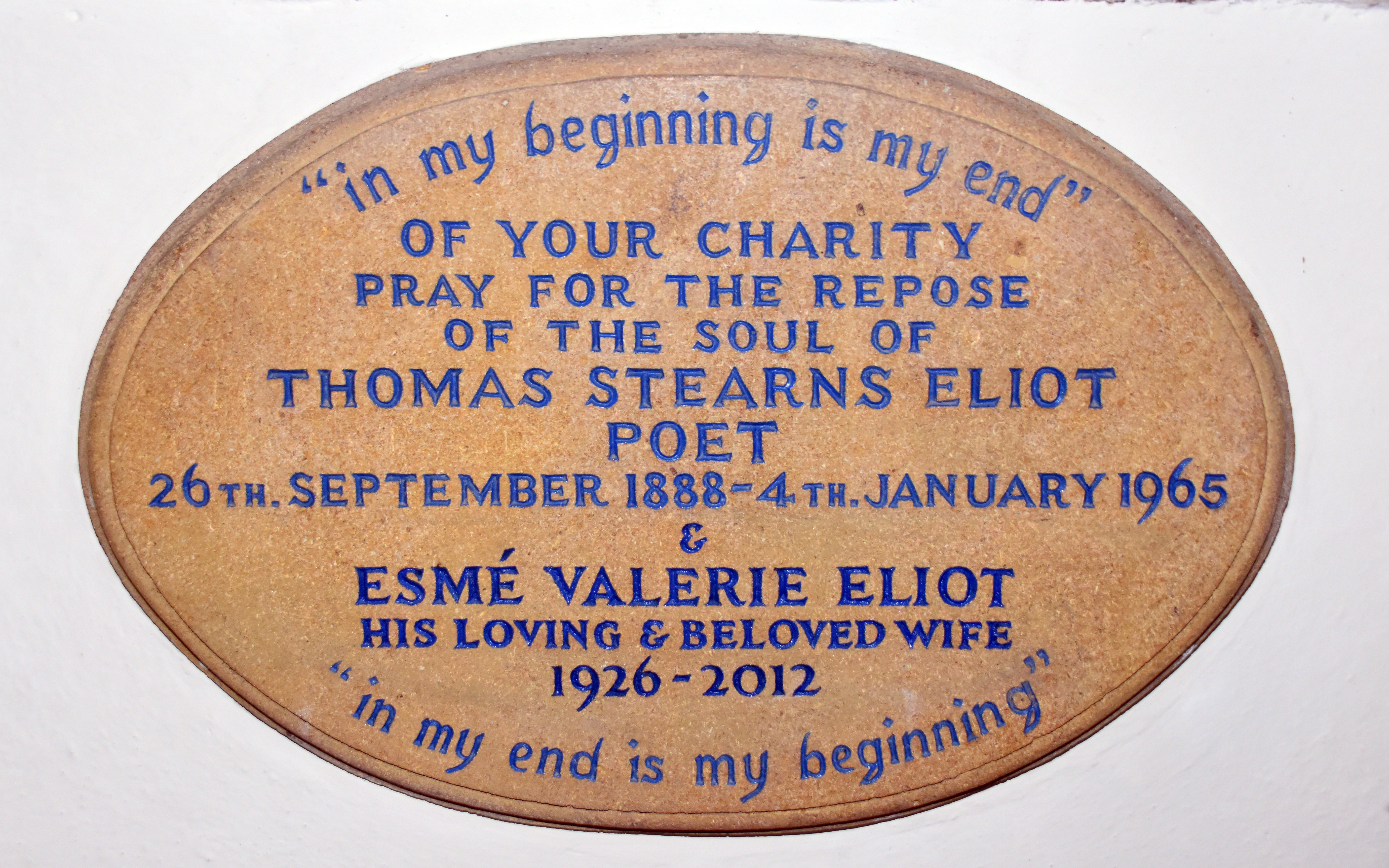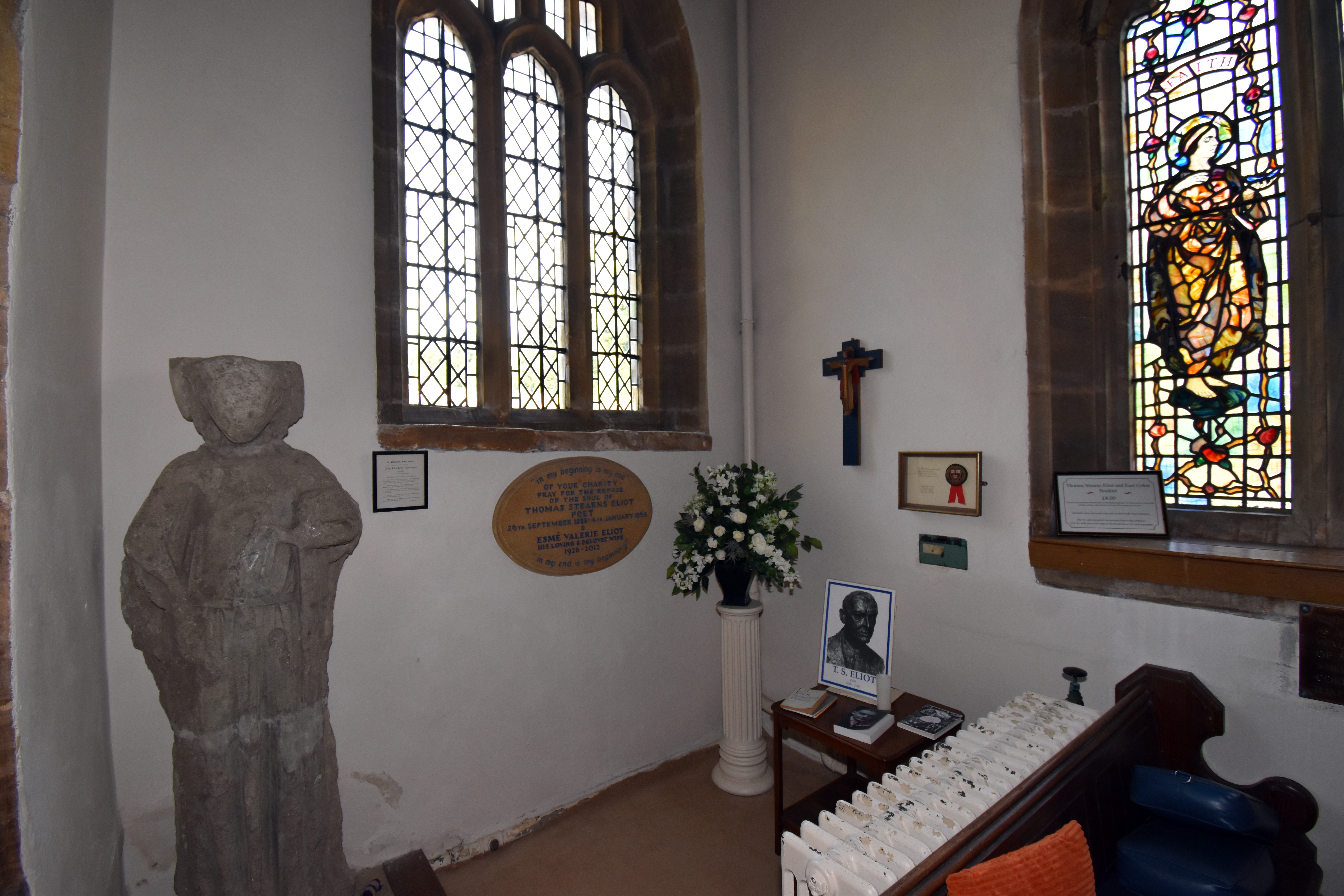
The corner of St Michael’s Church dedicated to T. S. Eliot marks the interment of part of his ashes in 1965. The choice of East Coker was deliberate and based on ancestry rather than personal sentiment. Eliot’s forebear Andrew Eliot left the village for Massachusetts in the seventeenth century, and the poet maintained an interest in the family’s origins. When he wrote East Coker in 1940 he used the village not as a source of atmosphere but as a fixed historical reference point. It provided a location with documented continuity, a parish whose records show the movement of families, the rise and decline of local dynasties, and the repetition of ordinary labour across centuries. The poem’s opening line, “In my beginning is my end,” is the only line that can be quoted here, but it is enough to indicate the argument: beginnings and endings are part of the same historical cycle, not opposites.
The church is an appropriate location for the memorial because it represents long-term continuity within the parish. Its fabric contains medieval work and later additions, and its associations with the Courtenays, the Helyars and other families provide a stable historical backdrop. Eliot was not interested in rural charm or picturesque detail. He was interested in the endurance of communities and the limits of individual agency within larger historical forces. East Coker provided an example of a place where generations had lived, worked and died without altering the fundamental structure of the parish. The poem uses the village to illustrate this continuity rather than to evoke mood.
Eliot visited East Coker during the period in which he was writing the Quartets, but his engagement with the village was analytical. He was examining the collapse of modern certainties, the instability of political systems and the repetition of human behaviour. The agricultural references in the poem are not attempts at pastoral description. They are examples of recurring patterns: labour, decay, renewal and the limited scope of human control. Eliot’s interest in East Coker was structural. He used the village to demonstrate that human activity follows cycles that do not depend on modern ideas of progress.
East Coker was written during the Second World War and reflects Eliot’s concerns about the fragility of modern civilisation. The village provided a counterpoint: a place where the basic structure of life had remained stable despite national and international upheavals. The poem’s references to the movement of families, the decay of buildings and the repetition of labour are based on historical observation. Eliot was not romanticising the village. He was using it to show that the idea of progress is unreliable when measured against the long record of human behaviour. The poem’s argument is built on the contrast between modern instability and older patterns that persist regardless of ideology.
The decision to place part of his ashes in St Michael’s was made late in his life and reflects his interest in origins rather than any personal connection with the parish. The memorial stone is plain and contains only essential information. It does not attempt to interpret the poem or the Quartets. It is the place where this American who fell in love with England reconnected to his ancestors and their culture.