|
|
|
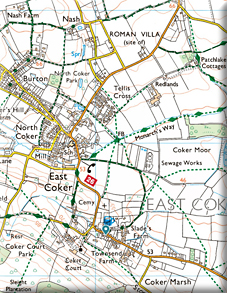
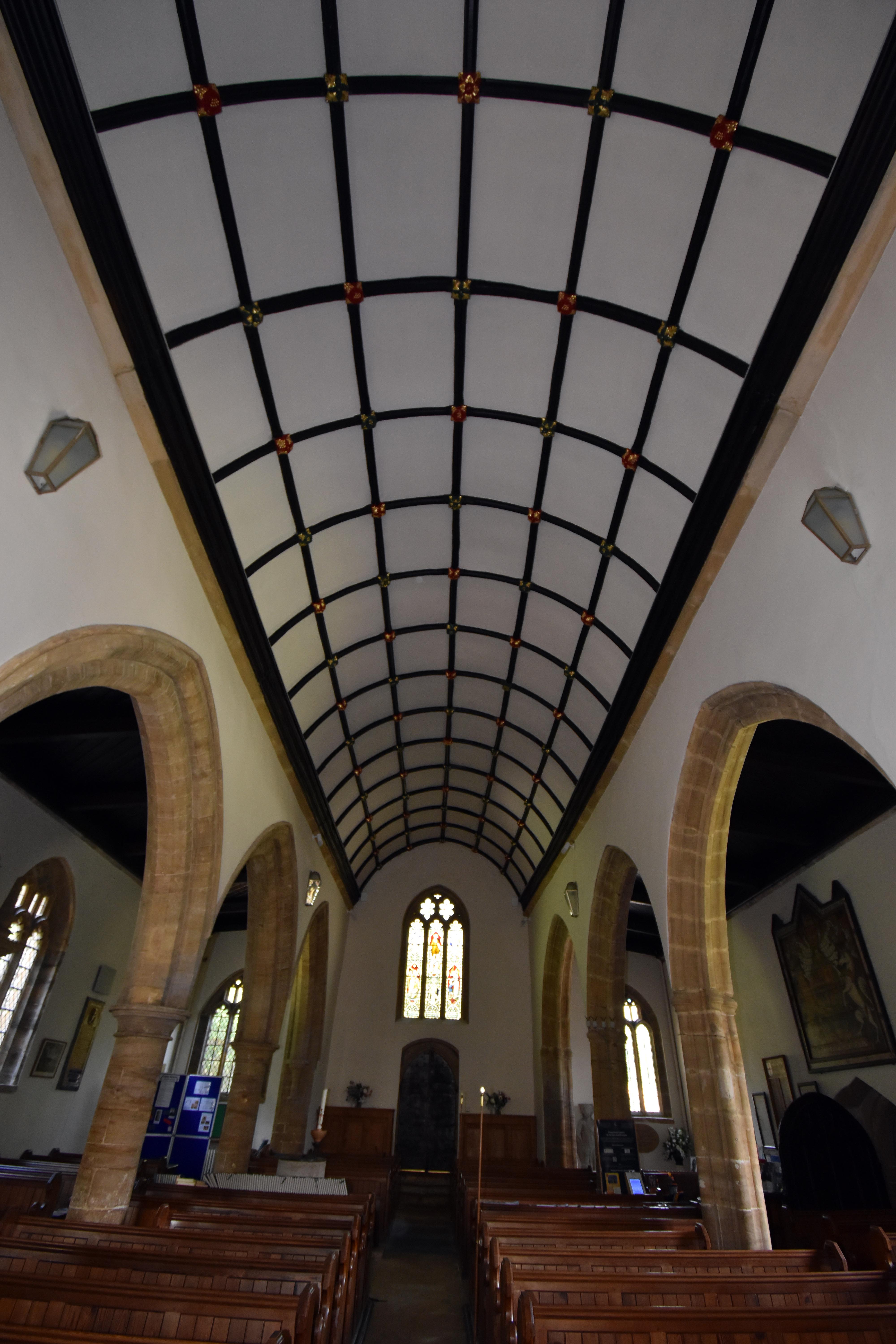
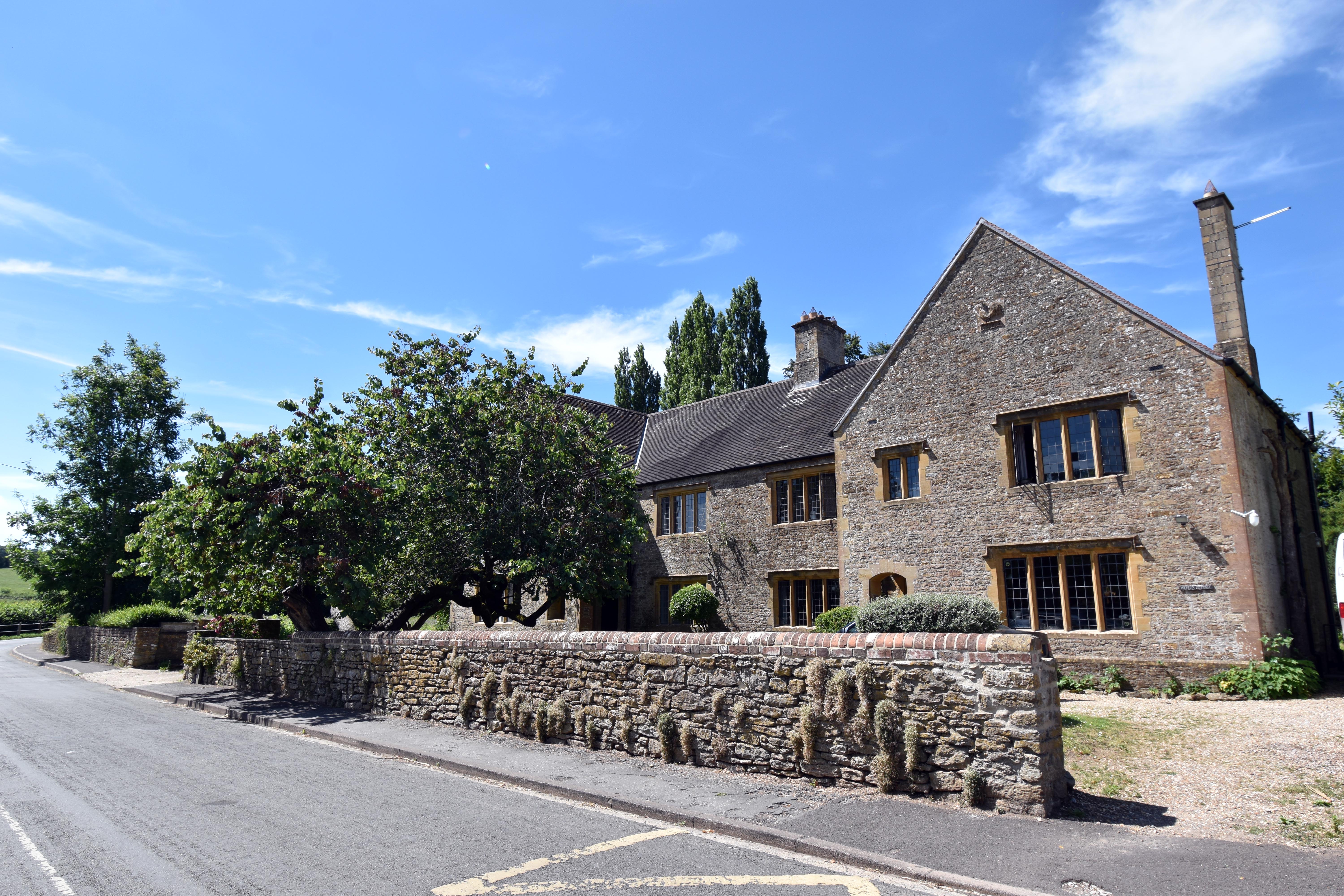
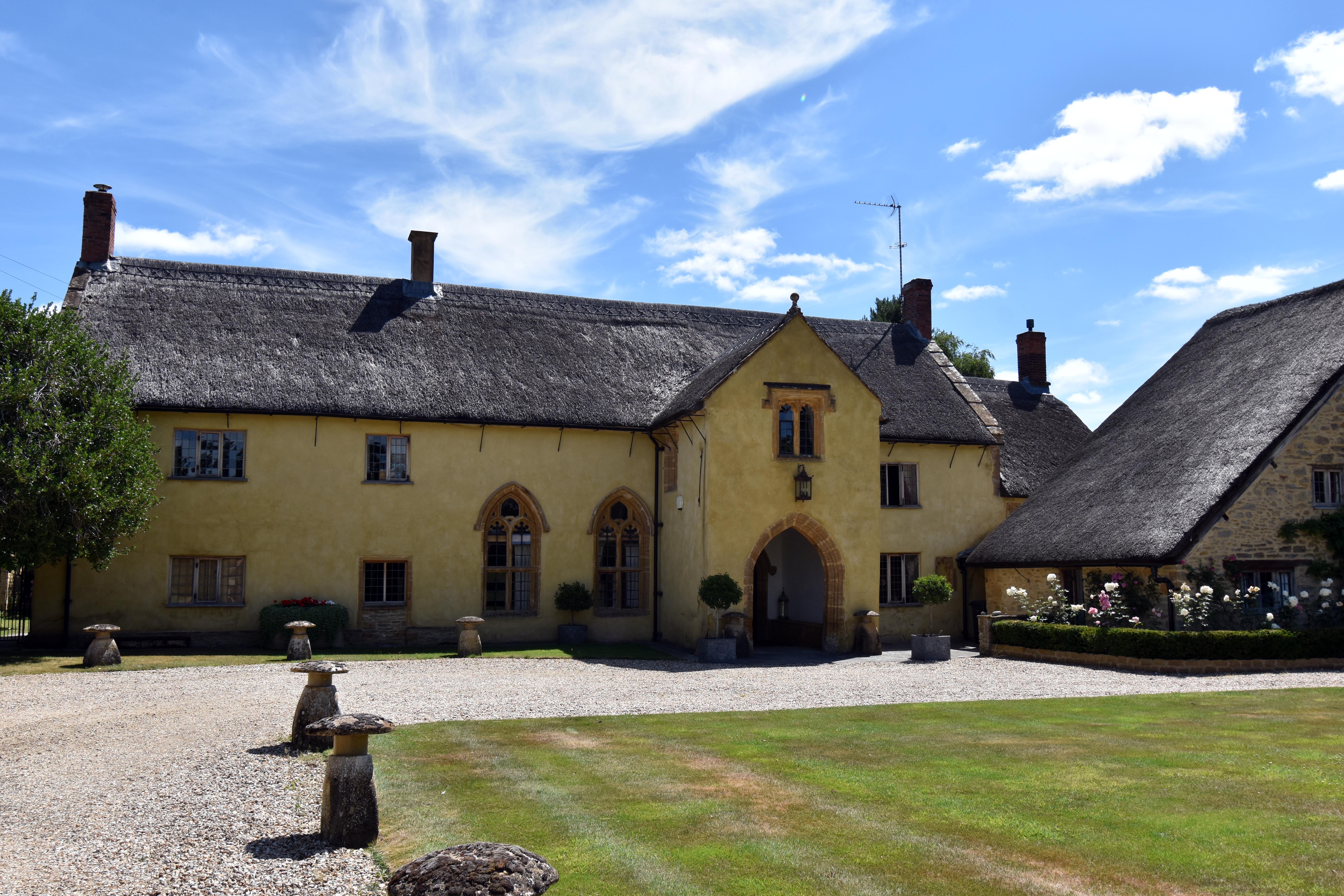
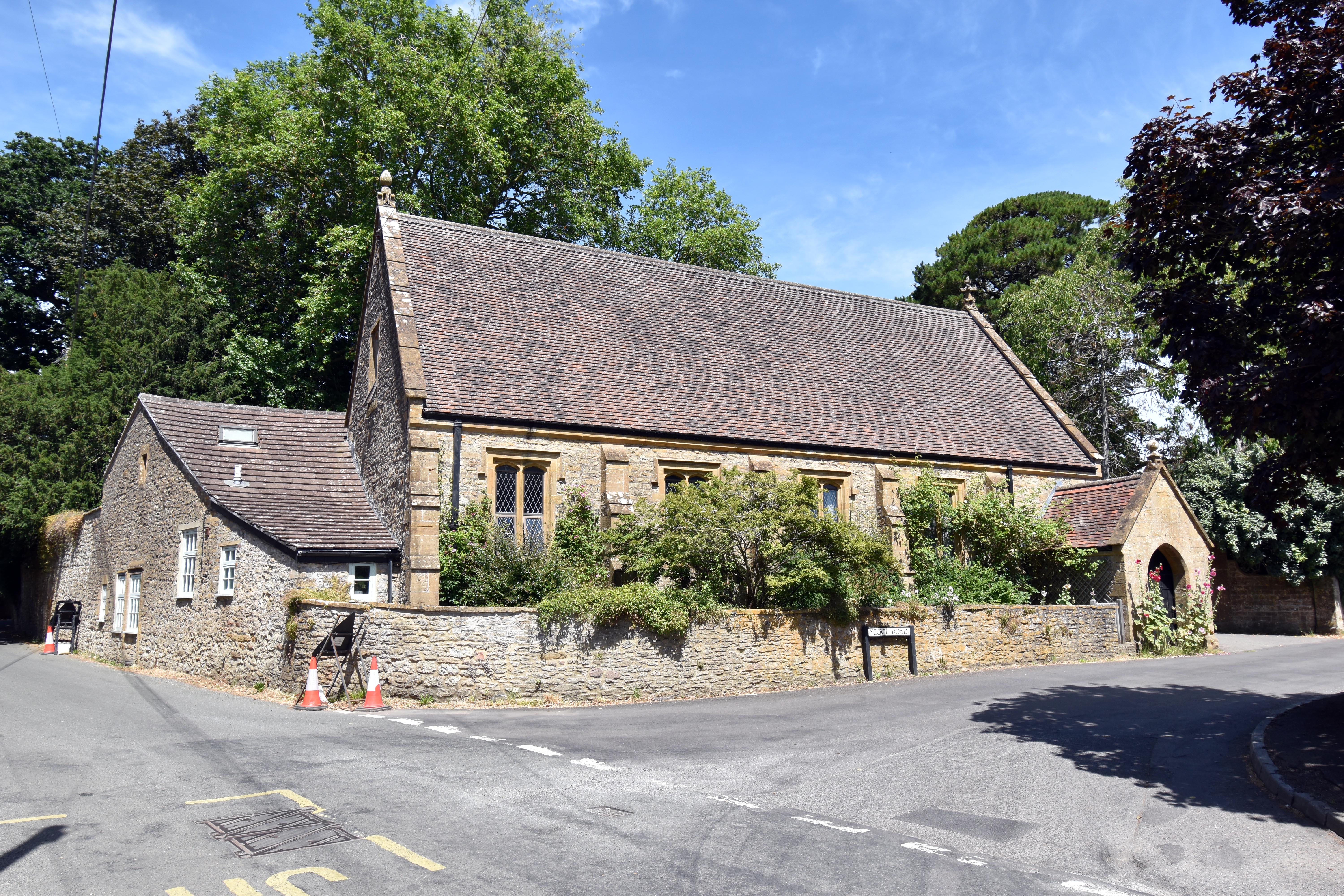
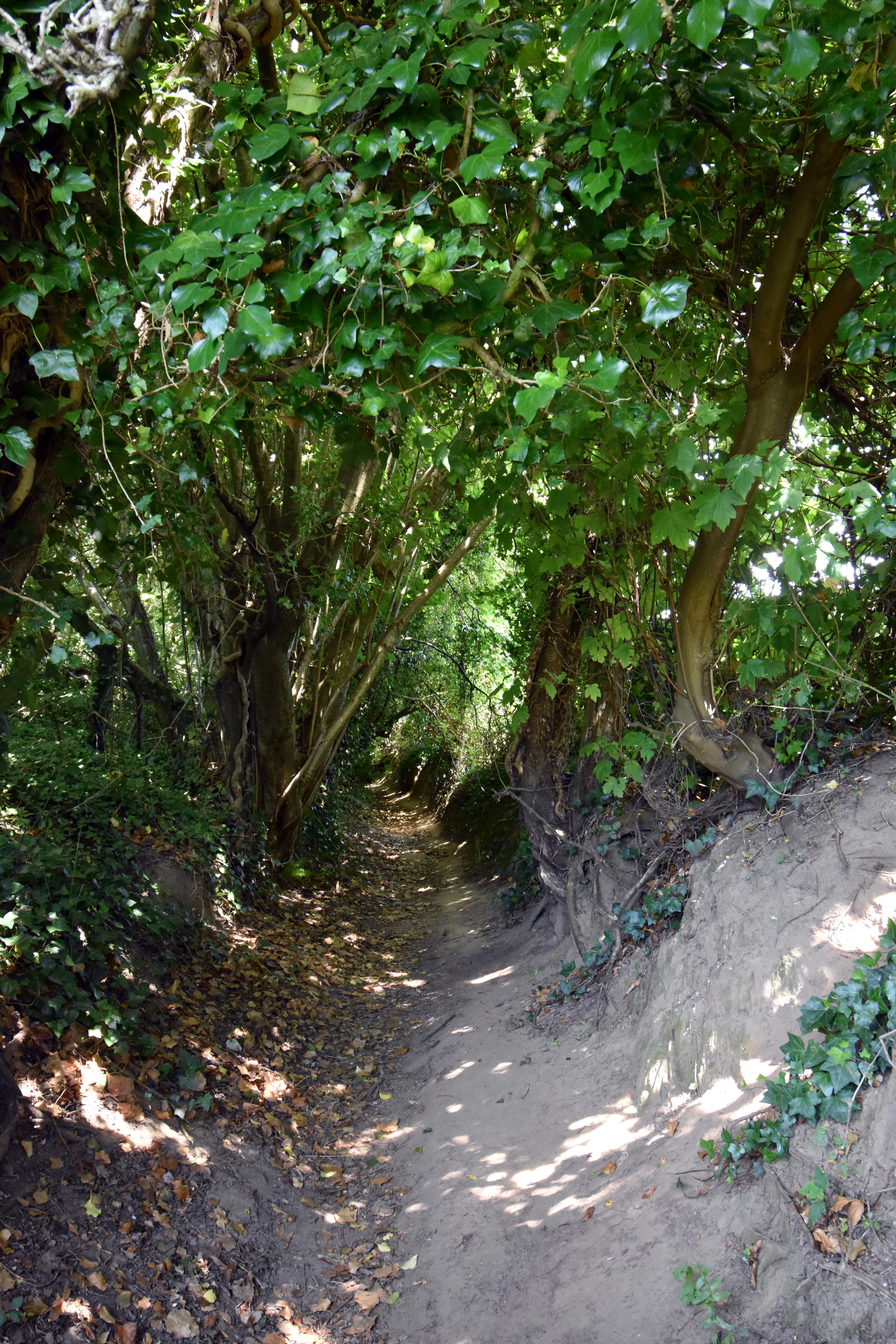
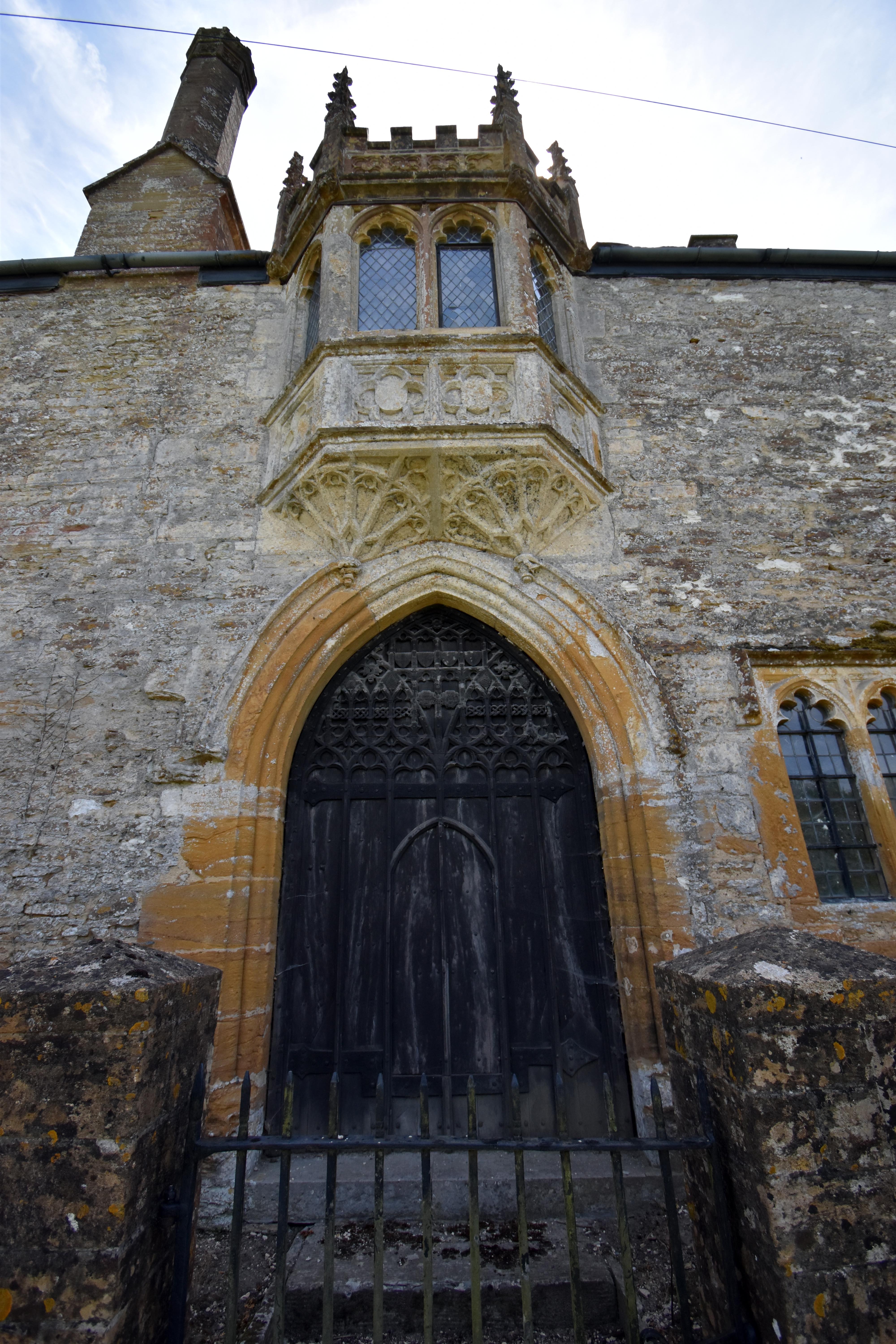
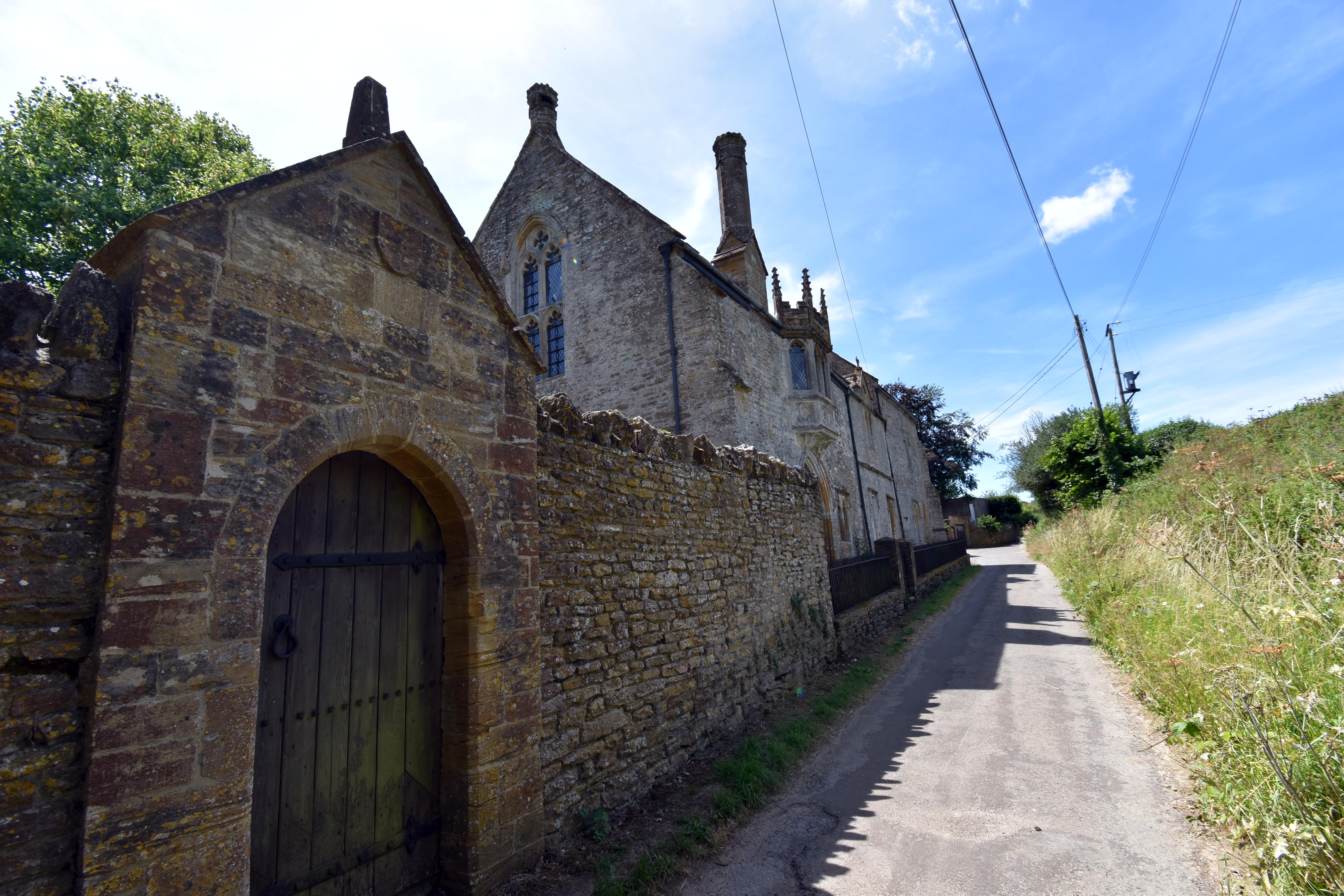
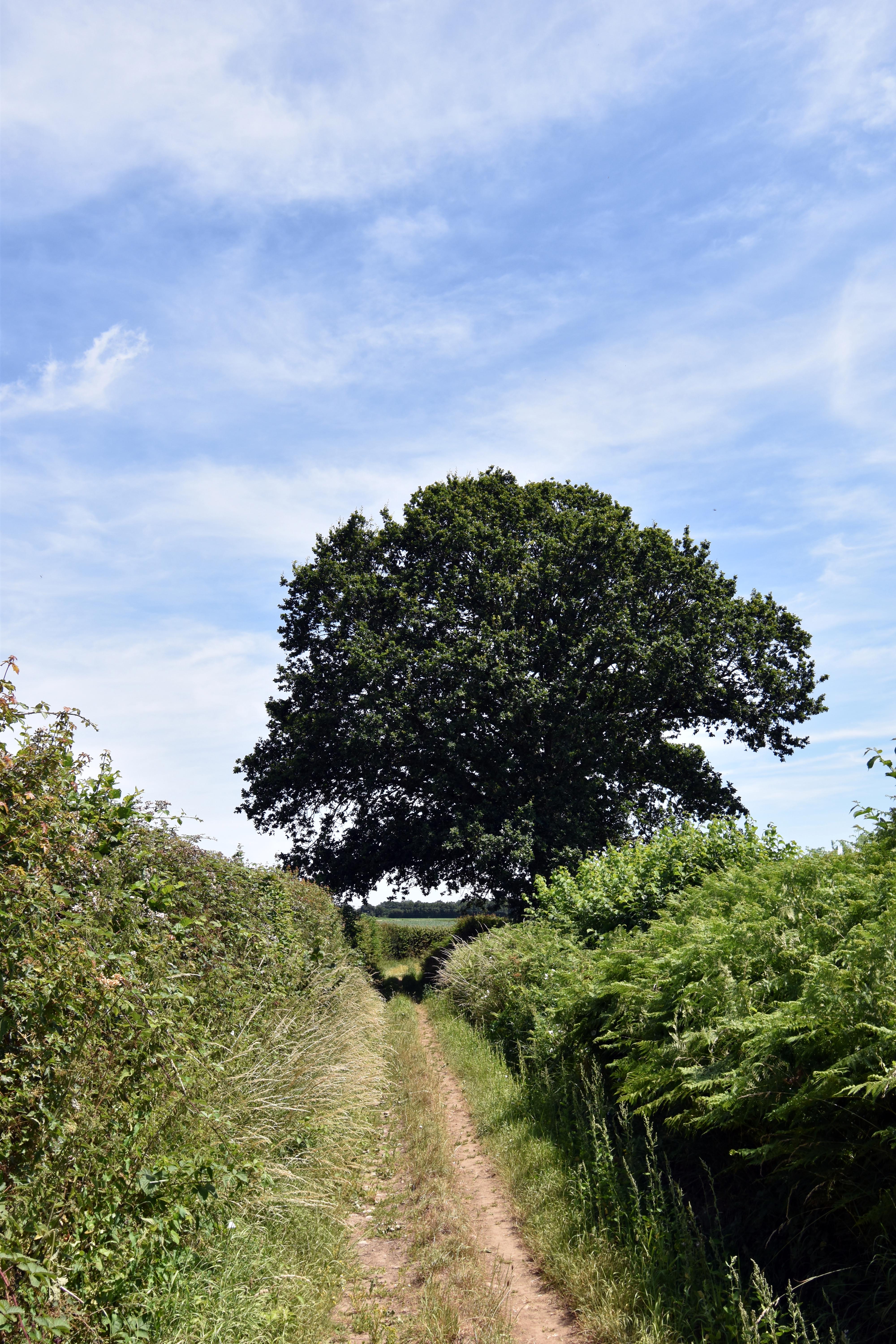
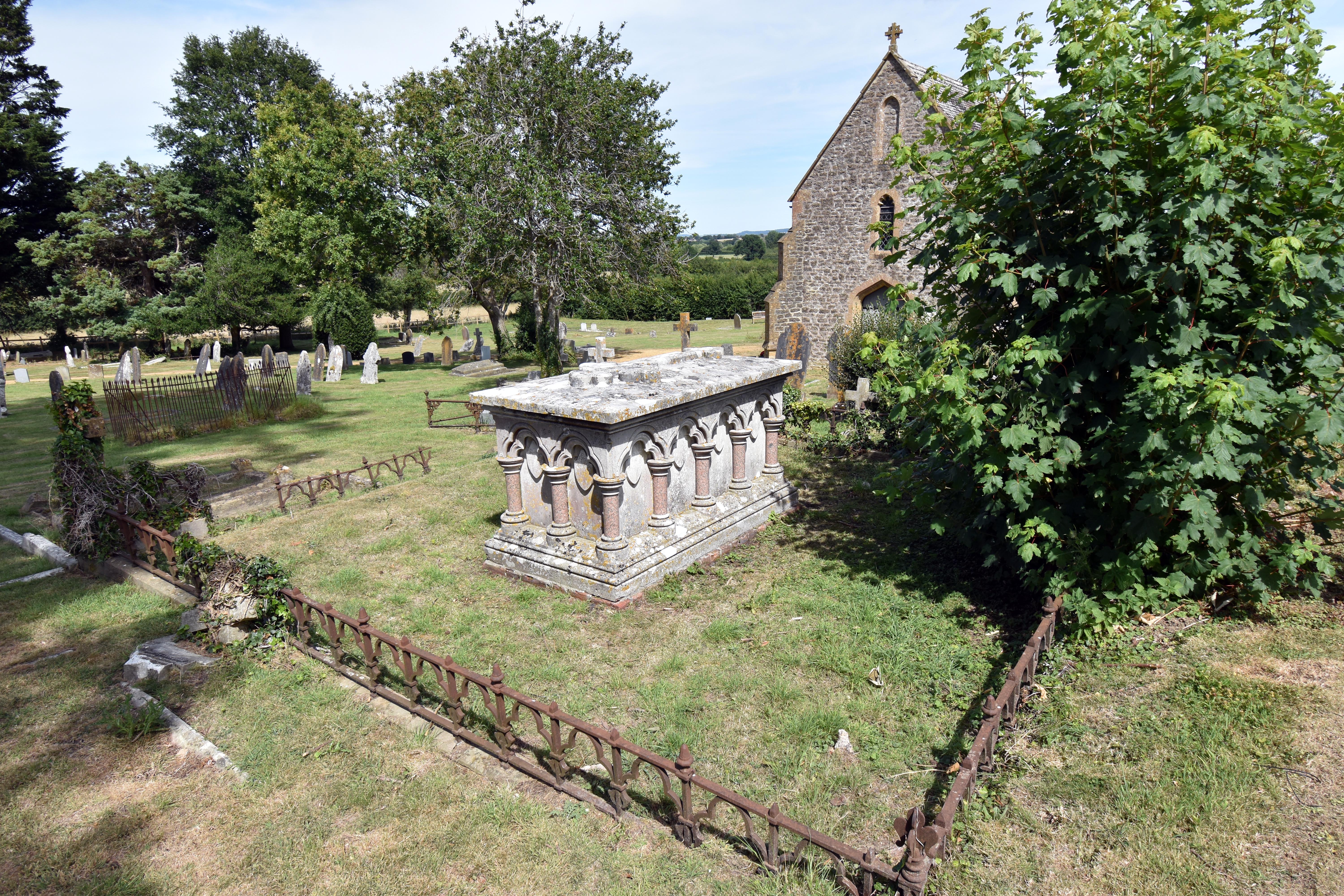
Yesterday I visited the idyllic Somerset village of East Coker. It was the prettiness of this village that reminded T. S. Eliot, whose ancestors hailed from there, of the 1860 German short story entitled Germelshausen. This itself was inspired by a far older German folk tale of a traveller who stumbles across a beautiful village with farmers, dancers, an ancient church and cemetery. The traveller meets and falls in love with a village girl, but as the clock strikes midnight the girl and village disappear. For Germelshausen was a village that would only appear one day in every century and then disappear without trace. There is something otherworldly about this village which is almost unfeasibly pretty. When T. S. Eliot first came to East Coker he felt he had stumbled across a lost world — just like that of Germelshausen. Even the approaches to East Coker in the car are remarkable as you drive through sunken holloways as if you are being transported to another dimension. And indeed those sunken roads are not consigned merely to the roads; many of the footpaths leading to the village are like walking through natural tunnels with only the occasional glimmers of sun breaking through. And even more curiously, despite walking all the way around the village you never quite got to see it as a whole; it was as if it were hiding so as not to reveal too much of its beauty all at once. It is also curiously strung out with the church and a beautiful manor house (built by the seemingly ubiquitous Courtenay family) on top of a hill, but neither of them can be seen from the village itself. The cemetery is off all by itself between two sections of East Coker which seem to have come adrift from one another. It is all enchantingly curious and on a beautiful summer’s day was quite mesmerising.

|
|
|
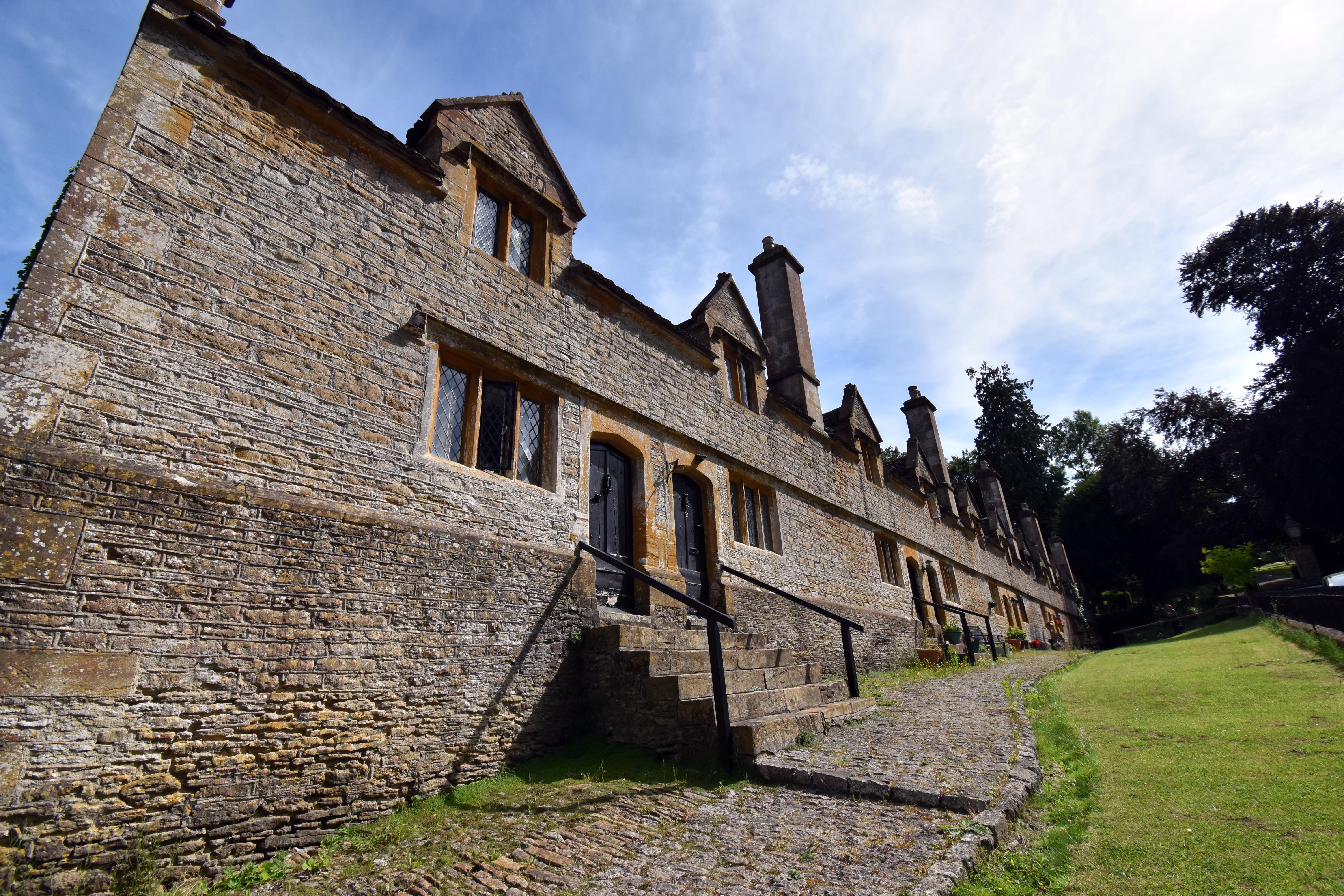
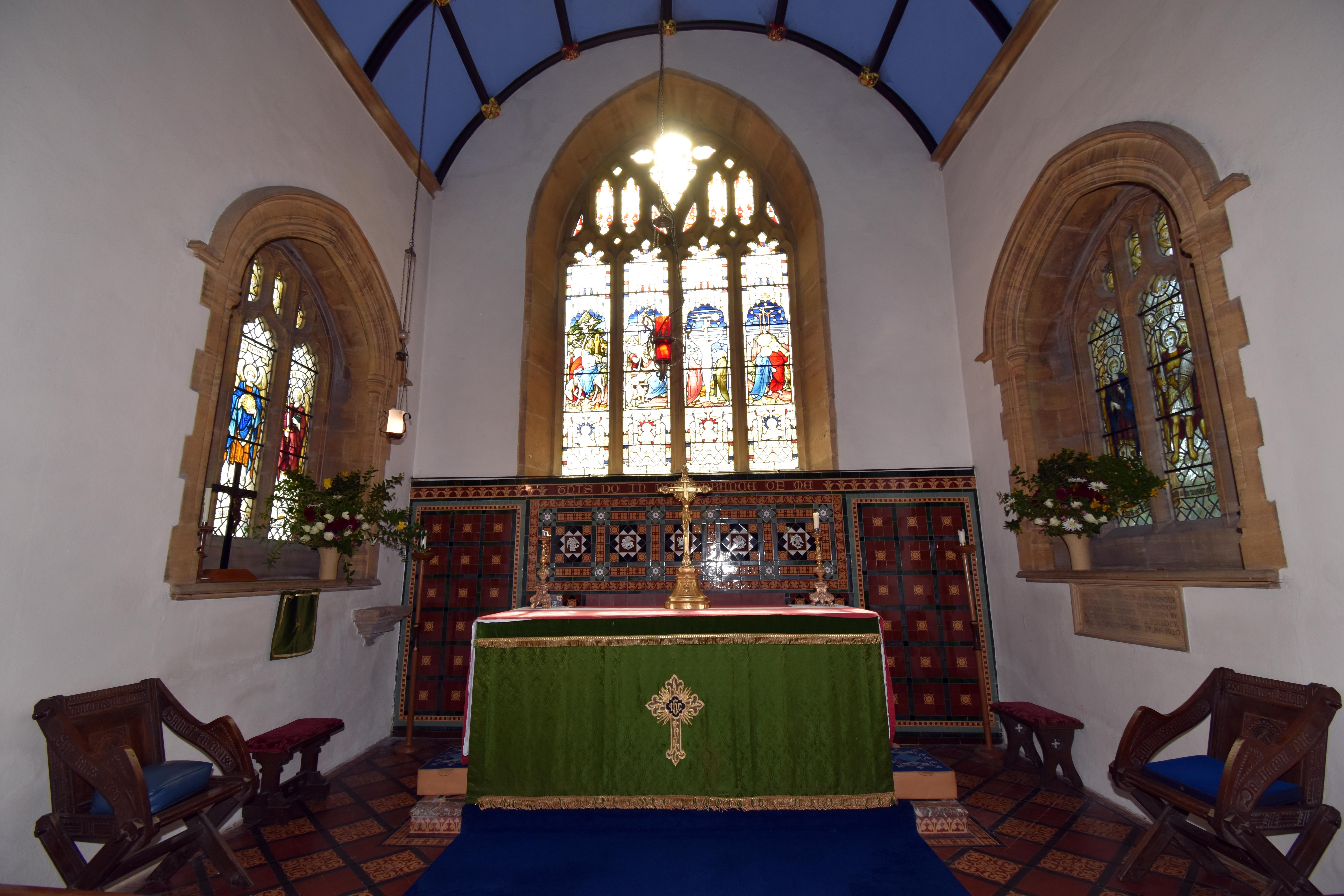
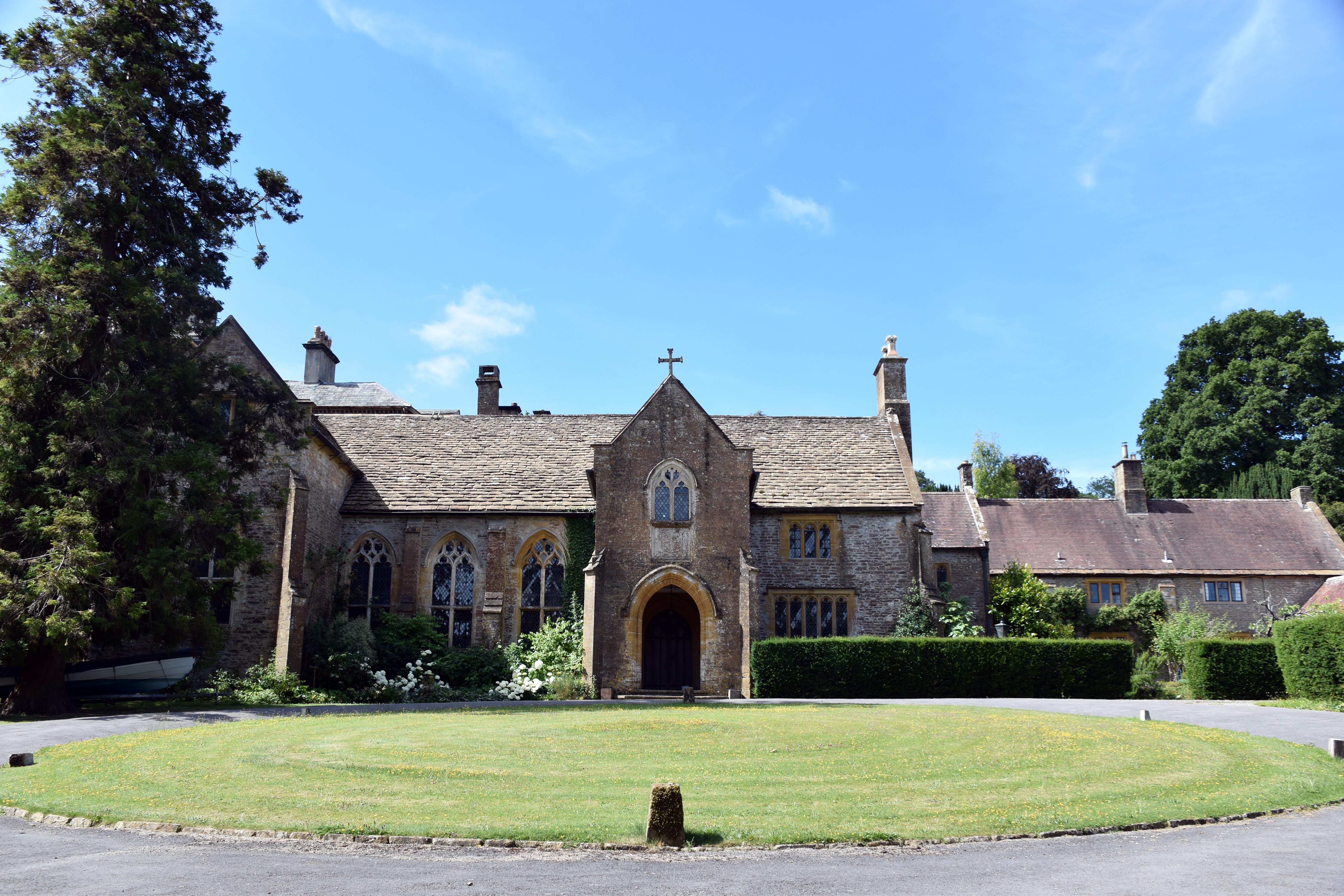
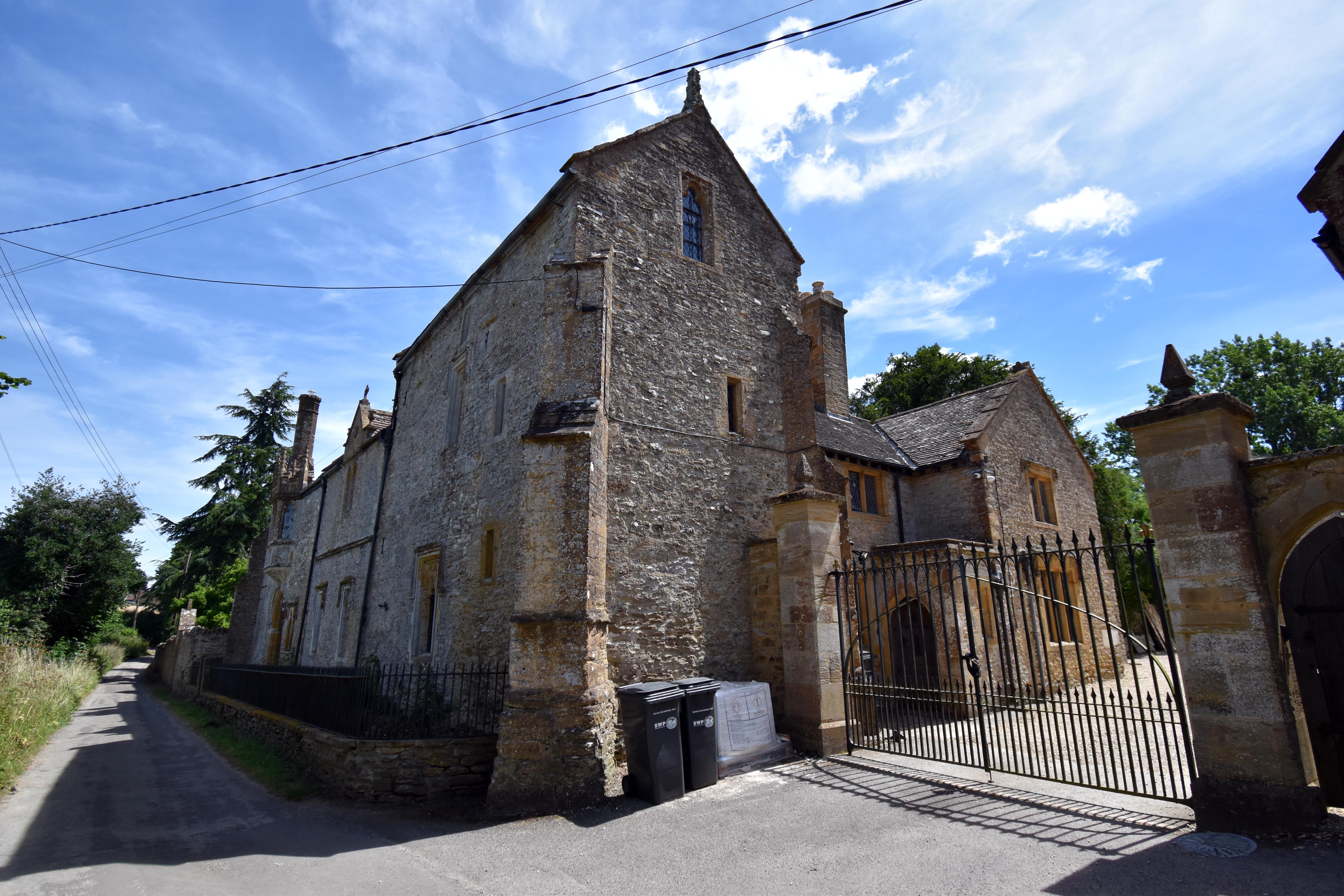
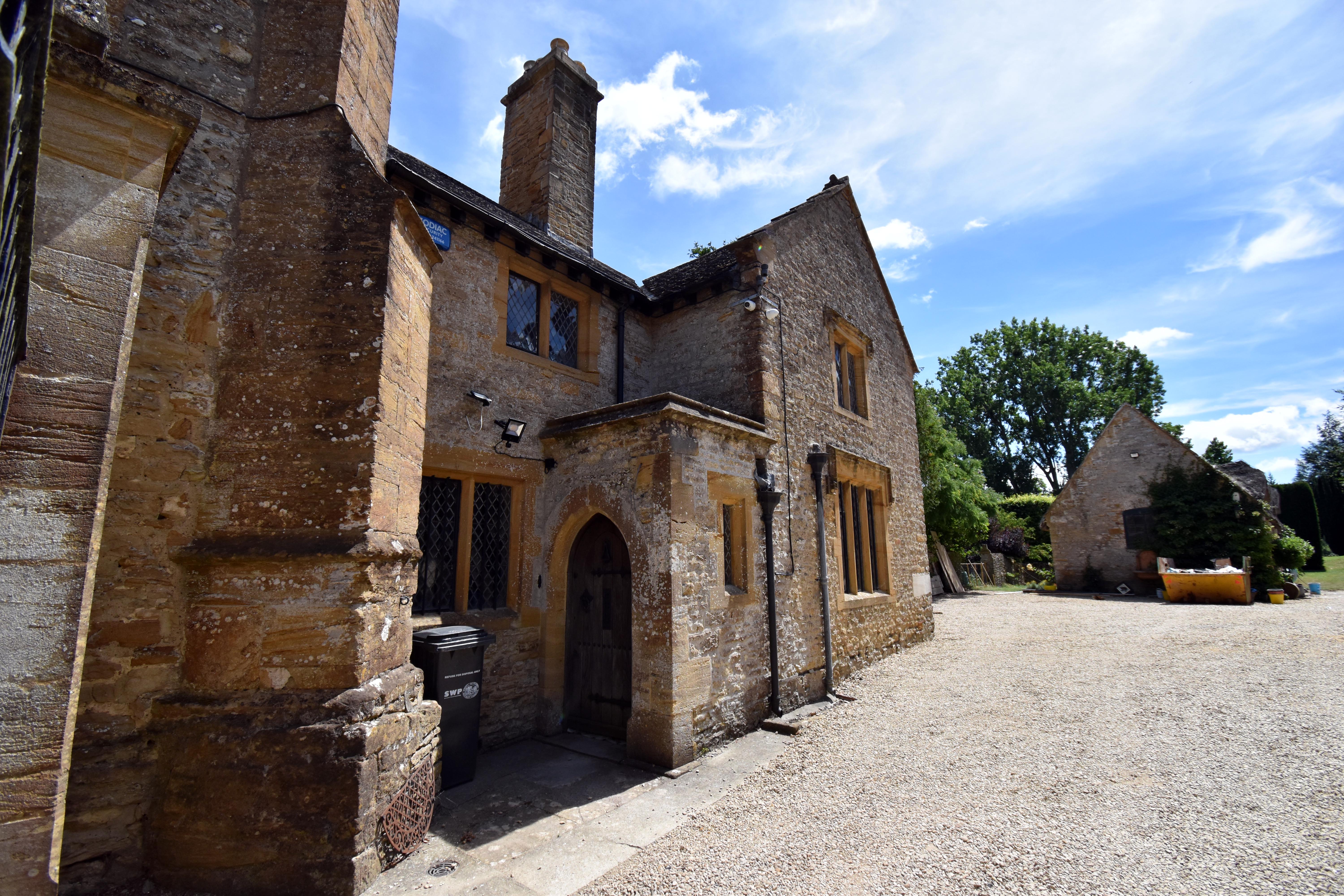
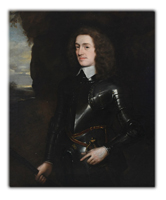
The reason I went to East Coker was actually because of some research I have been doing on Newton Ferrers Manor in Cornwall which for about a century belonged to a branch of the Helyar family of Coker Court, which is that beautiful manor house next door to the 12th‑century St Michael and All Angels Church. I was to find the Helyar name scattered throughout the village; indeed the very first line of buildings I saw were the remarkably beautiful Helyar almshouses for the poor of the parish at the foot of the drive to the manor house. These were originally designed by Archdeacon Helyar from Exeter Cathedral, who was the first of the Helyar dynasty to live at Coker Court. He actually hailed from the outskirts of Plymouth, having been baptised at St Budeaux. Sadly for him, his timing was terrible. He began the enterprise in 1640, but the Civil War was to grind the building process to a halt. He was personally dragged out of his bed in Exeter during the war by Roundhead soldiers and made to cough up £800 before being released. Worse than that though was that in 1645, thanks also to the privations of the war, there was an outbreak of plague in East Coker that not only carried off 70 parishioners but one of those who was to die was Archdeacon Helyar himself. What is even more remarkable is that the common plague pit that all the plague victims were interred within lies between the almshouses, Coker Court and the church, and if you look carefully you will see a gravestone attesting to its location. It would take another 15 years for these almshouses to be completed just in time for the Restoration of the monarchy, and a great celebration for both events was held in the village with the next generation of Helyars participating in the festivities.
|
|
|
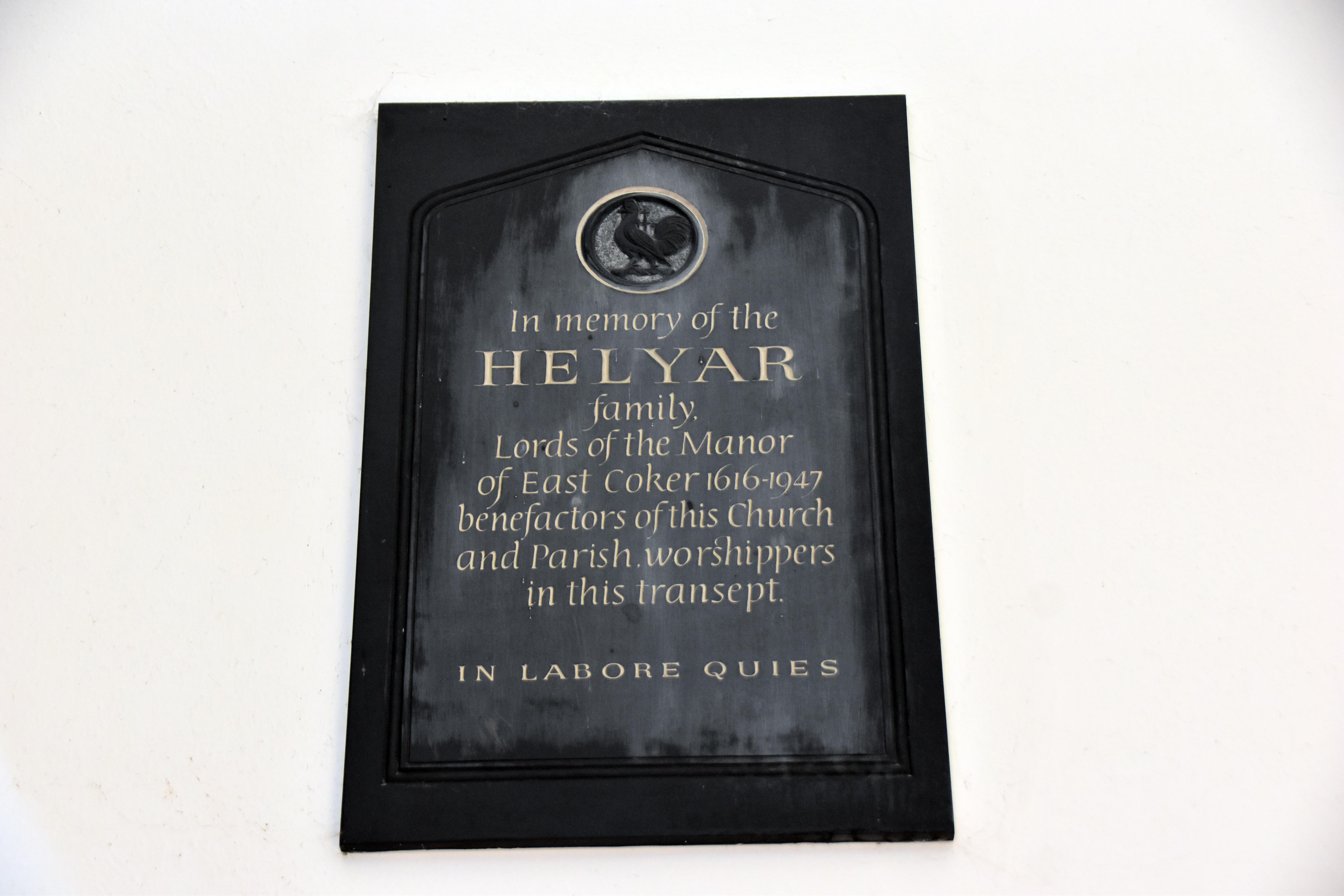
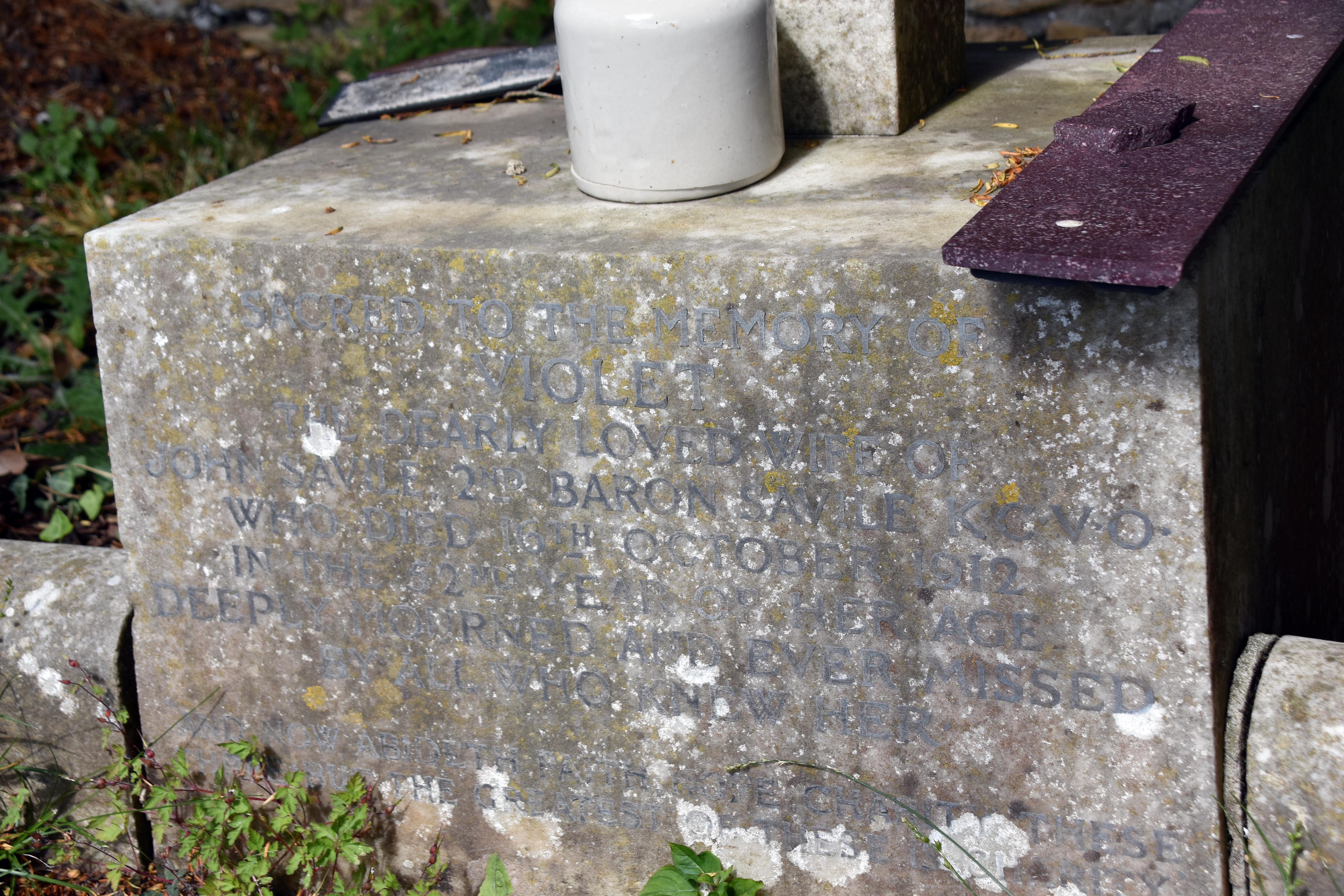
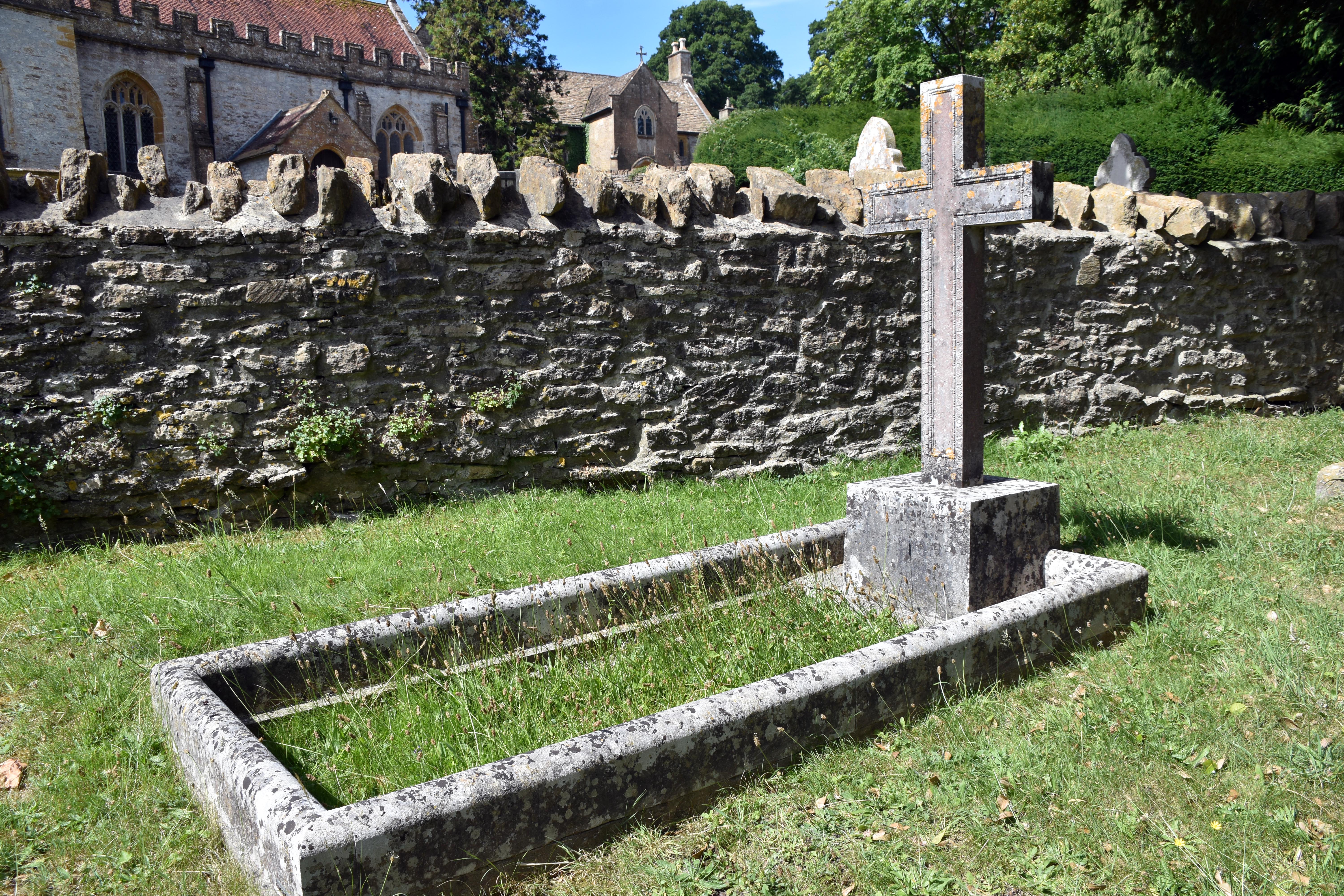
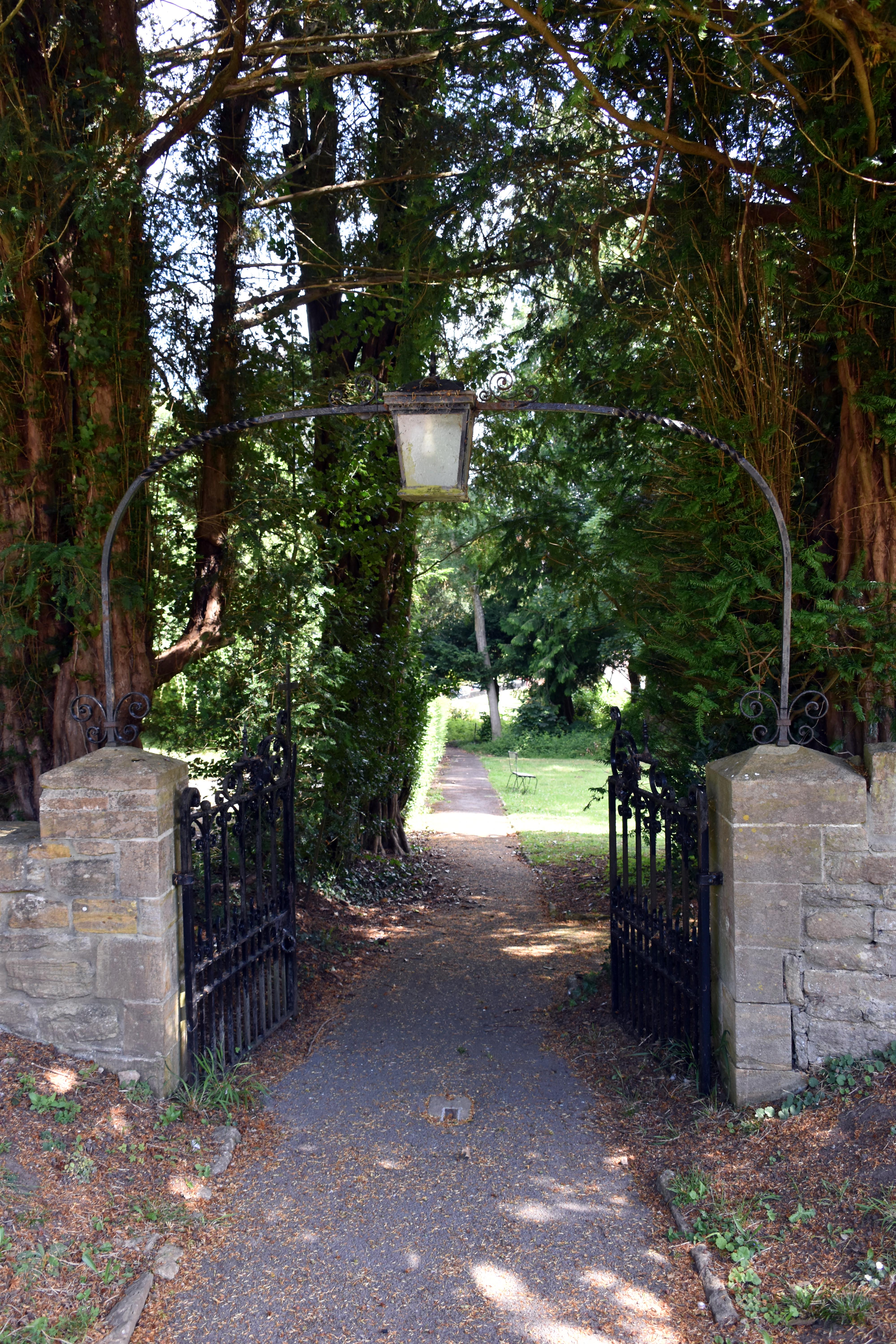
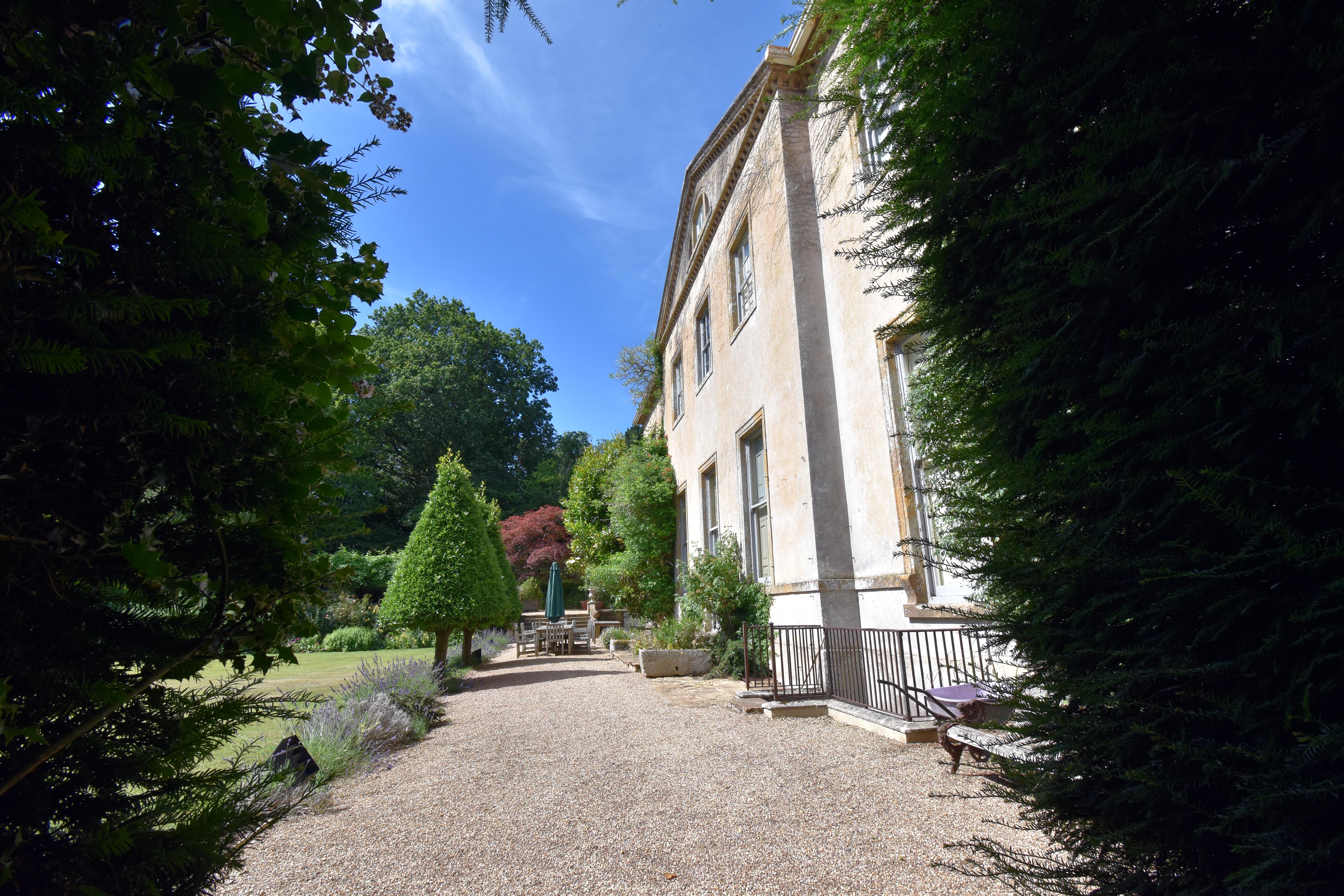
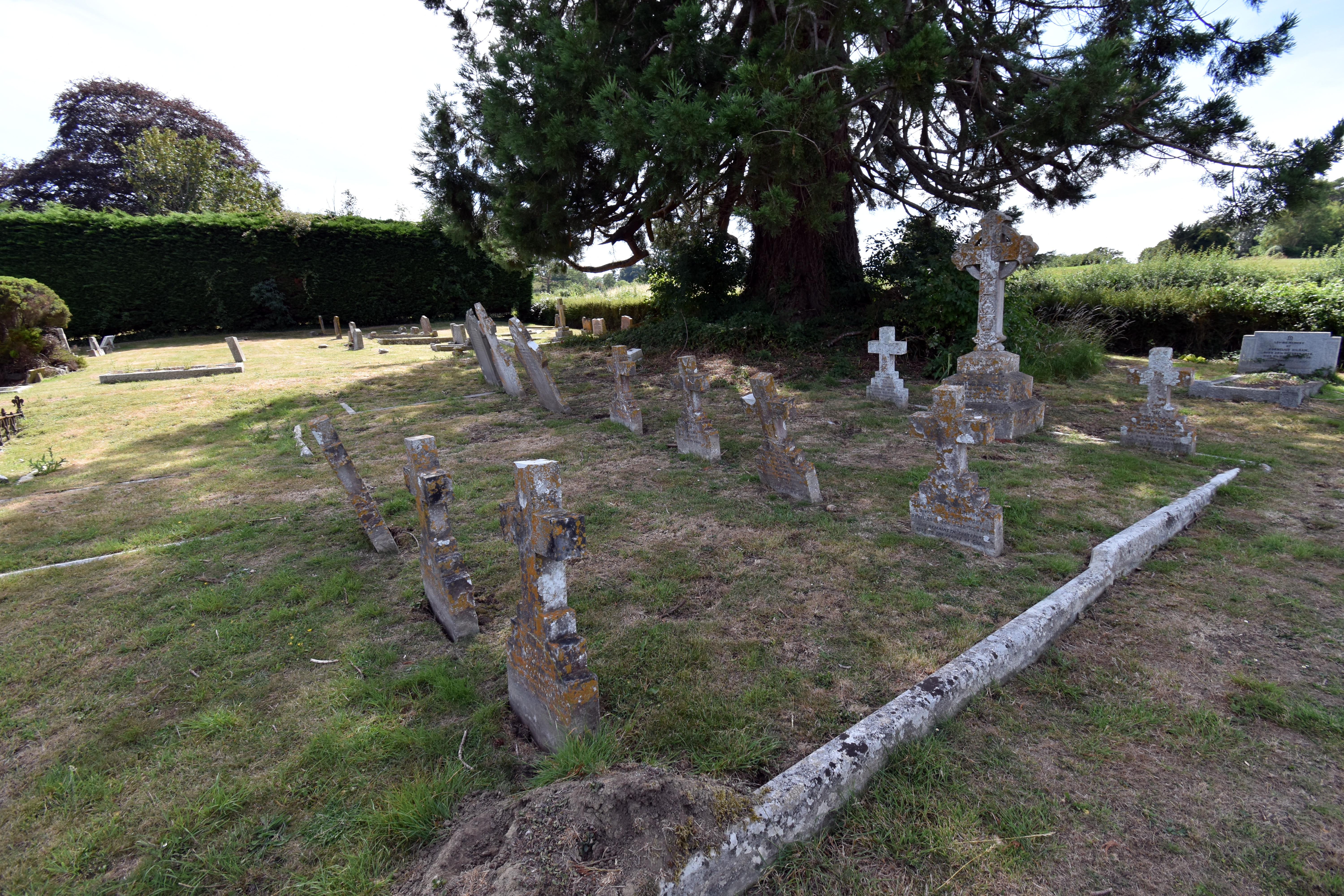
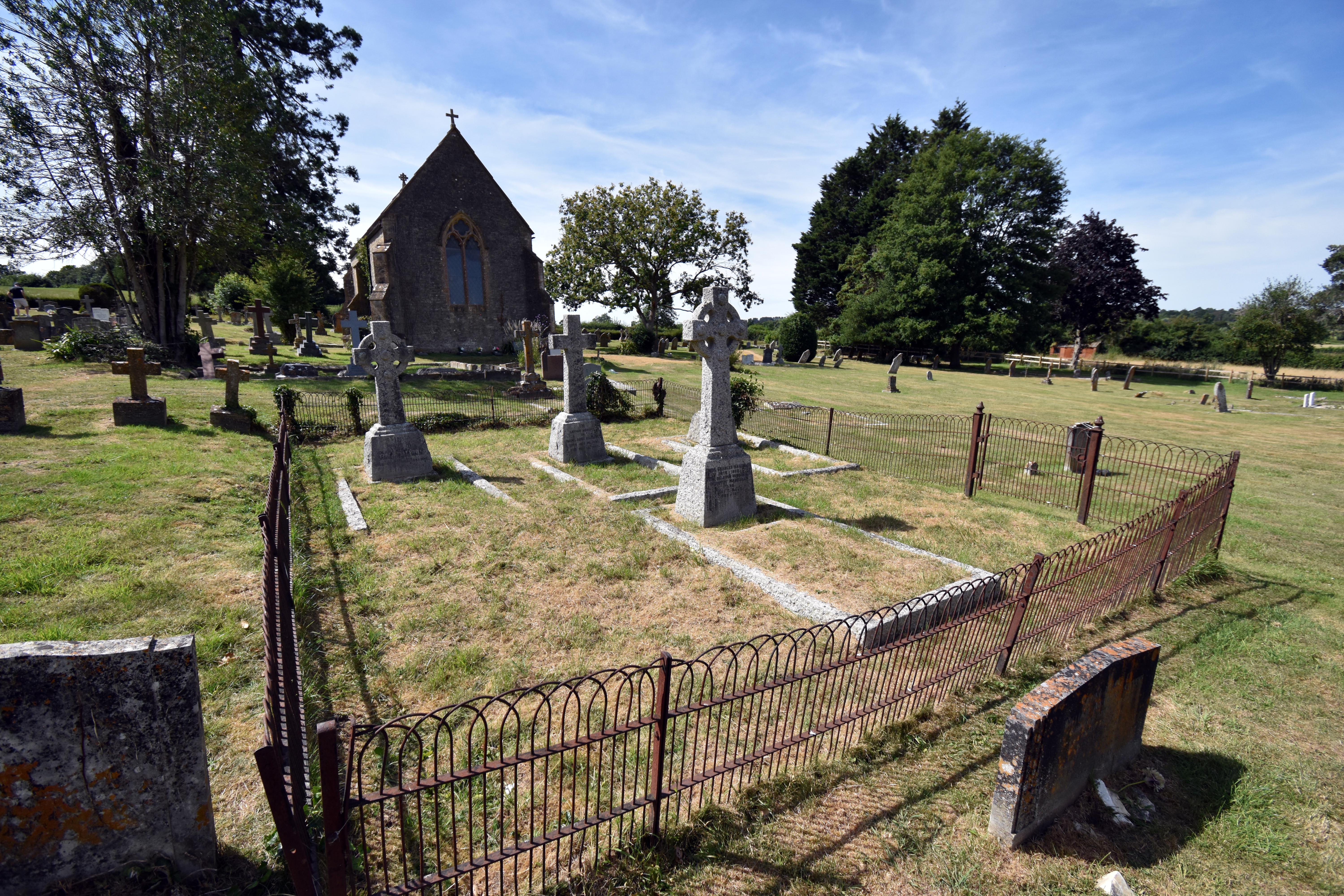
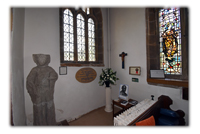
Walking up the hill, past the plague pit, you see some beautiful ironmongery and then the Hamstone graves and church on your left and the similarly lovely Hamstone Coker Court on the right. Coker Court is now a private residence and, according to a memorial in the church, the Helyars finally stopped being lords of the manor in 1947. Their connection to the manor house in Cornwall is that Rachel Helyar married into the Coryton family of Newton Ferrers in 1715. They were not to have any children. She outlived her husband, but when he died and after a long legal battle, the house became the property of the Helyars of East Coker. It should be said that the Helyars invested some of their resources into sugar plantations in Jamaica which helped move them from being a family of clerics into landed aristocracy, including Members of Parliament and eventually joining the establishment. They were to sell off their Cornish property in 1834, which coincides with the abolition of slavery throughout the British Empire, and one wonders if there was a connection to this fact as they sought to consolidate their wealth back to East Coker. The Helyars were lords of East Coker Manor for over three centuries eventually ending with the death of Dorothy Margaret Helyar Walker-Heneage who died in 1947. She is buried in a special little section of the graveyard right next to the plague gravepit where the first Helyar Lord of the Manor was buried in 1645.
|
|
|
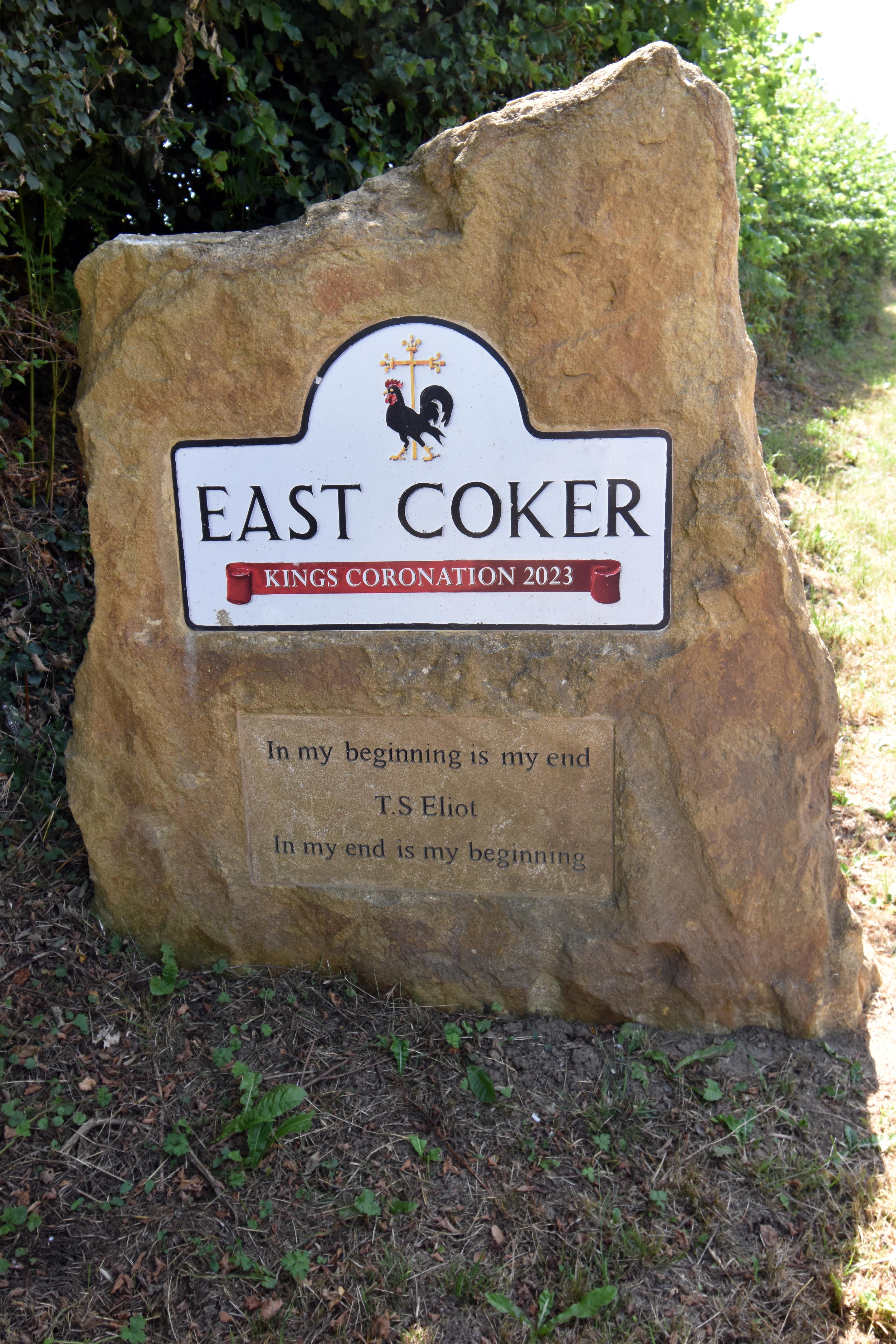
East Coker is justifiably proud of its connection to T. S. Eliot just as he was proud of his connections to it. Many people assume that T. S. Eliot, as one of the most quintessentially English poets, was English. He was not; he was American. And yet he became more English than the English, delighting in the fact that his ancestors hailed from East Coker before sailing to America in the 17th century. He wrote this poem in 1940 when the war was going badly as a way of encapsulating what people were fighting for: a deep cultural binding stretching back centuries which he himself felt in this village. The poem’s first line, “In my beginning is my end”, and its last line, “In my end is my beginning”, represented both his own family’s journey from East Coker to America and back to England, but also Western civilisation’s resistance to war and tyranny, and that even if the war went badly the roots of English civilisation and especially its Christian heritage run so deep that they would always reassert themselves. It is perhaps no wonder that upon his death he requested that his ashes be interred in the church at East Coker so that he might be reunited with his ancestors and with the Christian heritage that shaped his life and work.
|
|
|
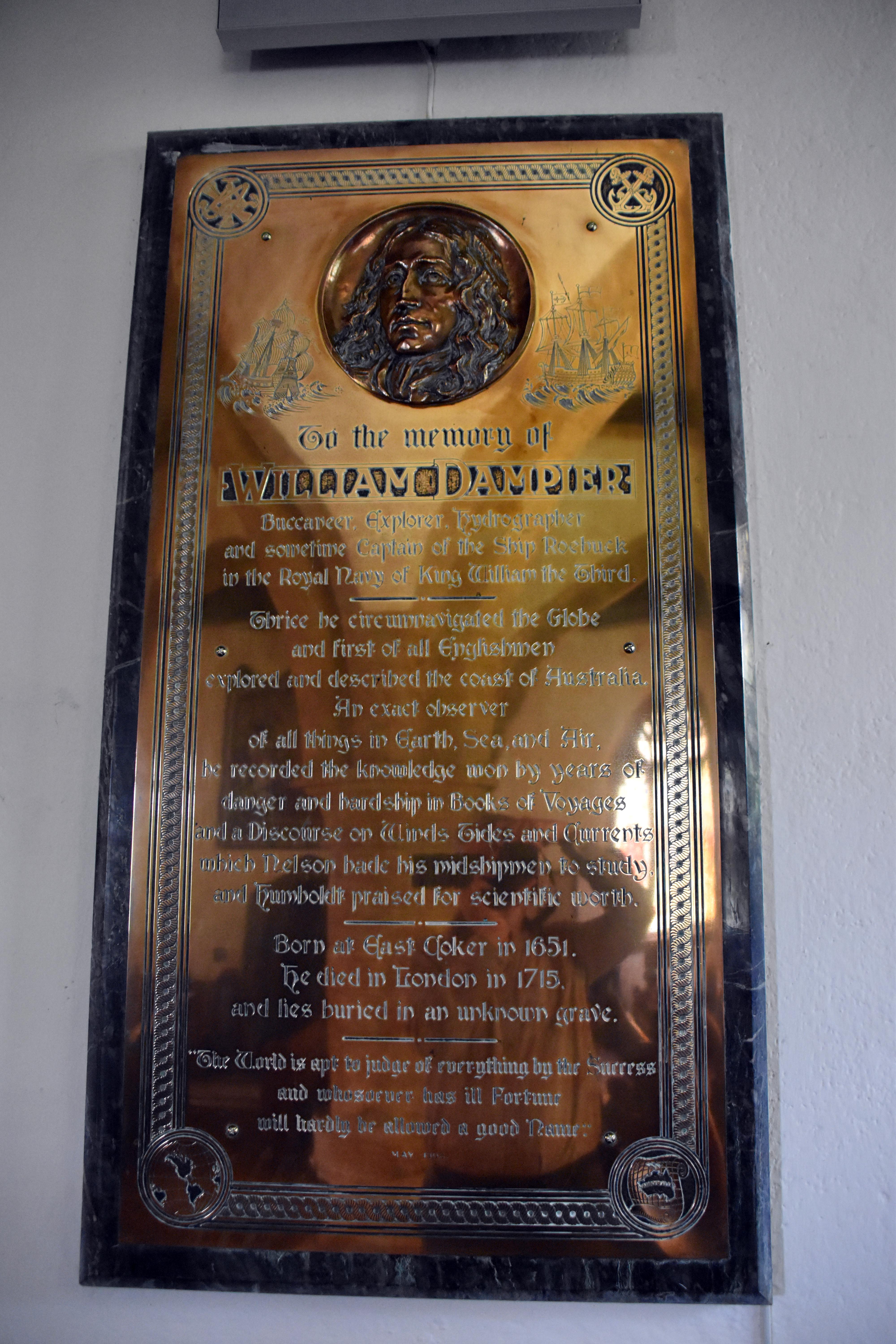
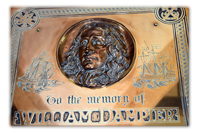
T. S. Eliot is not the only famous son of East Coker (not counting the Helyars); it is also the home of William Dampier, one of the most remarkable mariners of the late 17th century. Dampier was born in East Coker in 1651 and went on to become the first Englishman to circumnavigate the world three times, a pioneering hydrographer, the first Englishman to land on Australia, and one of the earliest systematic observers of natural history encountered during his global voyages. His writings influenced Defoe, Swift, and later Darwin, and his navigational work was used by Cook. It was one of the ships in his expedition — the Cinque Ports, captained by Thomas Stradling — that left Alexander Selkirk on Más a Tierra off the coast of Chile, the marooning that inspired Robinson Crusoe. Interestingly, he began his career in 1674 on the Helyar sugar plantations in Jamaica, where he quickly fell out with the overseer and complained that he was being treated “like a slave”, before abandoning plantation life and effectively running away with buccaneers and turning to privateering in the many wars against the Spanish and French. In this capacity he circumnavigated the world, developing skills and expertise which were later utilised by the Royal Navy. He was to circumnavigate twice more in the service of the Crown. There is a plaque that commemorates him in the church and you can also see the house where he was born on the Main Street of East Coker at Hymerford House. Why it does not have a blue plaque on it is beyond me, as William Dampier is one of the most important explorers this country has ever produced.
|
|
|
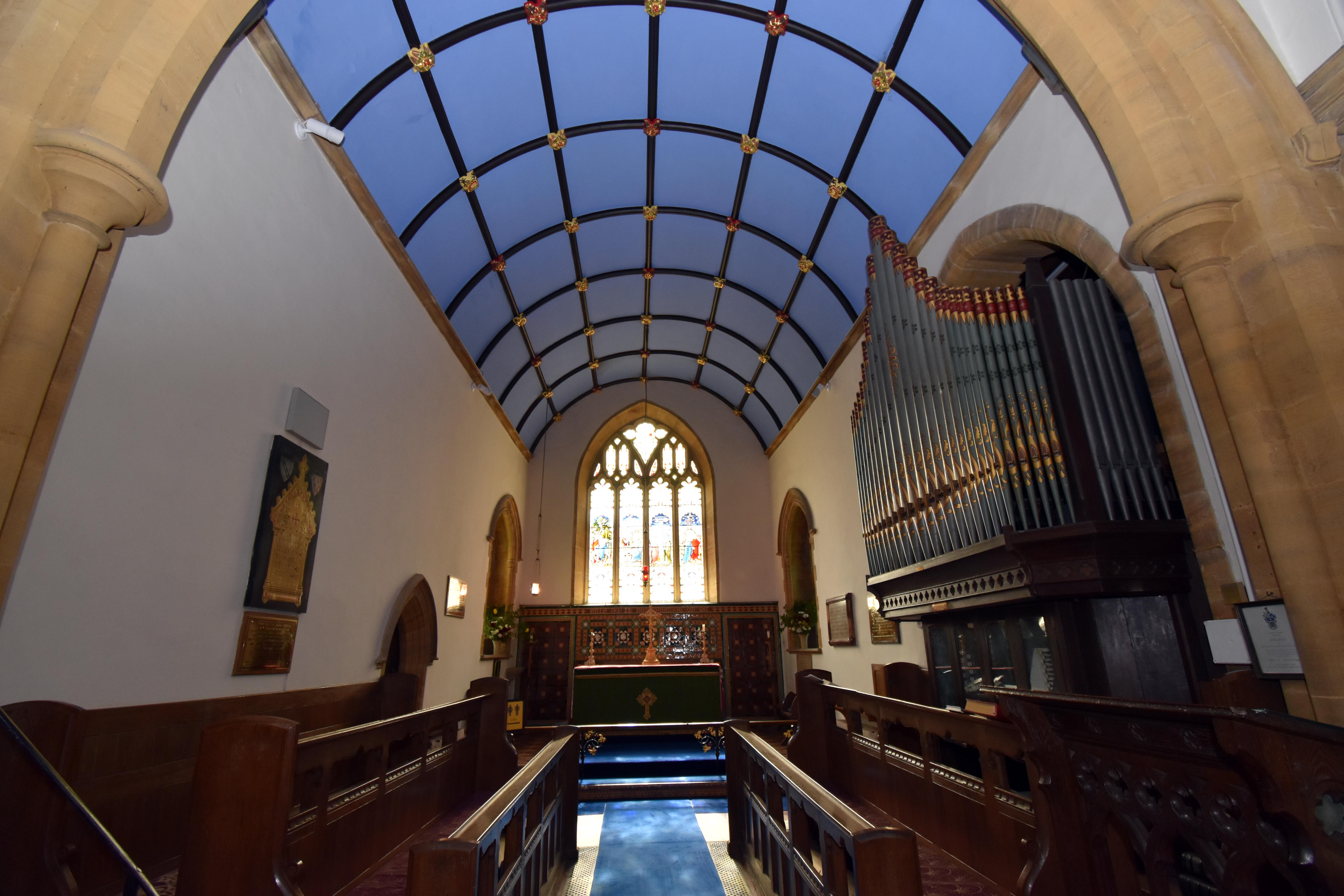
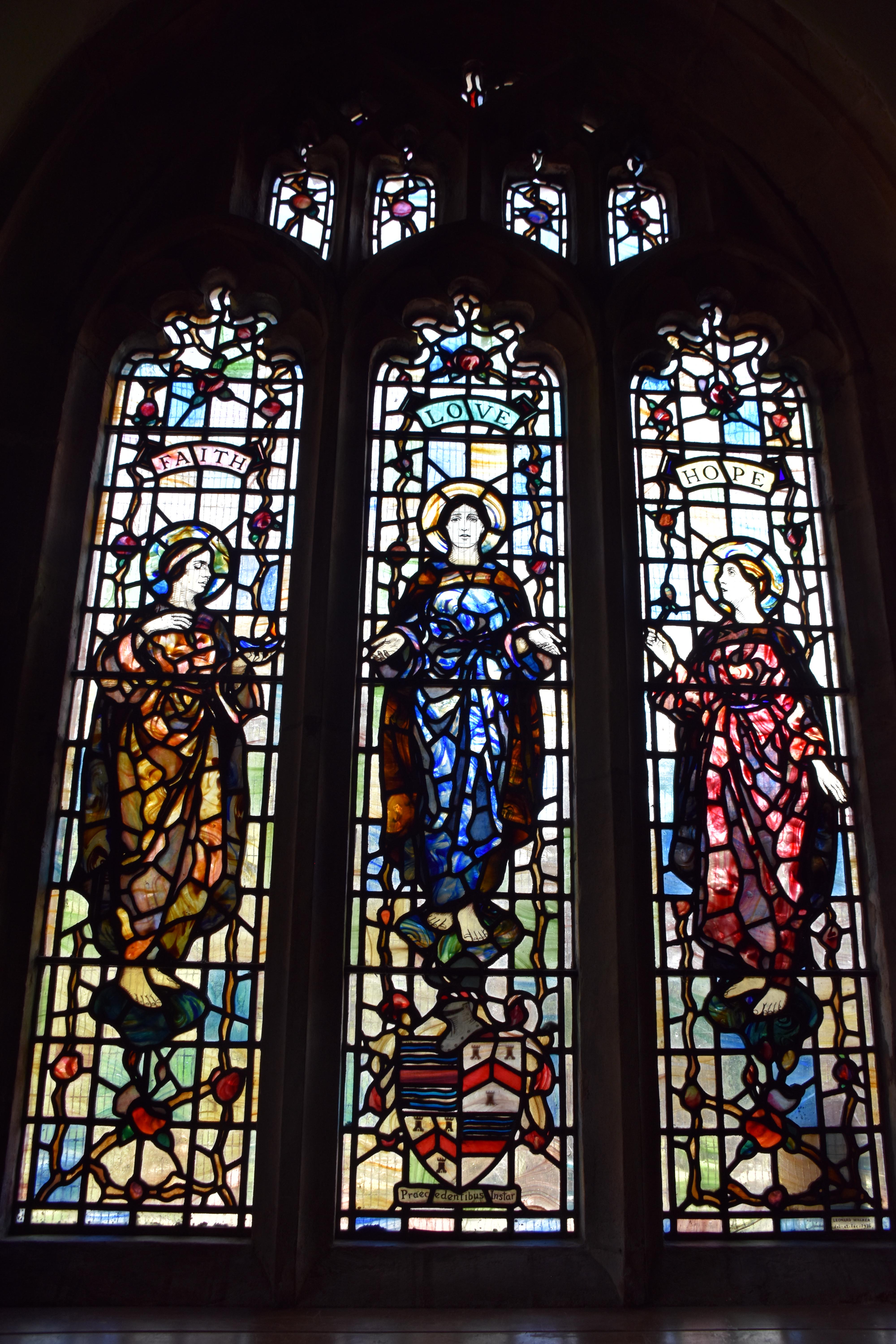
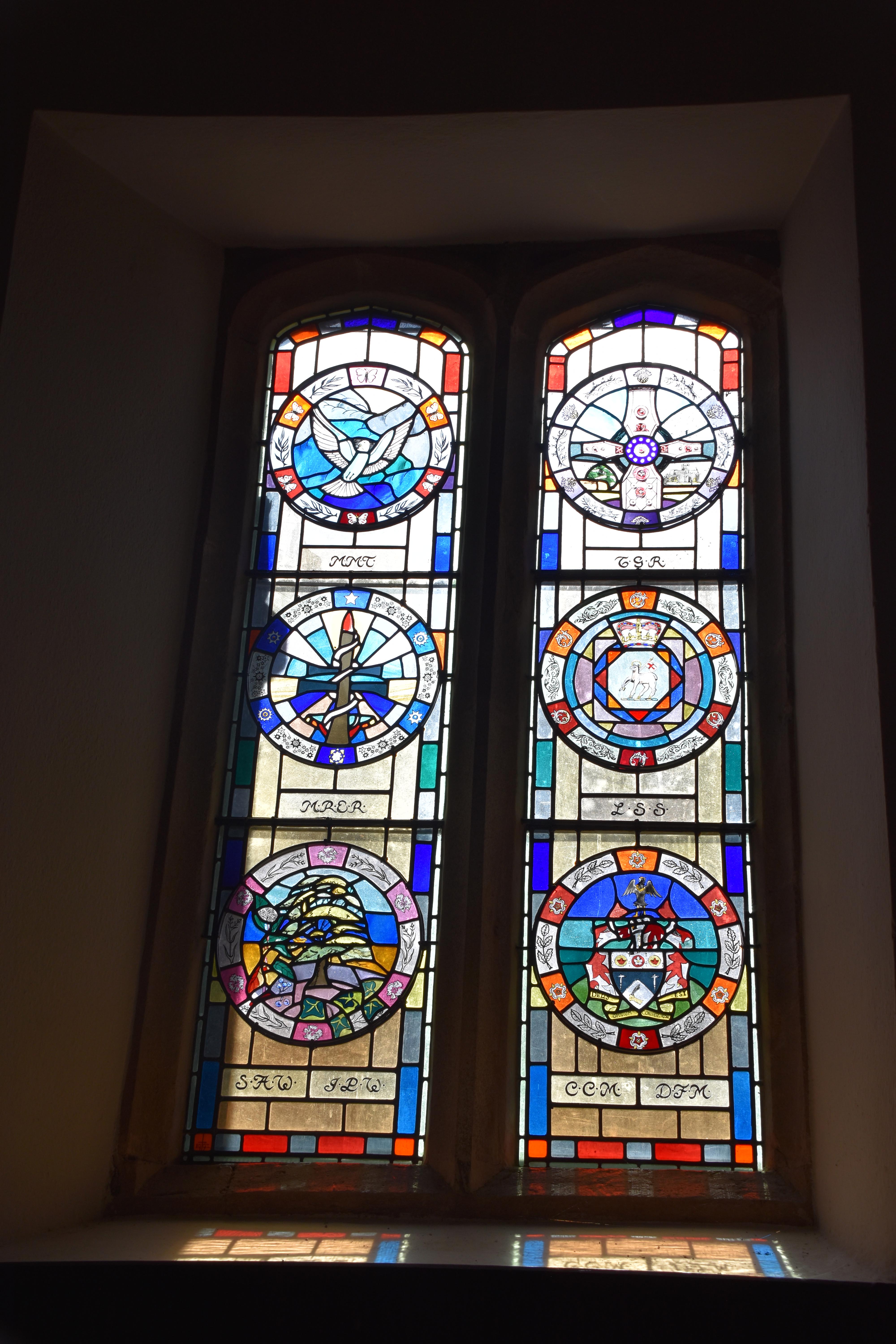
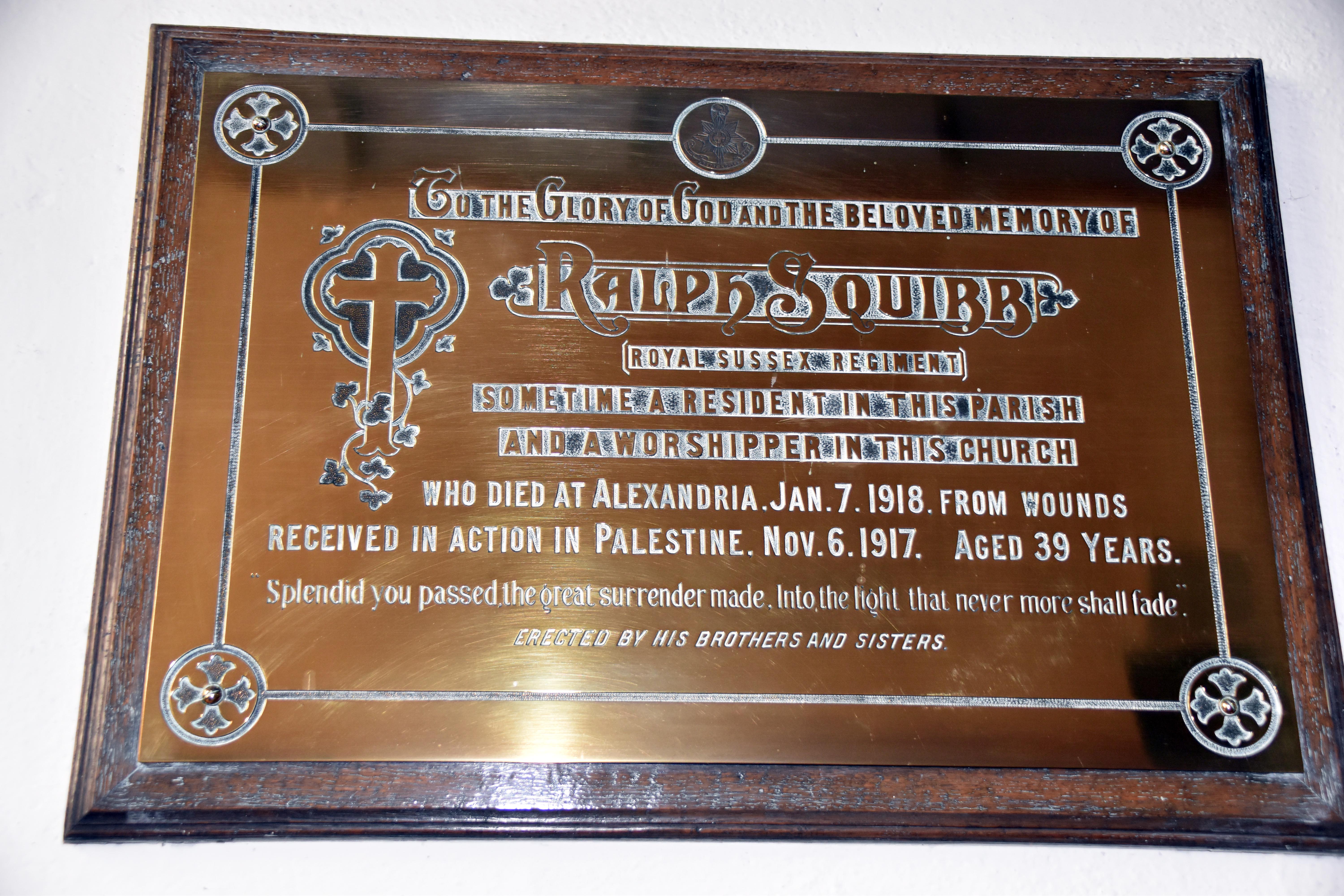
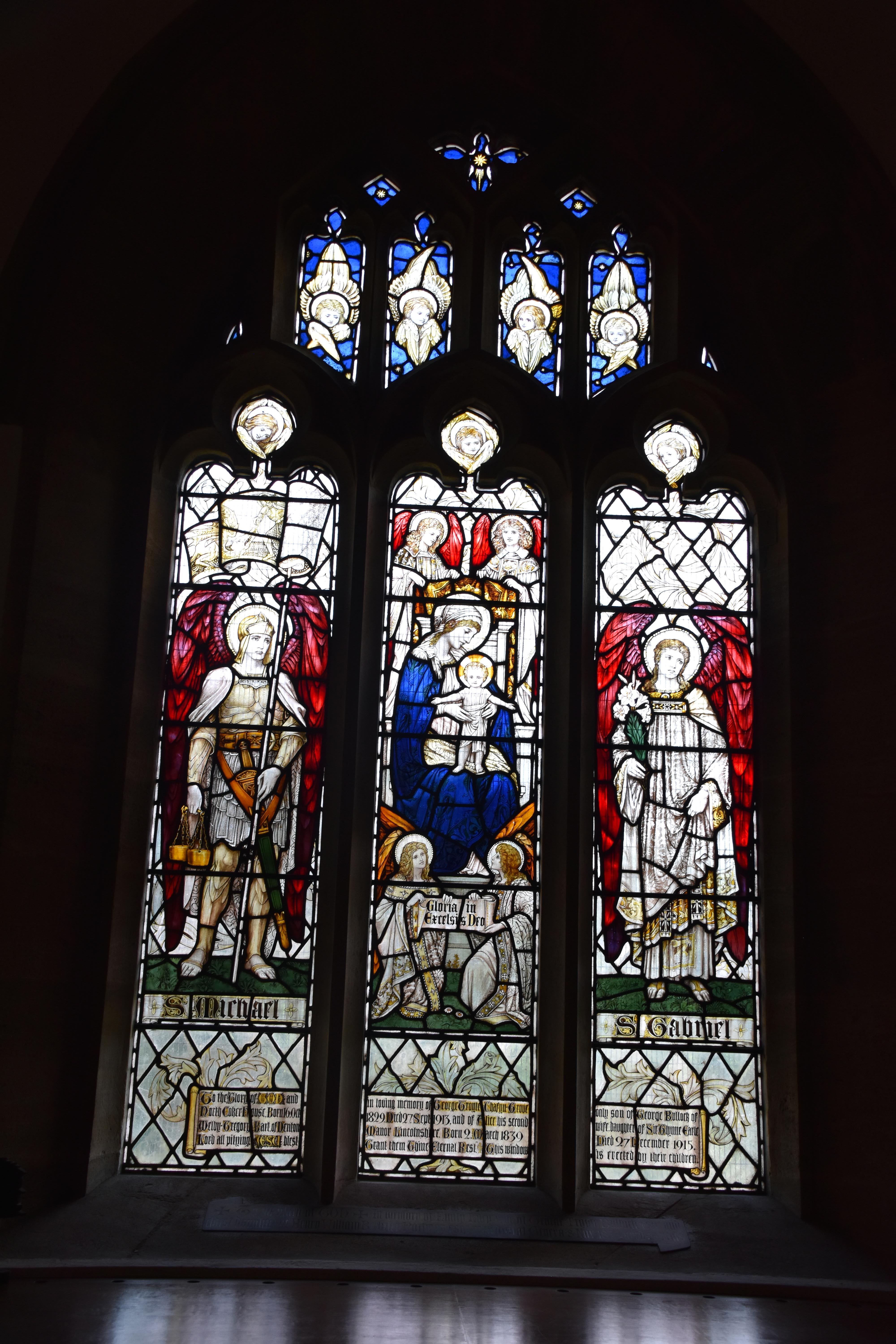
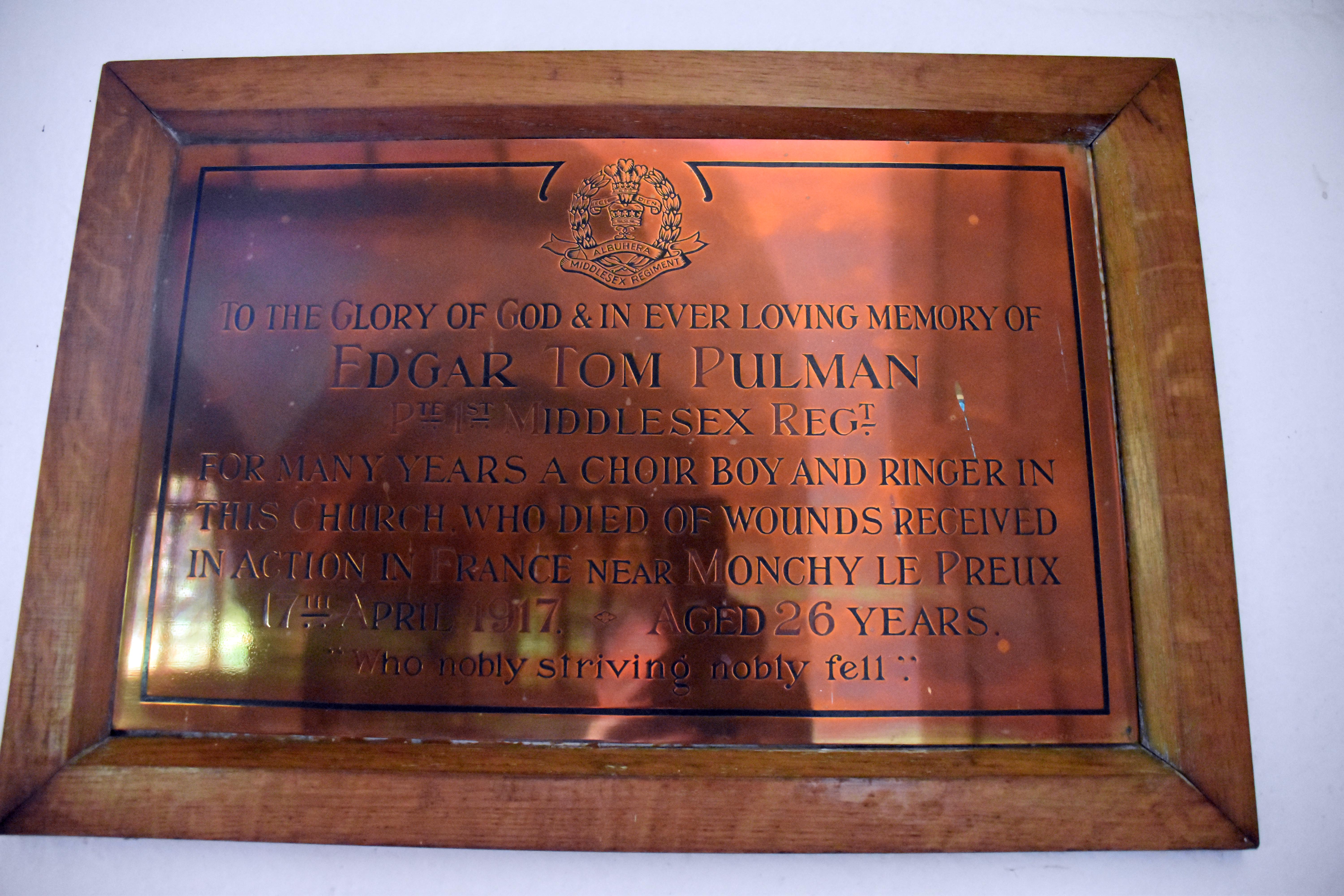
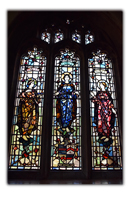
Back in the church, there is an imposing war memorial again showing the depth of sacrifice of small communities like East Coker, and perhaps confirming to T. S. Eliot why he felt that English roots ran deep with blood and sacrifice. There are some beautiful stained‑glass windows throughout the church, but funnily there is one that T. S. Eliot actually disliked intensely and did not hold back on his criticism of it. Ironically it was put there by a cousin of his in 1936 to celebrate the original Andrew Eliot who had left East Coker for New England back in the 17th century. T. S. Eliot said of his kinsman’s addition to the church: “The only ugliness in the place is a stained‑glass window in the church, recently erected by some cousin of mine — the most hideous I have seen.” He certainly did not hold back. It is definitely ‘different’ and probably in the 1930s felt very avant‑garde in its daring use of colours and shadings, but perhaps for T. S. Eliot this modernism somewhat grated in this church whose history spanned all the way back to the 12th century.
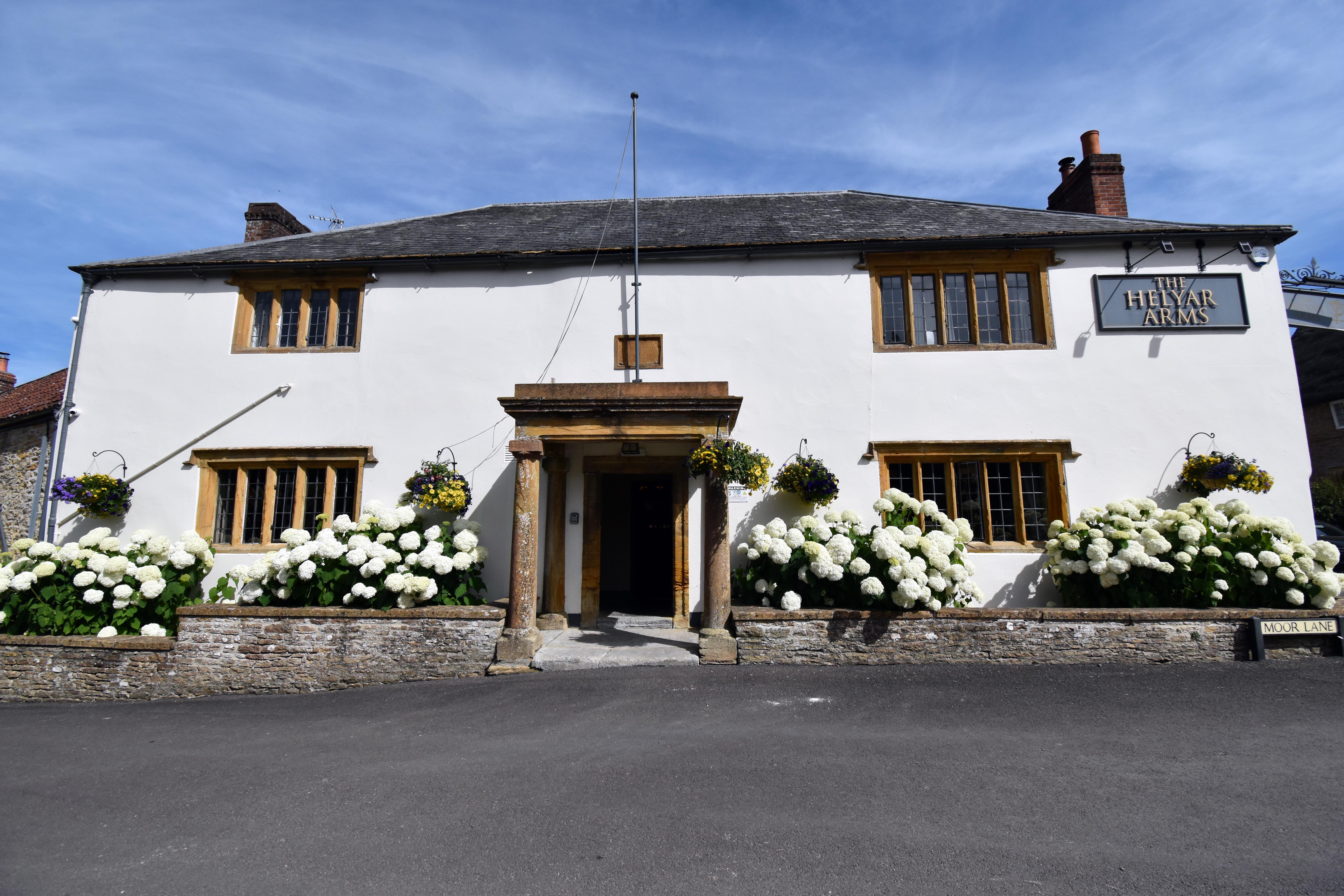
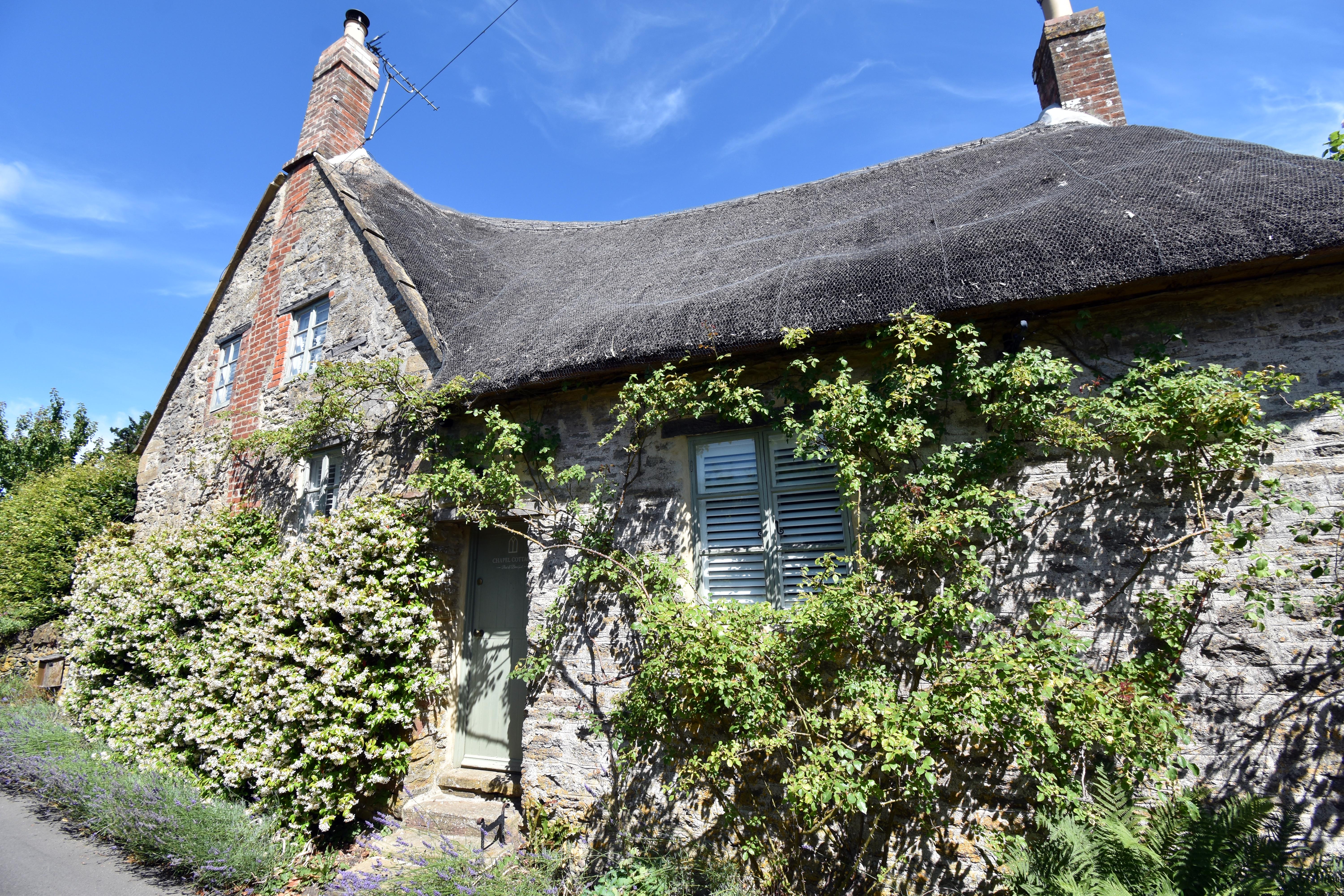
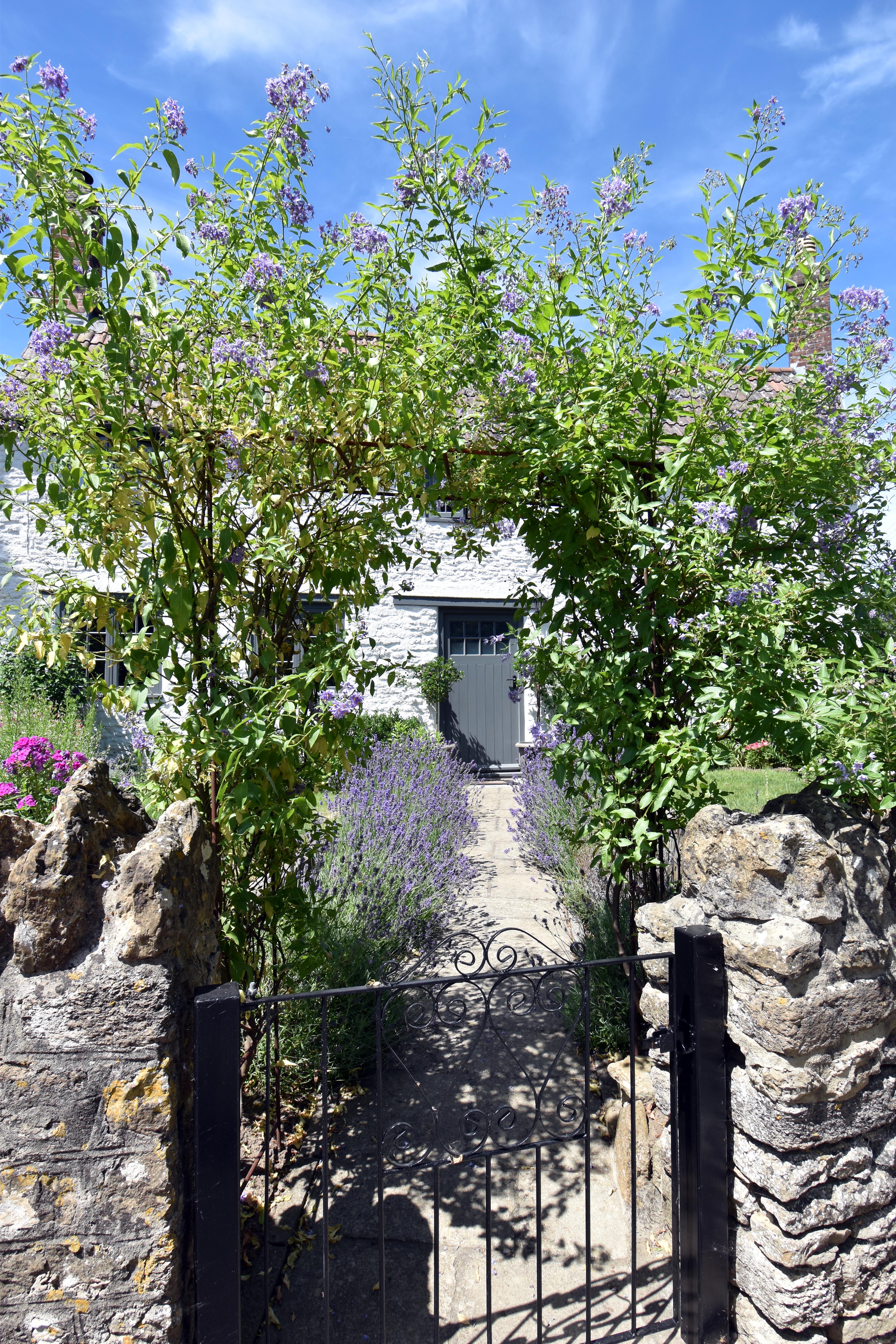
After exploring the church, I walked back down past the almshouses to head towards the Helyar Arms. There were some beautiful cottages with gorgeous flowers looking quintessentially like fudge‑box covers for the Somerset tourist industry. I then turned north to follow some of the paths, but not before passing the curiously named St Roch Cottage with its attached chapel. It reminded me of the chapel in Trewint in Cornwall I visited a few months ago with its tiny chapel and meeting room attached to a cottage. St Roch is a Cornish saint too, so one wonders if a Cornish Methodist preacher had a hand in setting up this particular chapel. Sadly it is no longer a religious house, but it looks like you might be able to stay here as accommodation, and what a beautiful location it would be too.
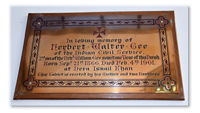
|
|
|
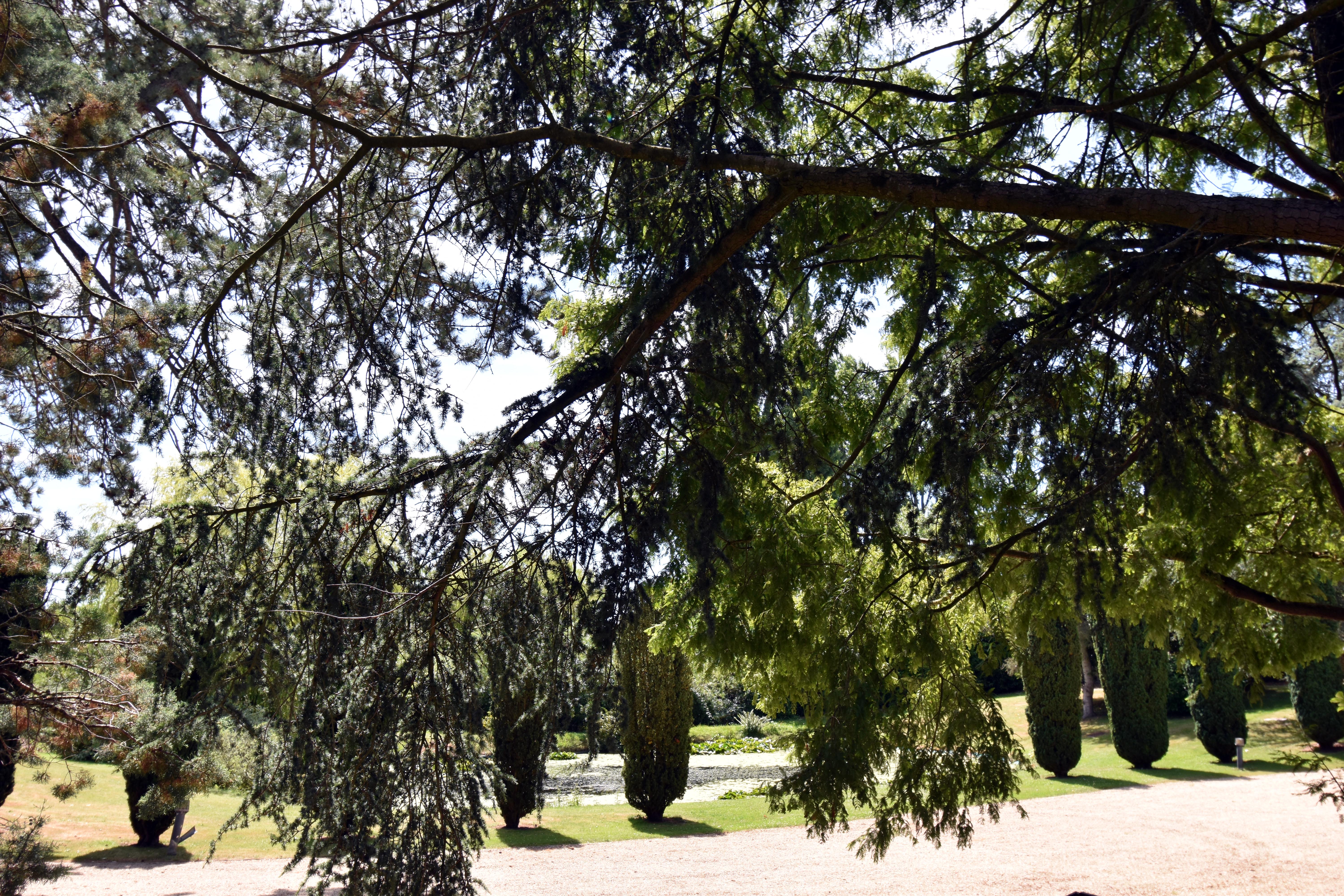
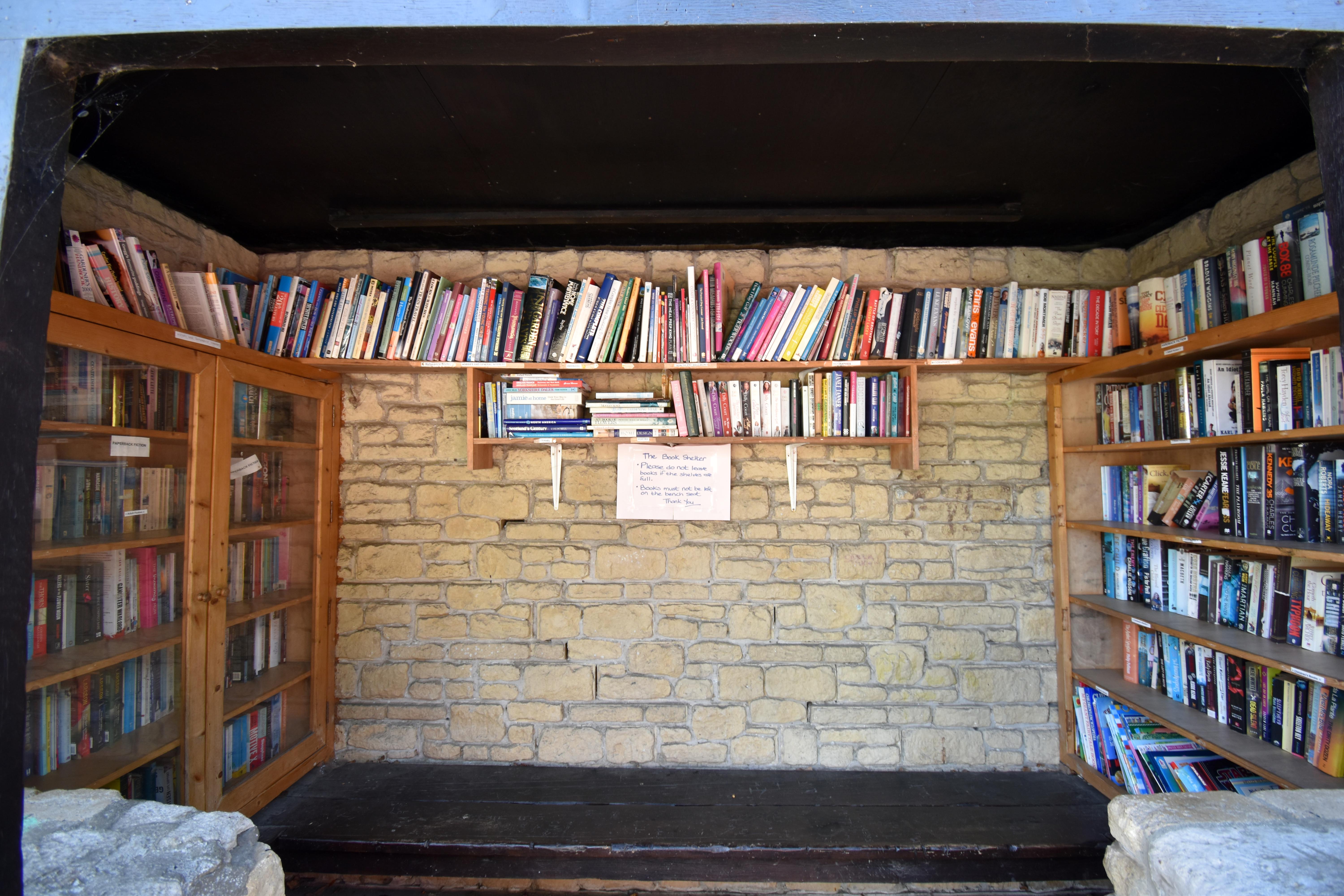
I then walked some of the country paths before heading back into the village in order to see William Dampier’s birthplace. It was looking lovely in the sun, but unless you knew your history you probably would pass this building by as just one more pretty building amongst so many others. Walking up the Main Street there was a bus stop which had been converted into a community library. I kept going into what was technically North Coker before turning north and walking through some amazing sunken pathways more like tunnels than tracks. I was heading north to try and find the old priory of Naish. It was a sweltering day with fecund fields accompanying us to the beautiful old early 15th‑century building. Now despite its name, this may not actually have been a priory. It appears that a later landowner called it this to try and give the building more history than it actually needs. Again those ubiquitous Devon Courtenays are probably responsible for this building, perhaps moving here from Coker Court. There are Courtenay coats of arms and also corbel heads of Henry IV and Joan of Navarre, whom the Courtenays served at the time. The building certainly looks old, but if you glimpse over the walls you can see gardens more akin to the formal gardens of a manor house than a working farm that a priory would more likely have required.
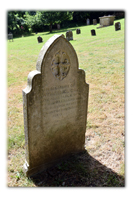
|
|
|
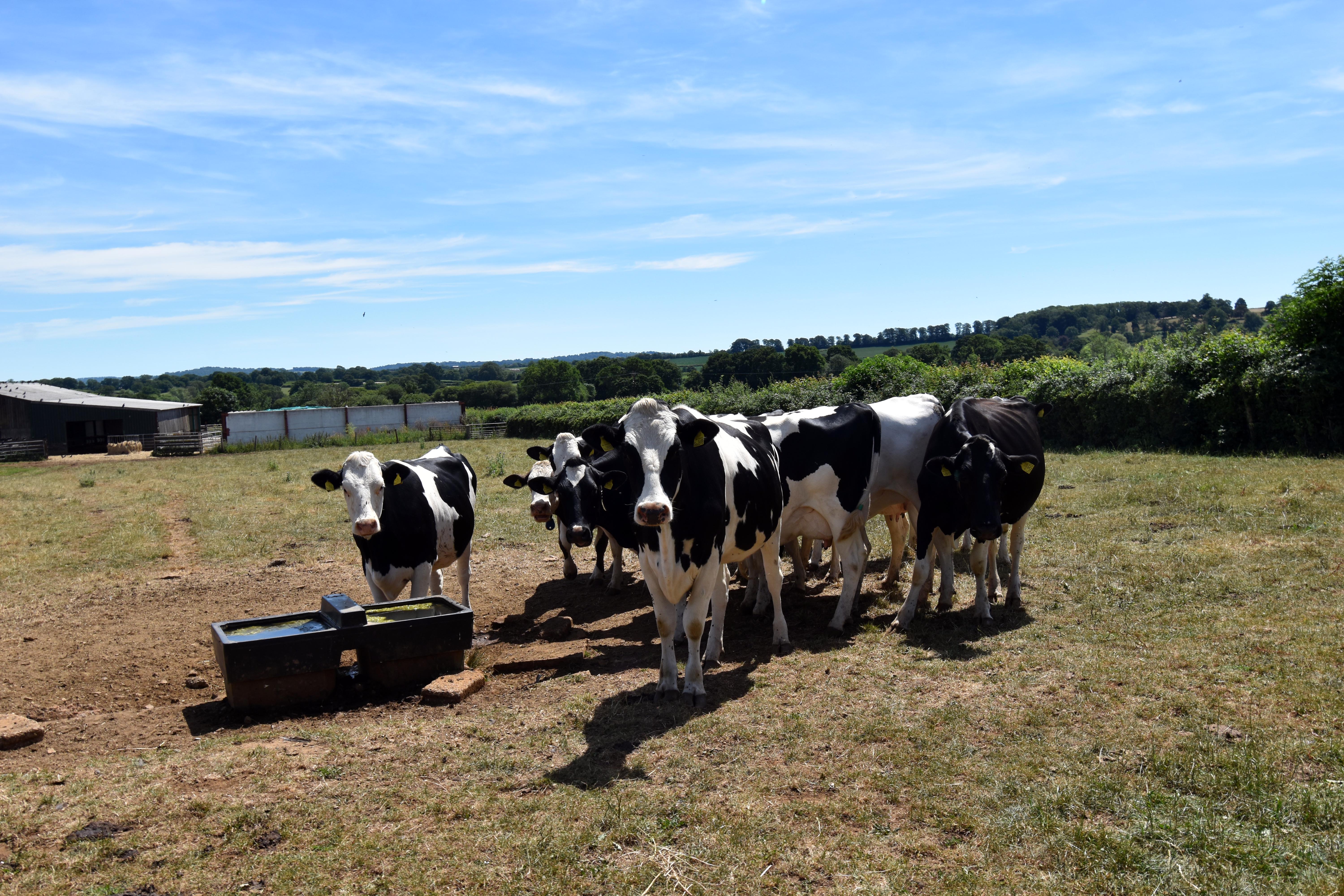
But I was not finished with layers of history yet as I continued a circumnavigation around the village, this time looking for an even older layer of history — this time a Roman villa. I was excited to see some on the Ordnance Survey map, but was to figure out that actually it is in the wrong place on the OS map, which was a bit annoying. Whilst referring to some local noticeboards and the Historic England website, I was to see it was to the south‑west of its location marked on the map, just north of what is called Dunnock’s Lane. Sadly there is nothing to see any more other than a field of cows. However, in the second half of the 18th century a Roman villa complete with underfloor heating, pottery, coins and a full‑on Roman mosaic was discovered here. That mosaic can now be seen in the Museum of Somerset in Taunton. But even though there is nothing to see, I still get a kick out of thinking that just shy of 2000 years ago Romans or possibly Romano‑British were living an incredibly privileged lifestyle by the standards of the time in this beautiful location. There is the Roman Dorchester to Ilchester road nearby and other villas have been discovered suggesting that they did have neighbours. would be too.

|
|
|
Again, this antiquity in history can be related to T. S. Eliot’s idea that there are not just centuries but millennia of history that underpin the culture of places like this. The Romans were keen to take the best quality farmland and this helps explain why England and the Celtic fringes would begin to diverge, as Romans were less taken with the hillier landscapes of Cornwall, Wales and Scotland. Saxons would later largely replace the Romano‑British, helping the culture of England diverge somewhat from that of their Celtic brethren. Hence earlier I talked about English culture, which is what I think T. S. Eliot was talking about in his poem, although he does not explicitly say that. But I think he was identifying with this Romano‑British / Saxon / Norman culture rather than the equally fascinating but different path of the Celtic fringes. As someone who lives on the border of this Saxon and Celtic world in Plymouth in Devon but within sight of Cornwall from my bedroom and with a genuinely mixed Saxon‑Celtic surname of Luscombe, I feel that I have a foot in both camps and can appreciate both of these historical trajectories. But today I was undoubtedly exploring the English part of this journey — the part that spoke to T. S. Eliot, who as an American also felt part of this English historical development. And in East Coker you can see almost the quintessential English village with its incredibly deep roots but also producing people like William Dampier and the Eliots themselves, who were also not afraid of the wider world and were keen to explore and settle it and undoubtedly took their culture with them on those journeys. They helped to make the modern world but from a place with very deep roots: “In my beginning is my end” and “In my end is my beginning” indeed!
|