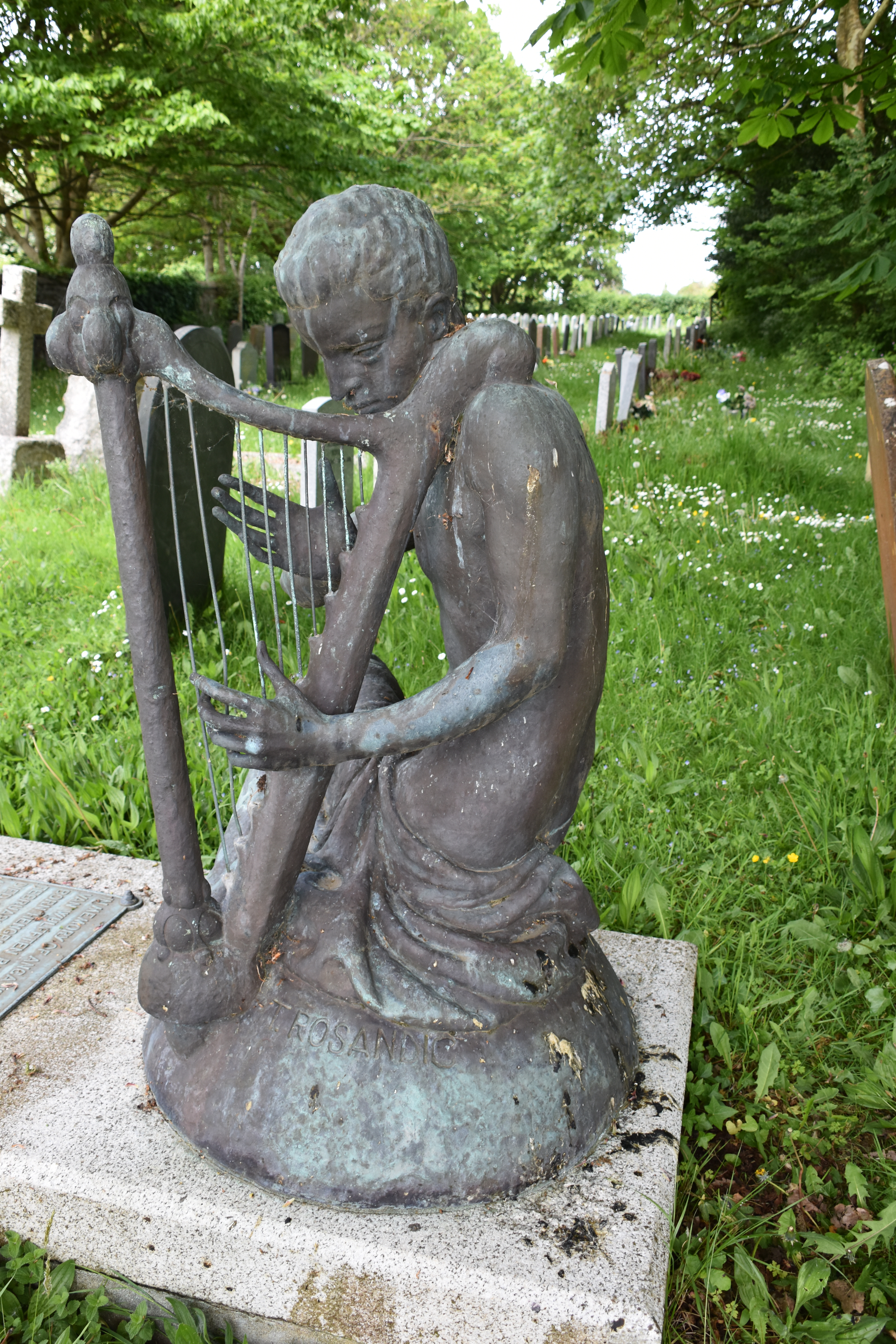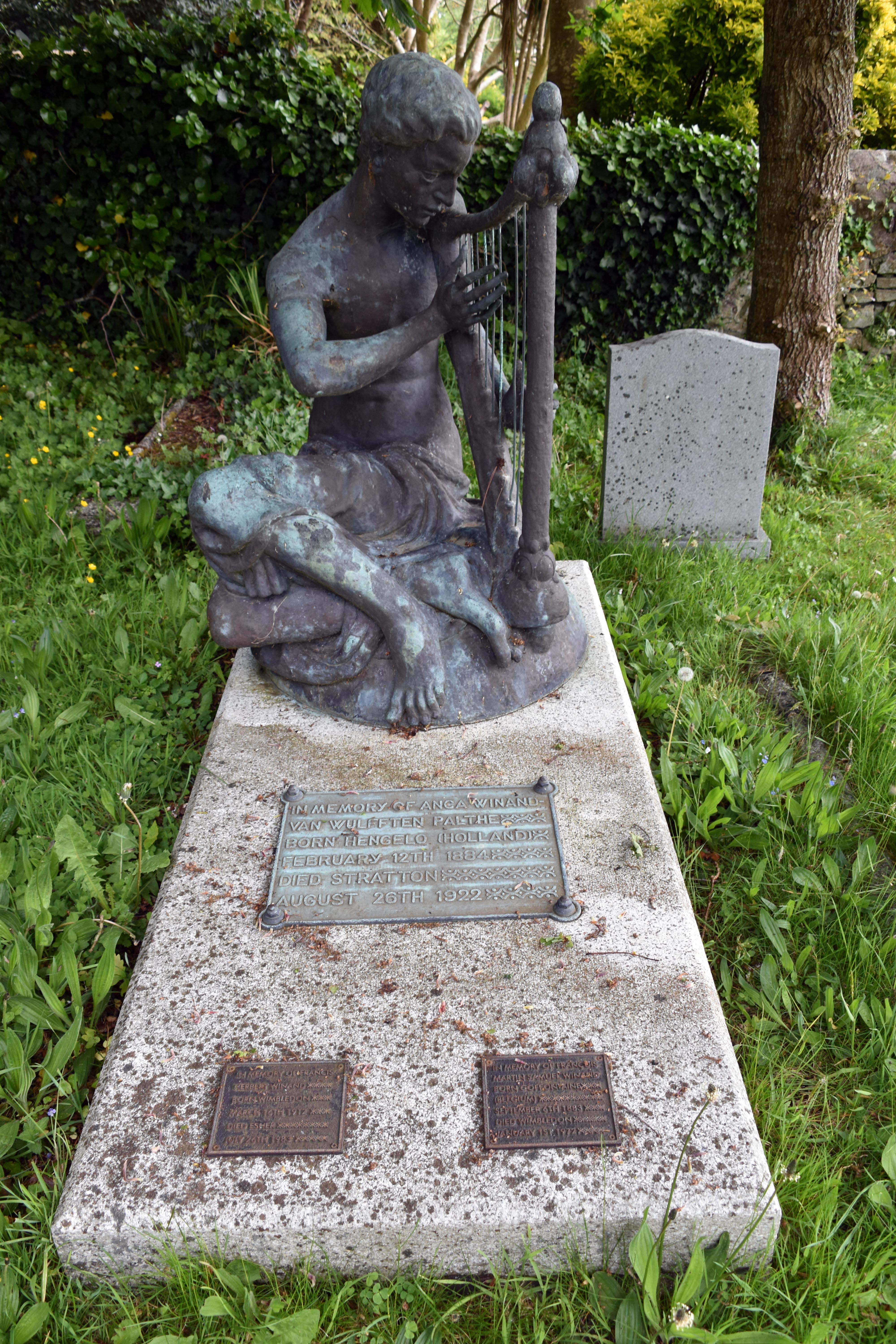
Among the graves at St Andrew’s, Stratton, one of the most striking is that of Anca Winand van Wulfften Palthe, born in Hengelo, Holland, in 1884 and buried here in 1922. The grave is marked by a full mermaid statue, an unusual and visually prominent memorial that immediately distinguishes it from the surrounding stones. The sculpture was created by the Yugoslav artist Toma Rosandić, who had come to Britain from Serbia during the First World War and later became one of the leading sculptors of the inter‑war period. His involvement gives the grave a significance far beyond the parish, linking it to the wider European artistic world of the early twentieth century.
Little is known about Anca’s life in Stratton, but the presence of such a memorial indicates that she was not an anonymous visitor. The inscription records her Dutch origins and her death far from her birthplace, suggesting that she had settled in the district or had close connections with those who lived here. The choice of a mermaid figure is unusual for a churchyard monument and may reflect personal symbolism, family preference or a connection to maritime themes. Rosandić’s work often incorporated strong figurative forms, and the mermaid here is consistent with his style of combining mythological imagery with expressive modelling.
The circumstances of Anca’s death are not recorded on the stone, but the date of 1922 places it within a period when influenza and post‑war illness remained widespread. Many communities in Britain experienced continuing health problems in the years immediately after the First World War, and it is possible that she was affected by such conditions. Her relatively young age and the decision to commission a major sculptural work suggest that her death was unexpected and that she was held in considerable regard by those who arranged her burial.
Rosandić’s presence in Britain during the war years is well documented. He had fled the Balkans during the Austro‑Hungarian occupation of Serbia and worked in London before returning to Yugoslavia in the 1920s. His commissions in Britain were limited, making the Stratton mermaid one of the few surviving examples of his work in the country. The statue therefore has both local and international significance: locally as a memorial to a Dutch woman who died in Cornwall, and internationally as a rare British example of Rosandić’s sculpture.
The grave also illustrates the capacity of small Cornish communities to absorb individuals from far beyond their immediate region. Anca arrived as a foreigner, yet her burial in a prominent position and the commissioning of a major sculptural work indicate acceptance and respect. The memorial stands as a reminder of the mobility of people in the early twentieth century and of the personal stories that brought individuals from continental Europe to rural Cornwall. It remains one of the most distinctive monuments in the churchyard and a rare example of continental artistic influence in a parish setting.