The history of Coker Court in the seventeenth century is inseparable from the early generations of the Helyar family, whose rise from Devon clerical origins to Somerset gentry status was shaped by a sequence of inheritances, marriages and political circumstances. The line begins with Archdeacon William Helyar, born in 1559 and baptised at St Budeaux, Devon, the son of William Helyar and Alice Veale. Educated at Exeter College, Oxford, he held a succession of ecclesiastical posts across Devon before becoming Archdeacon of Barnstaple in 1605 and serving as chaplain to Queen Elizabeth I. In 1616 he purchased Coker Court from Sir Edward Phelips, bringing the manor into the hands of a family whose influence in East Coker would endure for more than three centuries. He began the construction of the Helyar Almshouses in 1640, though he died in 1645 before their completion.
His marriage to Mary Cary of Cockington produced several children, including Henry, Elizabeth, a younger son also named William, and daughters Mary, Phillis and Grace. Henry, the eldest son, married Christiana Cary of Clovelly but died in 1634, leaving a young son, William, born in 1621 and baptised at Exeter Cathedral. Because Henry predeceased his father, the succession passed directly from the Archdeacon to his grandson. The Archdeacon’s younger son William, although present in parish records, played no part in the inheritance of Coker Court, which followed the standard pattern of primogeniture.
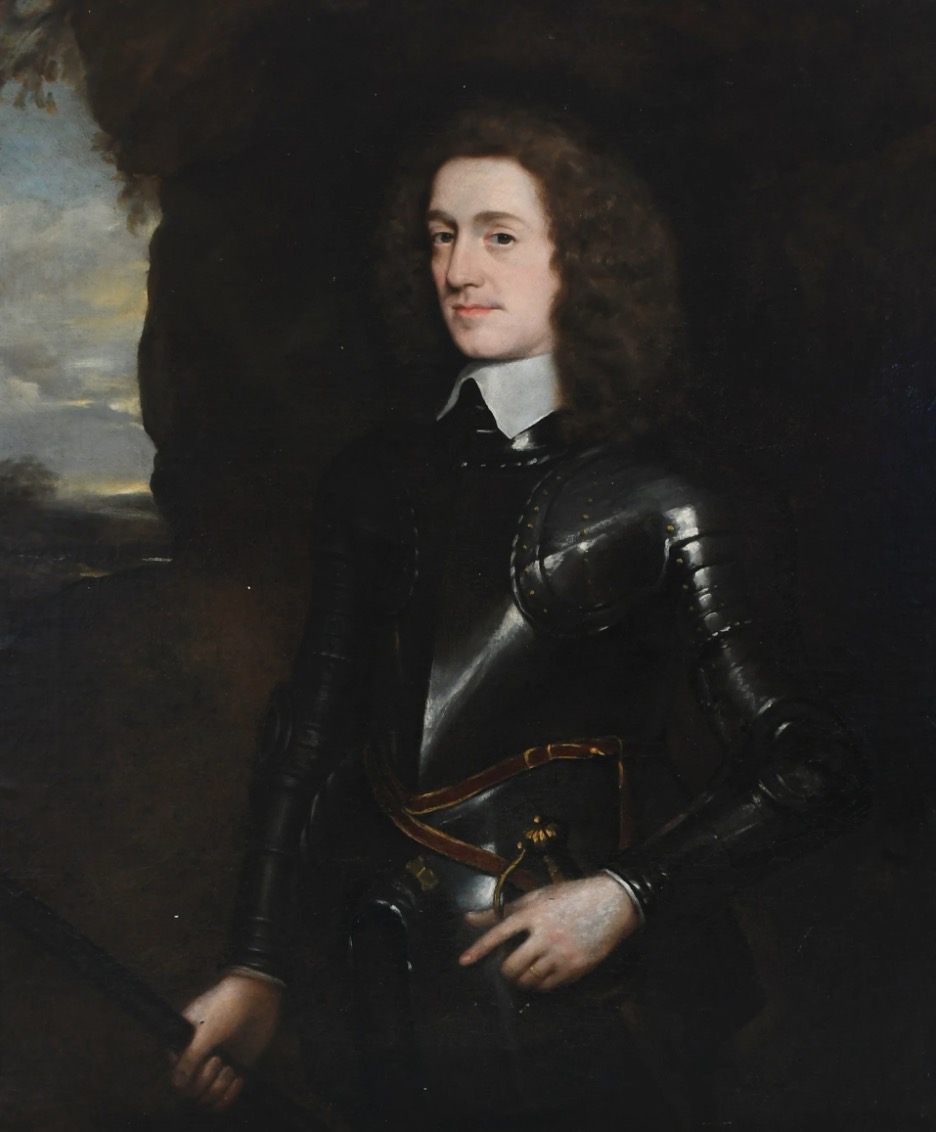
The heir, Colonel William Helyar, matriculated at Exeter College in 1637 aged fifteen and entered Lincoln’s Inn in 1638. His portrait, three‑quarter length and wearing armour, reflects his Royalist service during the Civil War. He was present in Exeter at its capture by Parliamentary forces in 1646 and compounded as a delinquent, paying £1,522. Letters Patent of Charles I dated 6 November 1648 granted him a pardon for treasons committed since May 1642, issued “By order of Parliament” at a moment when the King was a prisoner at Hampton Court. He served as Sheriff of Somerset in 1661 and remained the central figure at Coker Court until his death in 1697.
His will, dated 1 February 1695/6, refers to “my plantation in Jamaica called Bybrook” in the parish of St Thomas, and to the almshouse founded by his grandfather. He named his sons William, John and Richard, and probate was granted on 15 December 1697. He was buried on 2 January 1698 at Whitchurch Canonicorum, Dorset. The Jamaican plantation is documented in extensive correspondence from William Whaley, the Helyars’ agent, who reported sickness on the estate, deaths among enslaved workers, and an uprising of “one hundred Negroes upp in Armes” who killed several white men and destroyed plantations in St Mary’s parish. Whaley described thefts, trials, shortages of skilled white servants, and the purchase of enslaved people, tools, horses and coppers. A deed of 15 August 1673 transferred to Colonel William fifty enslaved people, four coppers with ladles, nine horses and mares, and seven white servants formerly belonging to Cary Helyar.
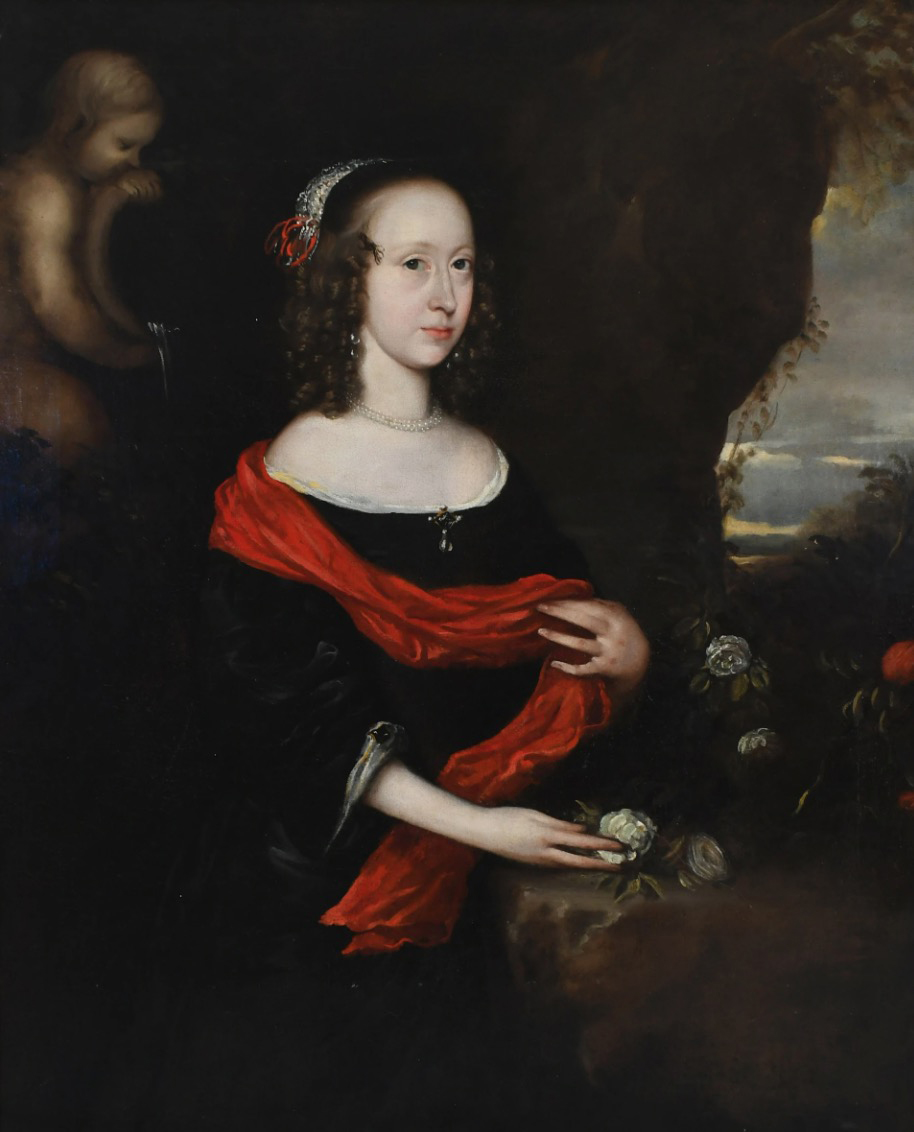
Colonel William married Rachel Wyndham, daughter of Sir Hugh Wyndham of Pilsdon Court. Her portrait, three‑quarter length and set in a landscaped garden with flowers and a fountain, forms a companion to her husband’s martial likeness. The marriage linked the Helyars to one of Dorset’s prominent gentry families and placed Rachel at the centre of the household during the period in which the estate was consolidating its position in Somerset and extending its interests to Jamaica. Although documentary references to her are limited, her portrait and her position within the succession make her an essential figure in the history of Coker Court.
The couple’s eldest son, William Helyar, born on 10 July 1662, inherited Coker Court and continued the family’s political and estate interests. Educated at Trinity College, Oxford, and Lincoln’s Inn, he served as Sheriff of Somerset in 1701–1702 and sat in Parliament for Ilchester in 1689–1690 and for Somerset in 1715–1722. He voted consistently as a Tory and did not stand again after 1722. He inherited the Jamaican plantation lease and maintained the family’s colonial connection into the eighteenth century. He died in 1742.
Later generations remodelled Coker Court, most notably in 1766 when William Helyar (d.1820) commissioned Joseph Dixon to design a new Georgian wing, built by Sir William Chambers. Around 1900 a servants’ wing was added to the south and west. The Helyars remained lords of the manor until the death of Mrs Dorothy Walker‑Heneage (née Helyar) in 1947, the last of the line. The portraits of Colonel William and Rachel, taken together with the surviving correspondence and estate papers, provide a coherent picture of the family’s rise, its connections in Devon, Dorset and Somerset, and its involvement in Jamaica during the later seventeenth century.