 |
|
|
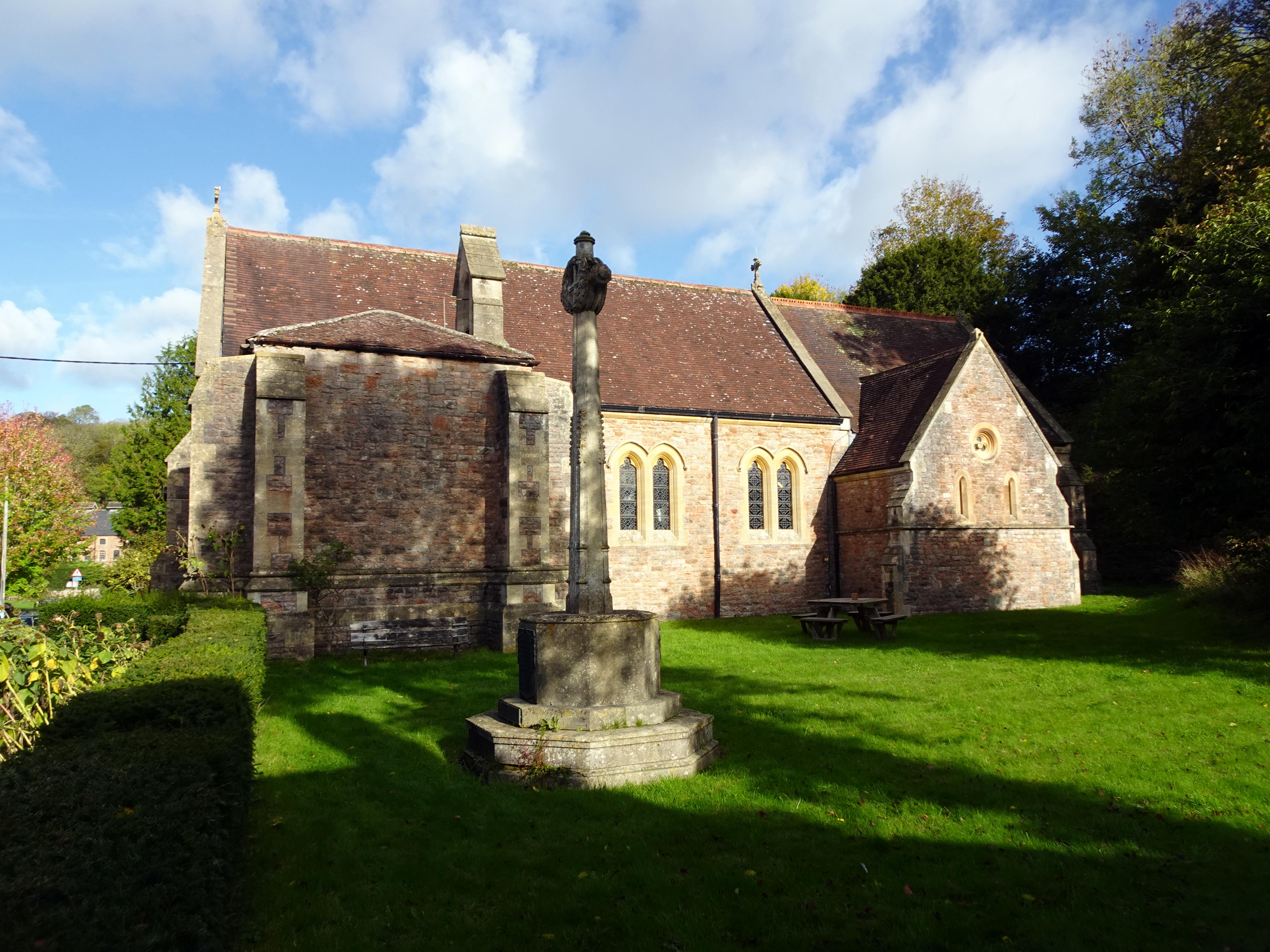
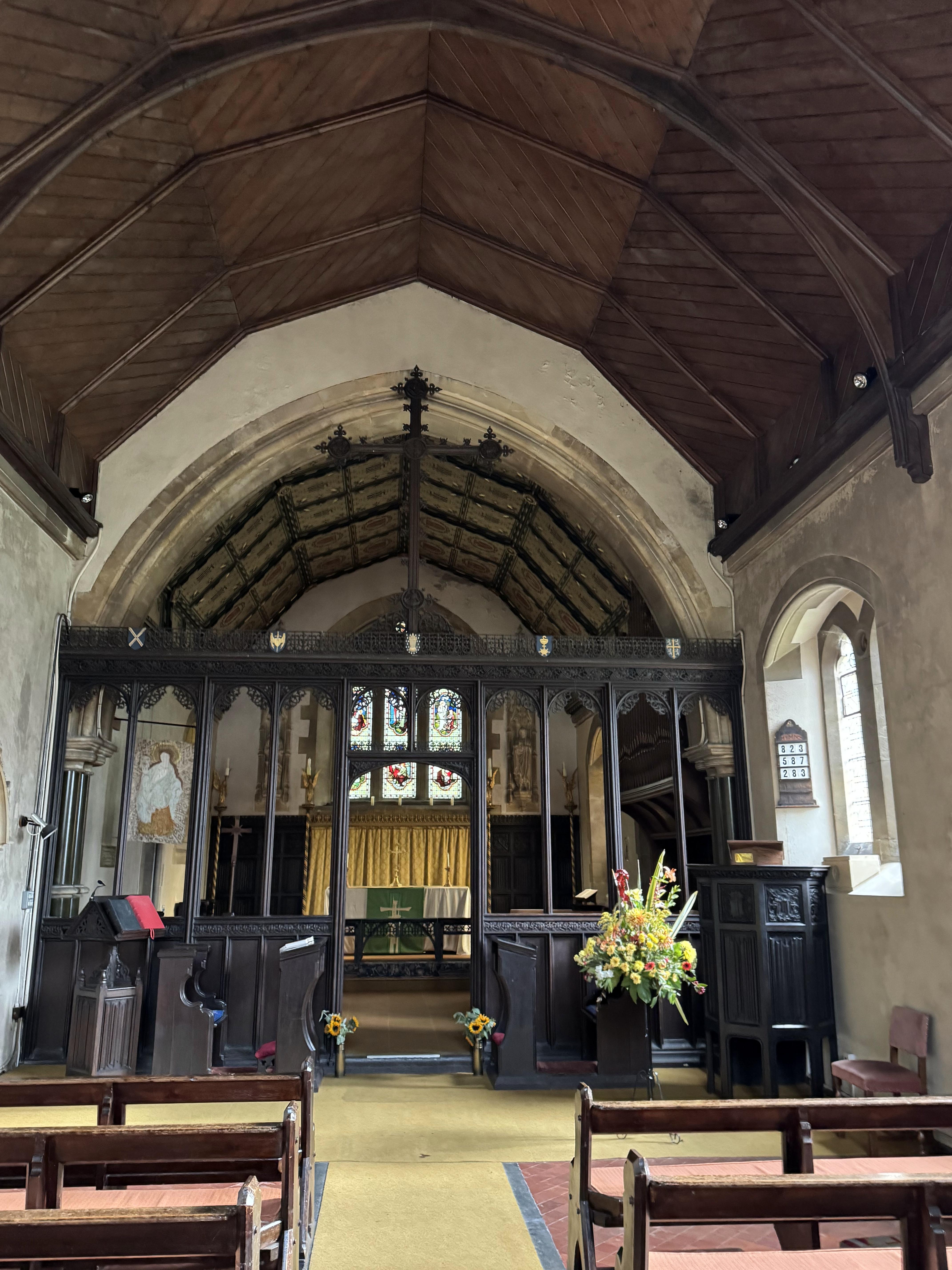
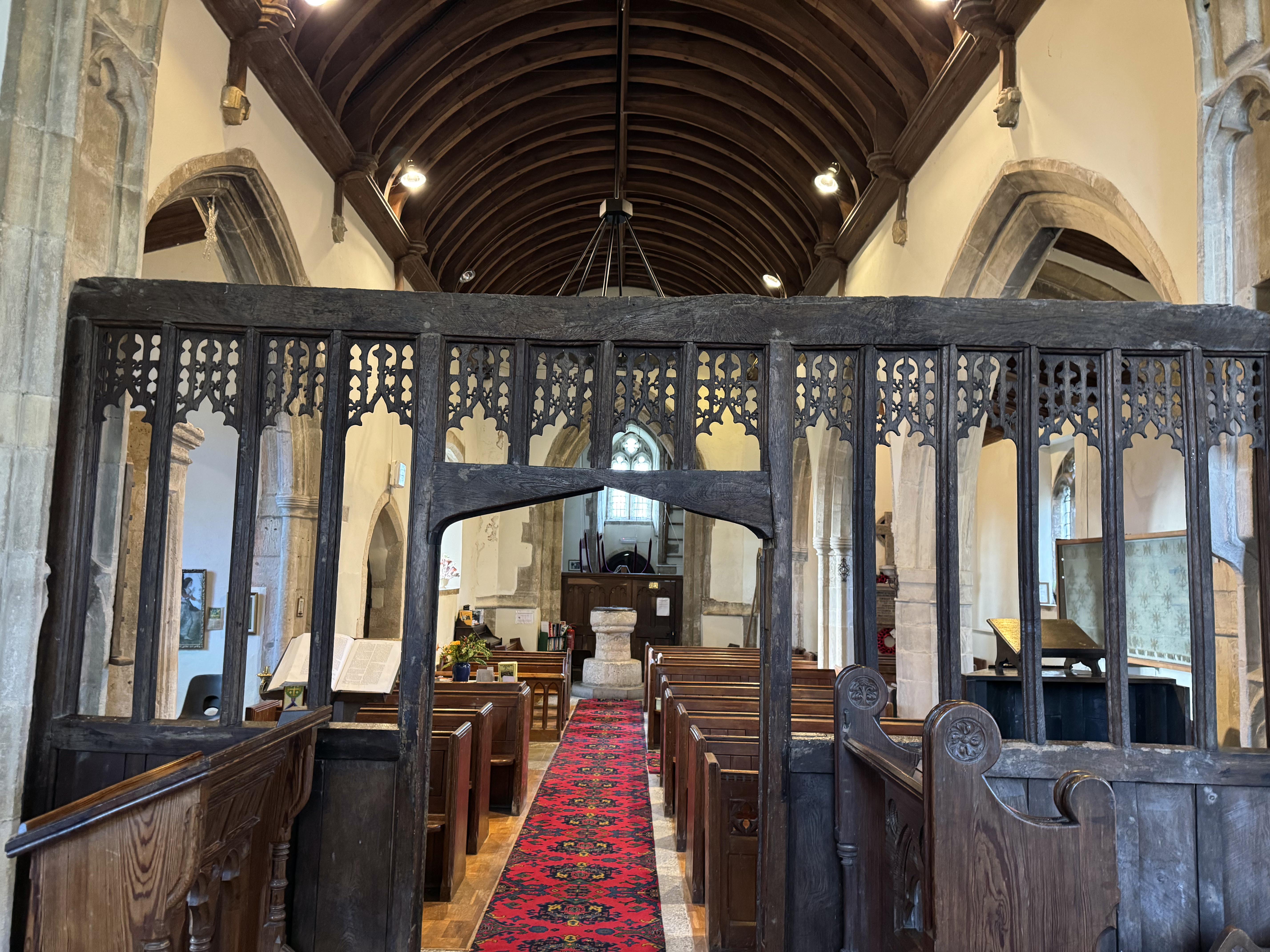
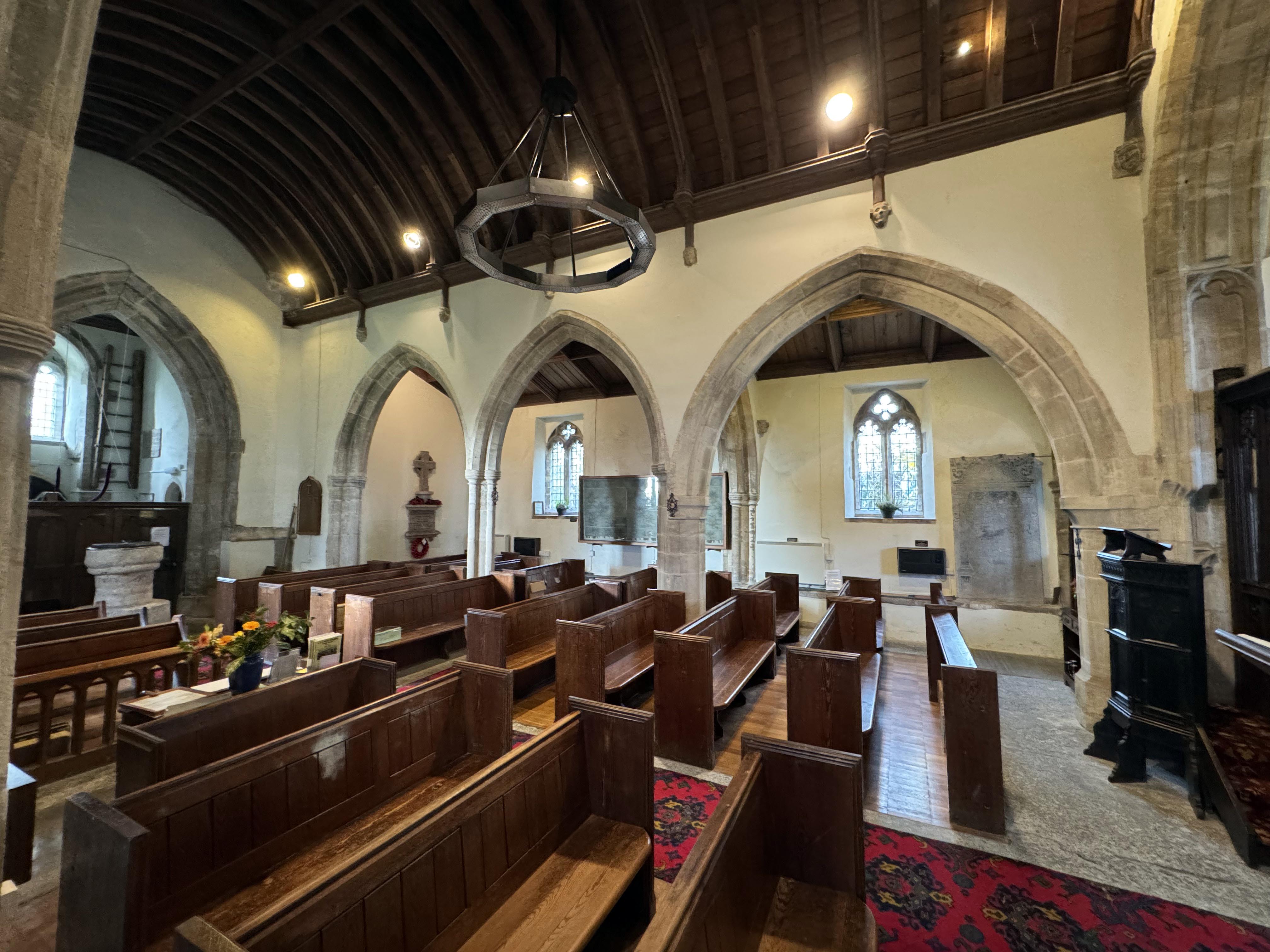
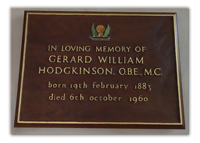
In late October, Rupert and I were further afield from our normal bailiwick up in North Somerset. We parked at Wookey Hole (that of course is a pre-Star Wars Wookey). Being half term there were hundreds of families heading for the tourist attraction of the caves and circus school which the area is famous for. Rupert and I on the other hand were more interested in the local history and the fascinating geography to explore. We parked right outside St Mary Magdalene church which is actually a relatively new church by Church of England standards. It was funded by the local paper mill owners - the Hodgkinsons. You can see the name Hodgkinson recurring again and again on plaques and memorials within the 1874 church. The Paper Mill buildings which made their fortune are still standing and form the basis of the Wookey Hole tourist attraction. In the Victorian era, rich industrialists would often reinvest their profits in to community assets like this church and they also constructed housing for their workers and club that is still on operation to this day. This unified building at the instigation of a single family made for a very pleasing unified architecturally sympathetic village. I would say projects like this beat our modern mega rich who spend their money on yachts and space programmes!
 |
|
|
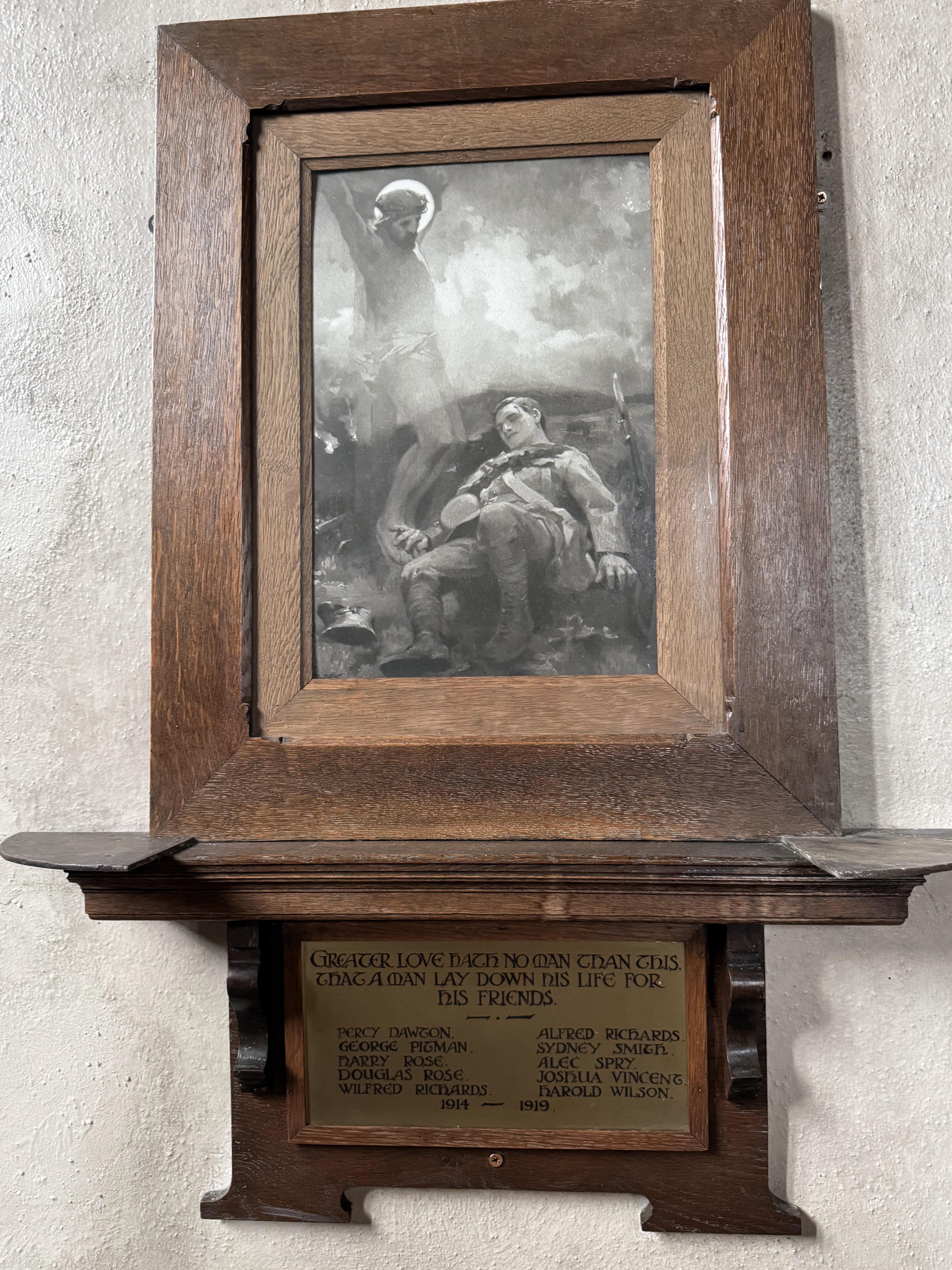
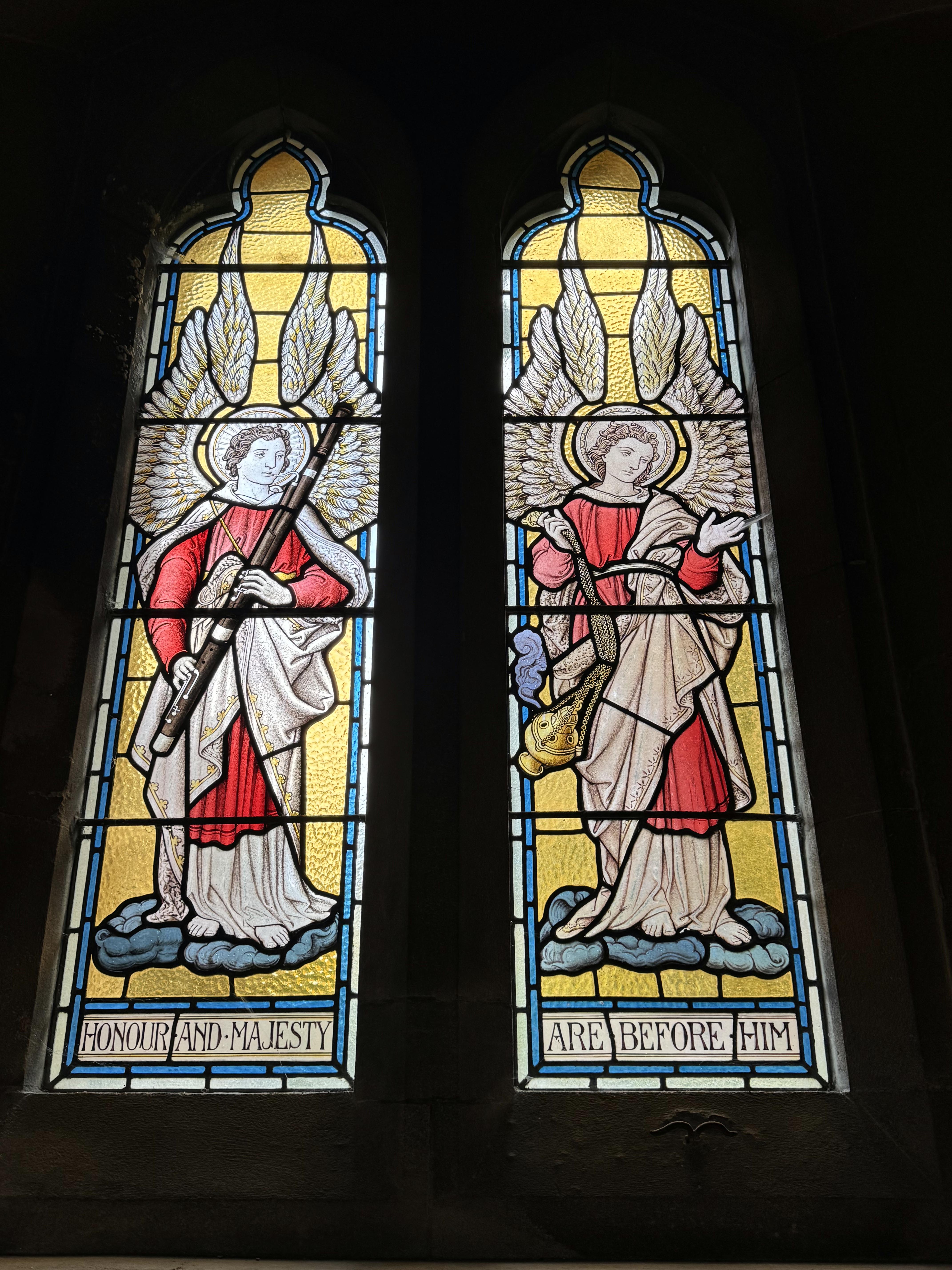
The fact that the church was built from scratch in the era of high church architecture from scratch means that it also has an internal unified architectural style with no requirements to incorporate Medieval or Gothic intrusions like most churches had to. There was a significant upgrade in 1921 but these would still have been by designers and artisans schooled in the Victorian age. The best example of this unified work is the magnificent ceiling sitting behind the ornate rood screen. There are also some particularly fine stained glass windows. Oh and a magnificent 1880 organ that really does look like a relic from history but a beautiful one nonetheless. There was also a very interesting World War One memorial with a touching bit of artwork depicting a fallen soldier on the battlefield with Christ appearing above him. Although sentimental such an image may well have offered solace to members of the village who lost loved ones in the conflict.
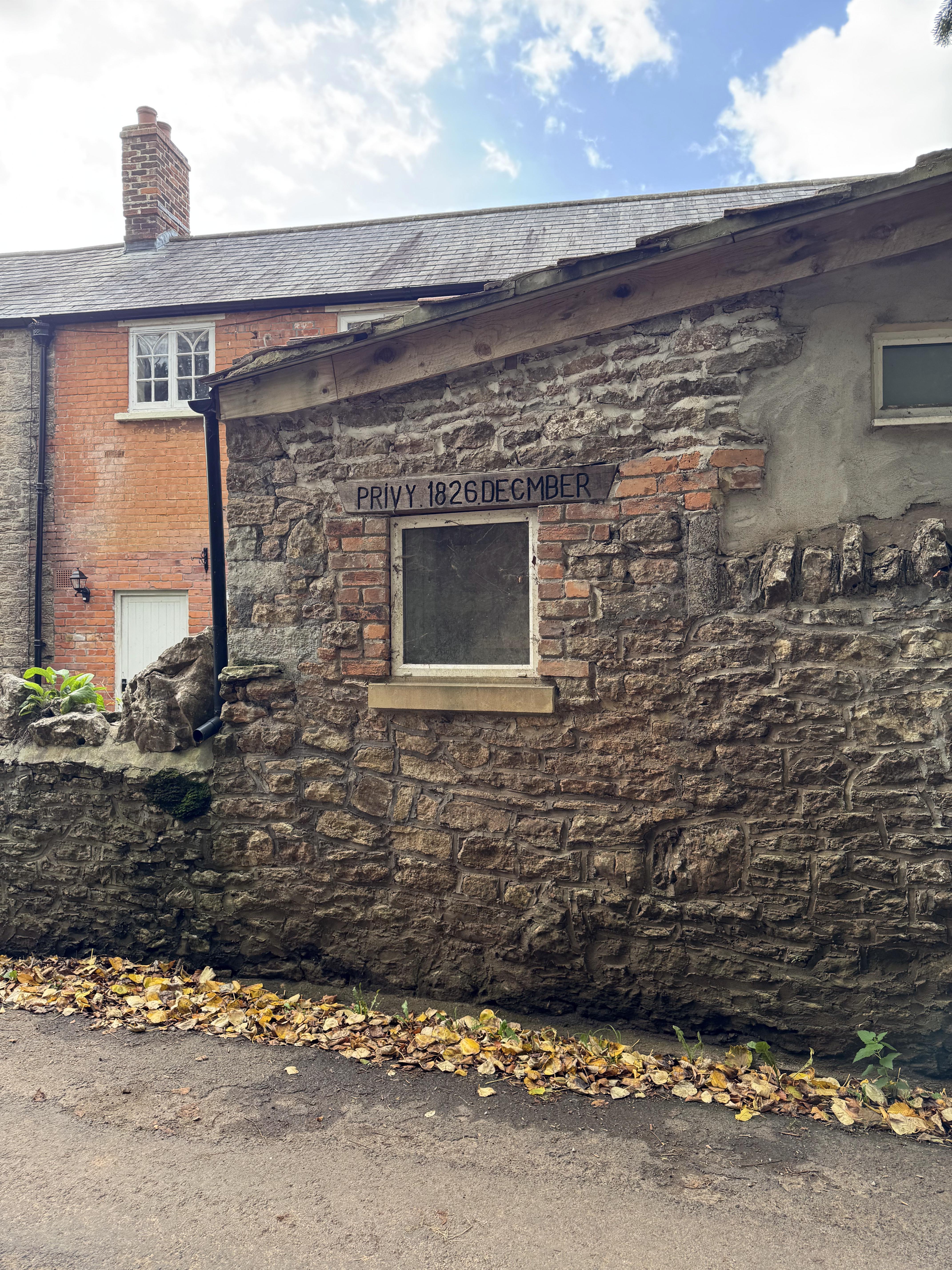
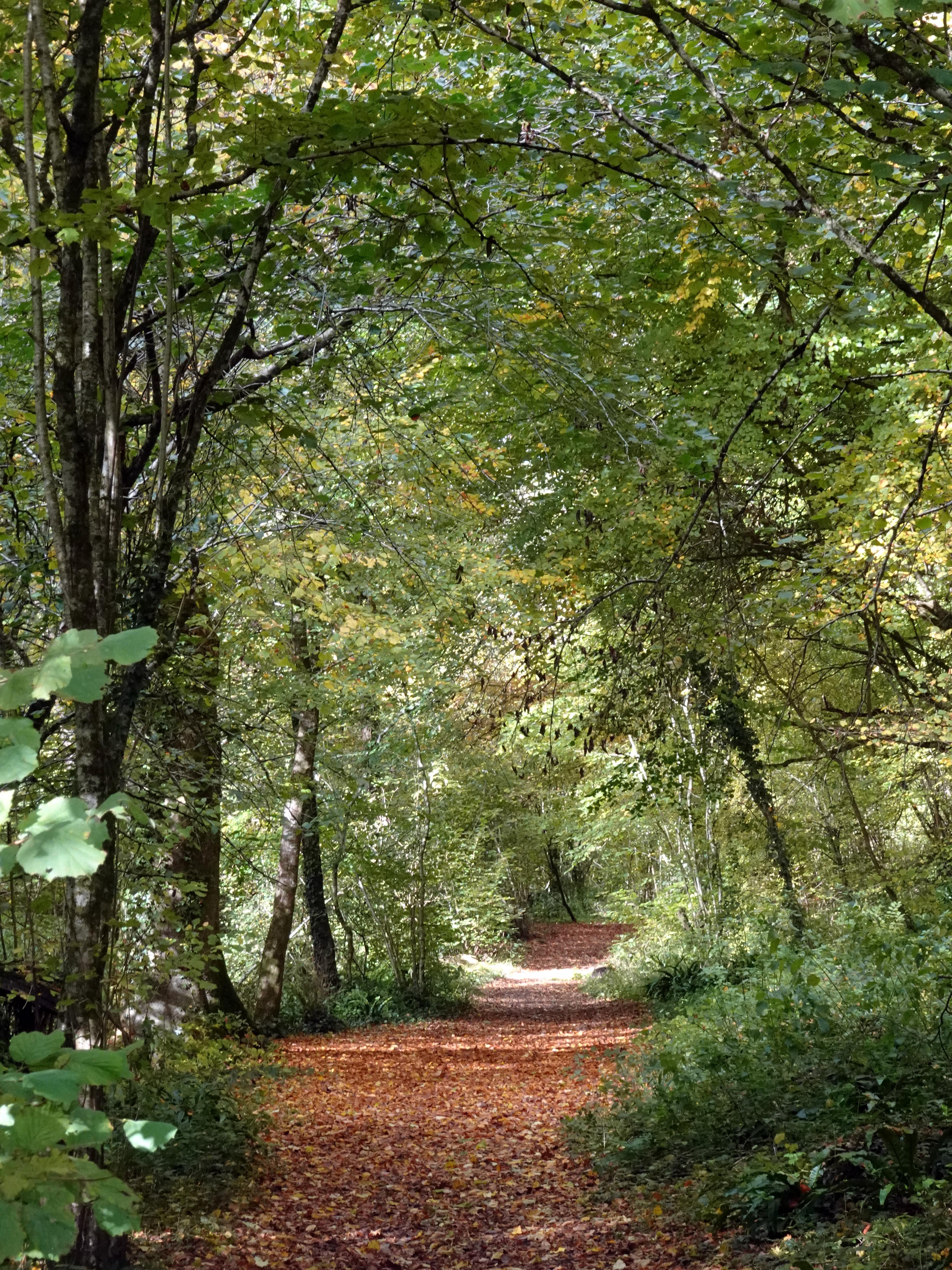
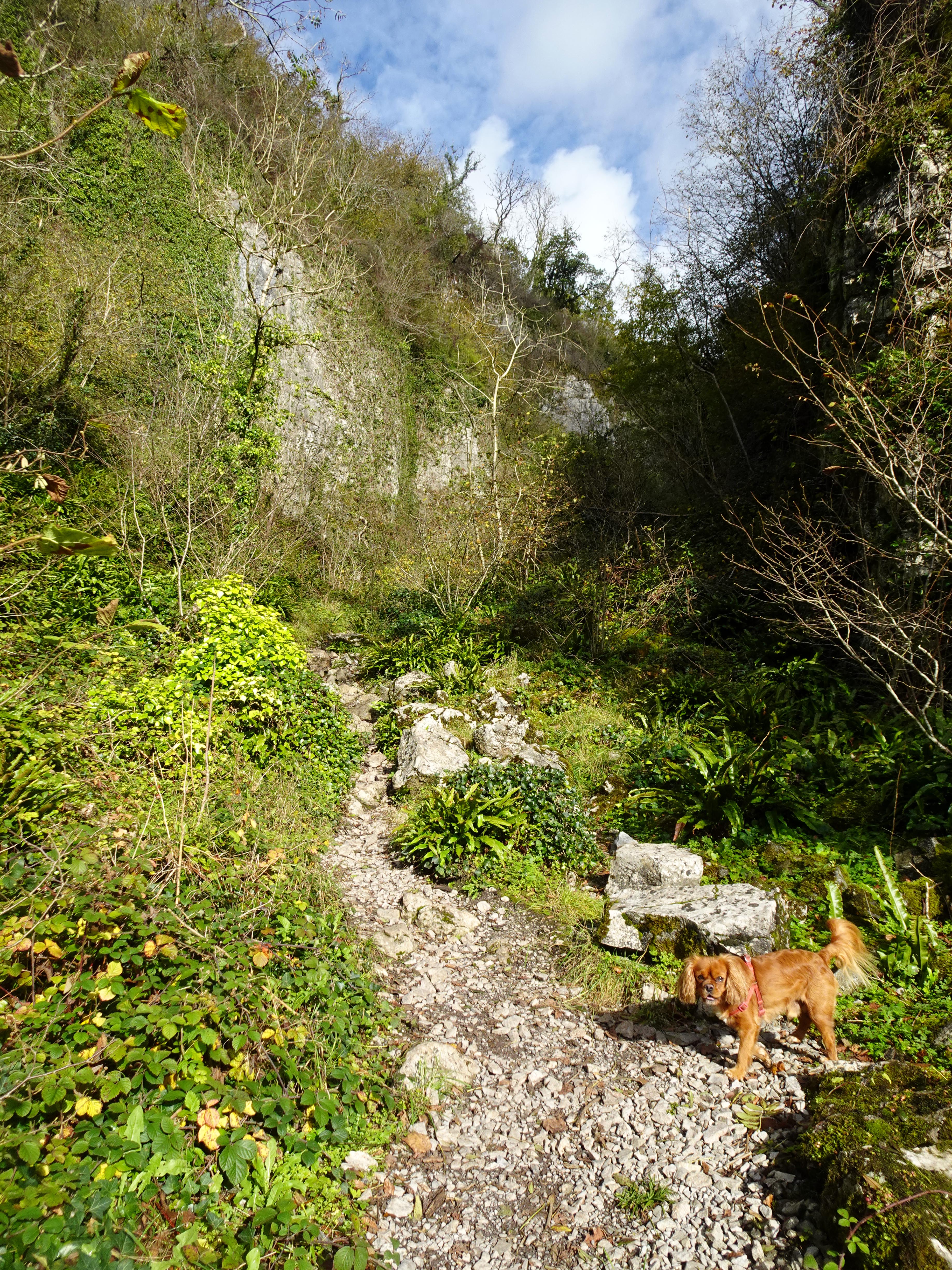
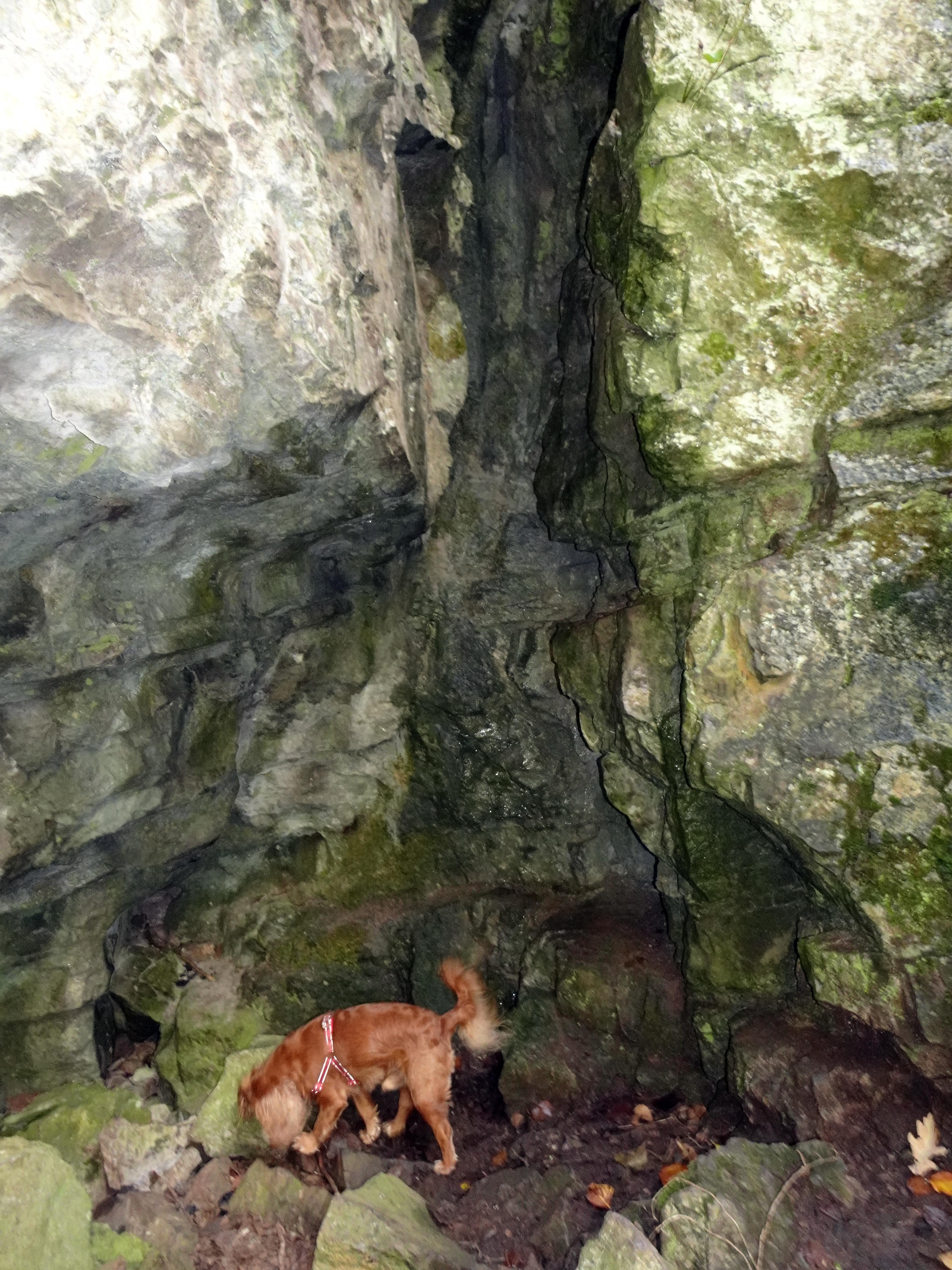
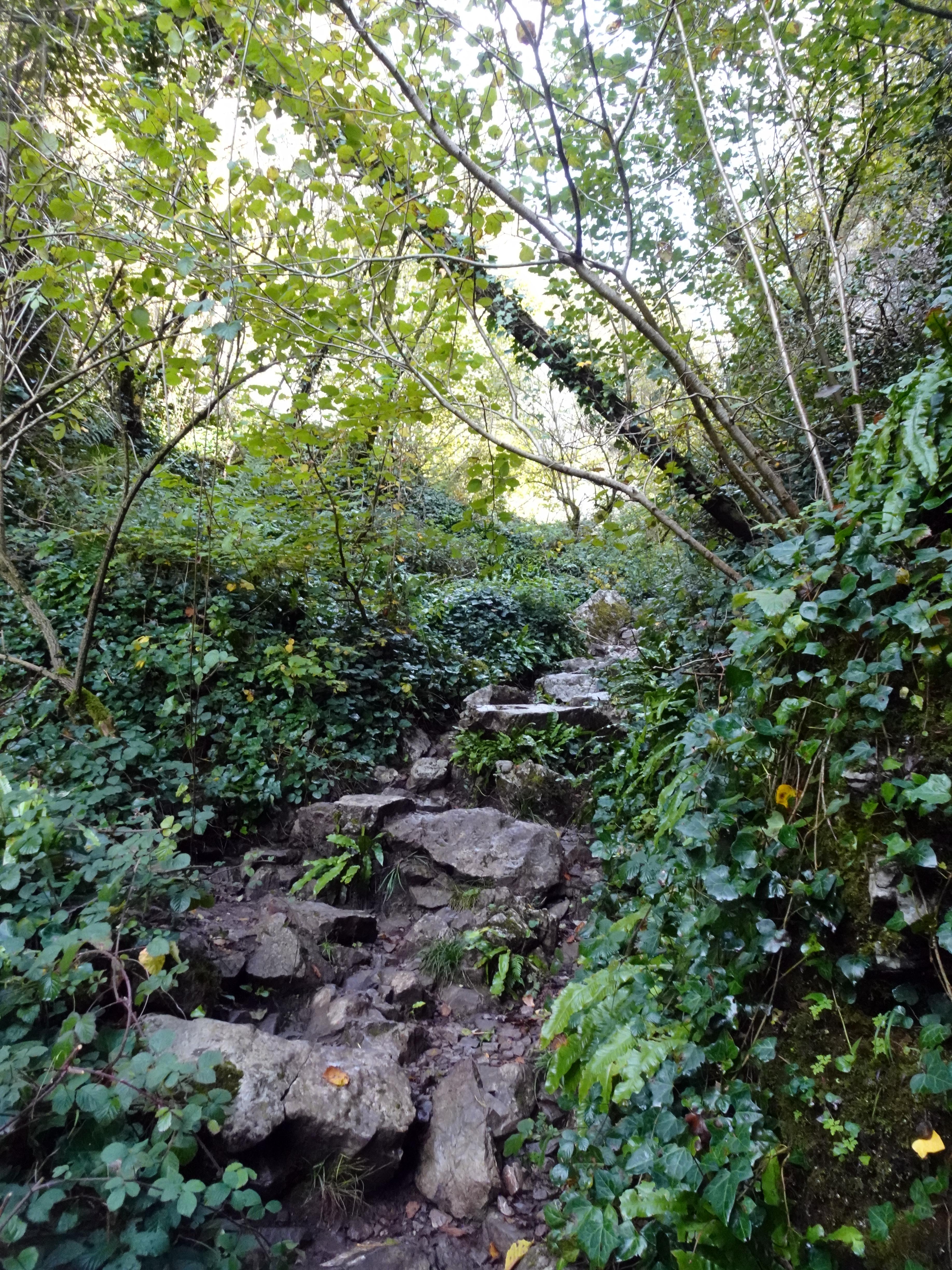
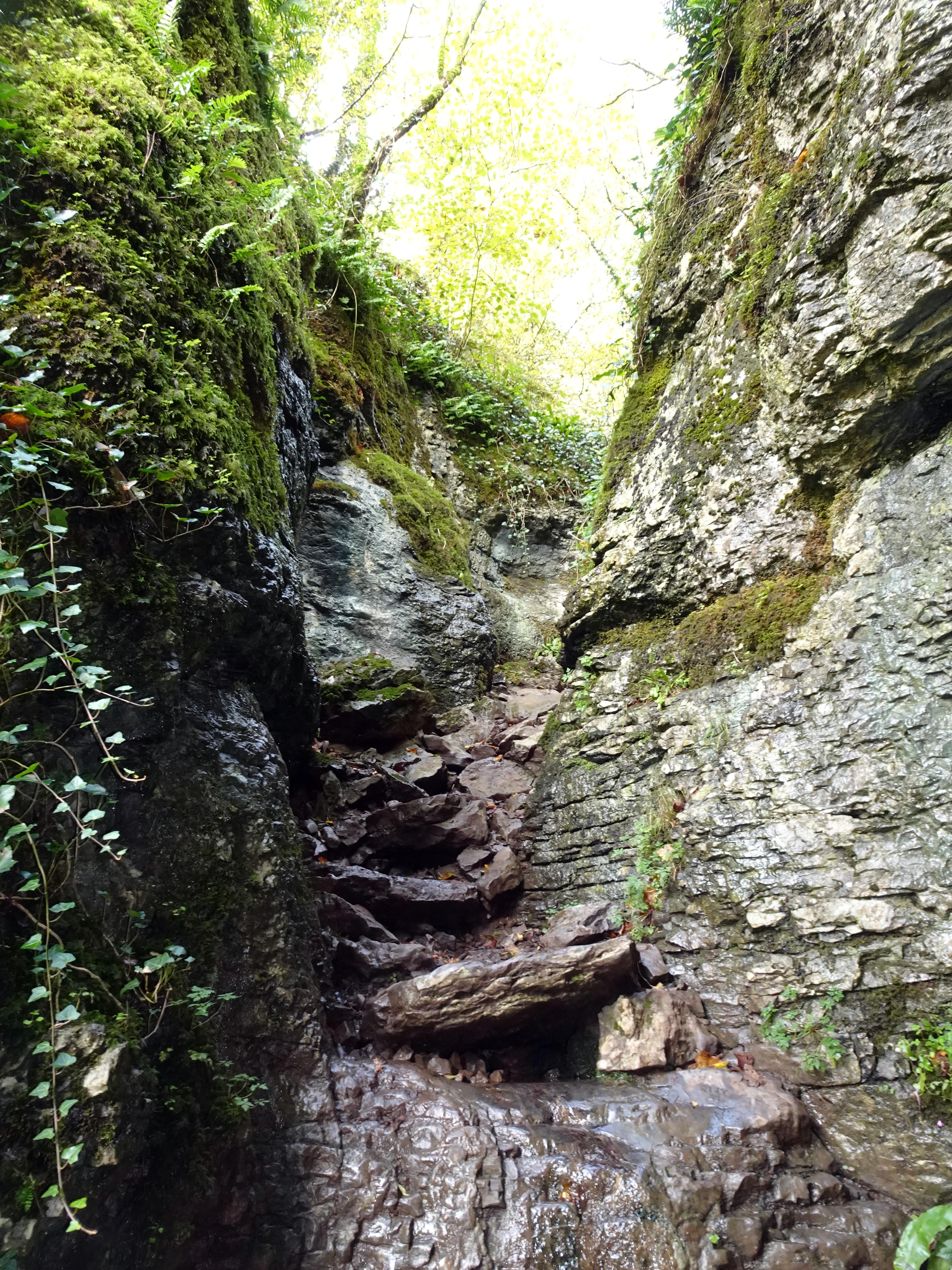
For the walk, we walked west out of Wookey Hole, past Wookey House and past an 1826 Privy (why it is labelled is anyone’s guess :-) ). We then entered Ebbor Wood and started the climb up to the Mendips above Wookey. The path starts getting steeper and steeper as you enter the gorge - you start passing some scree slopes and caves and you start feeling like you are very much entering Jurassic Park or on the hunt for King Kong. Although it was a lovely day, it had been raining a lot recently and so wet rocks and mud abounded as the gorge’s walls began to close in and the path kept increasing in elevation. Rupert started to struggle in places and needed help getting up some of the slippy rocks. Hilariously if incongruously about two thirds up the pathway we encountered a family of four - a young boy about 5 or 6 with mum, auntie and nannie! I’m not entirely sure nannie fully understood what she had let herself in for…. They were having a much needed rest and snack to let poor nan recover! Funnily enough we saw a frog hopping about at this point which I pointed out to the child. But given how much harder the next section proved to be I do wonder if nan is still stuck on that path :-) I didn’t see anything in the newspapers so perhaps she made it back safe.
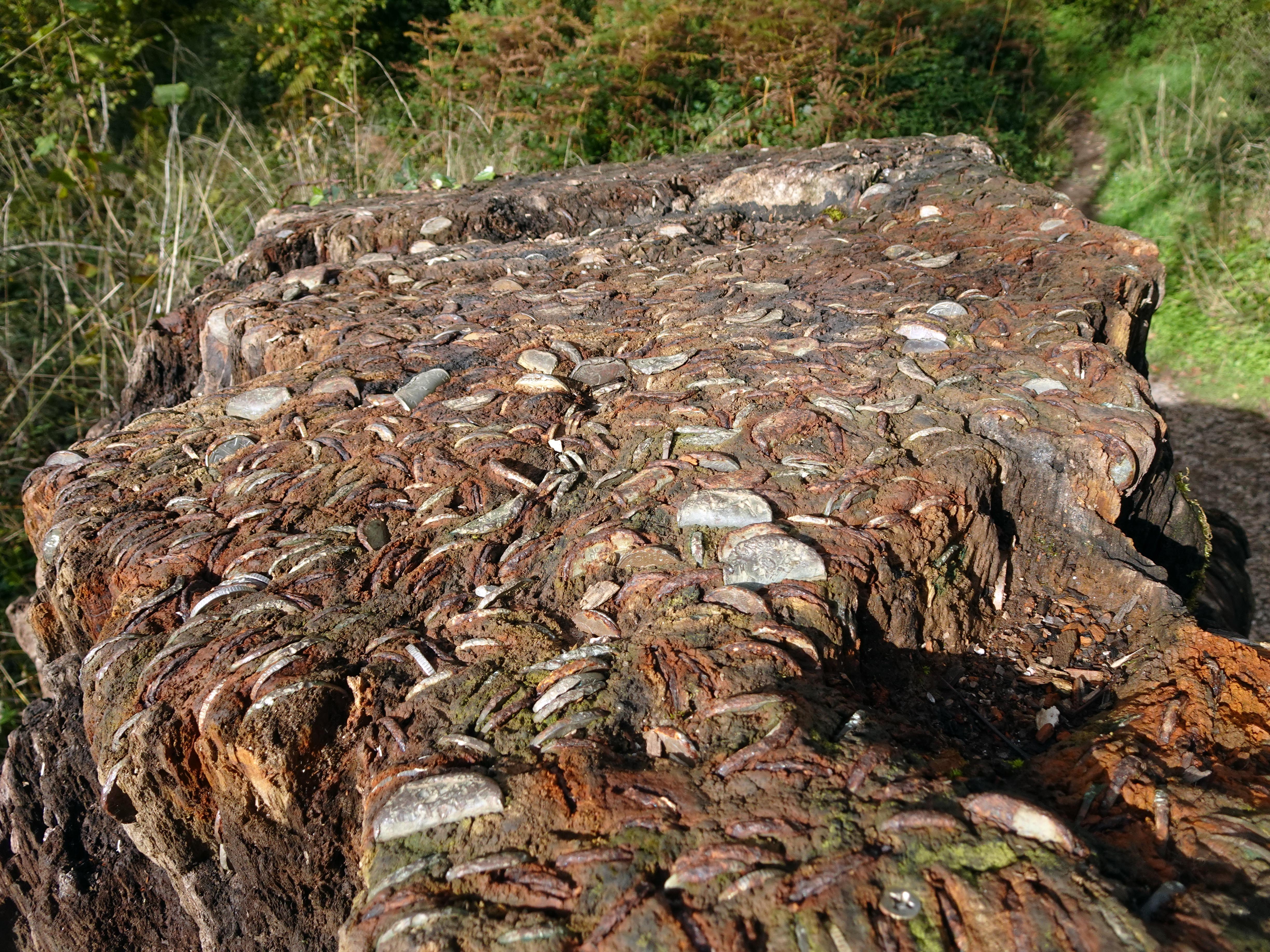
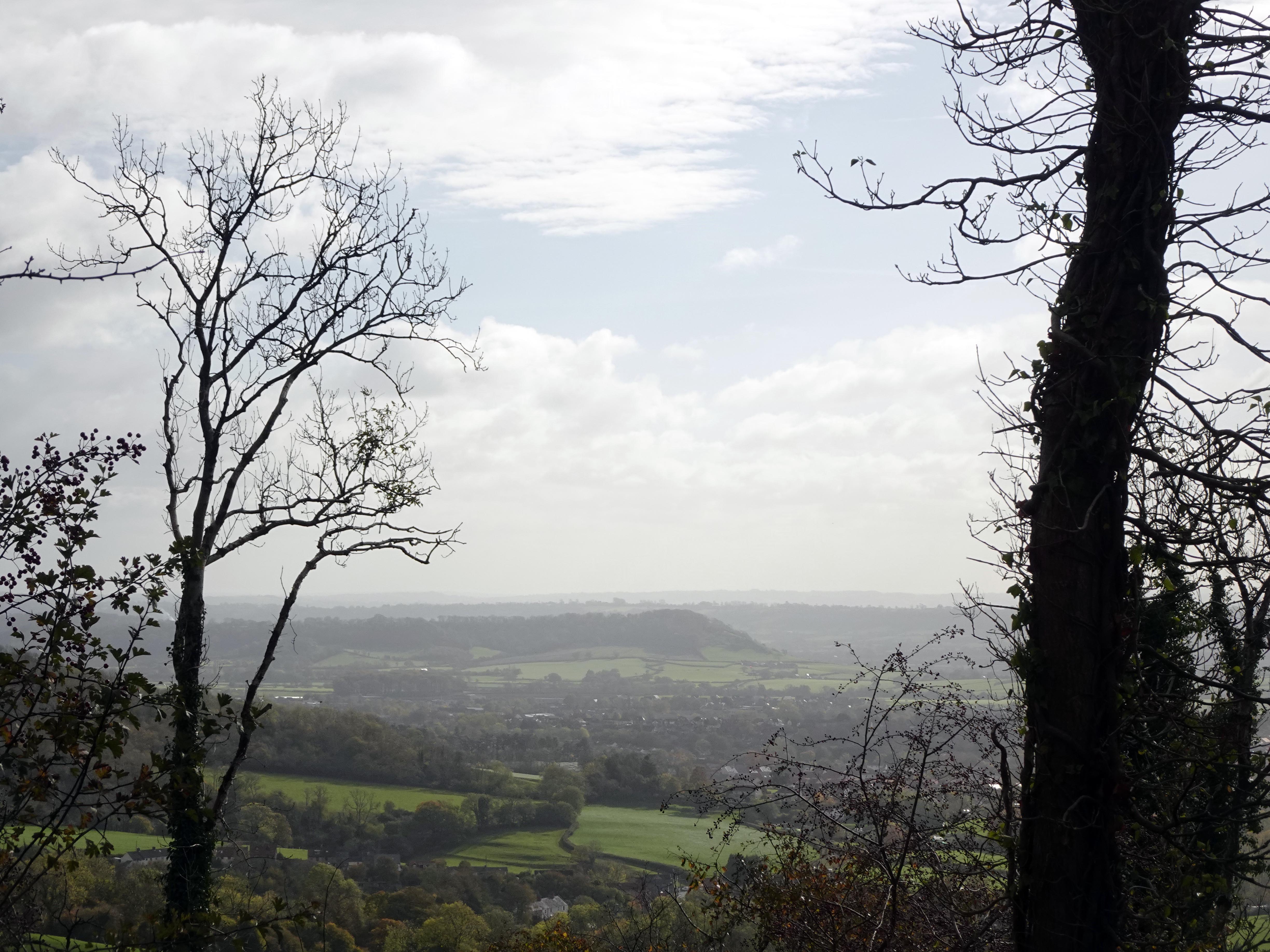
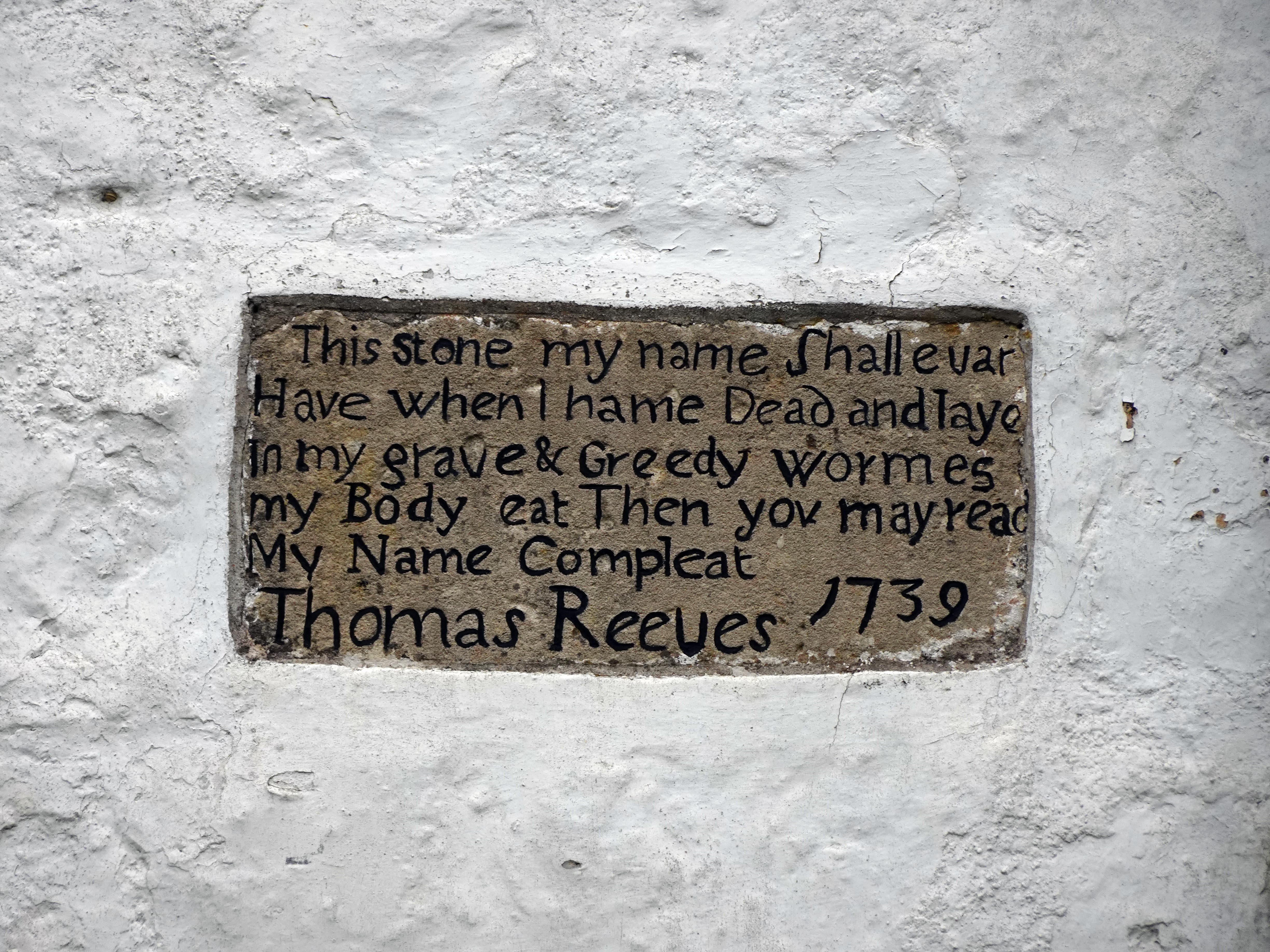
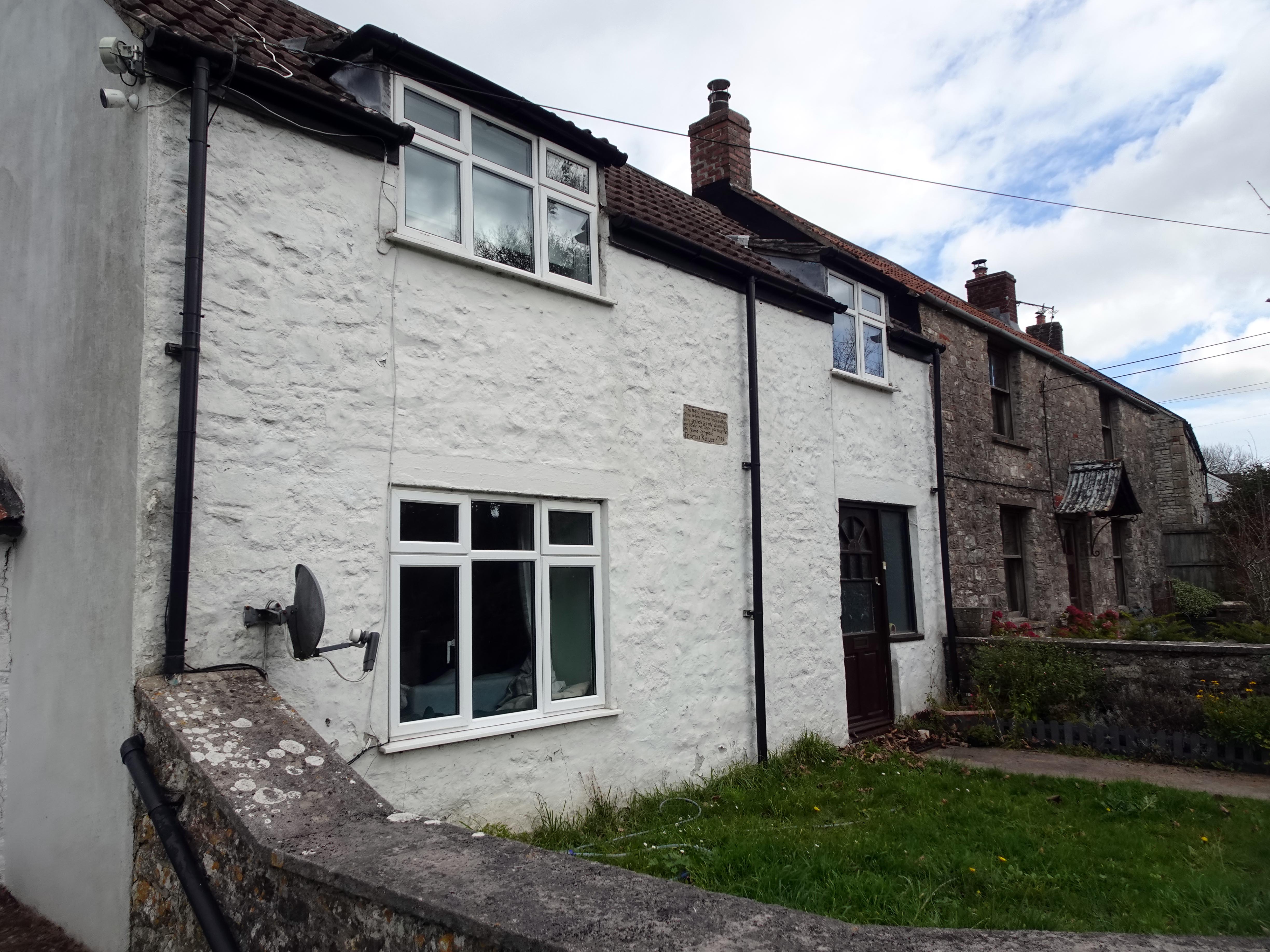
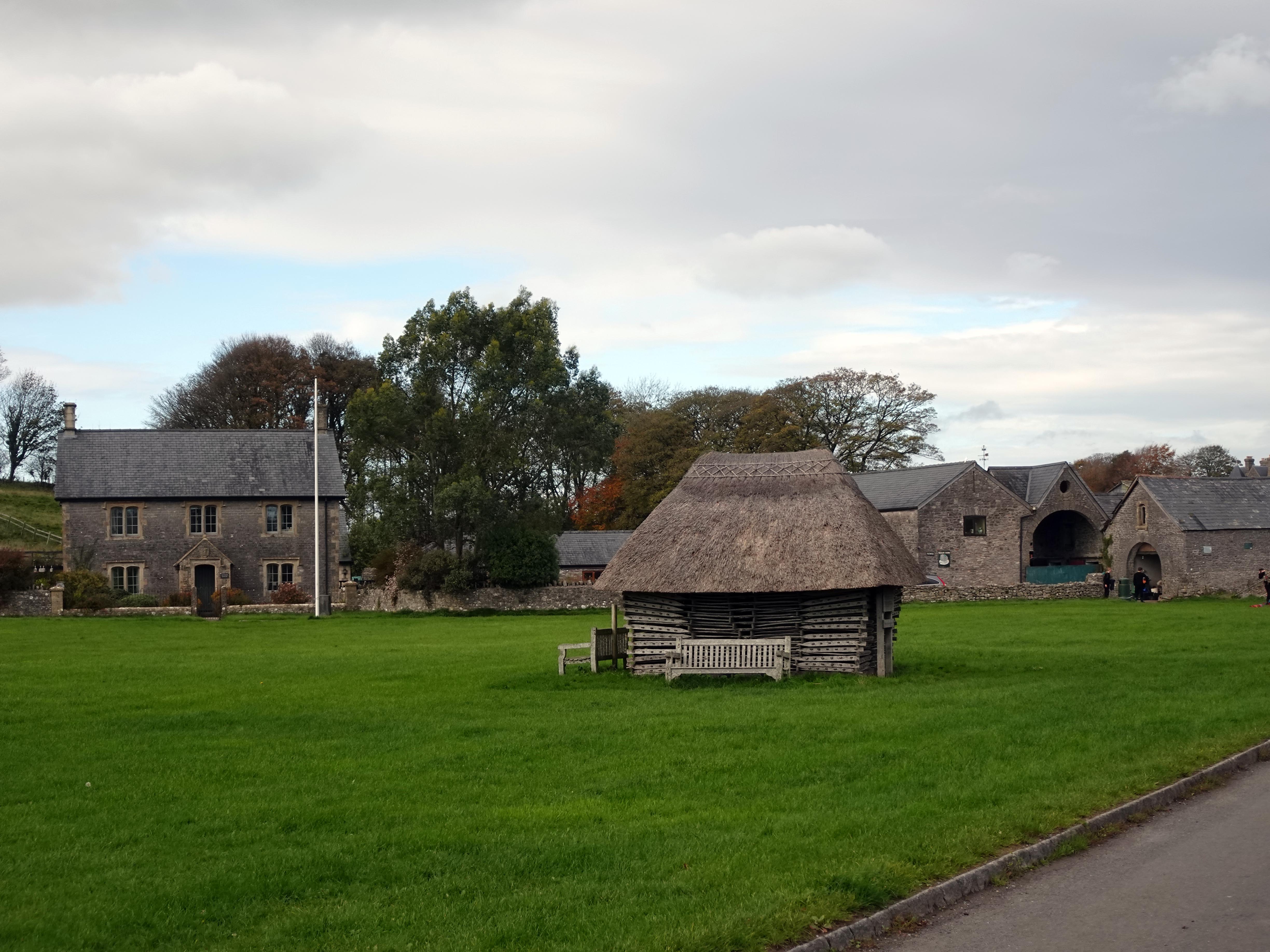
At the top of the hill you come across an interesting tree stump that has been stuffed full of coins - obviously going back years and years as they are mostly discoloured and lots of very old looking coins indeed. Obviously people push them into the wet wood for luck - but it makes for an interesting waypoint. From there we popped up onto the ridge quickly for lovely views out over towards Glastonbury. We then double backed and headed north climbing out of Ebbor Wood and into farmland up on the plateau. We then headed to the very pretty village of Priddy - where a Chinook helicopter provided a suitably noisy flypast that I barely got a picture of sadly! There was an interesting plaque from the 18th century on one house commemorating Thomas Reeves from 1739 who was keen to point out that he would be worm food by the time you read his memorial! Then on the village green there was a memorial to the old sheep markets that used to be held there - in fact they had been held continuously there from 1348 until 2013 - now that first date should be interesting to you in that that was when the Black Death was in full flow and so the sheep market from the more densely populated town of Wells up to this more isolated location - think of how Covid changed our actions although of course the Black Death was far more dangerous - but life had to go on and farmers needed to buy and sell sheep so it was done in this remote location - and never really went back to Wells.
We noted potholers cleaning up. This area is full of massive cave systems below us and you notice on the map all sorts of interesting holes, caves and disappearing waterways. Priddy sits above a network of classic swallet caves, most famously Swildon’s Hole, a nine‑kilometre system of streamways, cascades, and sumps that has trained generations of cavers. Nearby Eastwater Cavern, St Cuthbert’s Swallet, Hunter’s Hole, and Priddy Green Sink add to the variety, ranging from vertical pitches to complex crawls. This is a potholers utopia!
 |
|
|
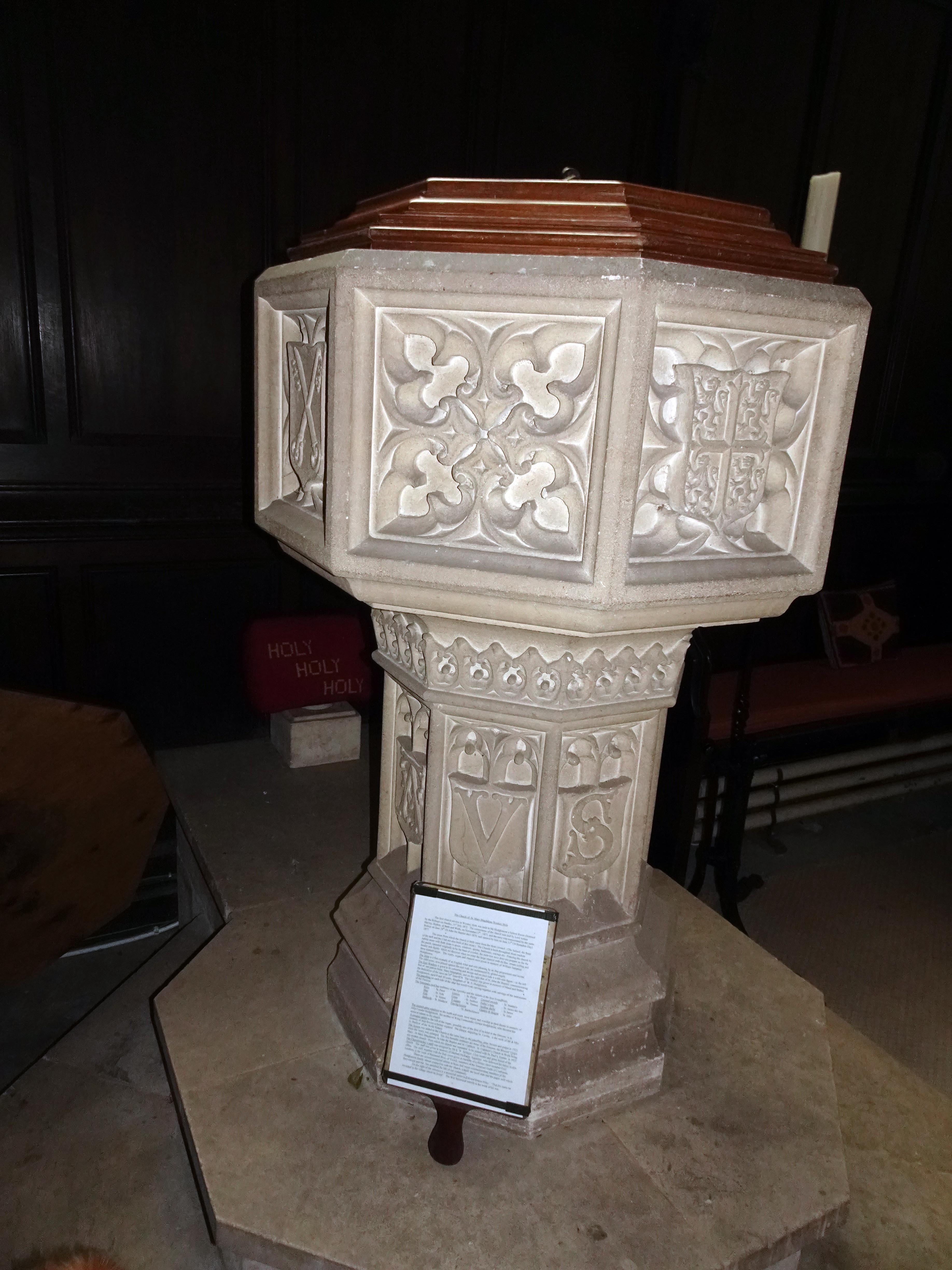
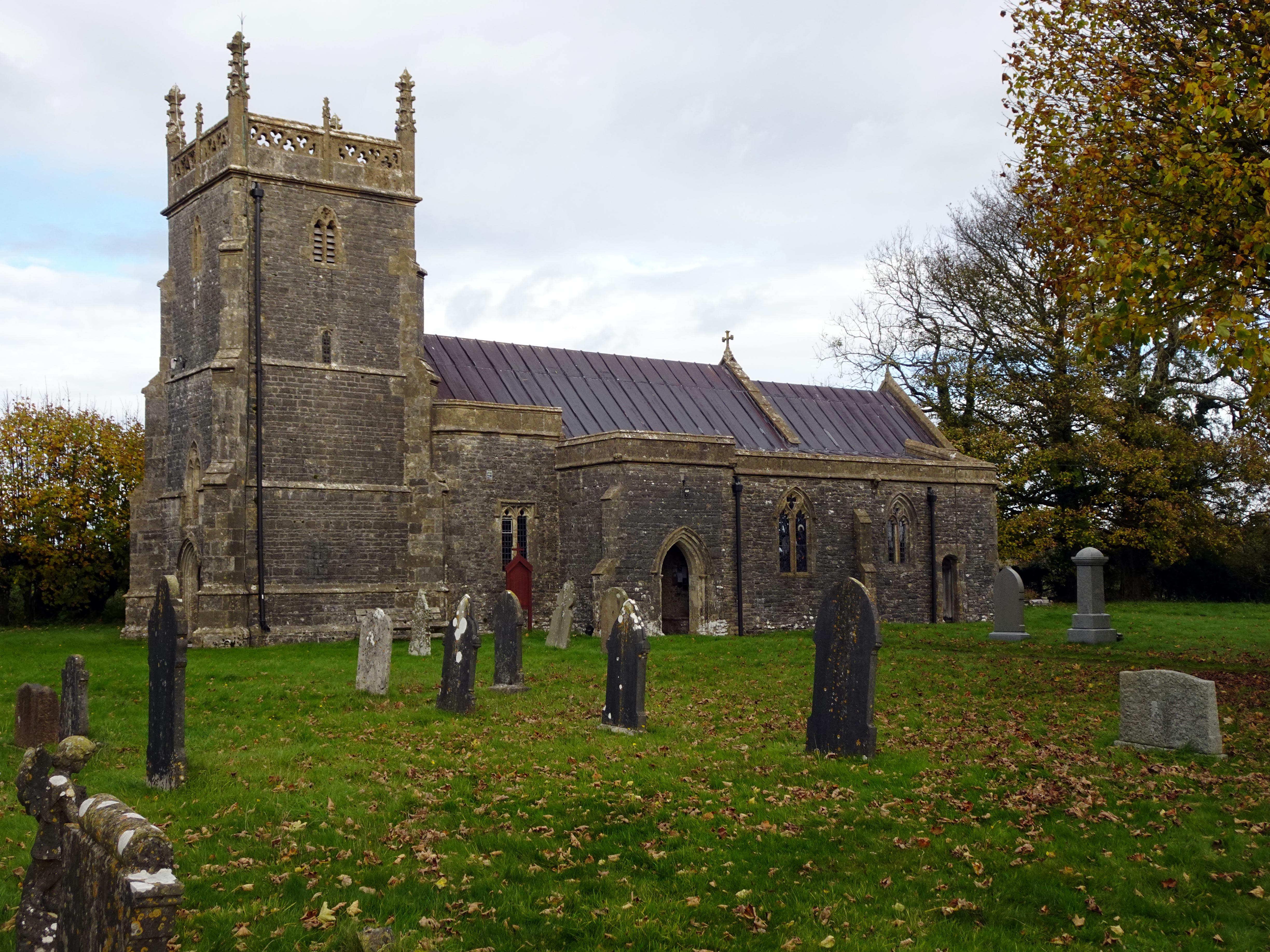
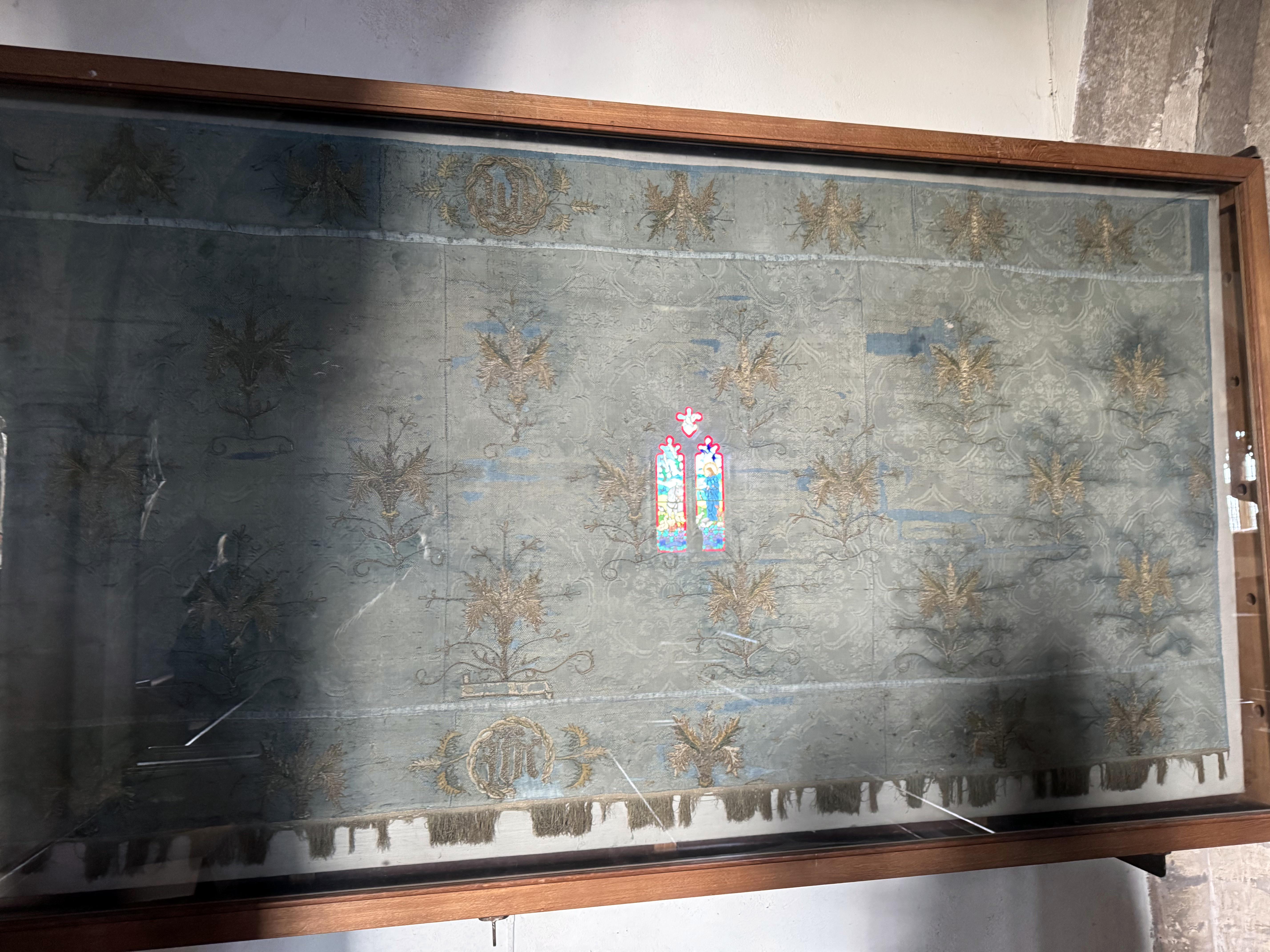
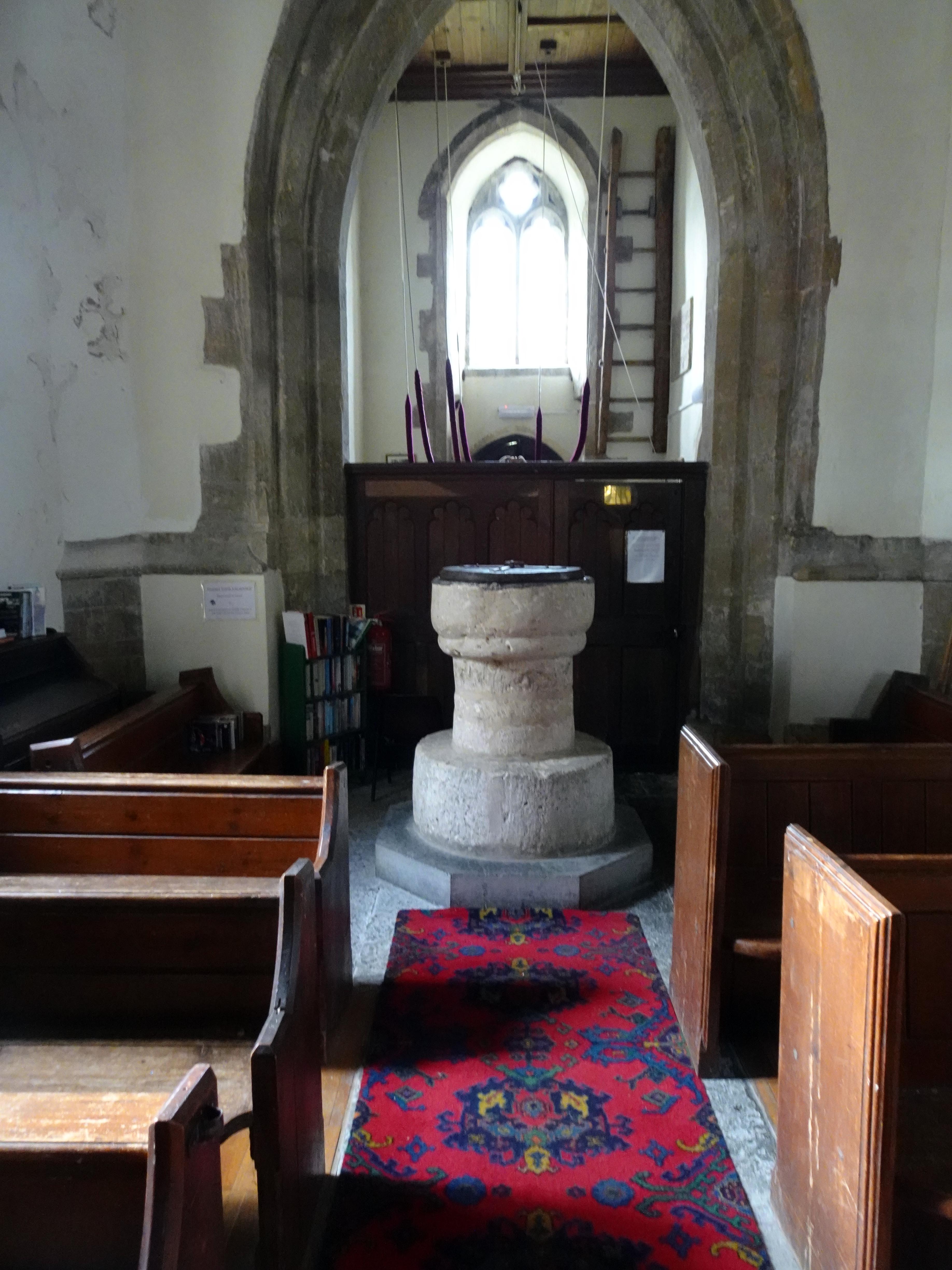
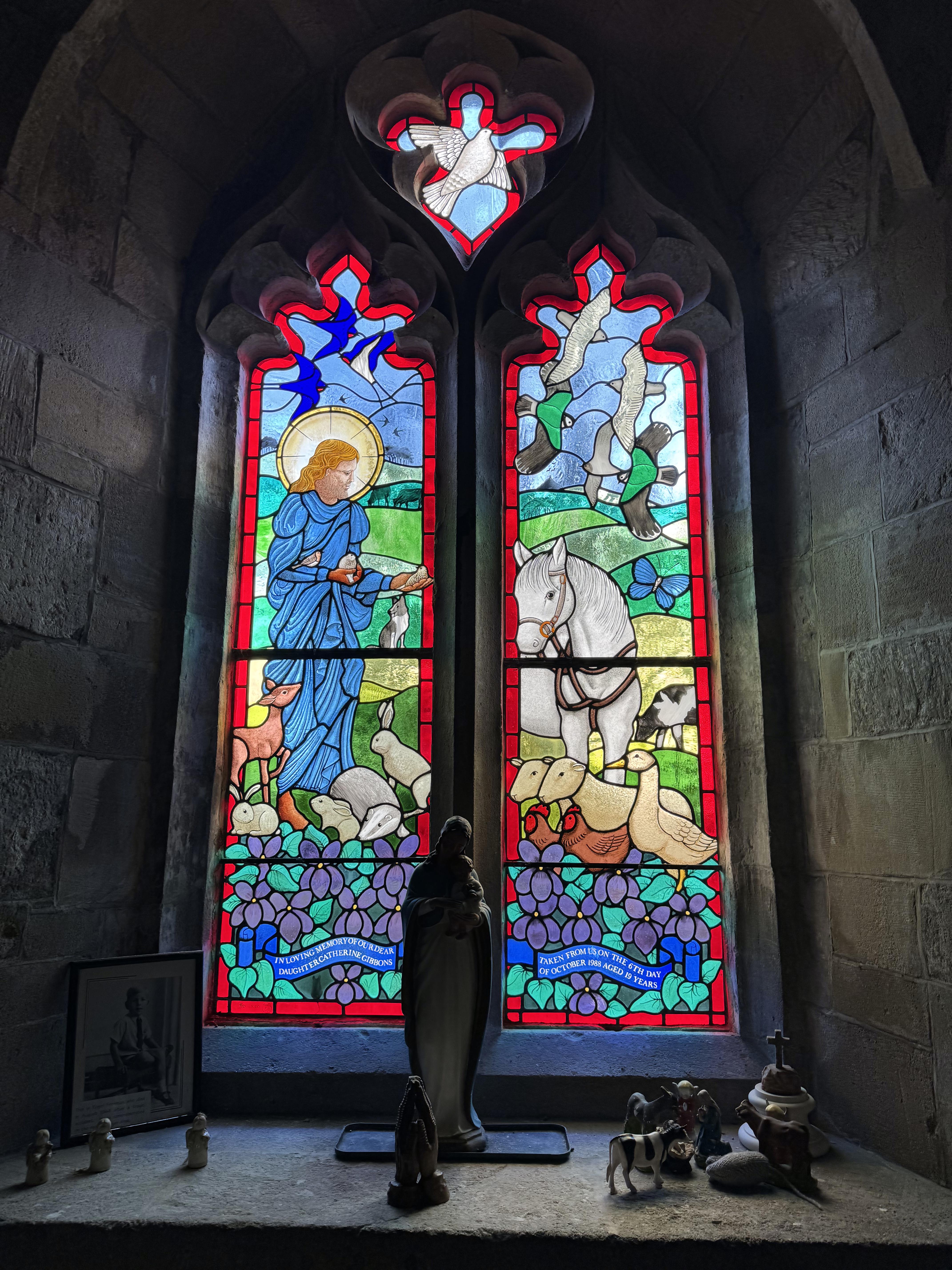
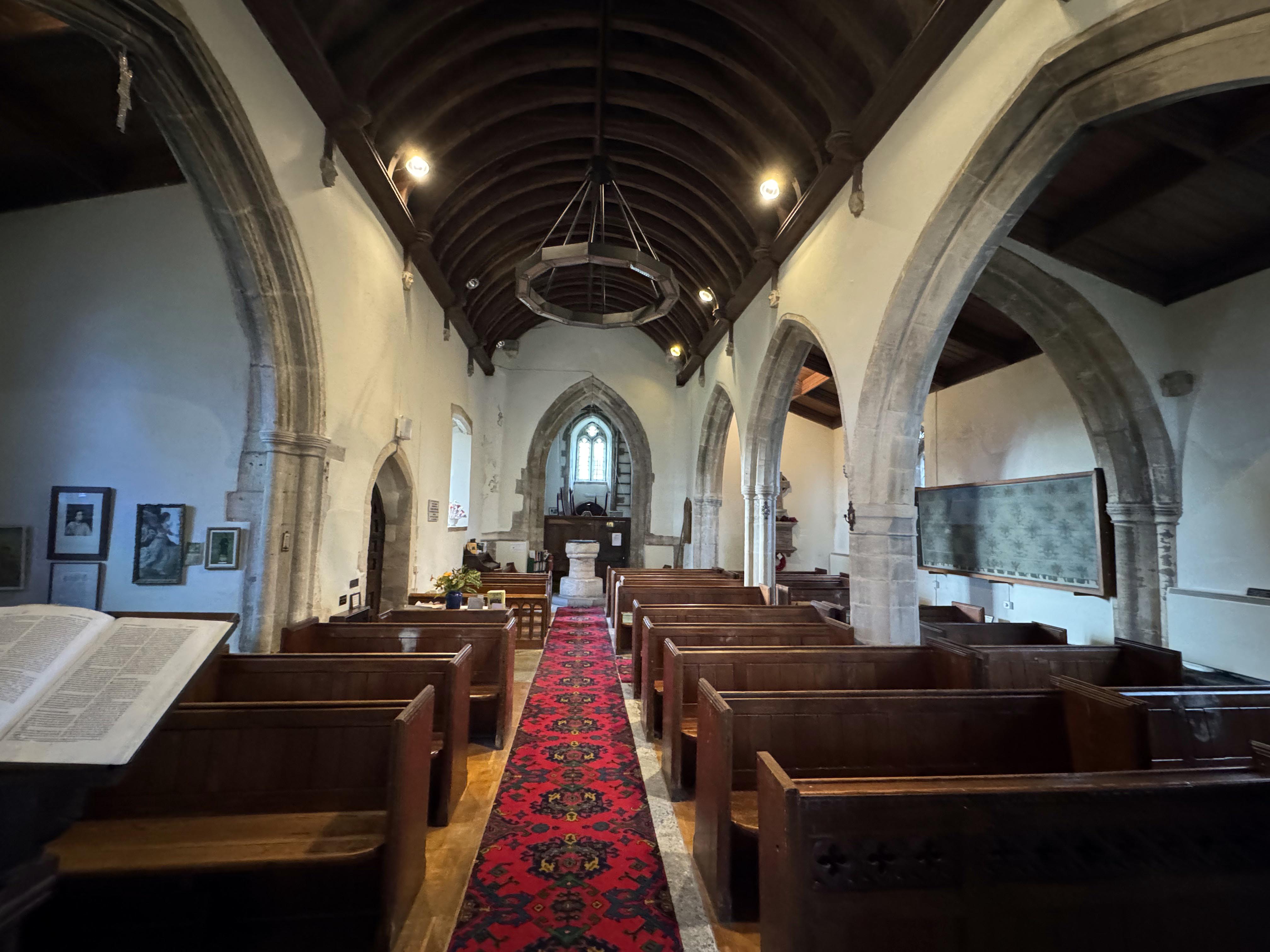
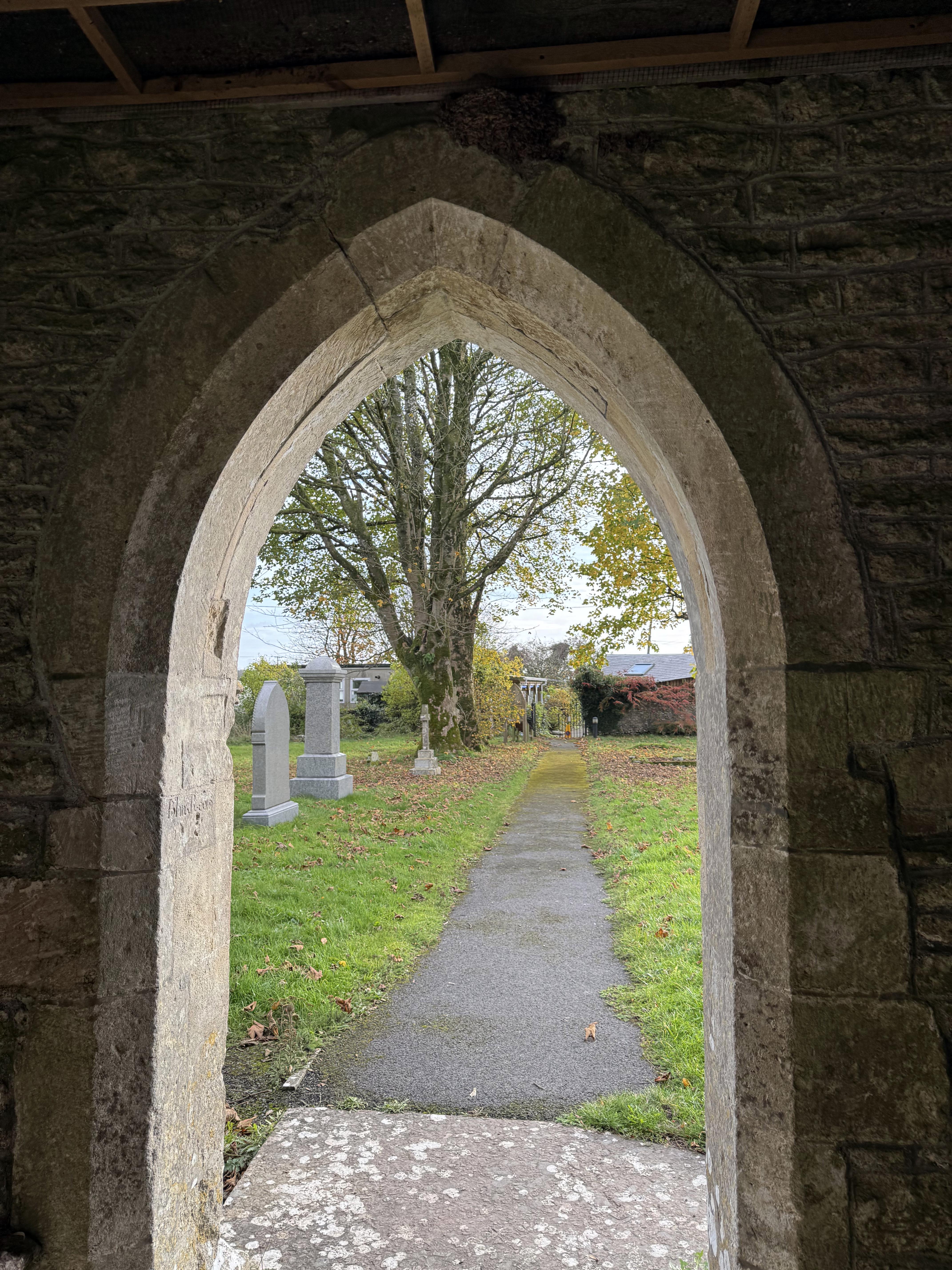
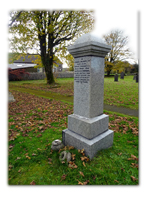
We carried on to our second church of the day St. Lawrence. This is a far older building and far from being tucked away is up high on a promontory that can be seen for miles around. We noticed a really interesting and quite substantial grave to a Sergeant Major Ernest Simmons killed in World War One - with a very touching dedication from his fellow soldiers. The church dates from the 14th century and the font certainly helps confirm its age. Unusually they also have a genuine 15th Century altar cloth framed on the wall. It is nice to think that this would have been used for services half a millennia ago and crucially from before the Reformation. There was also a very very touching stained glass window and a remarkably new one at that - dating from 1988. There is a sad story behind it. It is dedicated to Catherine Gibbons who was an 18 year old girl who had undergone significant surgery and was sadly to pass away. Included in the window is an image of her horse. What I found particularly touching about this was the fact that she was basically my age - and coincidentally in 1988 and 1989 I was undergoing significant surgery myself in Bristol and Plymouth as I was diagnosed and treated with Crohn’s Disease. I couldn’t find out what the young lady was being treated for, but I could very much empathise with her situation and felt real sorrow for her parents and family but what a wonderful tribute to someone who died so young. It is a beautiful way to commemorate a loved one. We had our lunch in the church with the sun breaking through this lovely stained glass window on us from time to time. Outside the wind had picked up outside and the late October sun was pretty weak.
 |
|
|
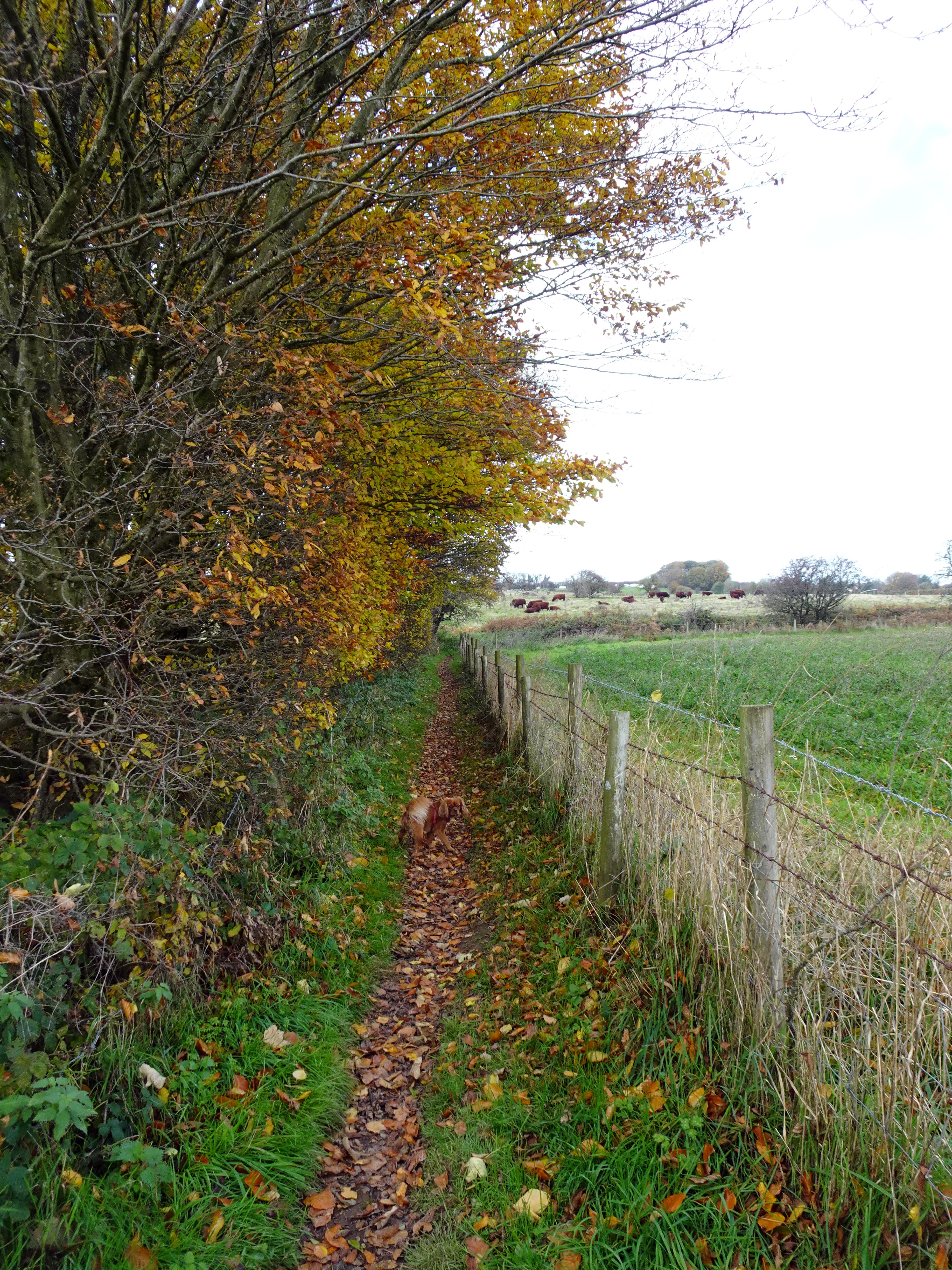
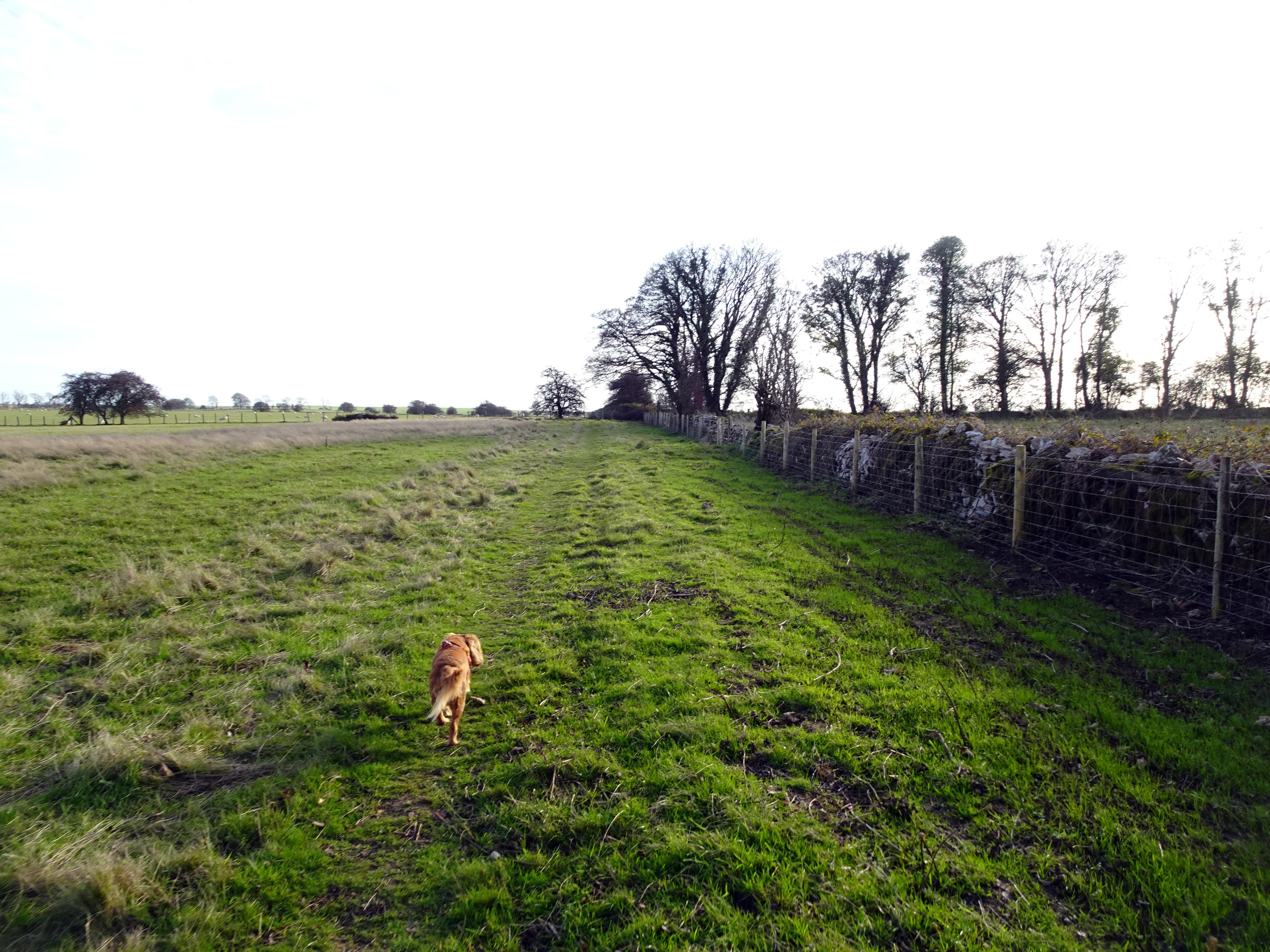
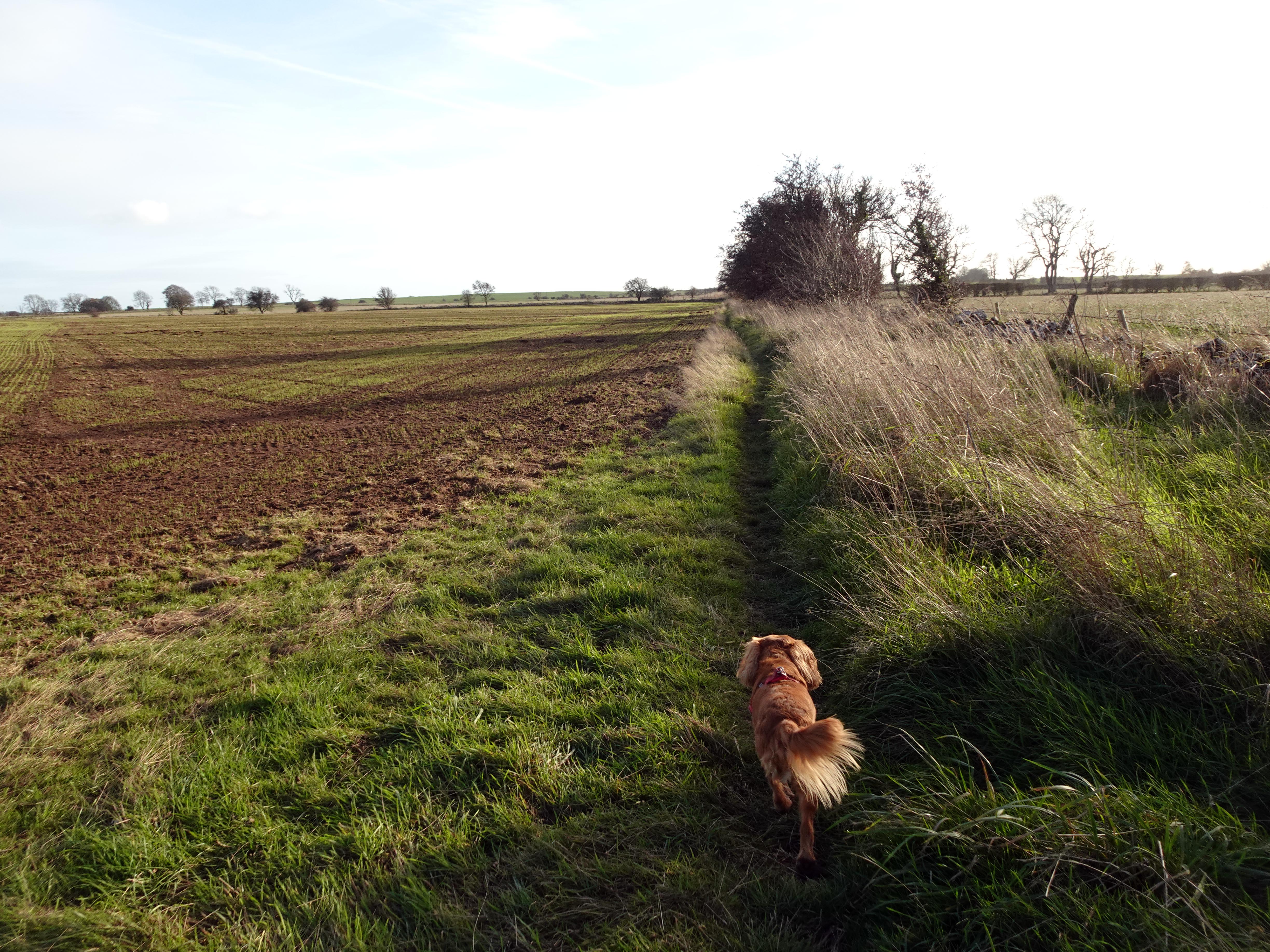
After lunch we headed eastwards eventually to pick up Monarch’s Way - the epic trail that the young Charles II undertook to avoid capture after the Battle of Worcester in 1651. He really did go all over the place including lots of double backing and big circles. But it is always interesting to follow in the footsteps of a major historical event and interesting to know that he would descend into Wookey Hole before heading off to Wells and eventually heading for the ports of the Southern Coast.
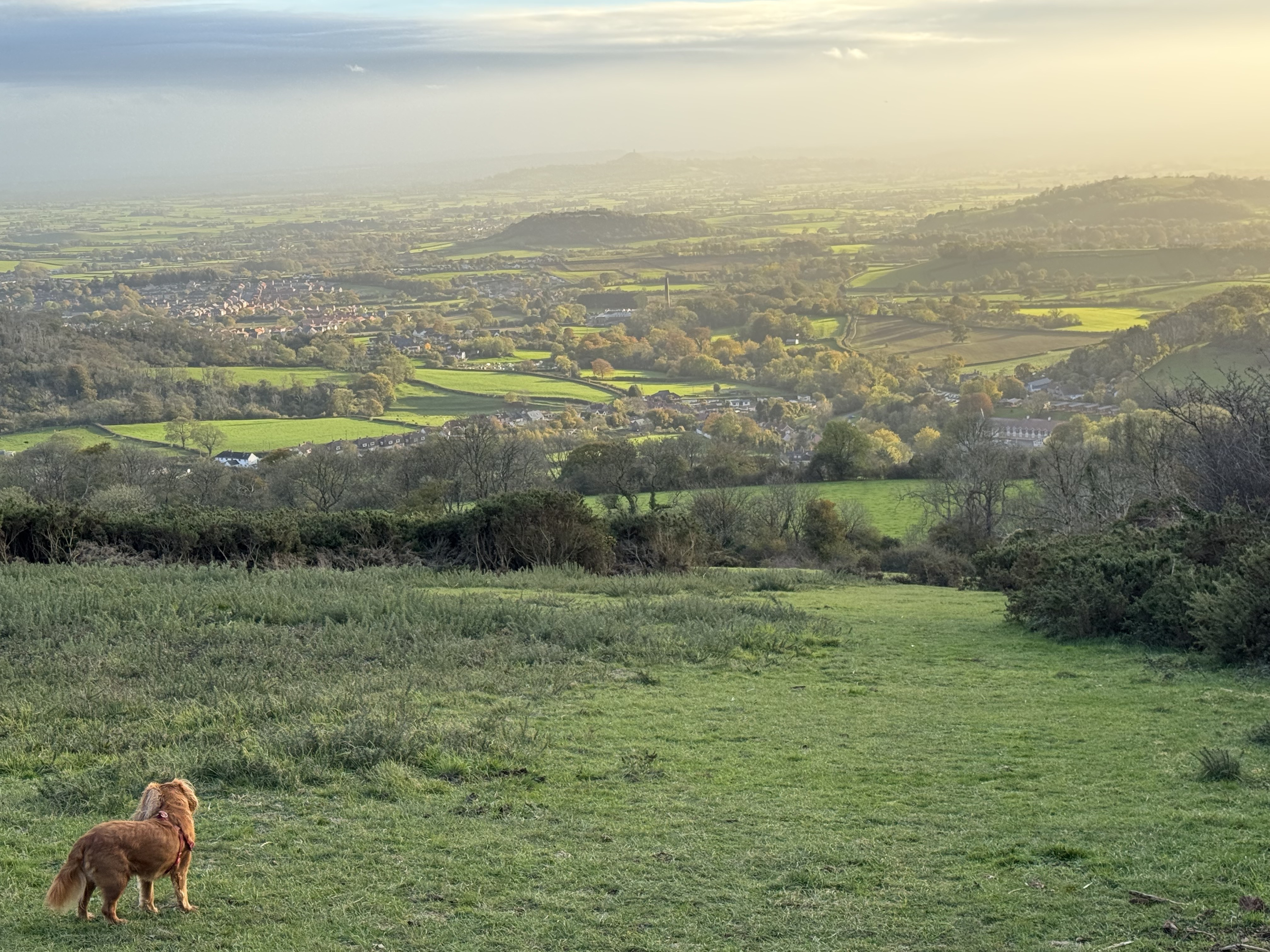
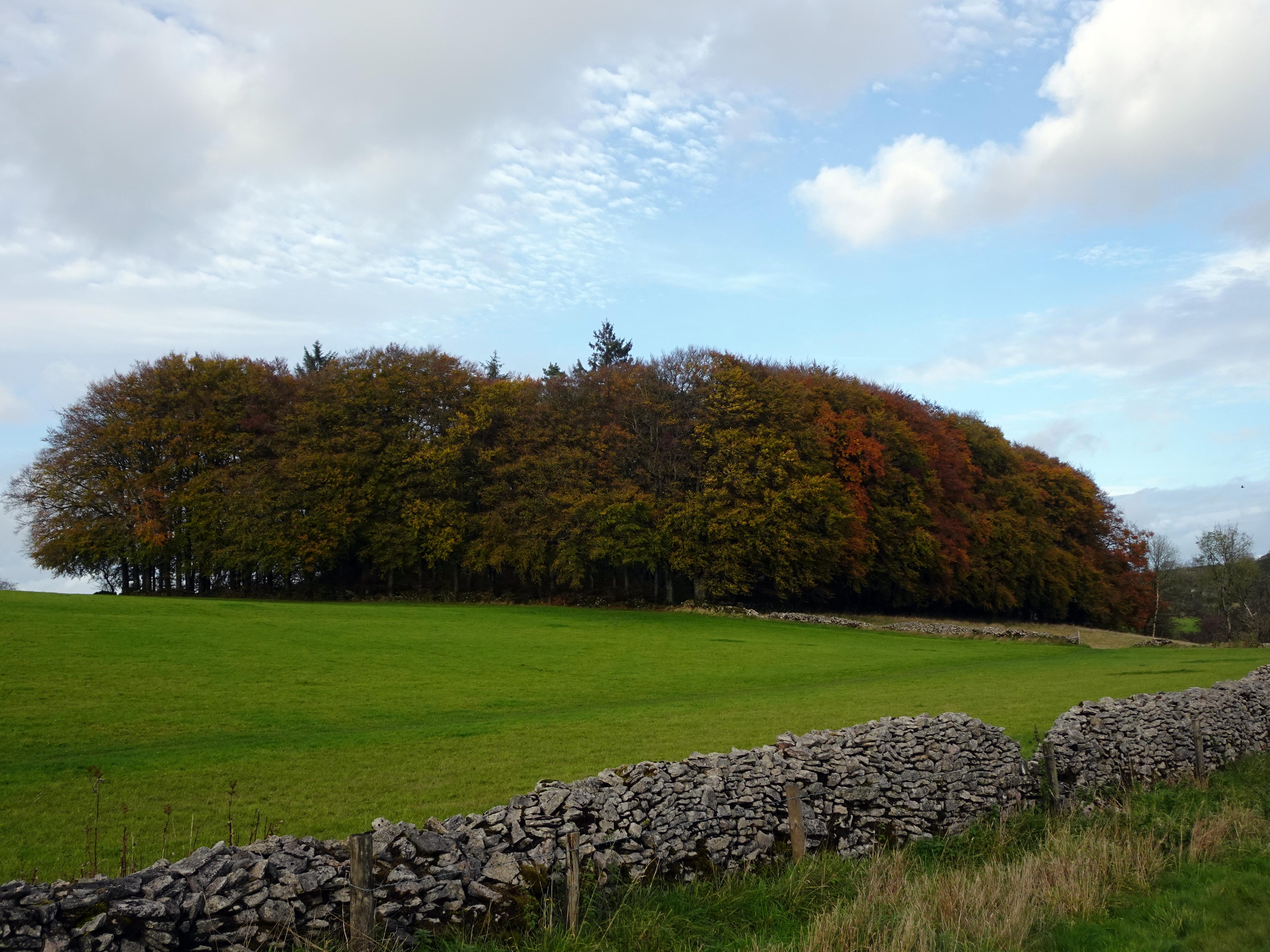
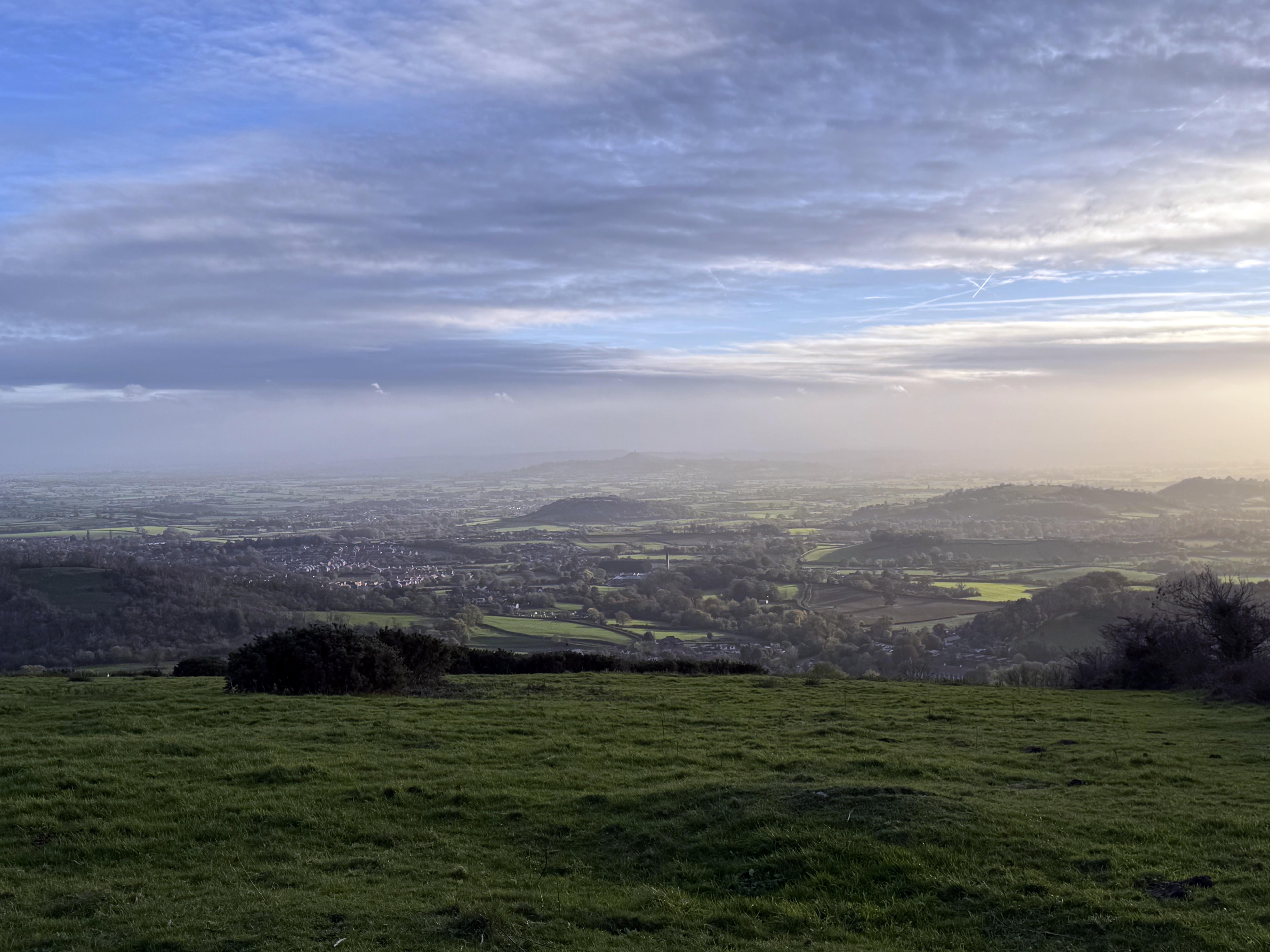
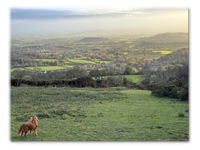
It was coming down the Monarch’s Way that we had the highlight of our walk - mainly through the serendipity of timing. With the clocks having changed just a few days before it was going to get dark from about 5pm but in the hour before we were treated to an absolutely delightful blaze of sun casting long shadows on the magnificent Northern Somerset scenery before us as we descended the plateau. In particular we could see the church of St Michael on Glastonbury Tor which we had visited not so long ago ourself. We also could see Wells Cathedral nestled beneath us looking surprisingly small from this magnificent perspective. Sadly the photographs can never do justice to the magnificence of such a sight. You really had to be there but we could not have timed it better if we had tried.
 |
|
|
The descent wasn’t all good news as we found that the path had several fields of bulls that had to be negotiated. I felt I had to pick up Rupert just to reduce areas of friction with young bulls. There was quite a lot of intimidating noises but fortunately no stampeding our way! They were far too busy eating before the sun fully disappeared. There were also some disconcerting sounds from the Wookey Hole tourist site as they have sounds of dinosaurs and monsters emanating from below - just enough to freak you out when you are stood in a field full of bulls! You also got a good look at the Paper Mills before descending all the way back down to the church where we had parked our car.
Altogether this was a really interesting and varied walk with fascinating history, geography and magnificent views. We did wonder though if Nanny had ever got back from the gorge!
|