

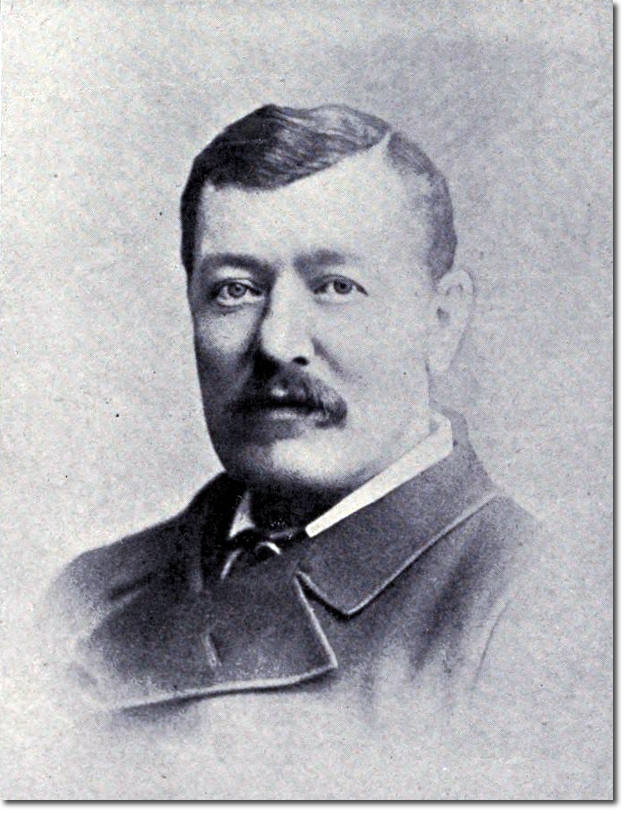
Sir John Underwood Bateman‑Champain was born at Gloucester Place, London, on 22 July 1835, the son of Colonel Agnew Champain of the 9th Regiment of Foot. He was educated at Cheltenham College, and for a short time studied fortification and military drawing at the Edinburgh Military Academy under Lieutenant Henry Yule. From 1851 to 1853 he attended the East India Company’s Military Seminary at Addiscombe, where he passed out at the head of his term and received the Pollock Medal. Commissioned as a second lieutenant in the Bengal Engineers on 11 June 1853, his subsequent promotions carried him steadily upward: lieutenant in 1857, captain in 1863, major in 1872, lieutenant‑colonel in 1878, and colonel in 1882.
After further training at the Royal Engineers Establishment at Chatham, Champain sailed for India in 1854. He was appointed assistant principal of the Thomason College of Civil Engineering at Roorkee, but the outbreak of the Indian Rebellion in 1857 drew him into active service. He served under Colonel Archdale Wilson, acting as adjutant of sappers and miners at the actions on the Hindon River in May, at Badli‑ki‑Serai in June, and in the capture of the Delhi ridge. During the siege of Delhi he combined his adjutant’s duties with general engineer work, and one of the batteries was named after him by order of Colonel Richard Baird Smith. Wounded by grapeshot on 13 September, he nevertheless returned to duty while still lame and was present at the storming of the palace.
He went on to command Bengal sappers in the march to Agra, the capture of Fathpur Sikri, and numerous expeditions. At Fatehgarh he joined the commander‑in‑chief, and later took part in the marches to Cawnpore and the Alambagh. At Lucknow he acted repeatedly as orderly officer to Sir Robert Napier, and was thanked for holding with Captain Medley and a hundred sappers the advanced post of Shah Najif through a night of heavy pressure. After the city’s capture he erected fortified posts for detachments, and in 1858 served in the Ghazipur and Shahabad districts, present in fourteen engagements and commended in despatches for his conduct at Ballia. He pursued rebel forces into the Kaimur Hills, where they were finally broken at Salia Dahar in November. For these services he received the medal and clasps.
With the rebellion suppressed, Champain became executive engineer in the Public Works Department at Goudah and later at Lucknow. In 1862 he was selected, at the invitation of Colonel Henry Yule, to accompany Major Patrick Stewart to Persia on government telegraph duty. The absence of a direct telegraph line between Britain and India had been keenly felt during the rebellion, and the government resolved to construct one by the Persian Gulf route. Champain travelled with Stewart to Bushehr and then to Tehran, where negotiations were conducted with the Persian government. By 1865 the line was virtually complete, and on Stewart’s death Champain was appointed to assist Sir Frederic Goldsmid as director of the Indo‑European Government Telegraph Department. He spent much of 1866 in Turkey, improving the Baghdad section, and in 1867 went to St Petersburg to negotiate for a Russian connection. His relations with General Alexander von Lüders, head of Russian telegraphs, proved valuable to the enterprise.
In September 1869, en route to superintend the laying of a second cable from Bushehr to Jask, he was nearly drowned in the wreck of the SS Carnatic in the Red Sea, but survived and assisted in saving lives. In 1870 he succeeded Goldsmid as chief director of the Indo‑European Telegraph Department. During the Persian famine of 1870–72, Champain organised the distribution of relief funds through the telegraph staff. His clear judgment and tact made him an effective representative of the Indian government at international telegraph conferences, and his duties took him repeatedly to India, Turkey, Persia, and the Gulf. In 1884 the Shah of Persia presented him with a sword of honour, and in 1885 he laid a third cable between Bushehr and Jask. On his return journey he learned from his old friend Sir Frederick Roberts that he had been made a Knight Commander of the Order of St Michael and St George for his long service in Indian telegraphy.
Champain was active in professional circles: a member of the council of the Royal Geographical Society, and President of the Society of Telegraph Engineers in 1879. He was also a skilled draughtsman; a Persian landscape of his won a gold medal at the Albert Hall Exhibition of 1873, and several of his watercolours illustrated Sir Frederic Goldsmid’s Telegraph and Travel.
In later life Champain suffered from asthma and bronchitis. In January 1887 he travelled to the Mediterranean for his health, spending time at Cannes before moving to Sanremo, where he died on 1 February. The Shah of Persia sent a telegram of condolence to his family, remarking that he had left “so many indelible memories in Persia,” an unusual gesture from the court of Tehran.
