

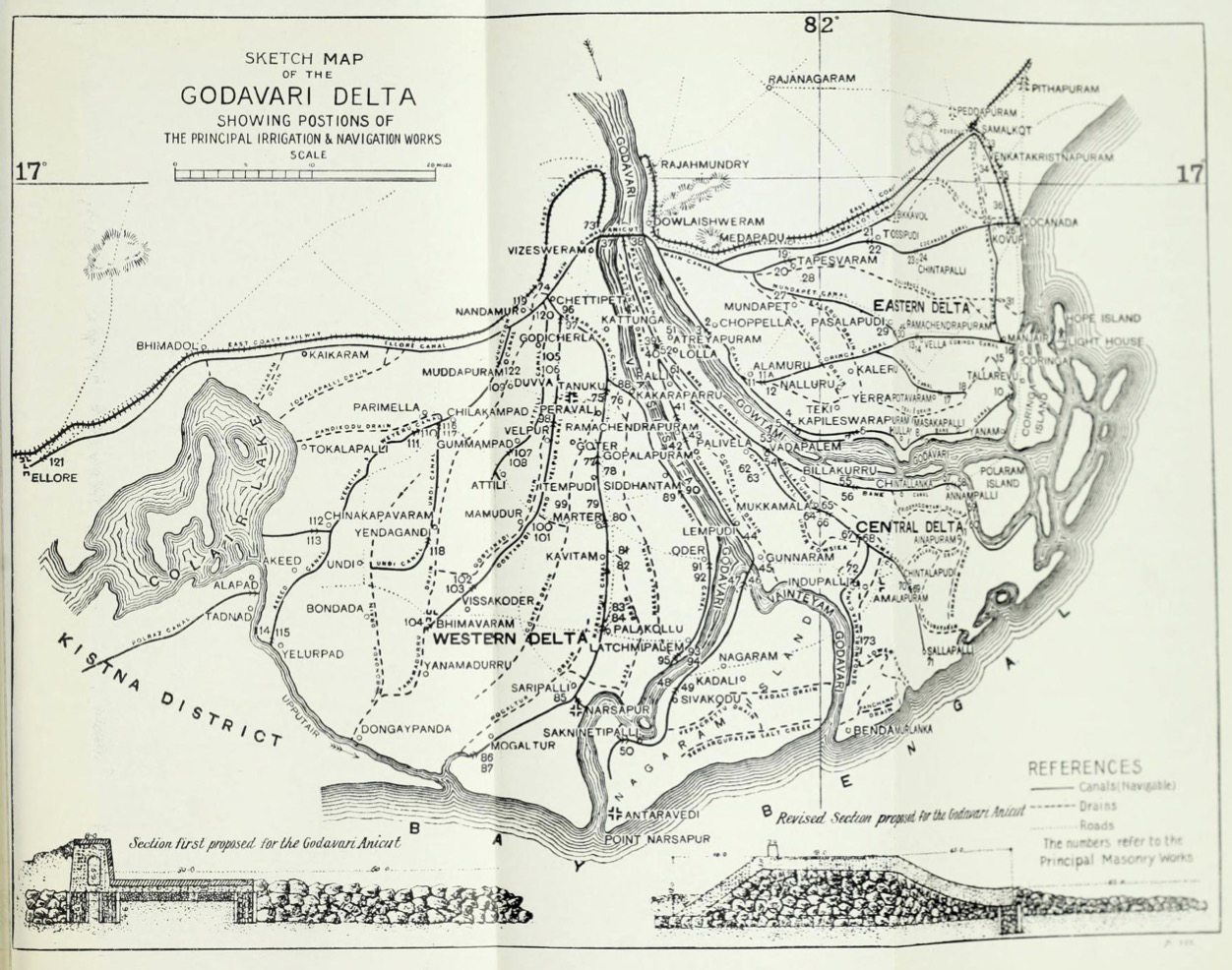
Arthur Cotton’s greatest project—the damming of the Godavari—took eight years to complete. Much of that time he was ill, but he refused to let illness slow the work. The main dam stretched a full two and a quarter miles, and Cotton daringly built it of rubble encased in masonry rather than solid stone. His colleagues jibed that he was “founding the cheapest school of engineering in the world,” but the Company Directors in London were delighted. The low cost meant the project would yield a return of 30 percent per year on capital invested.
The scheme irrigated 364,000 new acres, created 340 miles of navigable channel, insured millions against starvation, and was hailed as “the noblest feat of engineering skill which has yet been accomplished in British India.” Cotton hoped it might also increase India’s “appreciation of a Christian Government.”
The Godavari was a triumph, but Cotton had little time to enjoy his glory. In 1853, the Governor of Madras appointed an infantry captain to oversee construction works, claiming there were “no capable engineering officers available.” Cotton objected angrily, was accused of insubordination, resigned, and returned to England. Two years later he came back, but after another dispute, he left India for good in 1860.

