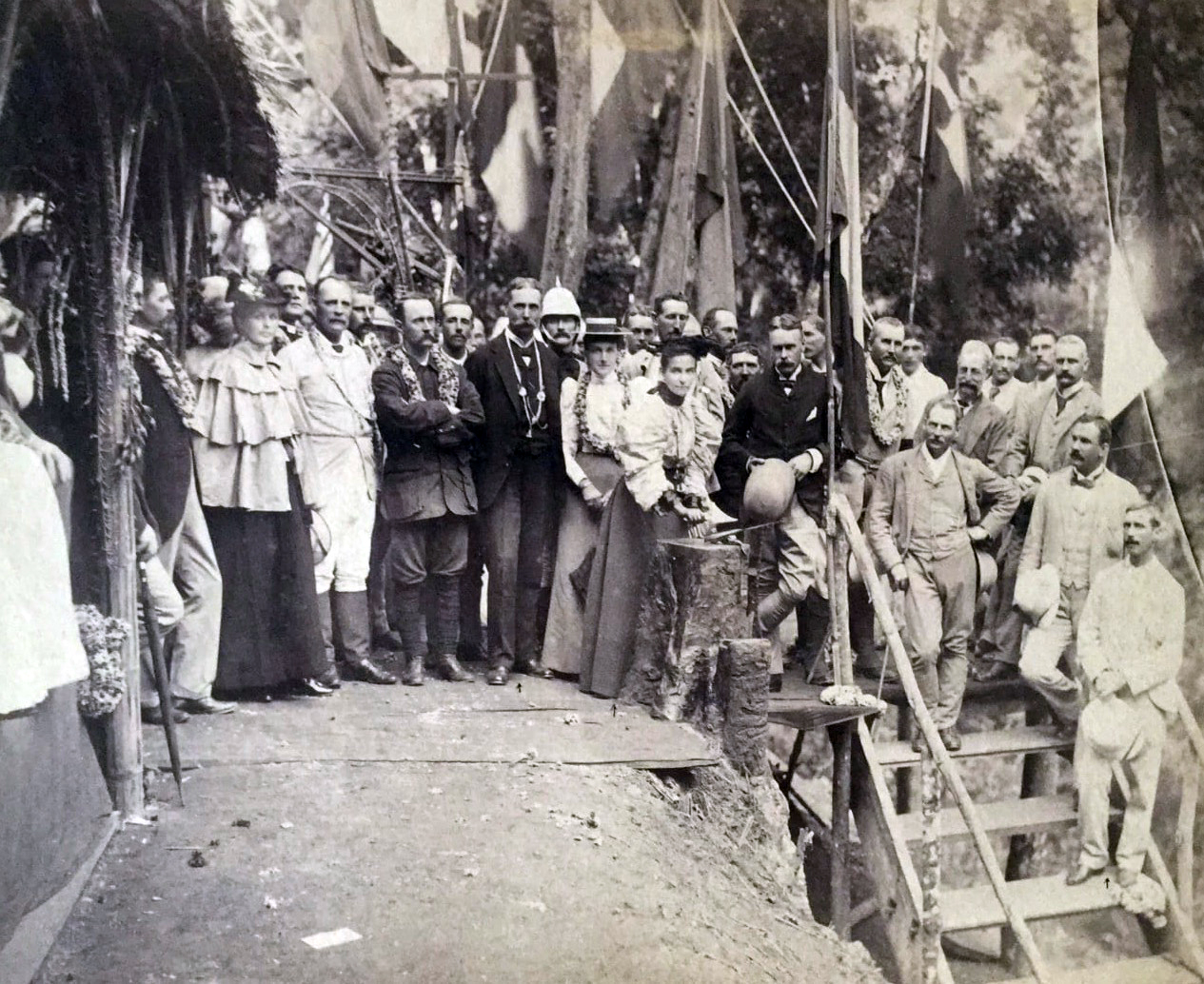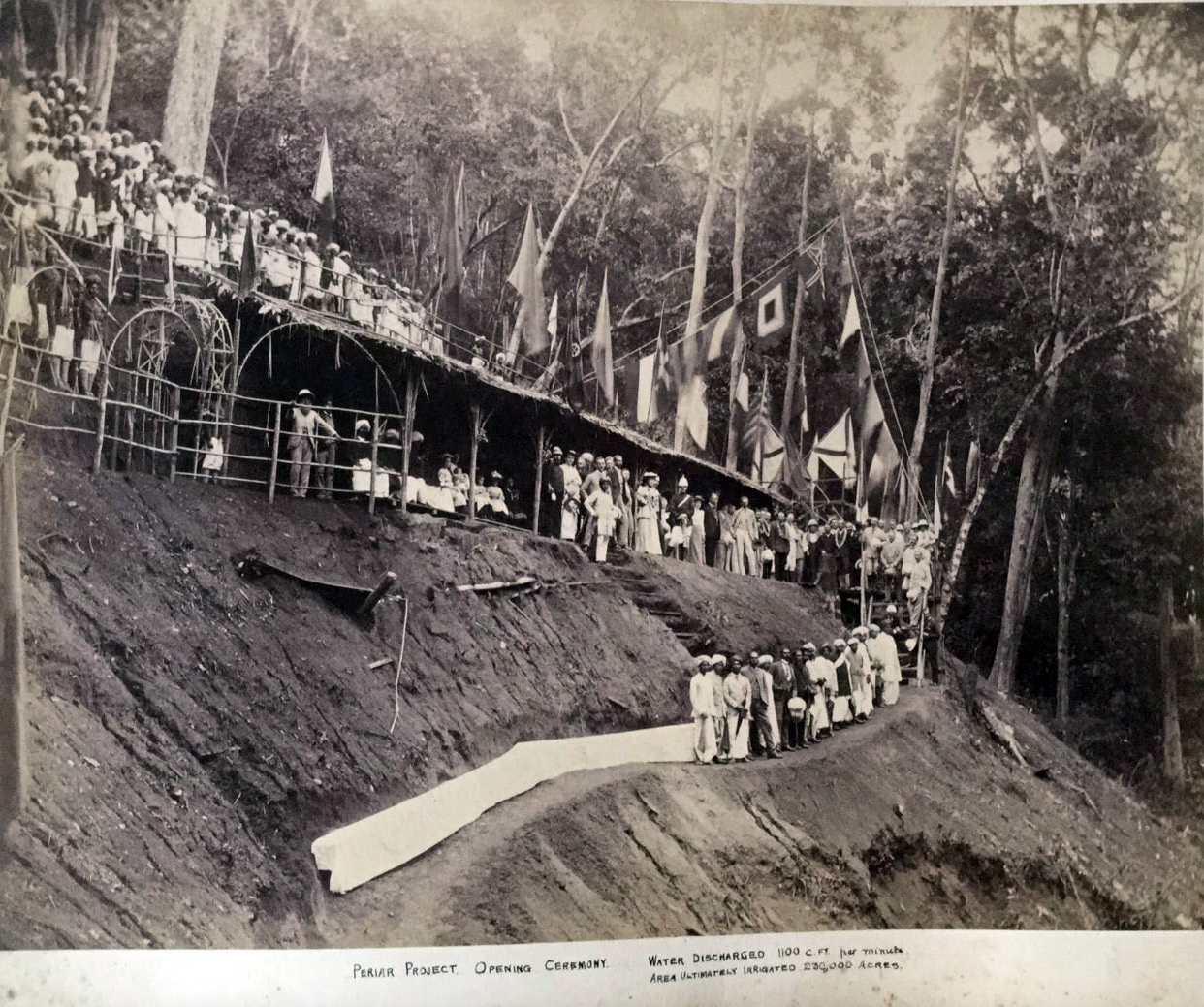
The two pictures show the formal opening of the Periyar Project by Lord Wenlock the Governor of Madras in 1896. The Periyar (Periar) Project, which was completed in 1895, stands as one of the most audacious and transformative feats of British engineering in colonial India. Conceived to address the chronic water scarcity in the rain-shadow plains of Tamil Nadu, the project involved damming the Periyar River in the Cardamom Hills of present-day Kerala and diverting its flow eastward—against its natural course—through a mountain tunnel into the Vaigai River basin.
The chief architect of this ambitious scheme was Colonel John Pennycuick of the Madras Public Works Department. Faced with formidable terrain, relentless monsoons, and logistical isolation, Pennycuick led a workforce through eight years of grueling conditions. The site was remote and densely forested, with the nearest railway station over 160 kilometers away. Workers endured malaria, cholera, and frequent flooding. Camps were repeatedly relocated due to disease outbreaks and wildlife threats, including elephants, tigers, and stampeding bison.
The dam itself is a gravity structure built from lime surki mortar—a traditional mix of lime, brick dust, and sand—at a time when cement was not yet widely available in India. Standing 164 feet high, it created the Mullaperiyar Reservoir, which remains a vital source of irrigation for Tamil Nadu to this day. The mile-long tunnel blasted through the Western Ghats was a marvel of precision, enabling the river to flow toward an ocean it had never seen before.
Pennycuick’s personal commitment to the project became legendary. When government funding faltered, he reportedly sold his own property in England to keep the work going. His legacy endures in Tamil Nadu, where statues, memorials, and even children named in his honour reflect the deep gratitude of communities whose agricultural prosperity was made possible by his vision.
The Periyar Project was formalised under a 999-year lease agreement between the Madras Presidency and the princely state of Travancore, granting Tamil Nadu rights to the diverted water. The agreement remains in effect and has been the subject of later administrative and legal review.
More than a technical achievement, the Periyar Project exemplified the imperial drive to reshape nature through engineering. It fused European design with Indian labour and materials, and its success helped cement the reputation of British engineers as agents of modernity.