

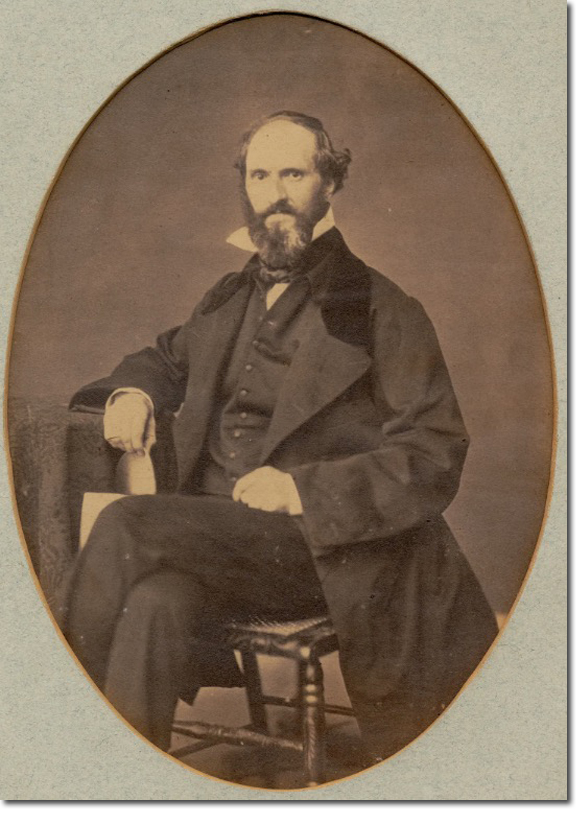
Richard Spruce (1817–1893) was one of the most accomplished botanical explorers of the nineteenth century, known for his extensive fieldwork in the Amazon basin and his critical role in the British transfer of cinchona to South Asia. A self-taught botanist from Yorkshire, Spruce combined meticulous scientific observation with extraordinary physical endurance, contributing thousands of specimens to European herbaria and shaping the imperial understanding of tropical flora.
Spruce’s career was defined by his fourteen-year expedition across South America, beginning in 1849. He travelled through the Andes, the Amazon headwaters, and the forests of Ecuador and Peru, collecting plants under often punishing conditions. His work was supported by institutions such as Kew Gardens and the Royal Geographical Society, which recognised the strategic value of his botanical intelligence. Spruce’s collections enriched the taxonomic record and provided material for economic botany, ethnobotany, and pharmacology.
In 1859, Spruce was recruited by Kew Gardens to participate in the British cinchona transfer. Cinchona bark, the source of quinine, was vital to the health of British troops and administrators in India, where malaria posed a constant threat. Spruce established a remote base in the Andes and began collecting seeds and seedlings of red-barked cinchona species. Over the course of several seasons, he gathered over 100,000 dried seeds and cultivated more than 600 seedlings, which he transported by raft to the Pacific coast for shipment to India and Ceylon.
The physical toll of this work was immense. Spruce suffered repeated bouts of malaria, dysentery, and rheumatism, and the strain of the cinchona expedition left him permanently disabled. He never walked again unaided. Yet his efforts provided the only viable stock from the British mission, and his red cinchona trees became the foundation of plantation cultivation in South Asia. Although later found to be inferior in quinine content to the Dutch Ledger varieties, Spruce’s contribution was indispensable to the initial establishment of the industry.
Spruce’s approach to botany was distinctive. Unlike many imperial collectors, he maintained a deep respect for Indigenous knowledge and ecological complexity. He documented the uses of plants by local communities, recorded vernacular names, and noted the cultural significance of species alongside their scientific properties. His journals reveal a sensitivity to landscape, language, and human experience that set him apart from more extractive contemporaries.
While Spruce did not hold institutional office or direct a colonial garden, his fieldwork shaped the practices of imperial botany. His specimens were studied at Kew, his notes informed cultivation strategies, and his maps guided future expeditions. He operated at the frontier of empire, where scientific ambition met logistical challenge, and his legacy lies in the integration of botanical precision with geographic and ethnographic insight.
Spruce’s contributions extended beyond cinchona. He collected new species of orchids, ferns, and mosses; studied the flora of the Rio Negro and the Andes; and provided foundational material for South American plant taxonomy. His work influenced figures such as Alfred Russel Wallace and Joseph Dalton Hooker, and his collections remain central to the study of neotropical botany.
Richard Spruce’s legacy is one of endurance, precision, and quiet influence. He bridged the gap between field science and imperial infrastructure, supplying the knowledge and material that enabled Britain to cultivate strategic crops in distant colonies. His work exemplifies the role of the solitary botanist in the broader machinery of empire—an agent of science whose observations and specimens helped shape the botanical geography of the modern world.

