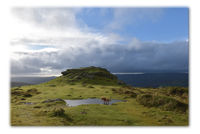
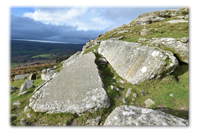
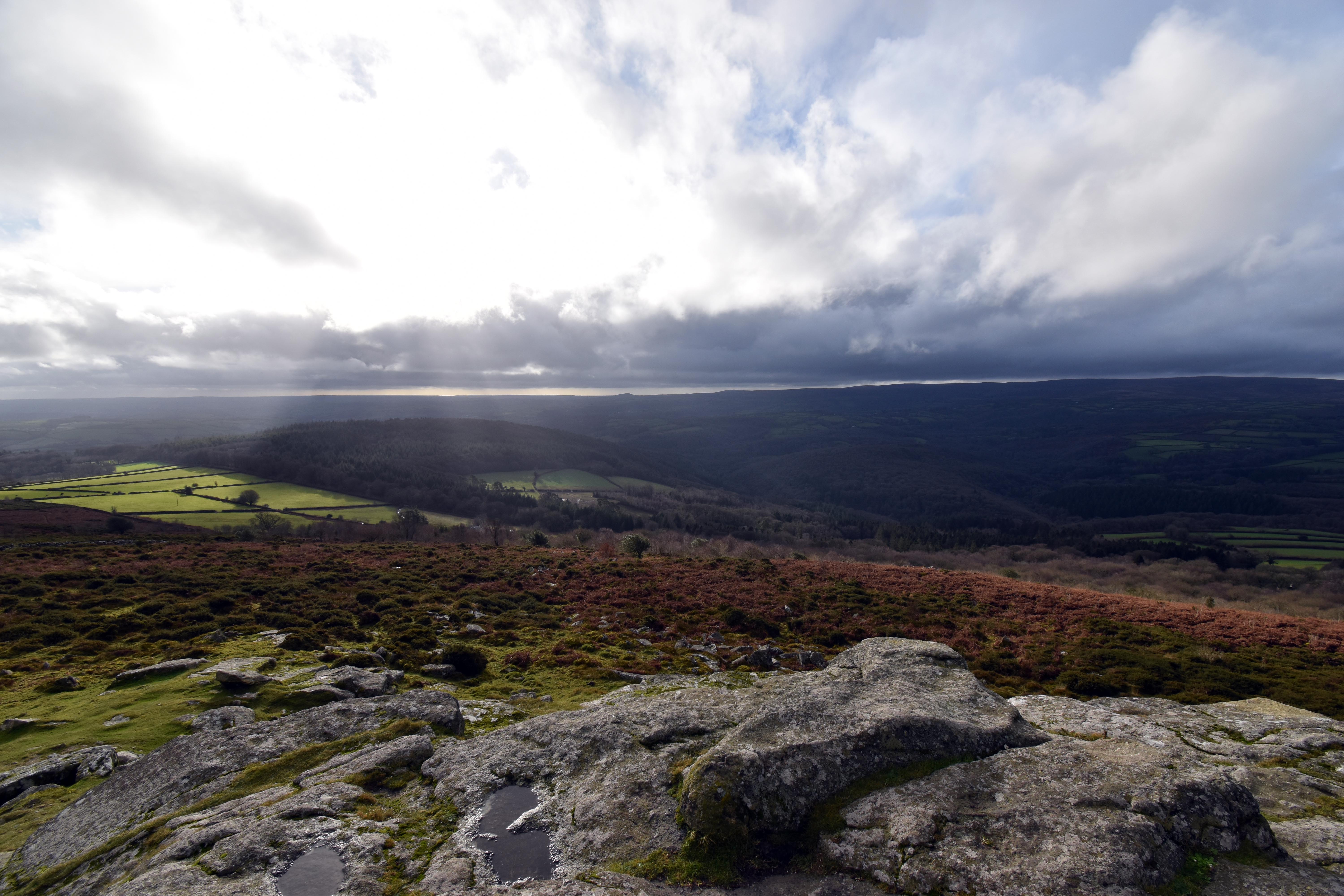
Just days before Christmas Rupert and I went on a very beautiful walk on a windswept day after a lot of rain. It made for a very atmospheric walk, made even more so by the poignancy of some of the places we were to visit. We parked at Cold East Cross car park, nestled below Ripon Tor and with the Rifle Range Butts not far off in the distance. From up here we walked pretty much due south towards Buckland Beacon. I have to say that you get gorgeous views from this ridgeline in every direction. To the west you can see many of the peaks of Dartmoor, and to the east you can see out towards Torbay, with the beautiful Teign Valley particularly well picked out as you look straight down it as it reaches the sea. It was more than a little blustery up here and, after all the rain, there was some serious puddle‑jumping to be done, but the views made it very worthwhile.
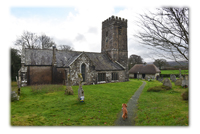
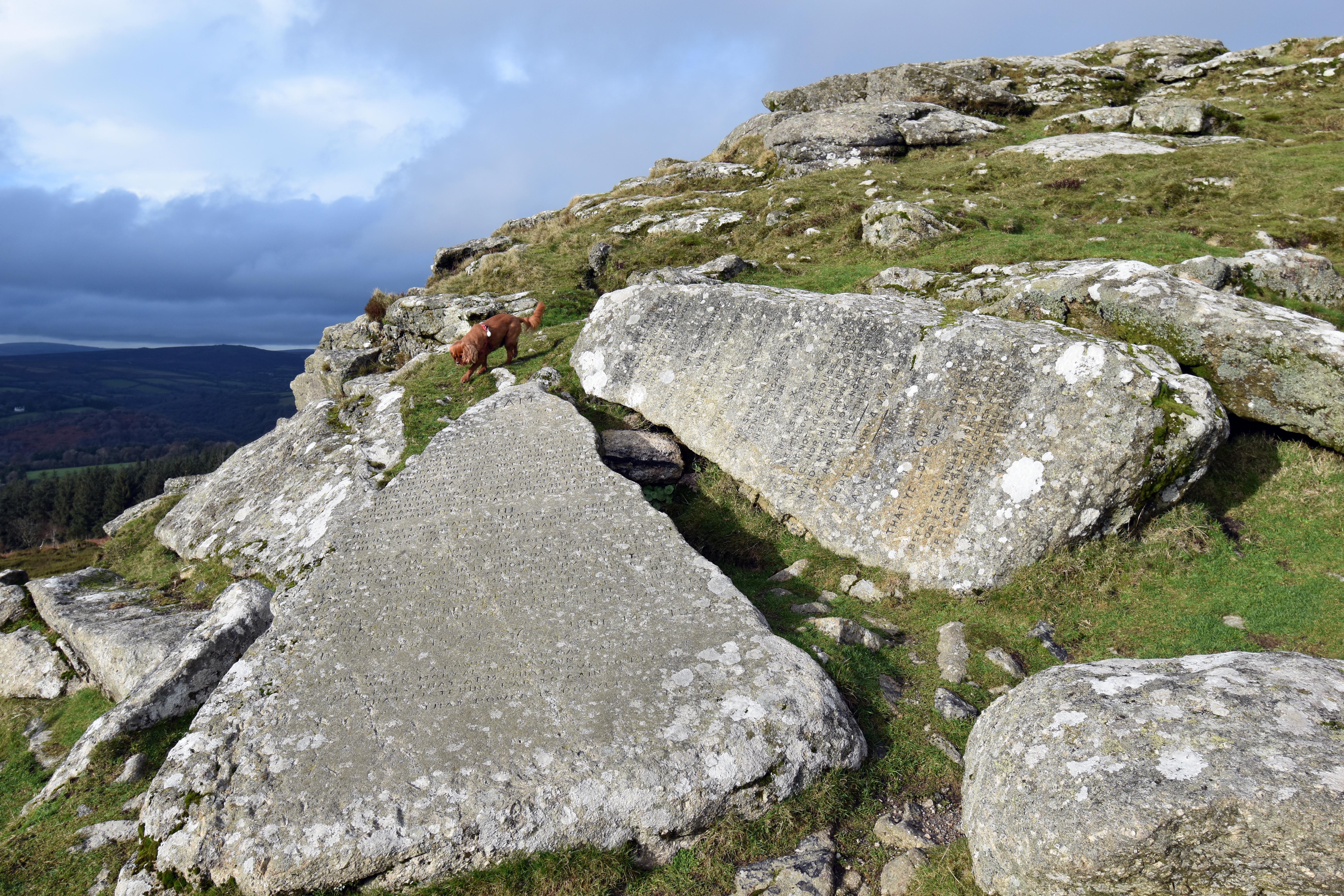
I have to say that this is definitely one of the more poignant walks you can make on Dartmoor, with some important religious overtones which were particularly relevant walking in Advent in the immediate run‑up to Christmas Day. Buckland Beacon is famous for hosting the Ten Commandments Stone near its summit. This was carved in the 1920s and commissioned by a devoutly religious Protestant named William Whitley. William and his brother Herbert had made their fortunes in Liverpool by running a brewery known as Greenall Whitley. In Edwardian times, the way you proved you had “made it” was to buy an estate in the country and live as a country squire. William bought Buckland Estate here in Buckland‑in‑the‑Moor, while his brother bought Primley Estate in Paignton — where Herbert founded a zoo that eventually became Paignton Zoo and is still in operation today. Their reinvention of themselves was tinged with sadness, as they had lost a very close brother at the Battle of Arras during the First World War — Charles Whitley, who had earned the Military Cross just the year before. The two Scouse brothers who moved to Devon are buried in the churchyard at St Peter’s down below in Buckland‑in‑the‑Moor.
And I have to say that you cannot visit Buckland Beacon without visiting Buckland‑in‑the‑Moor. They are integrally linked thanks to William Whitley. In fact, standing and looking at the Ten Commandments Stones, you can see what was his house, Buckland Court, right next to St Peter’s Church way down in the valley. William’s commissioning of the Ten Commandments Stone on Buckland Beacon was inspired partly by some carved texts from Exodus in that church next to his house. These had originally been placed there during the reign of King Charles II as a cheap way of replacing non‑conformist texts with more Anglican interpretations — much cheaper than reprinting all the prayer books. They were recarved in the Victorian era and you can still see these proudly displayed in the church. For William Whitley these provided the inspiration for his carving on Buckland Beacon. This was to celebrate the preservation of the Anglican Book of Common Prayer in its original form when proposed revisions to it were defeated in the Houses of Parliament in the 1920s. The stonemason W. A. Clements, who carved it, was inevitably given the nickname “Moses” by the locals, although he quipped in return that unlike Moses he “didn’t have to carry the slabs down from the top of the mountain!”
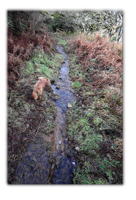
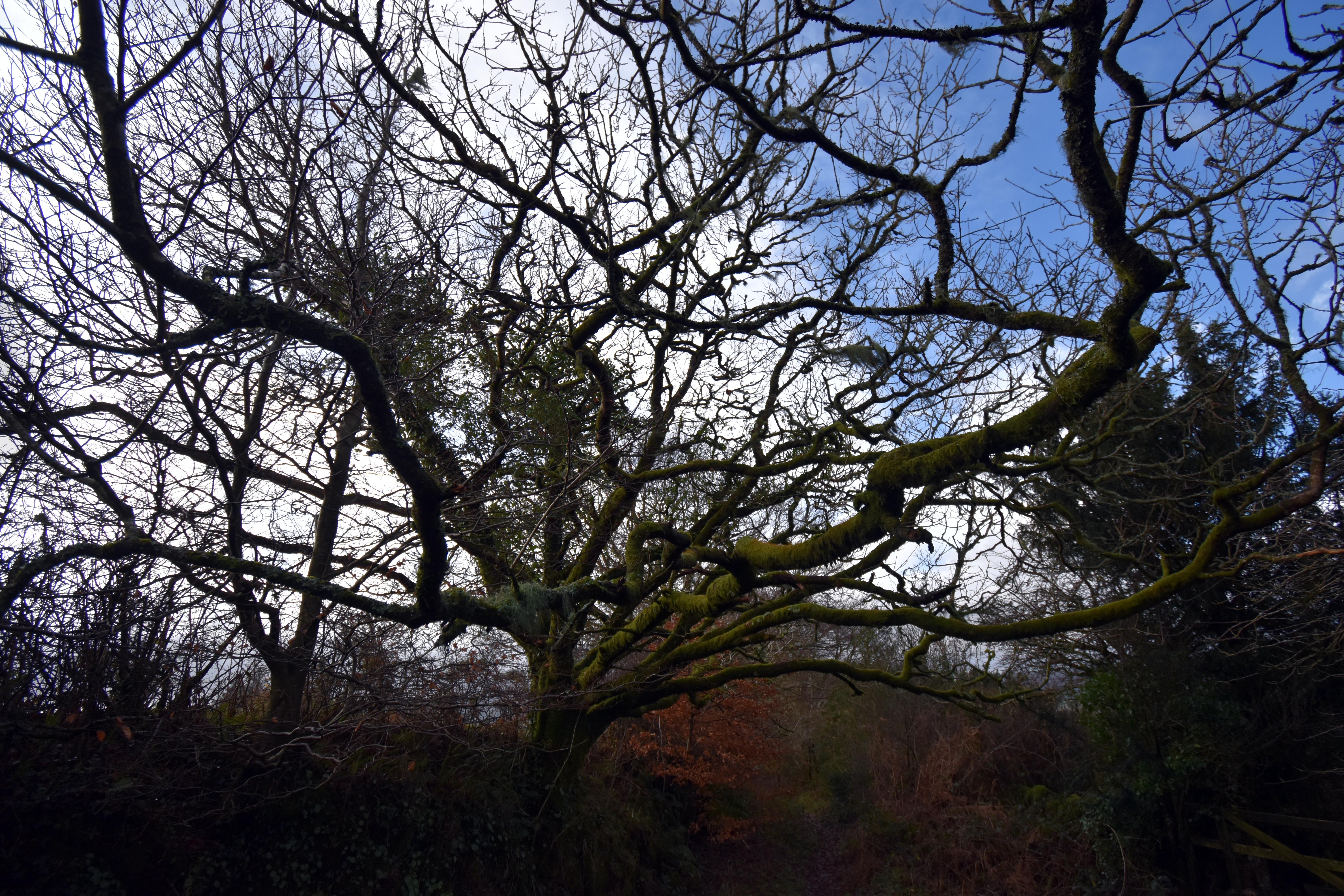
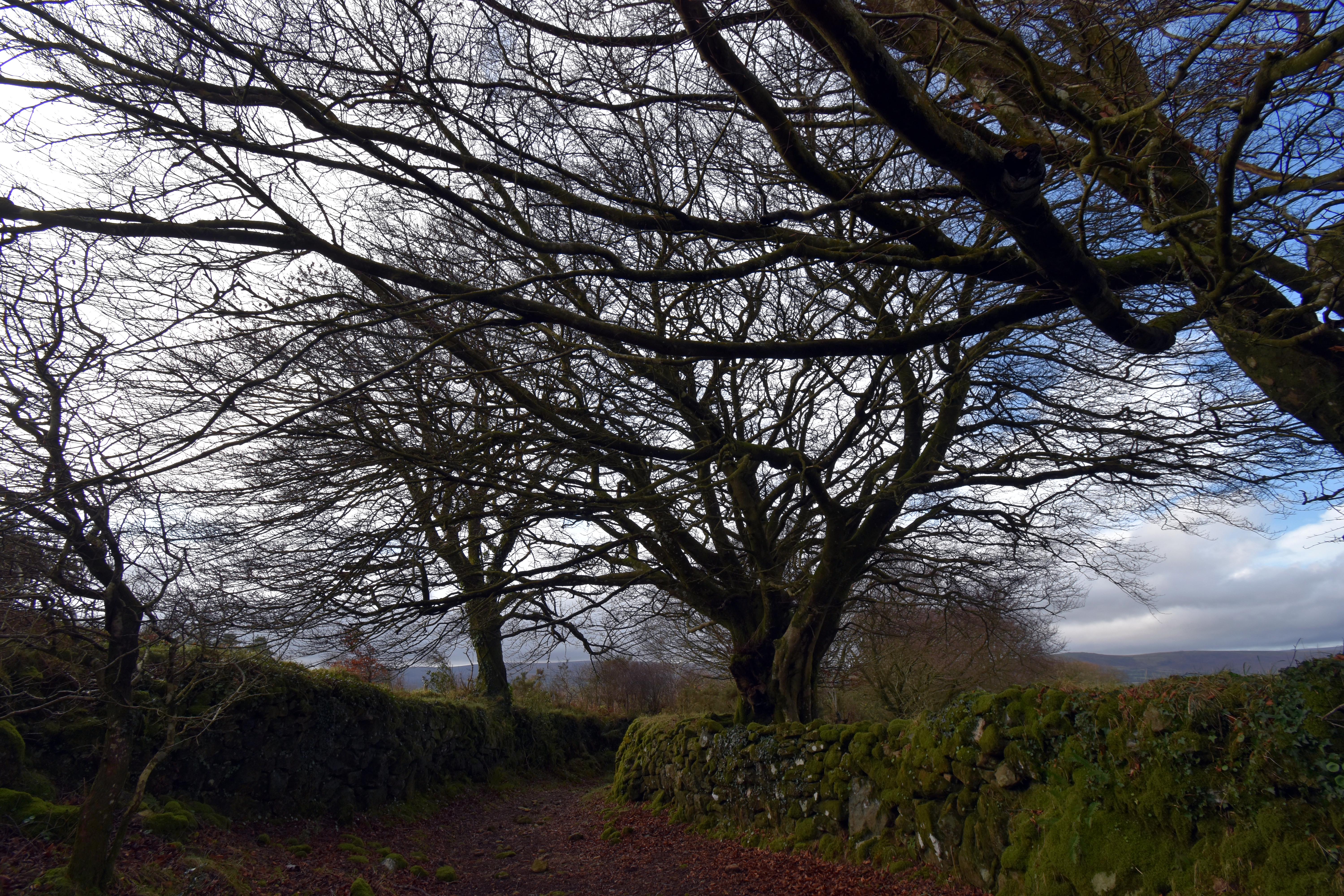
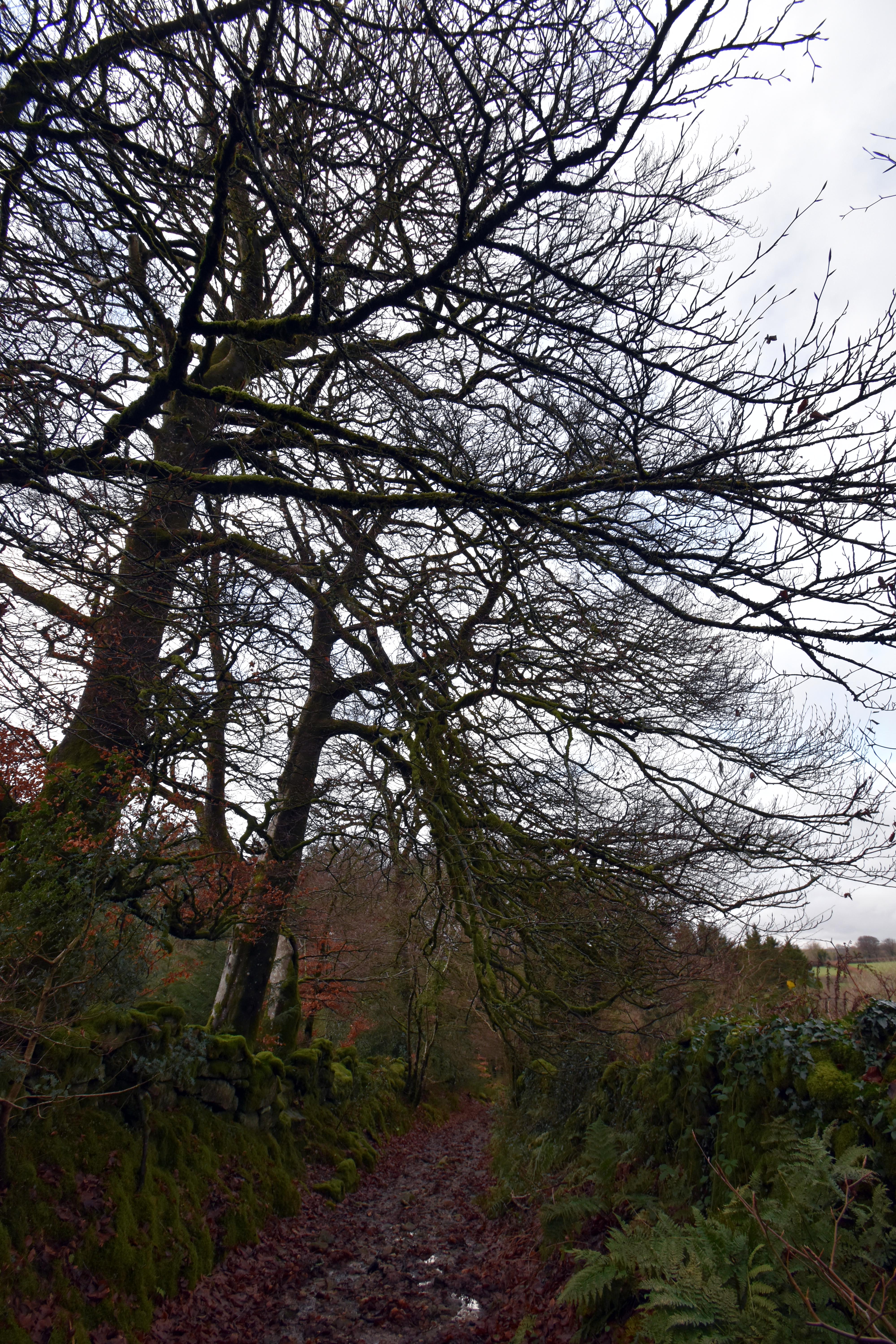
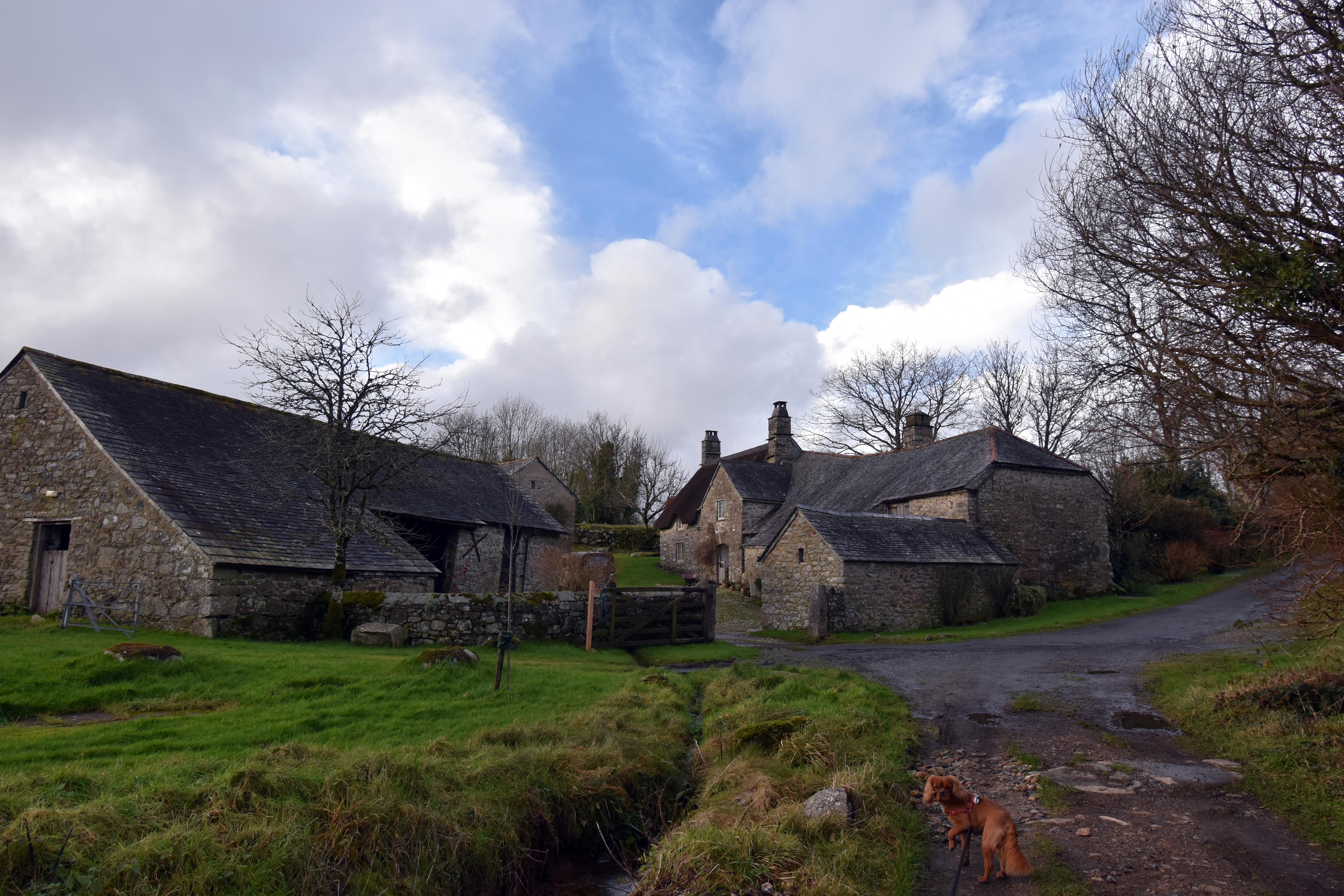
I should say that our own journey from the top of the mountain — or Buckland Beacon in this case — was a little more adventurous than we had been expecting. We headed northwest to try and find a bridle path towards the almost stereotypically beautiful Devon farm of Bowden and then join the road down to the church, but being winter the gorse was quite well developed. More challenging still was the fact that the bridle path had become virtually a stream in its own right thanks to all the recent heavy rain. There was some serious negotiating of the path in an attempt to keep out of the deepest parts. Luckily it didn’t last too long and soon it became a very beautiful trail downwards, with moss‑lined trees and walls and a very atmospheric winter walk indeed. After the farm at Bowden we joined Elliott’s Hill road, which takes you virtually to the church at Buckland‑in‑the‑Moor.
As you might expect, William Whitley — playing his role as lord of the manor to a tee — became very active in and supportive of St Peter’s Church for the rest of his life. When his mother died in 1929, William gifted a new church clock which has a very unusual face indeed. Instead of numbers it reads MY DEAR MOTHER. Additionally, every quarter hour it chimes “All Things Bright and Beautiful”. It was installed in 1930 and is quite eye‑catching.
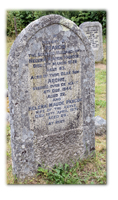
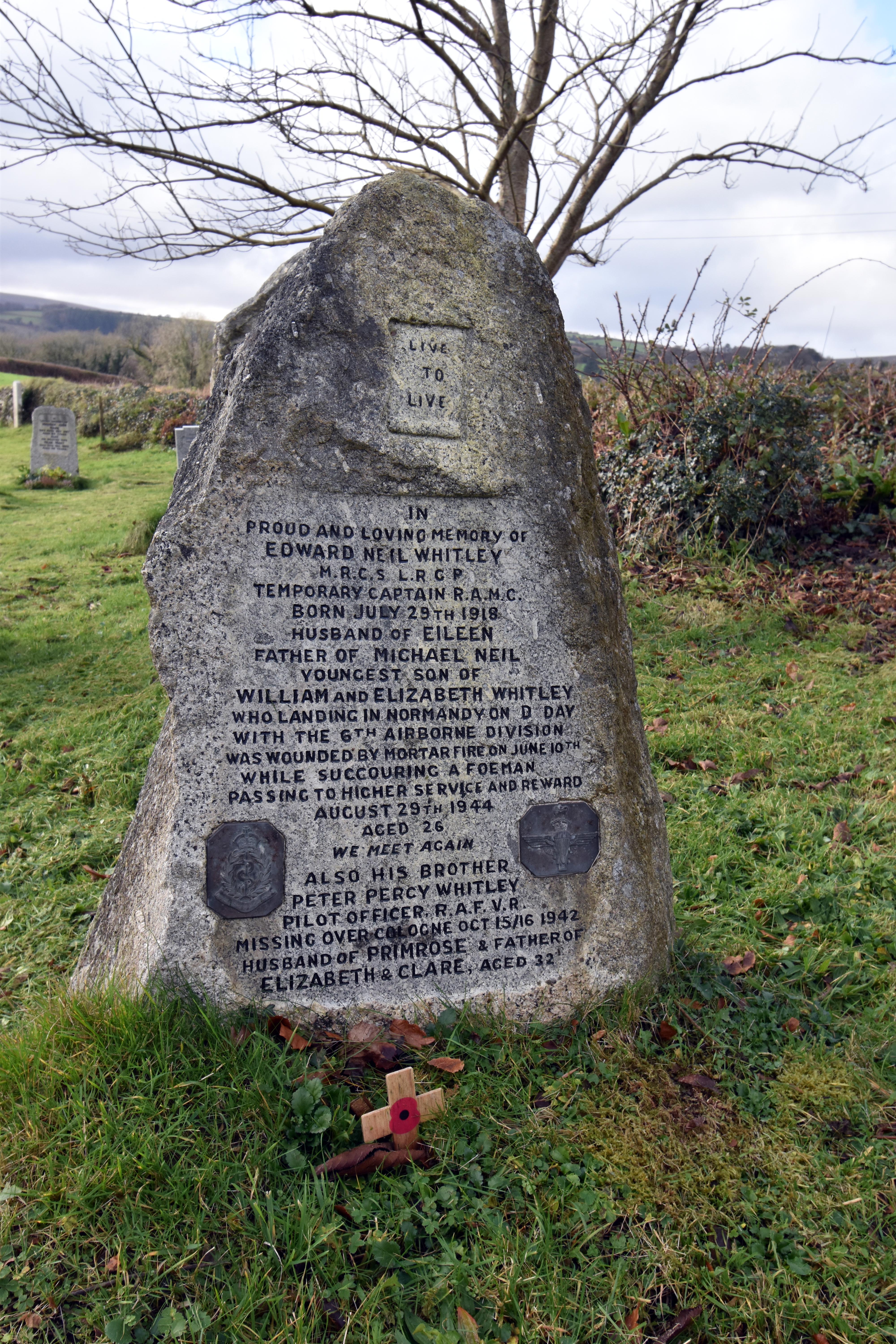
But for the devout Christian that he was, the graveyard sadly holds the graves of two of his sons who were killed during the Second World War. One served in Bomber Command as part of 57 Squadron. His Lancaster was participating in a raid on Cologne but was lost over the North Sea in 1942 — his body was never recovered. His brother had an even more poignant death. Edward was a doctor who had joined the Royal Army Medical Corps and, as a medic, had transferred to the Parachute Regiment. He parachuted into France with his unit on D‑Day itself — 6 June. Just four days later, as his gravestone makes clear, he was “Wounded by Mortar Fire on June 10th while succouring a foeman.” He was evacuated back to Britain but sadly succumbed to his wounds on 29 August. I find it incredibly moving that a doctor died while helping to treat an enemy soldier. It illustrates the humanity that can be present in the midst of conflict.
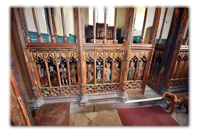
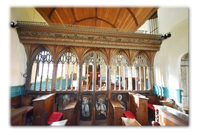
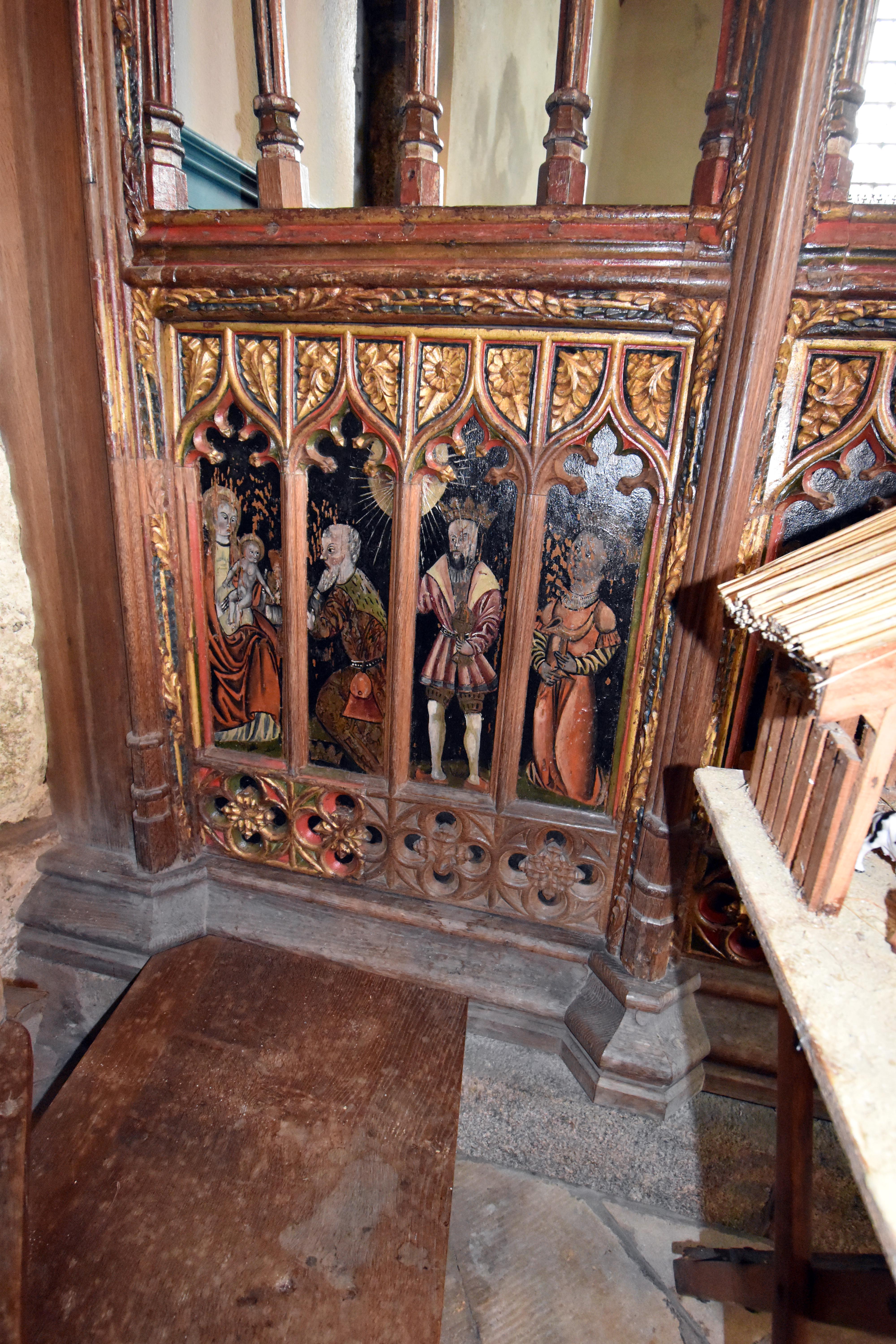
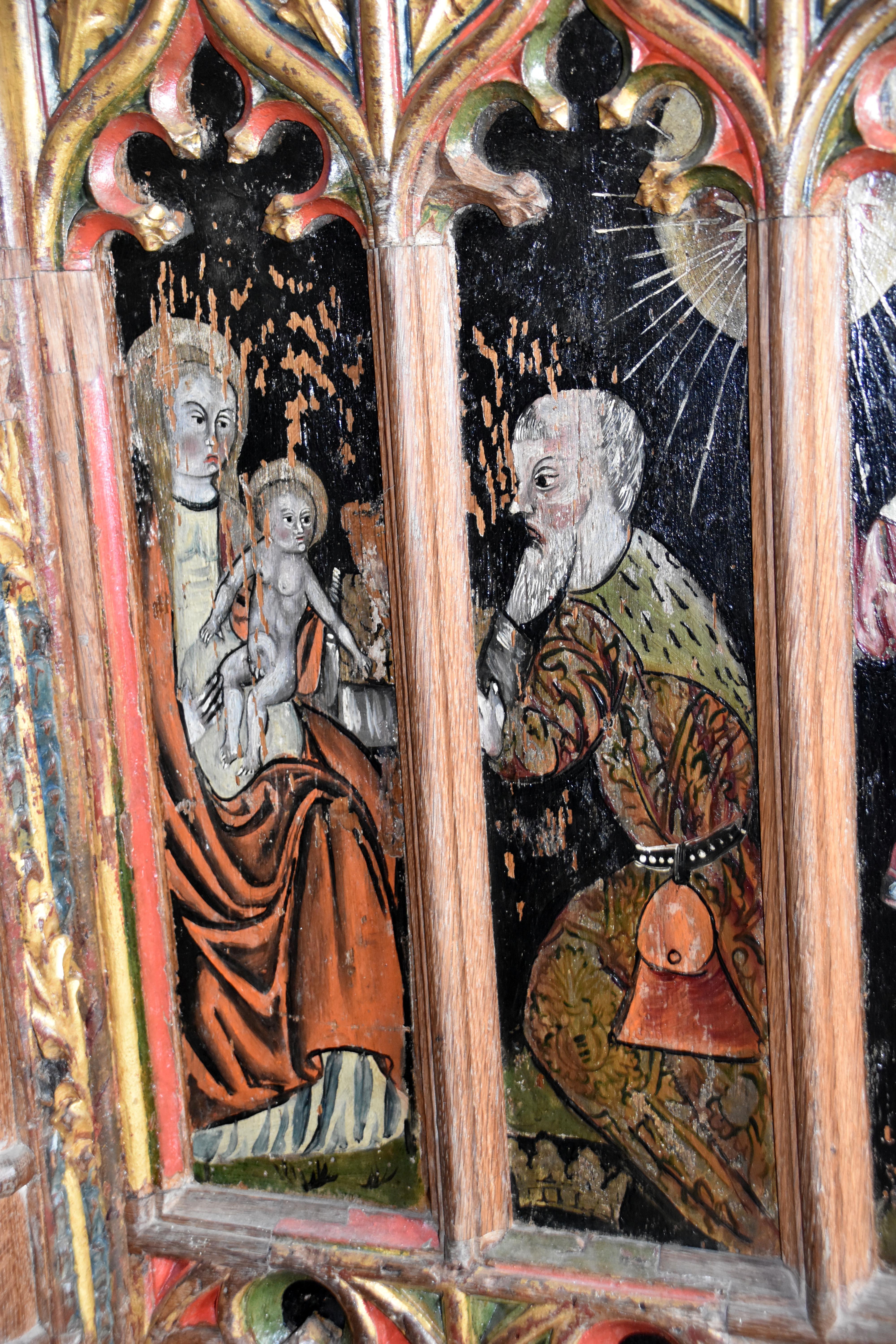
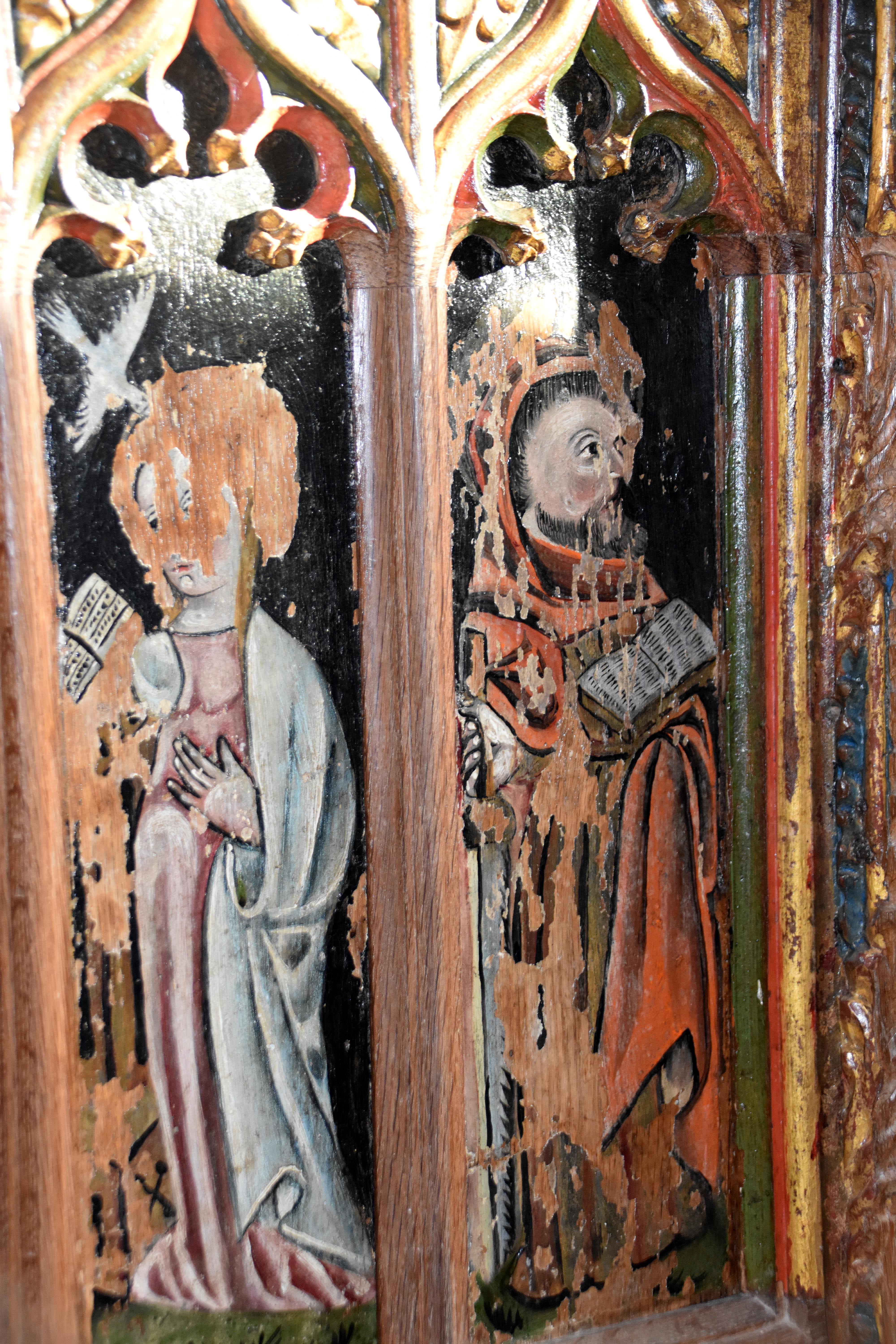
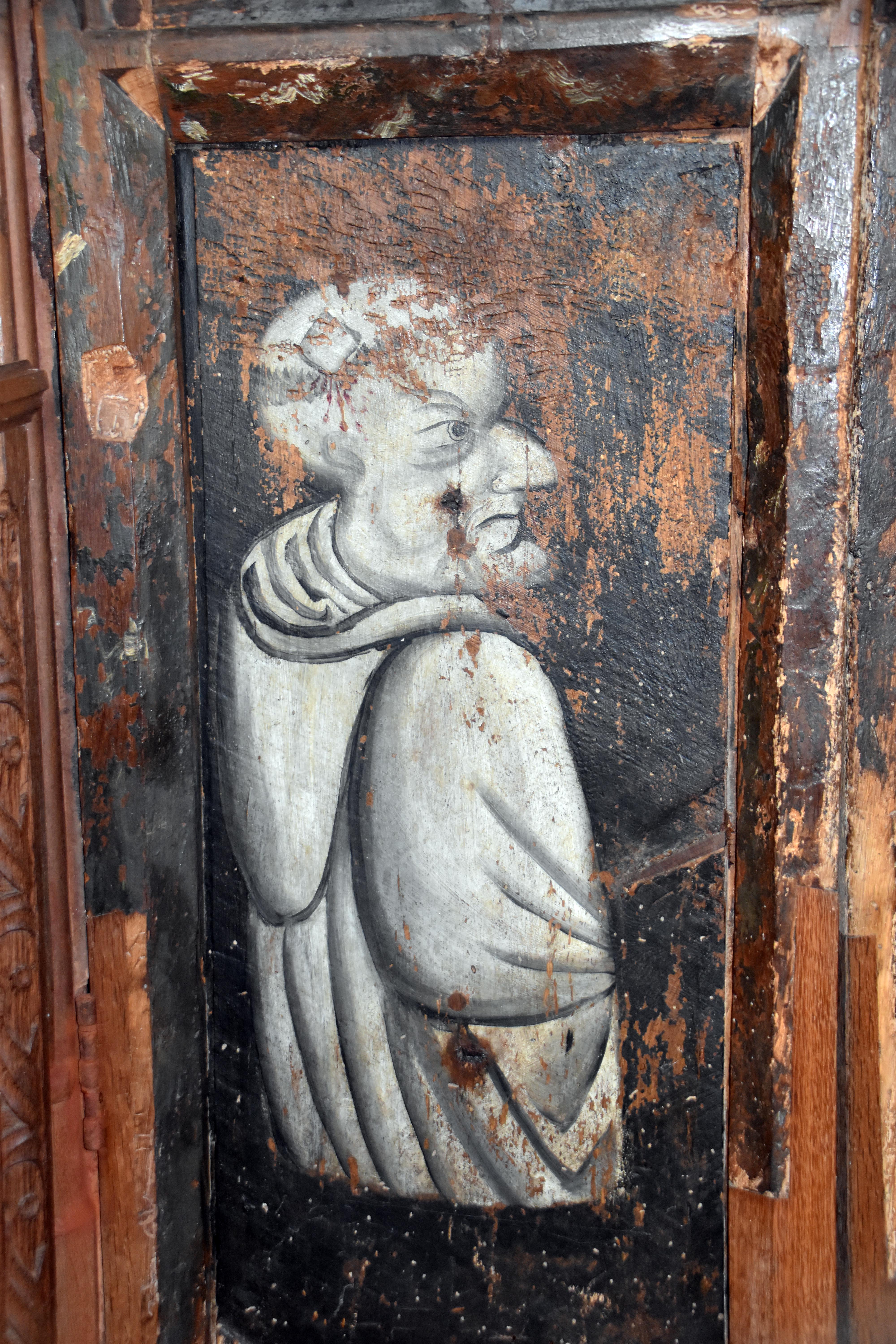
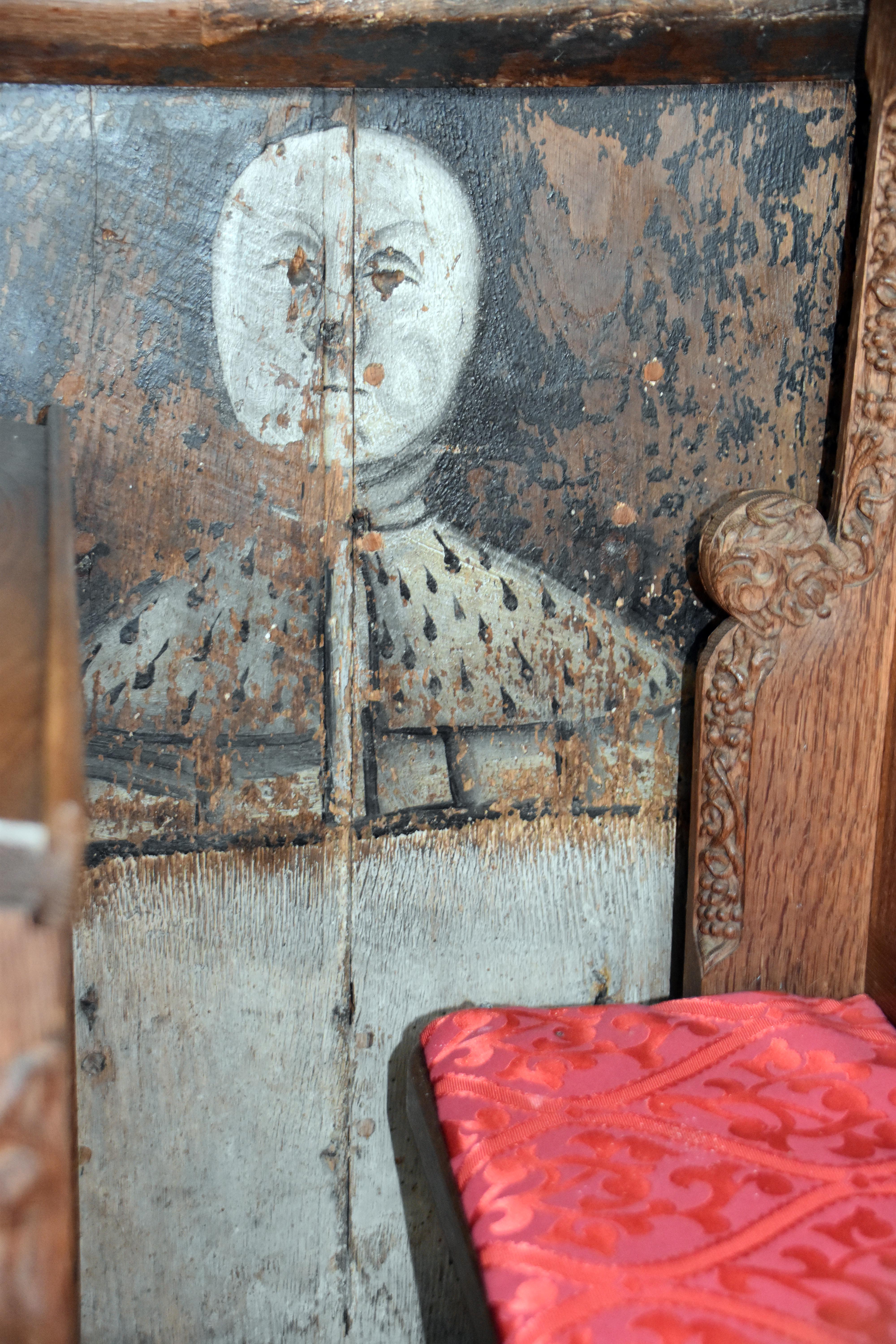
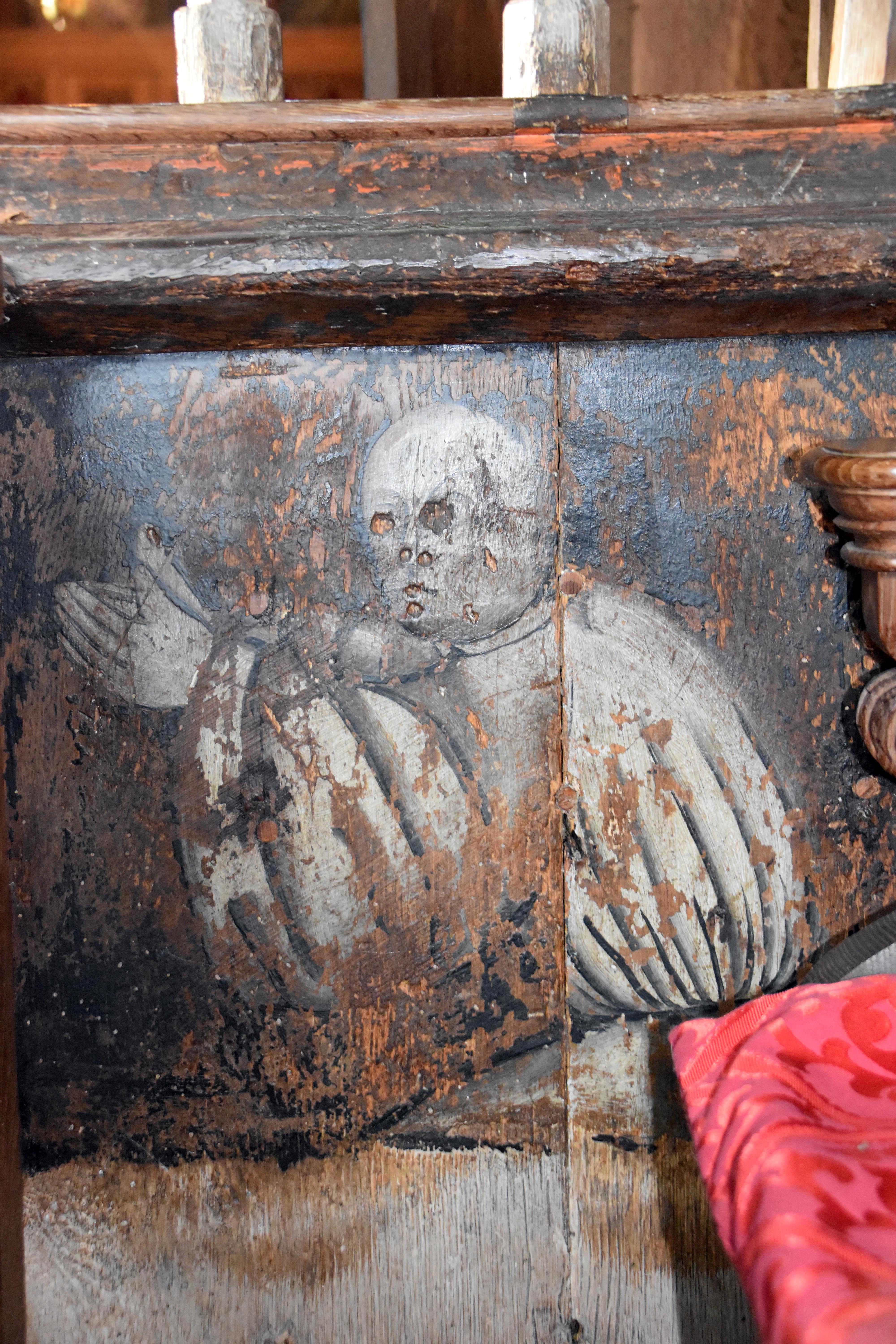
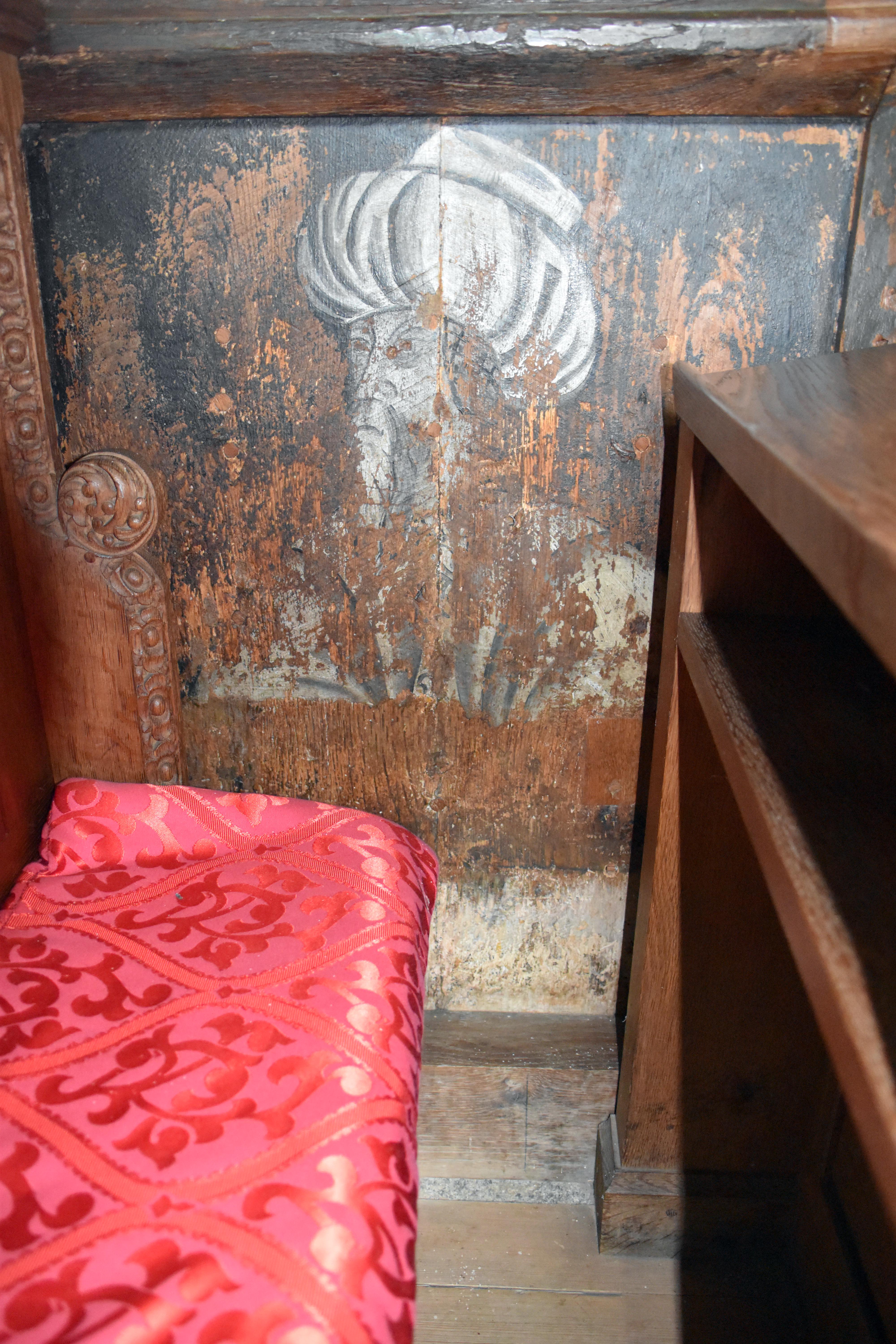
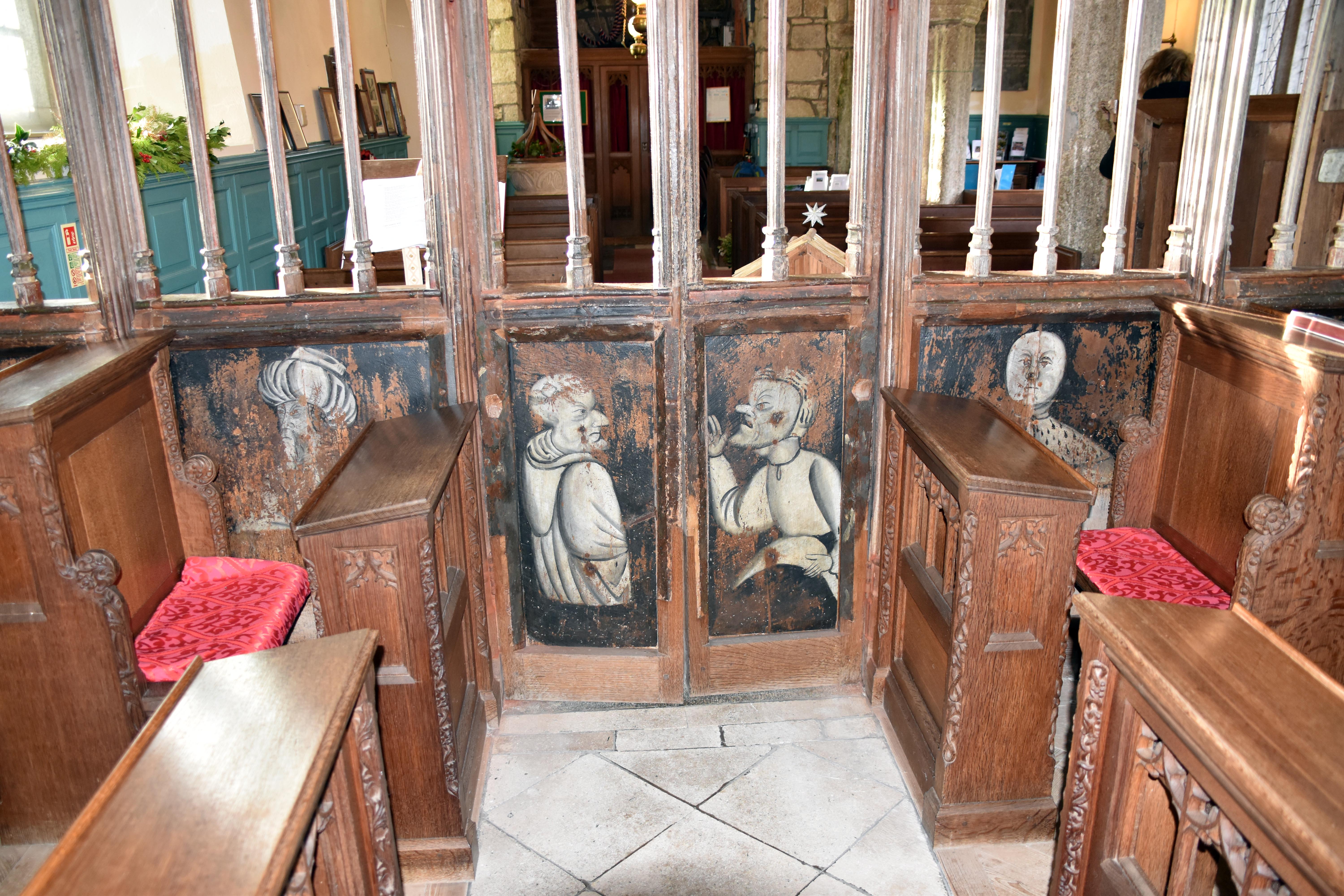
The other fascinating thing about St Peter’s is that few churches show as much clear evidence of the turmoil and consequences of the Reformation as this one does. Generally, after the Reformation, churches in England were encouraged to whitewash walls, remove any images or carvings of saints or the Virgin Mary, and discourage the portrayal of human forms altogether. Of course, the more isolated the church, the more likely such instructions might have been ignored. The c.1500 rood screen (so pre‑Reformation) shows a bit of both: many of the faces have been scratched out — almost certainly at the behest of austere Protestants — but some images, including the Virgin Mary and the Archangel Gabriel, survived.
My theory (and it is only a theory) is that the church probably thought, “Oh for goodness’ sake, we’ve only just redone this rood screen — we don’t want to destroy it already! We’ll just scratch out a few faces and cover up the rest.” It is very unusual indeed to find pre‑Reformation imagery in an Anglican church, and there are even more fascinating images on the rear of the rood screen — possibly showing Suleiman I, the Sultan of the Ottoman Empire, who had evicted the Knights of St John from Rhodes in 1522. It is possible that the other images show soldiers and people afflicted by that forcible takeover — and if so, they would show a real concern for the spread of Islam in Europe, even in this seemingly isolated spot on Dartmoor.
The rood screen would have had a rood loft, and you can see the staircase to this missing minstrel gallery very clearly. These were removed in Tudor times as part of the Reformation, although Elizabeth allowed rood screens to remain. However, they were often truncated and looked a bit forlorn without the ornate loft above them. In this case it was not until a little over a century ago that the rood screen had a far more substantial top attached to it. This was integrated into the medieval screen by no less than one of the Pinwell sisters from Ermington — in this case, Ethel Pinwell.
There is more evidence of international events reaching this tiny little church, with a record of alms‑giving from the local community in 1657 to “certain Irish People who dwelt in the isle of Begnosses who were taken by pirates who had their house burnt and spoyled.” We often assume that these rural communities were insulated from the wider world, but if you look you can find evidence that they were far more aware of what was going on than we might assume.
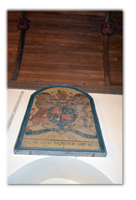
And then there is evidence of turmoil in the kingdom with the Royal Coat of Arms of King George II hanging over the door and dated to 1745. This date has real resonance with the upheavals of the Jacobite rebellions taking place in Scotland and stretching all the way down to Derbyshire. The Hanoverians were in real peril and were on the point of abandoning the kingdom when the Jacobites decided to turn back to Scotland. Eventually they were defeated by the King’s forces at Culloden. But it is telling that our National Anthem dates from this time, and declarations of allegiance to the Hanoverians might have been proclaimed in even these remotest of Devon churches.
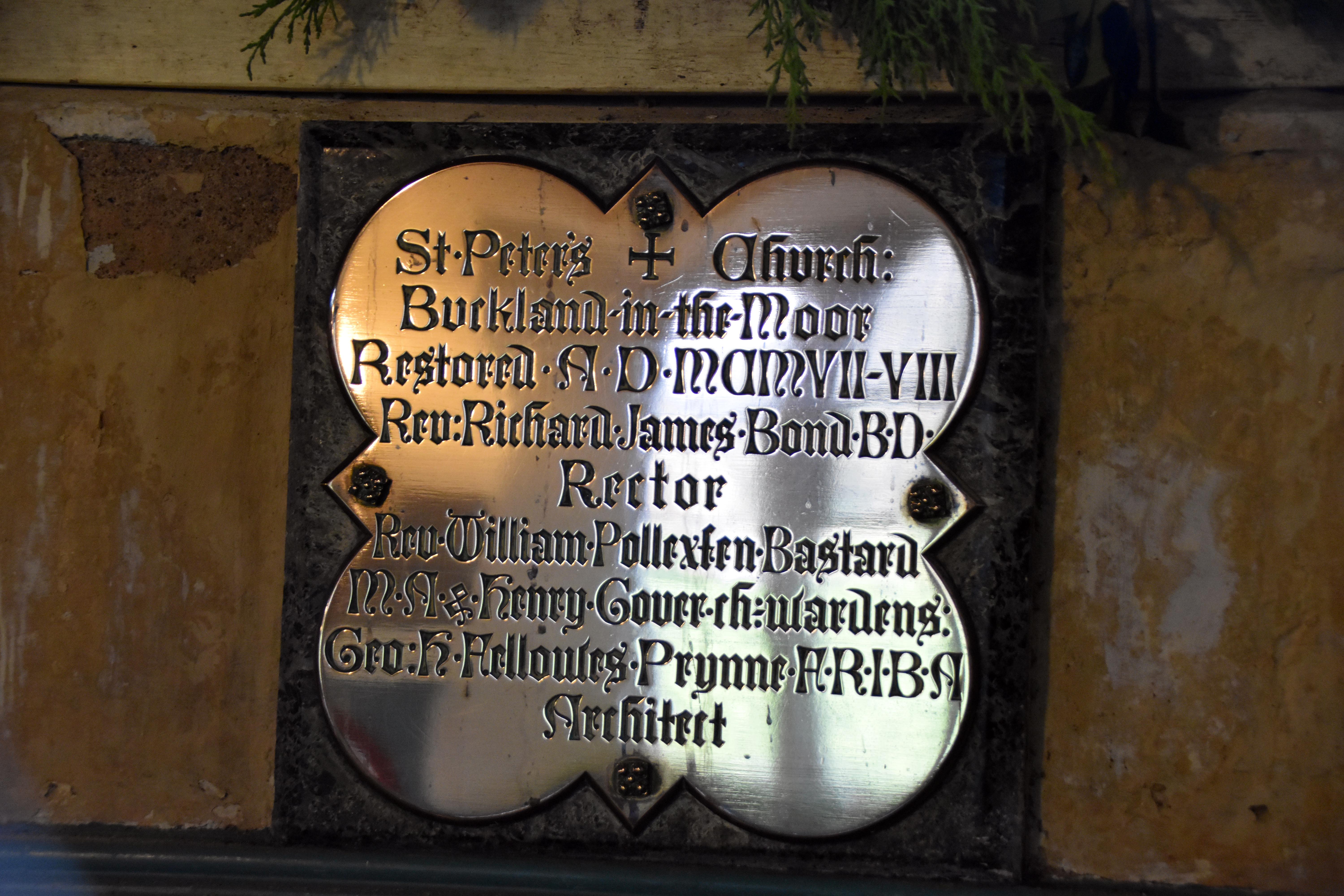
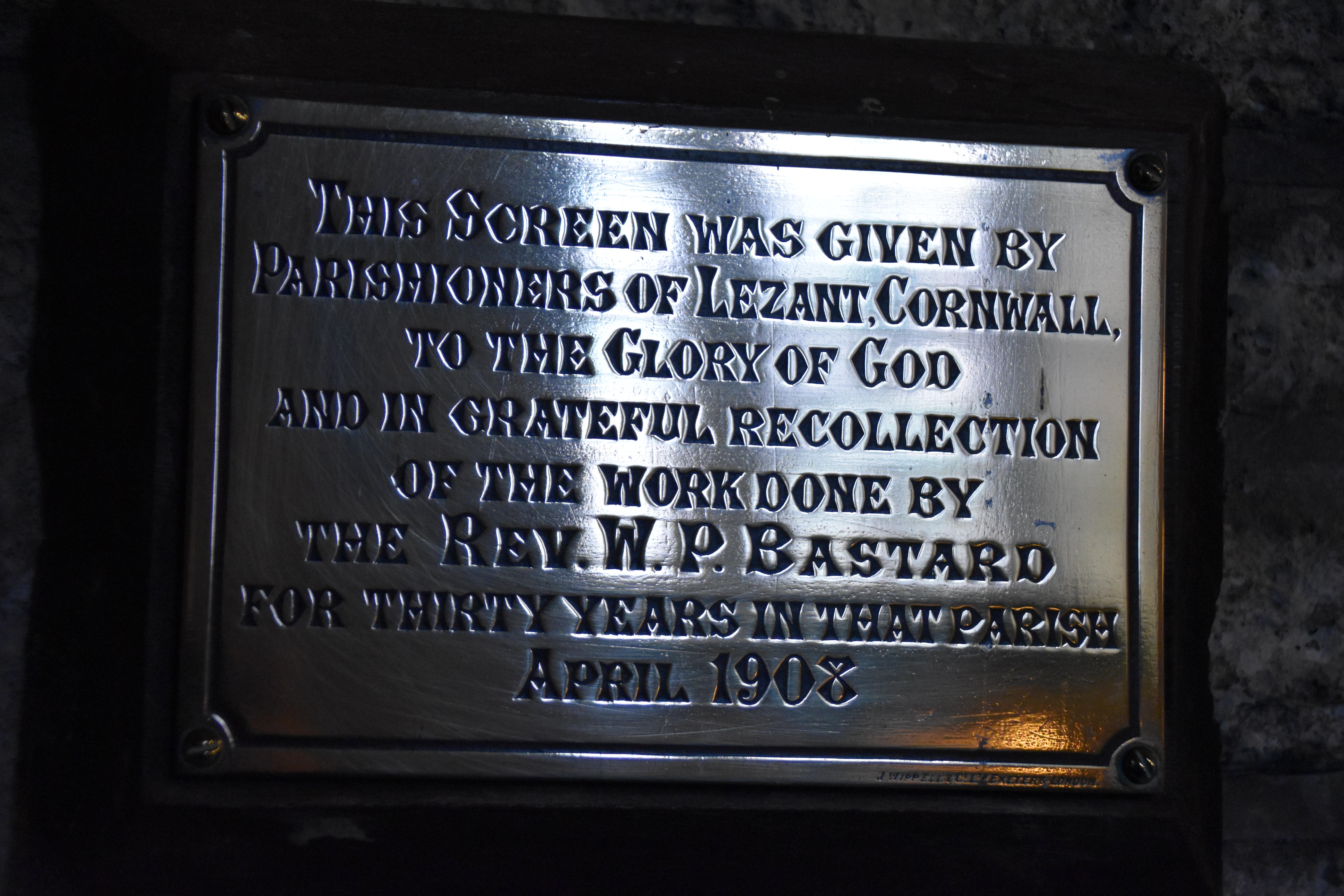
By the way, if you look carefully you do keep seeing the name Bastard commemorated around the church. This is because in 1614 the Bastard family bought Buckland Manor, and with the manor came the right to appoint the vicar of the church. There are several Bastards commemorated. They also married into the Pollexfen family, another famous Devon family we came across very recently at St Swithun’s in Woodbury near Exeter. The Bastards kept — and still have to this day — their other manor at Kitley. Intriguingly, it was the Bastards who sold the manor to William Whitley, allowing him to enter the landed aristocracy, although it appears he did not spend much time in the house itself. He was more after the lifestyle and social cachet of being a country lord of the manor. Tellingly, he allowed the US Army to use the property during the Second World War, and almost out of habit they built gun emplacements in the garden. Hard to think the house was in that much danger during the war.
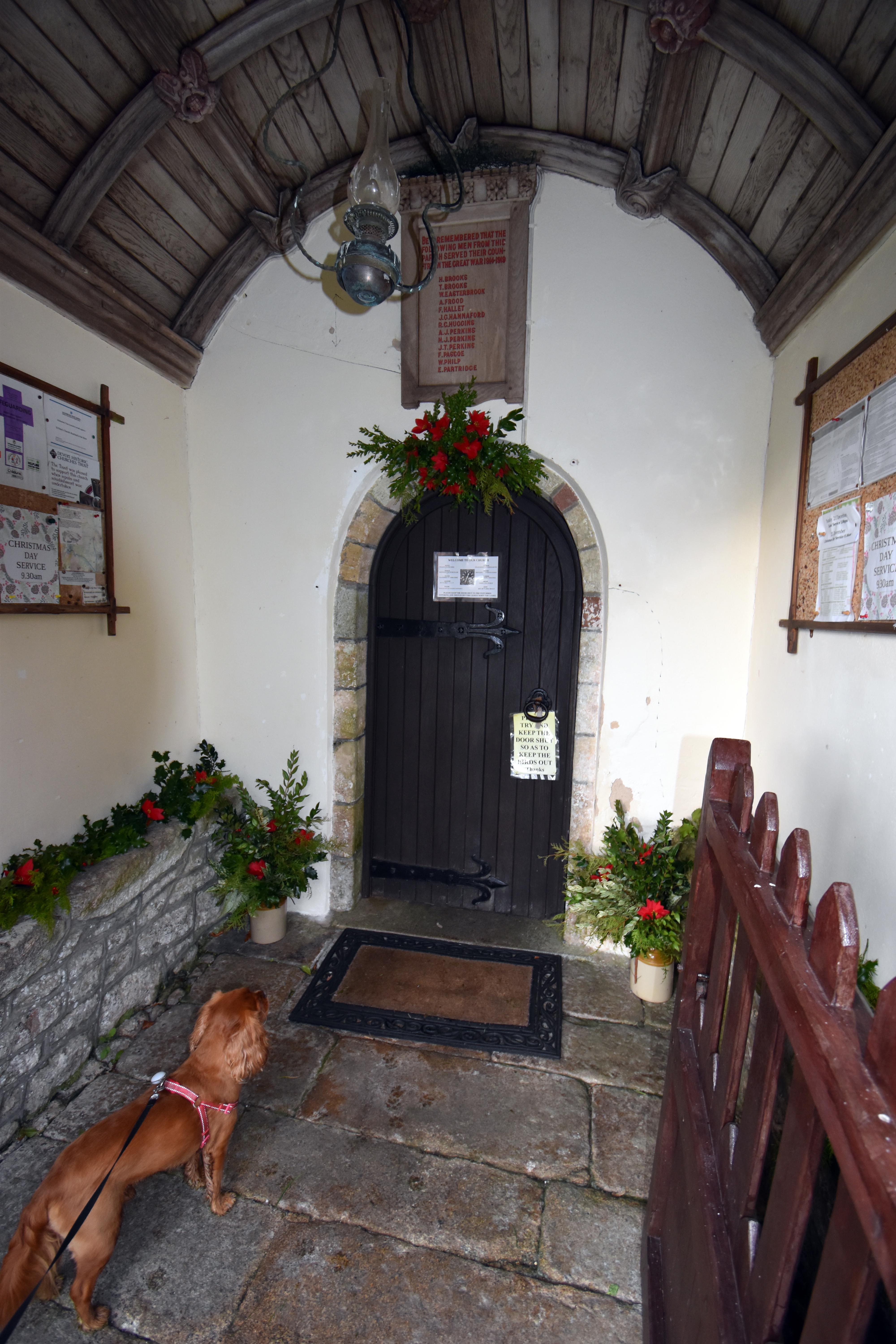
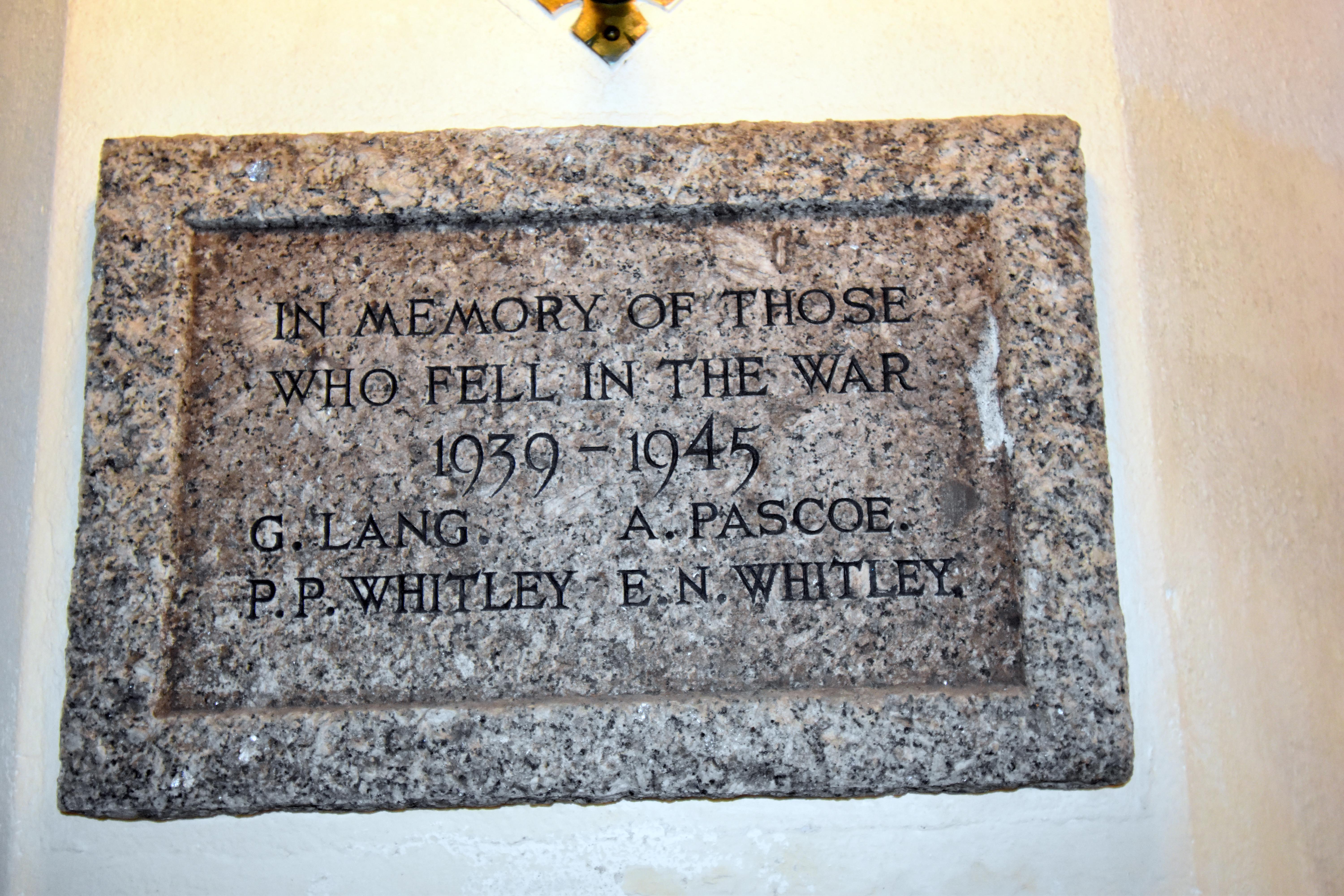
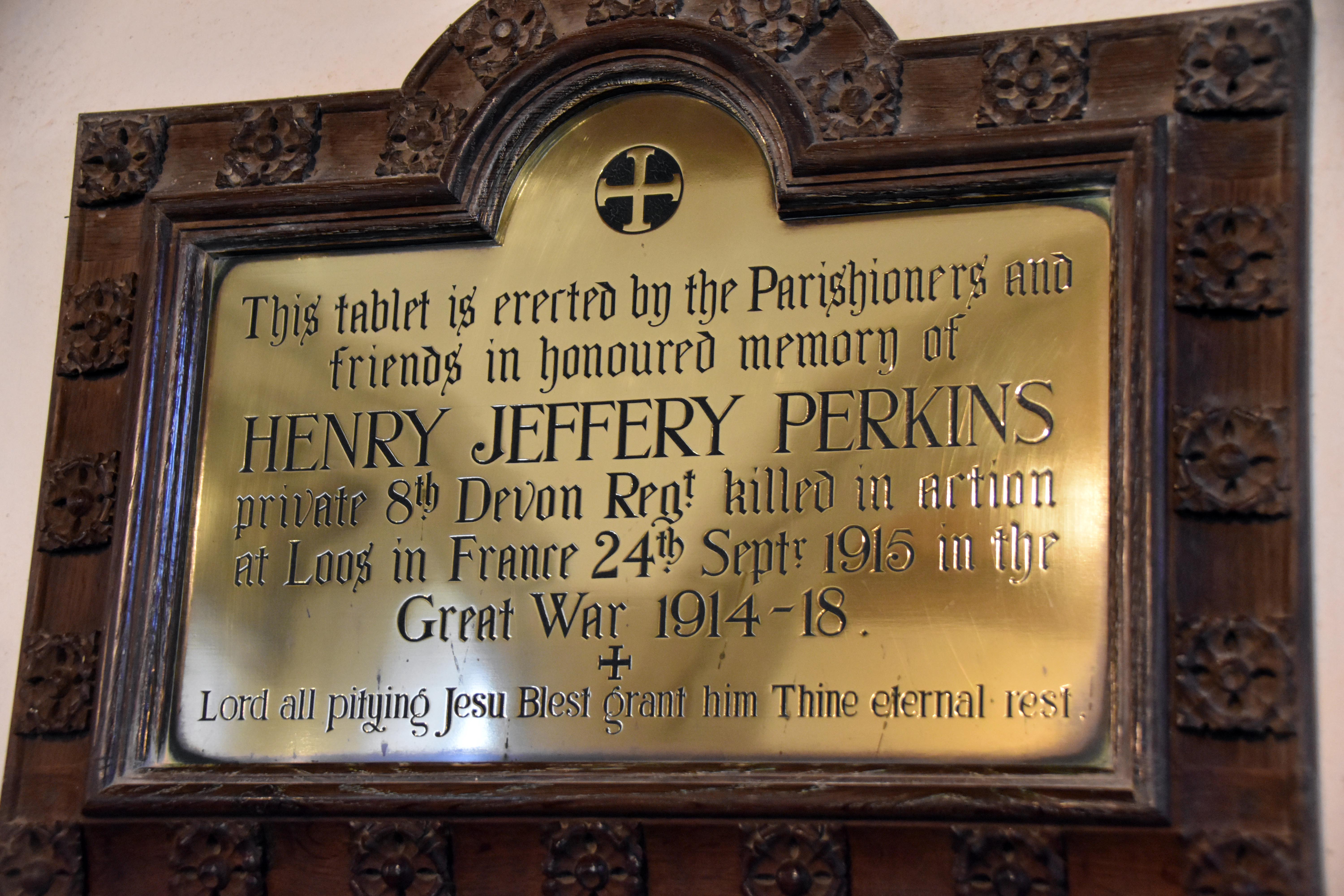
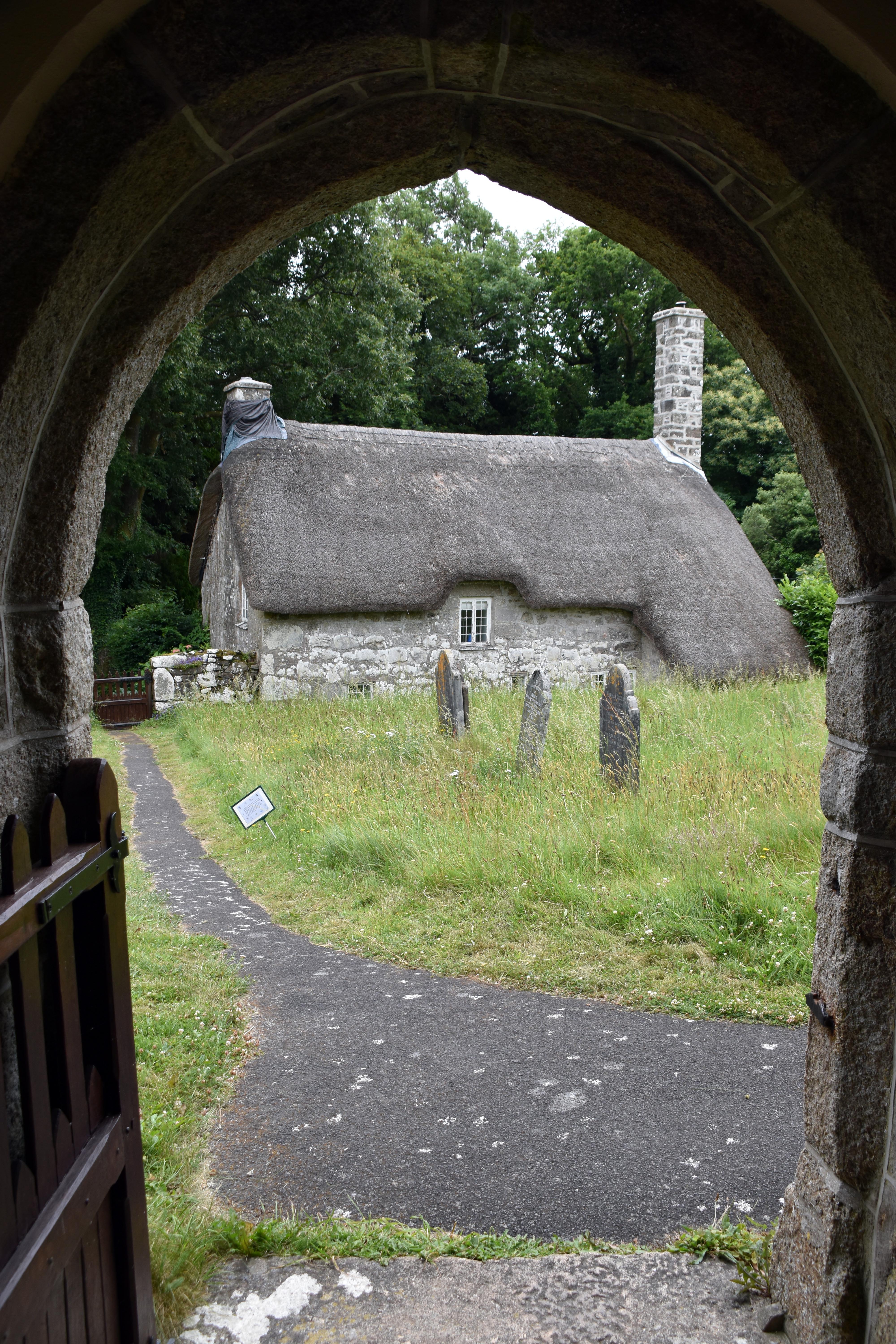
There is a commemorative plaque to Henry Jeffrey Perkins, who I believe lived in the church cottage literally outside the front door of St Peter’s. It is a beautiful thatched cottage and the first thing you see as you leave the church. Rather poignantly they have a photograph of him and his sister. He had worked as a footman at Buckland Court, presumably for the last of the Pollexfen‑Bastards, as they were yet to sell it to William Whitley by the time of the First World War. Sadly Henry was killed at the Battle of Loos with the Devonshire Regiment in the opening skirmishes of what was to become a very significant battle. This battle was the first time that the new recruits from 1914 — such as Henry — would be used en masse as part of the New Army divisions after much of the original professional British Expeditionary Force had been destroyed. Henry had been one of the first to volunteer from the area when war broke out in 1914. Sadly there were two other members of the Perkins family who also would not return from the First World War. Another family that sacrificed much was the Pascoe family, who lost a member in both world wars. Indeed, in the graveyard you can find a dedication to Archie Pascoe — “Missing over Germany, 4th December 1944” — a similar death to that of Peter Percy Whitley, the other son of William Whitley.
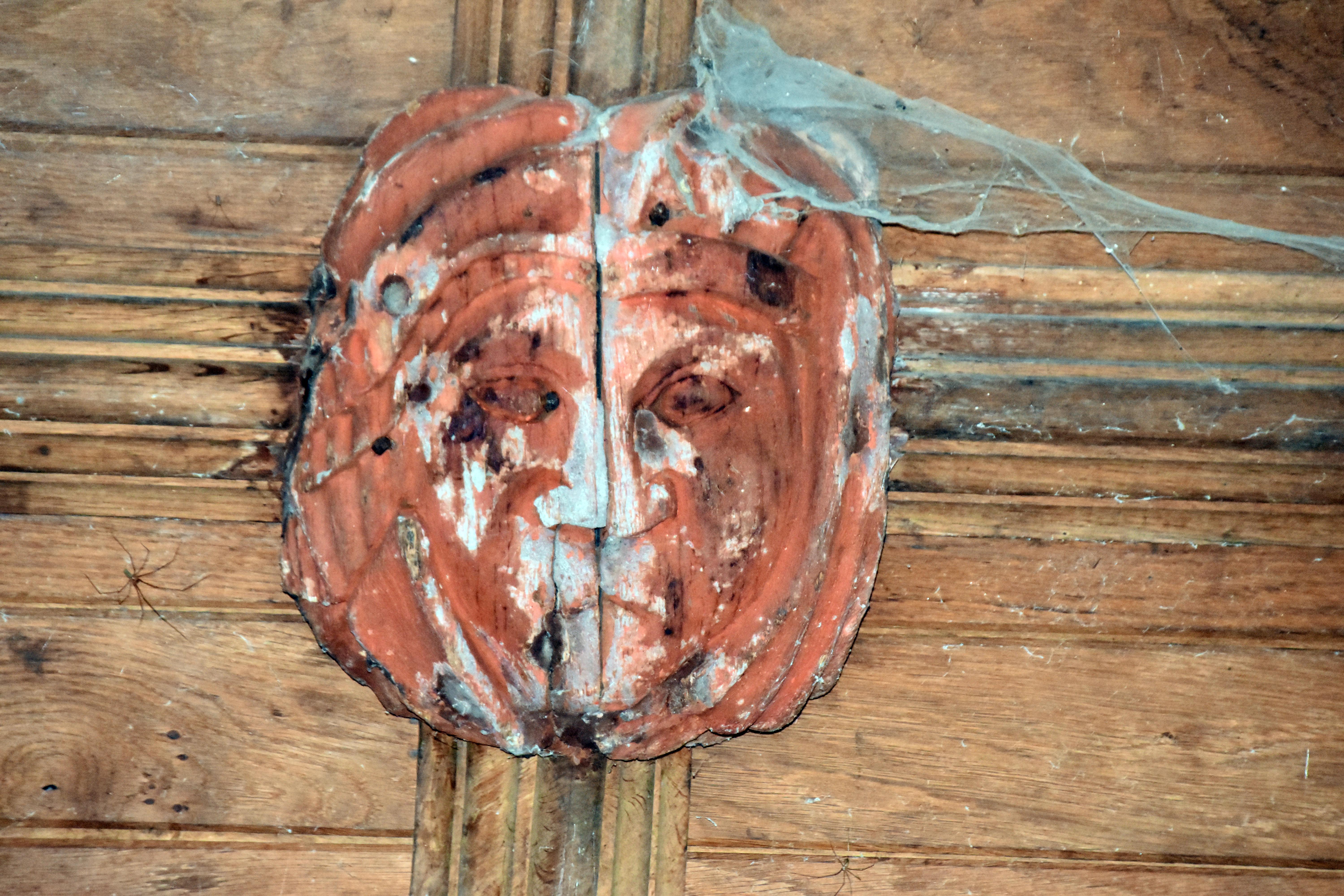
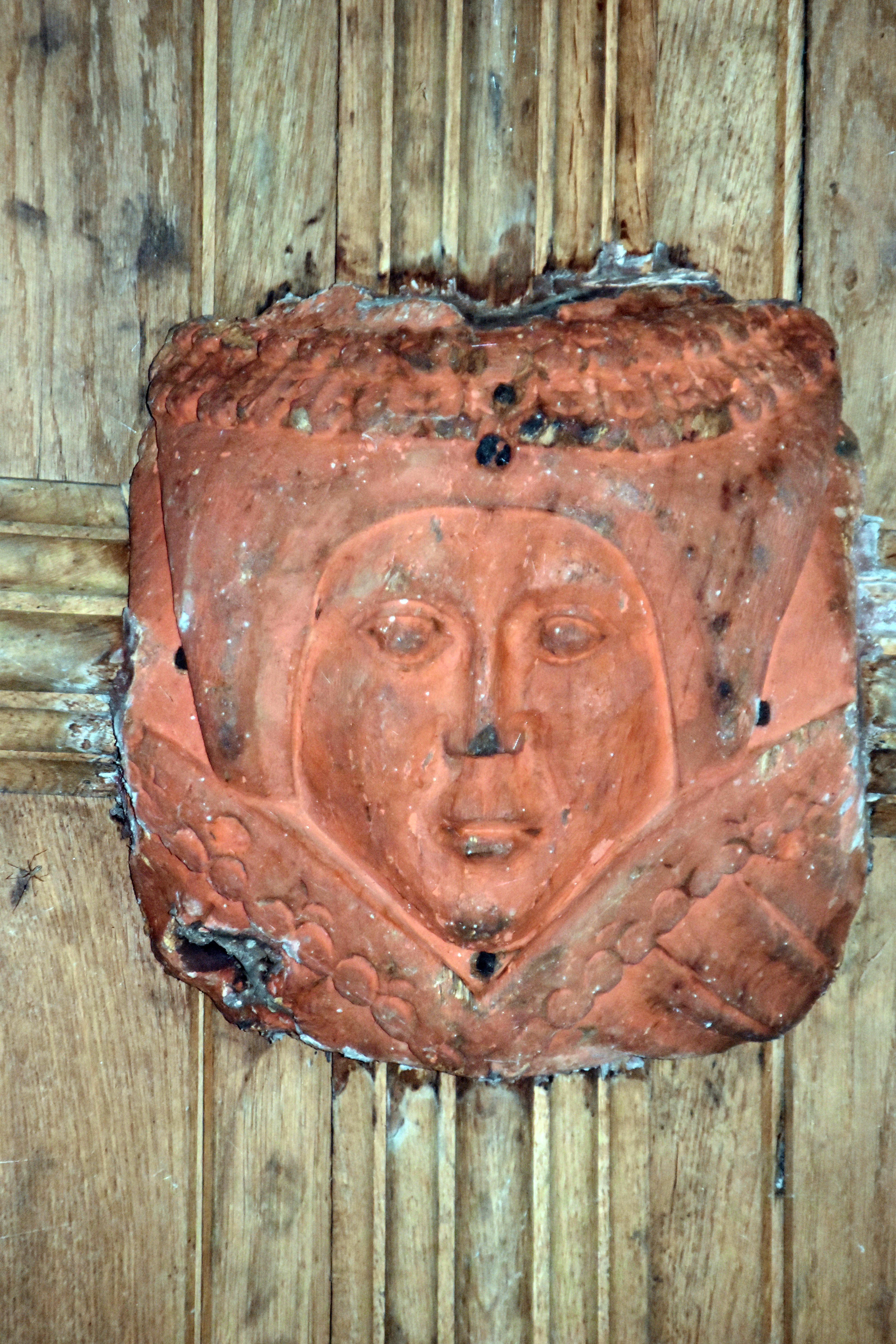
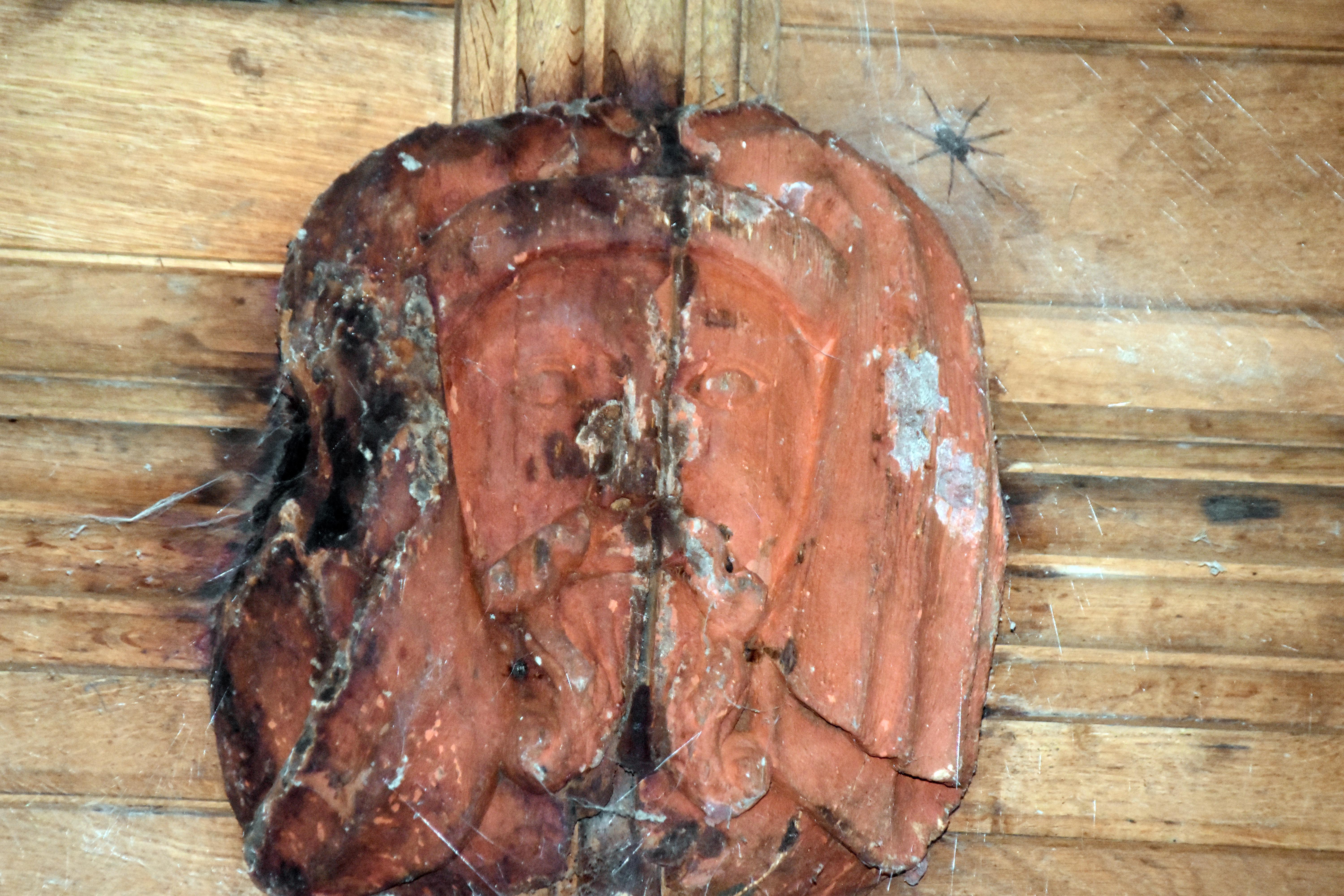
Back in the church, if you look upwards as you step beneath the tower at St Peter’s, you’ll notice a cluster of carved bosses staring back at you from the roof. Three of them, locals will tell you, are said to depict Henry VIII, Anne Boleyn and Thomas Cranmer. And if you squint, you can just about see the resemblance. If those identifications are right, the carvings would date from the brief, turbulent window between 1533 and 1535 — though it seems unlikely that anyone was undertaking major church building work in the thick of the Reformation’s upheaval. Just beside them are three more bosses, this time decorated with a Tudor rose and a face that looks far more convincingly like Henry VII. That earlier date feels more plausible and would place them neatly alongside the construction of the tower itself. Interestingly, the west door and window at the tower’s base appear older still, as if salvaged from the original west wall when the tower was added.
Rupert Appreciating The Bells
Likewise there are still some original medieval tiles that were salvaged in the Victorian era although then placed down in a bit more of a chaotic and haphazard way but it is still impressive to think that you are walking where our medieval descendants used to walk.
As we departed we saw the Whitley graves. All of them display the family motto “Live to Live”, which seemed particularly fitting for the family as a whole, but especially for the two sons of William Whitley who both died in tragic circumstances. But the whole family dedicated themselves to service — whether it was the zoo, the church, or, in the case of Herbert Hugh Whitley (the last of the Whitley graves here), helping to preserve Dartmoor in this local area. They were all larger‑than‑life characters who definitely lived (and died) by their motto.
Rupert and I then had to trudge back up the imposing Elliott’s Hill past Elliott’s Farm. We decided not to retrace our steps up the bridle‑path‑turned‑stream and instead followed the road northwards until it narrowed into a simple bridle path. Then we turned right and headed back towards our starting point, really noticing the wind as we climbed out of the valley. What a difference it made to the temperature. But the hill warmed us up, and before long we were back at Cold East Cross car park. It had been a lovely walk with fabulous views, made all the more beautiful by the moody weather — glimpses of sunshine, plenty of characterful cloud, and of course so much history woven into the route.