|
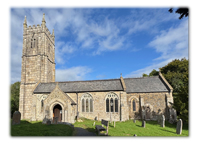
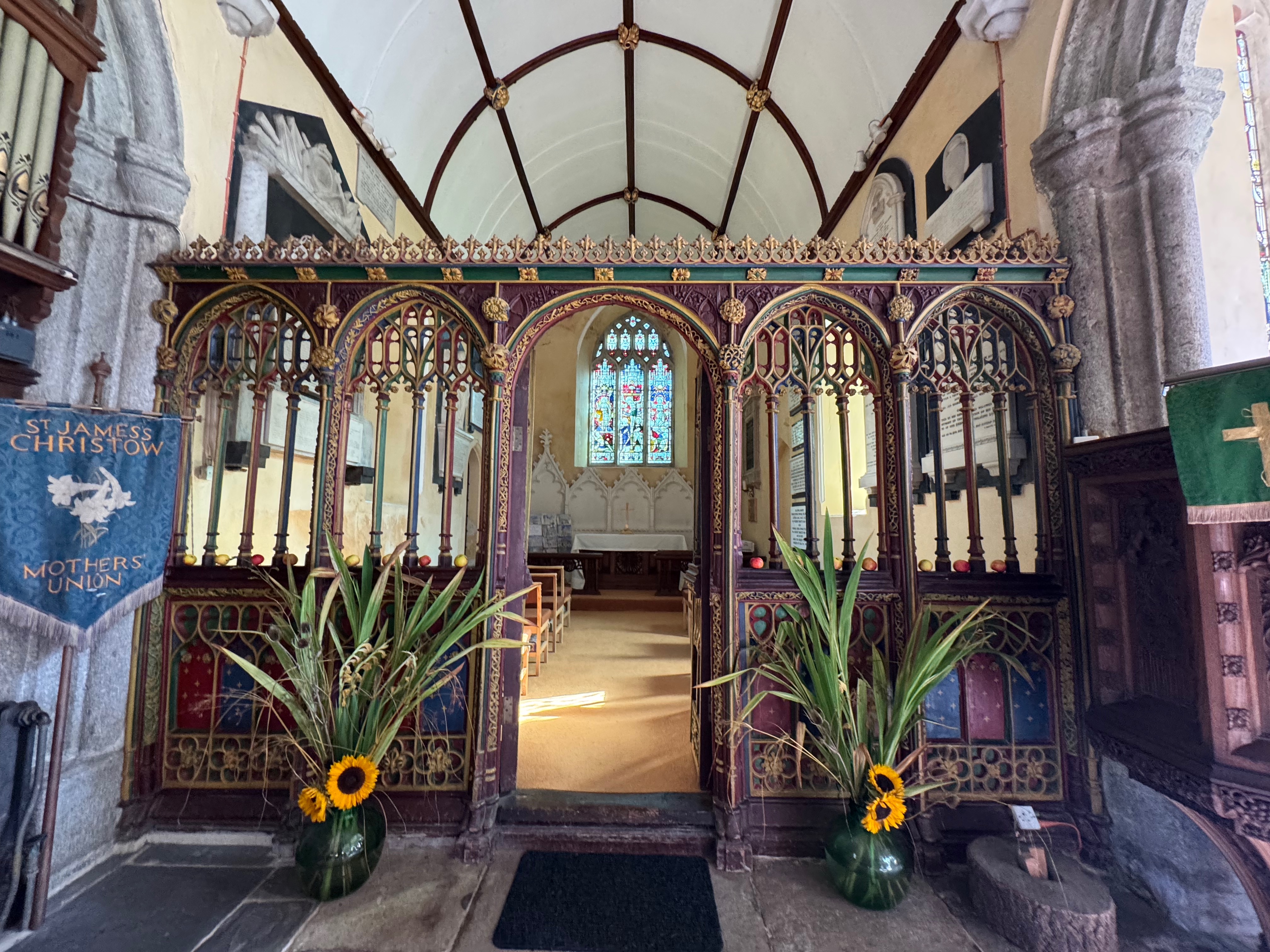
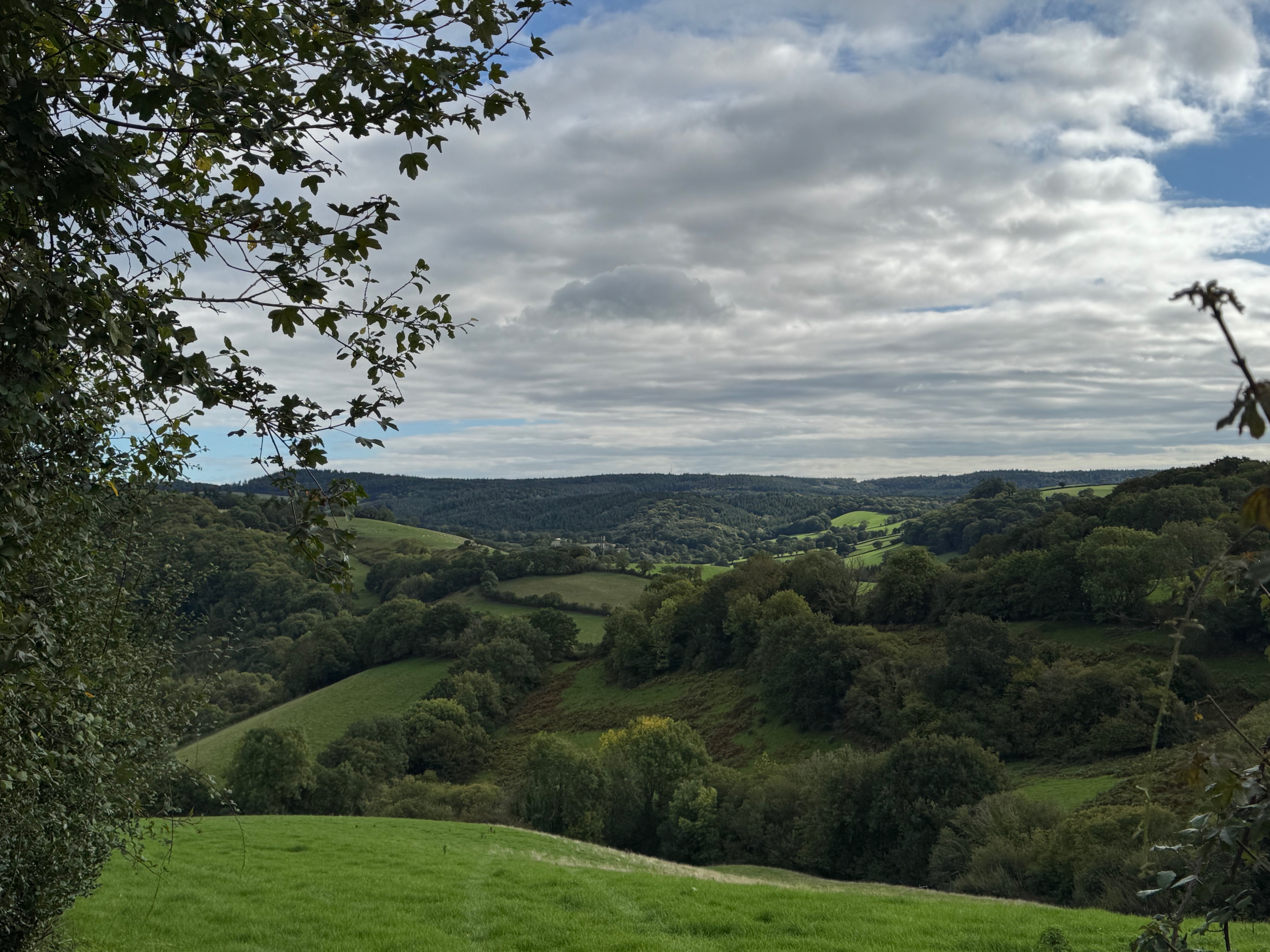
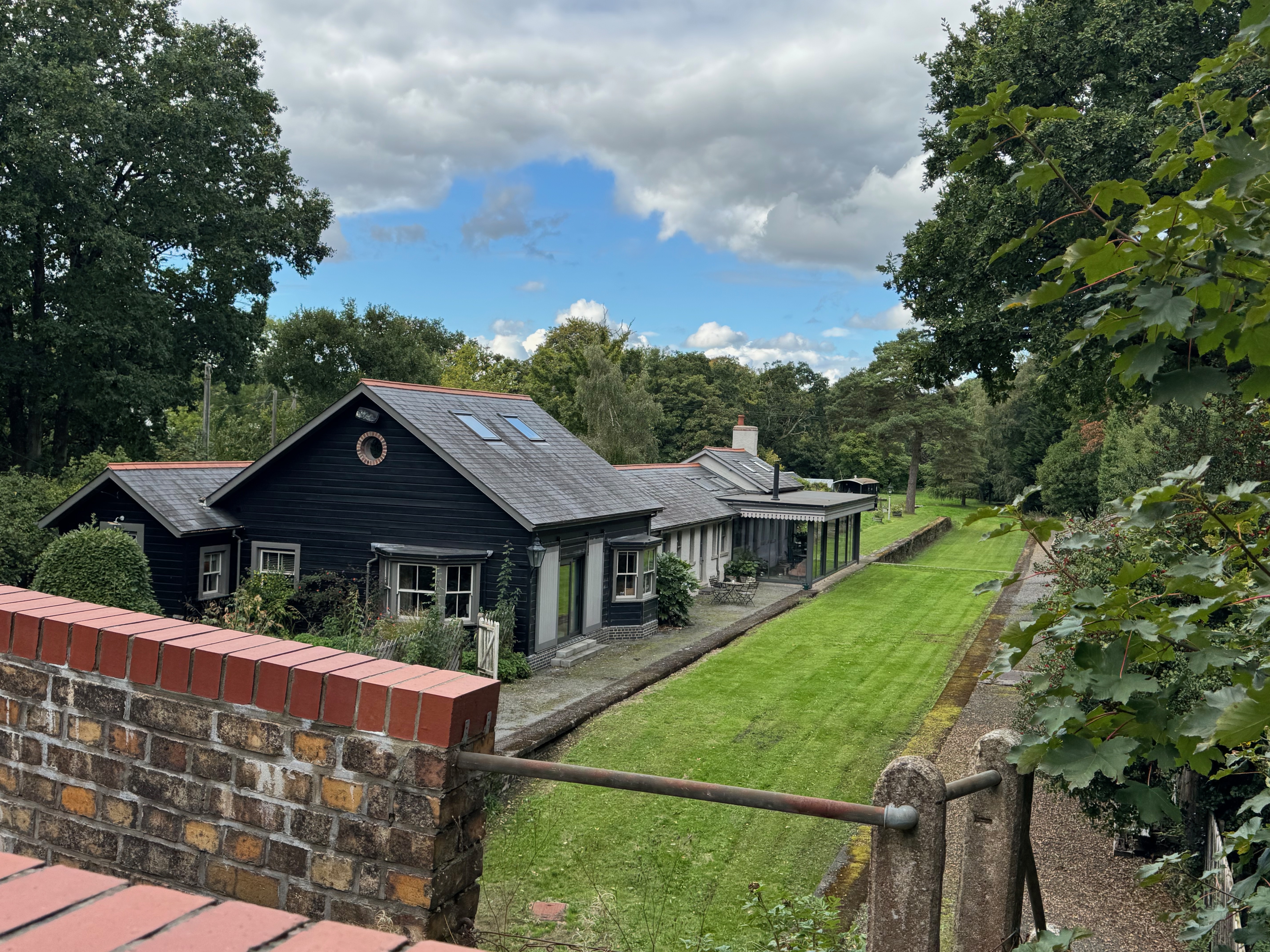
Rupert and I visited not one, not two, but three beautiful churches yesterday as we followed the lovely Eden Way along the Teign Valley. We discovered it almost by accident a fortnight ago when we were following the East India connections of Haldon House’s owner Sir Robert Palk and his good friend Major-General Stringer Lawrence. This took us to their memorials at Dunchideock Church, which is one of six churches on the Eden Way. We parked at a surprisingly busy Christow car park for a September Sunday. Little did we know that there was a majorette competition going on here and there were hundreds of mostly girls twirling things in the air and usually catching them on their descent. I did glance back at my car a little nervously :-) but proceeded up to St James’ Church in Christow. It is so sad that it was a Sunday morning and there was no service being held in this beautiful church. But the parishioners’ loss was our gain.
 |
|
|
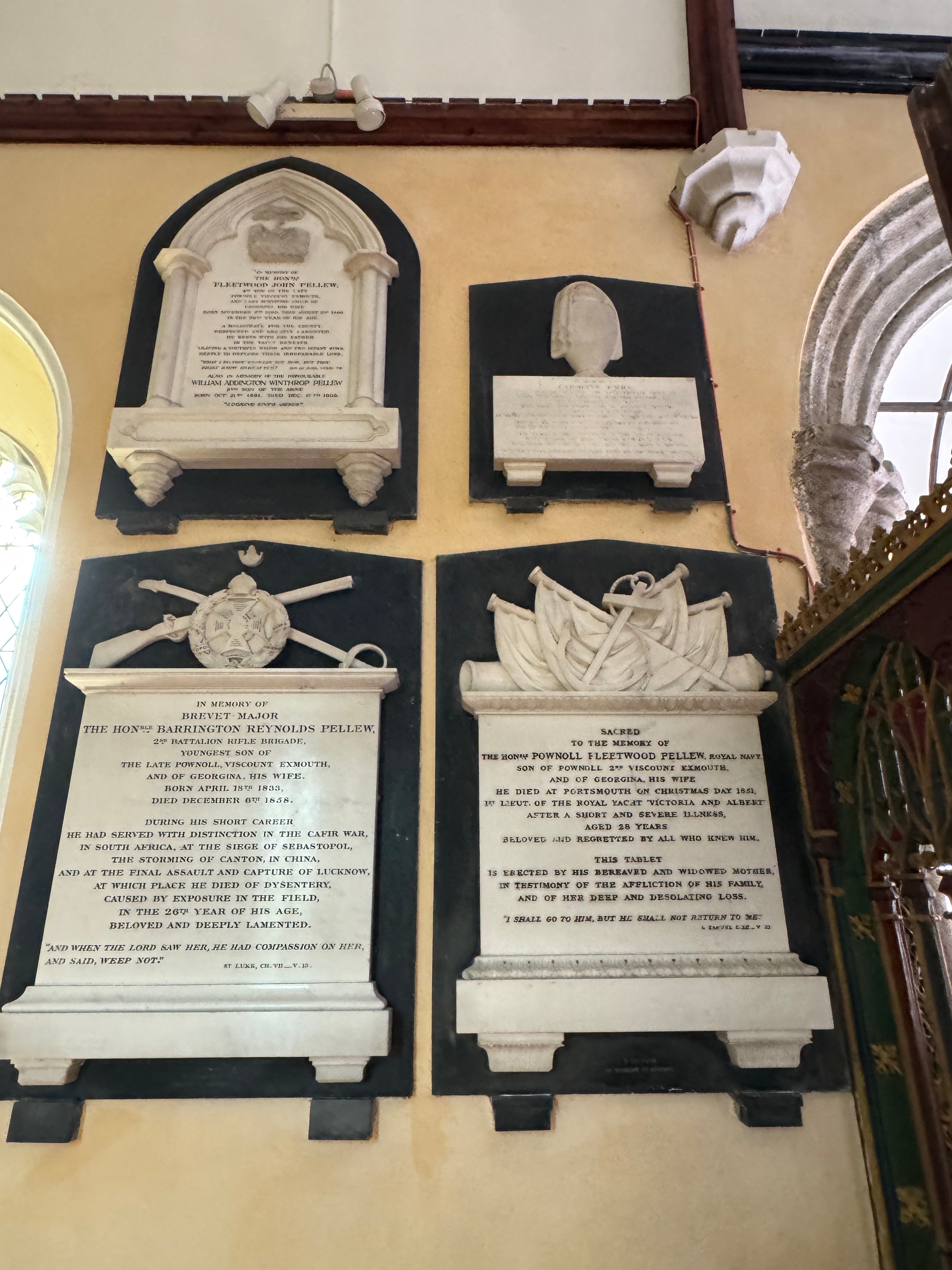
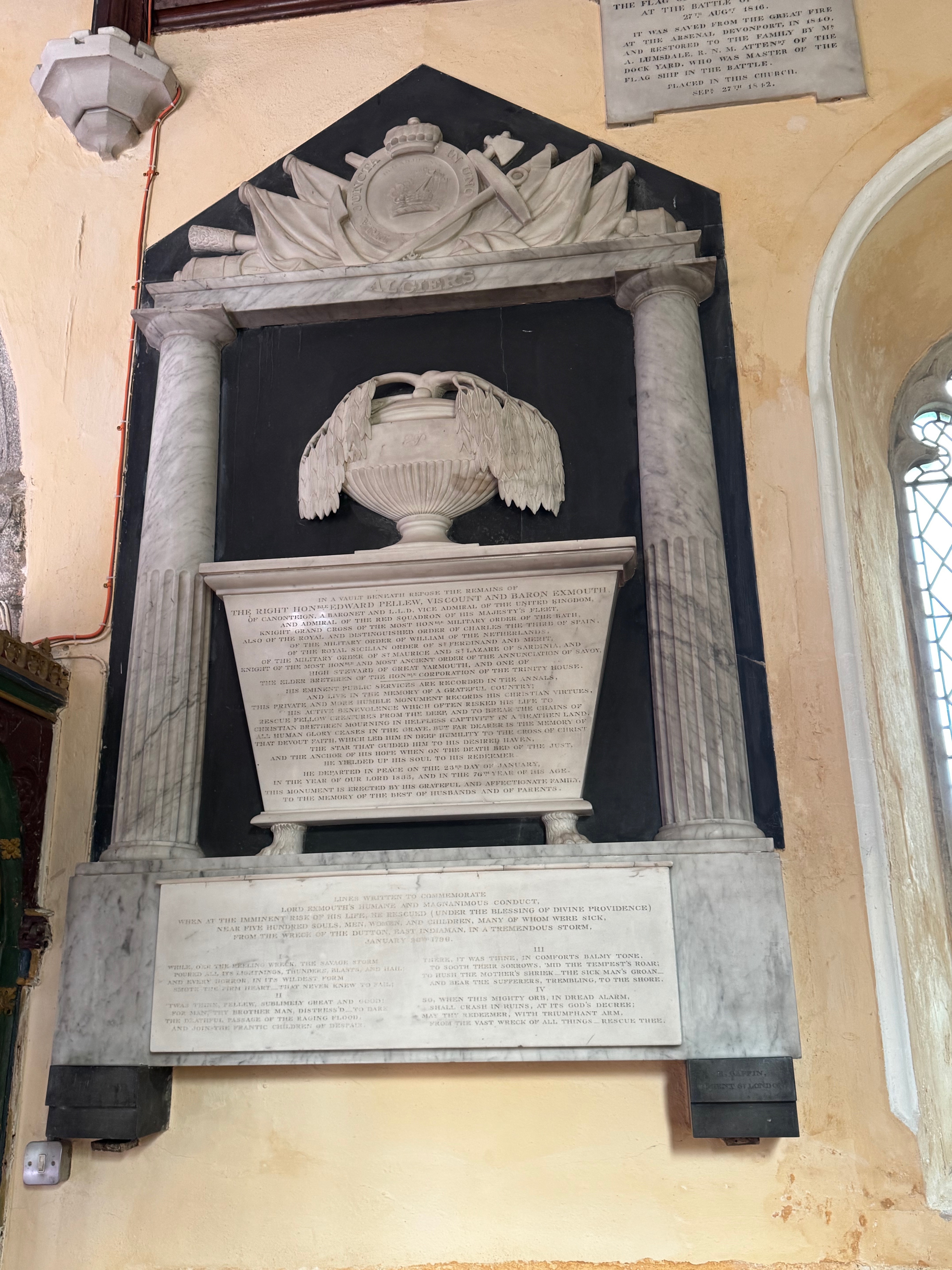
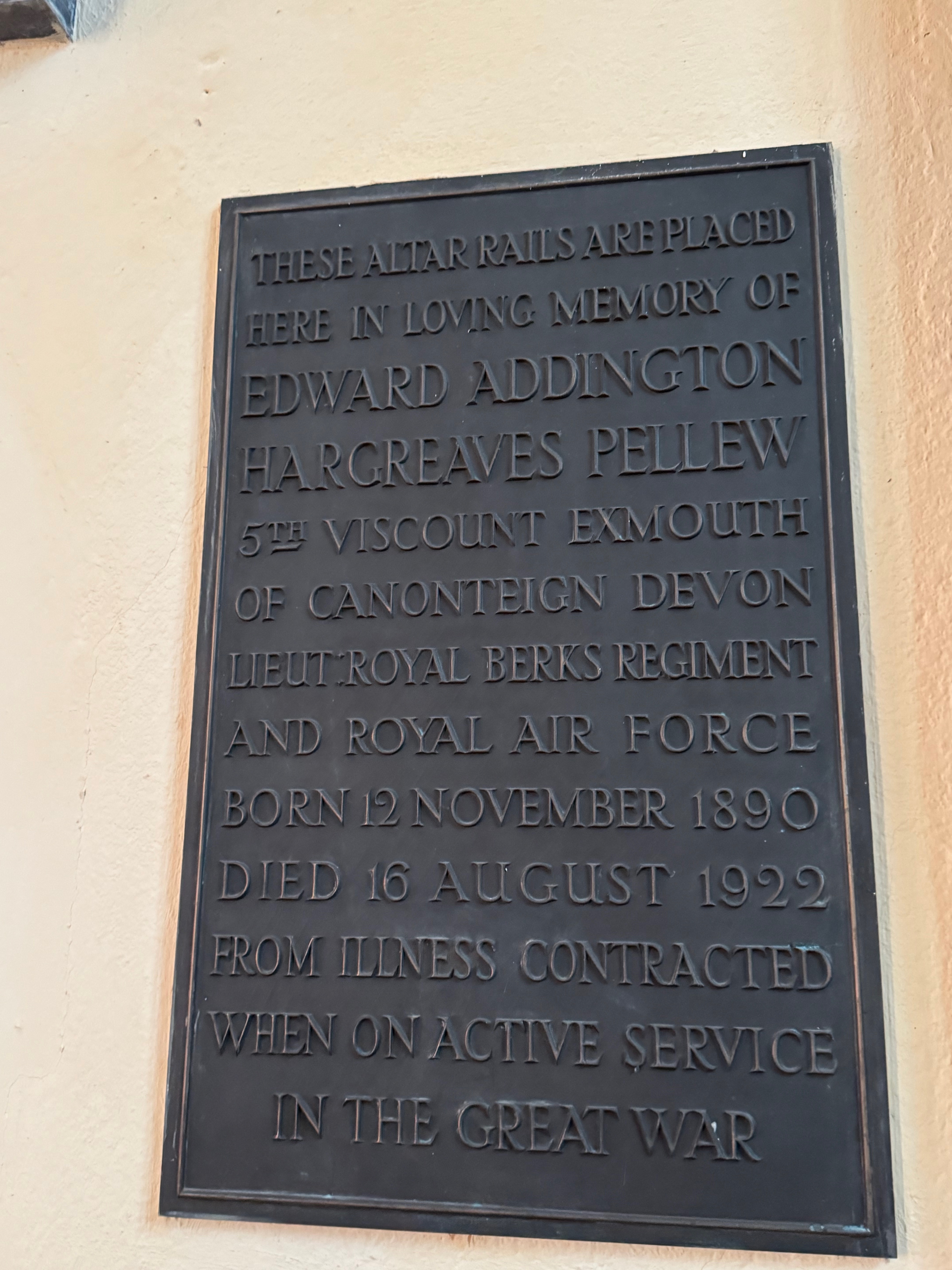
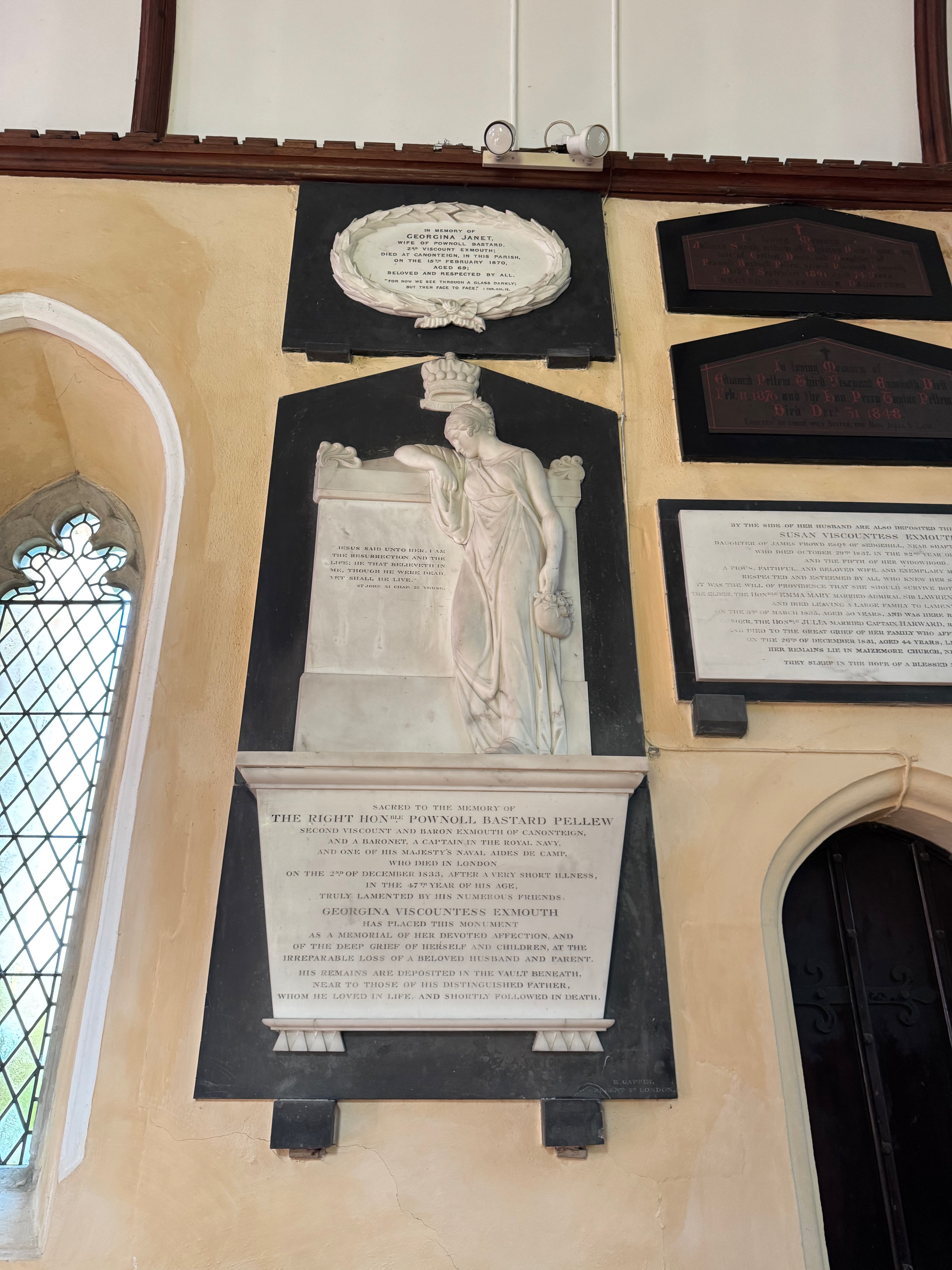
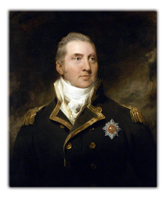
St James’ Church is the resting place of the Pellews of the nearby Canonteign Estate, a very interesting military family. The most remarkable by far is Sir Edward Pellew, who has strong connections to Plymouth and is in fact a major character in C. S. Forester’s Hornblower books and indeed some of Pellew's real life exploits were incorporated into the series! Sir Edward Pellew fought throughout the American Revolutionary and Napoleonic Wars—indeed he became wealthy due to his success in seizing so many prize ships in the East Indies, where he was the commander of the theatre. He later became the commander of the Mediterranean fleet and in this role was pivotal in helping end the Barbary States in North Africa from their slave predations and piracy—alongside the United States Navy, it should be said—who, despite having been at war with one another so recently, had a common enemy in these Barbary pirates.
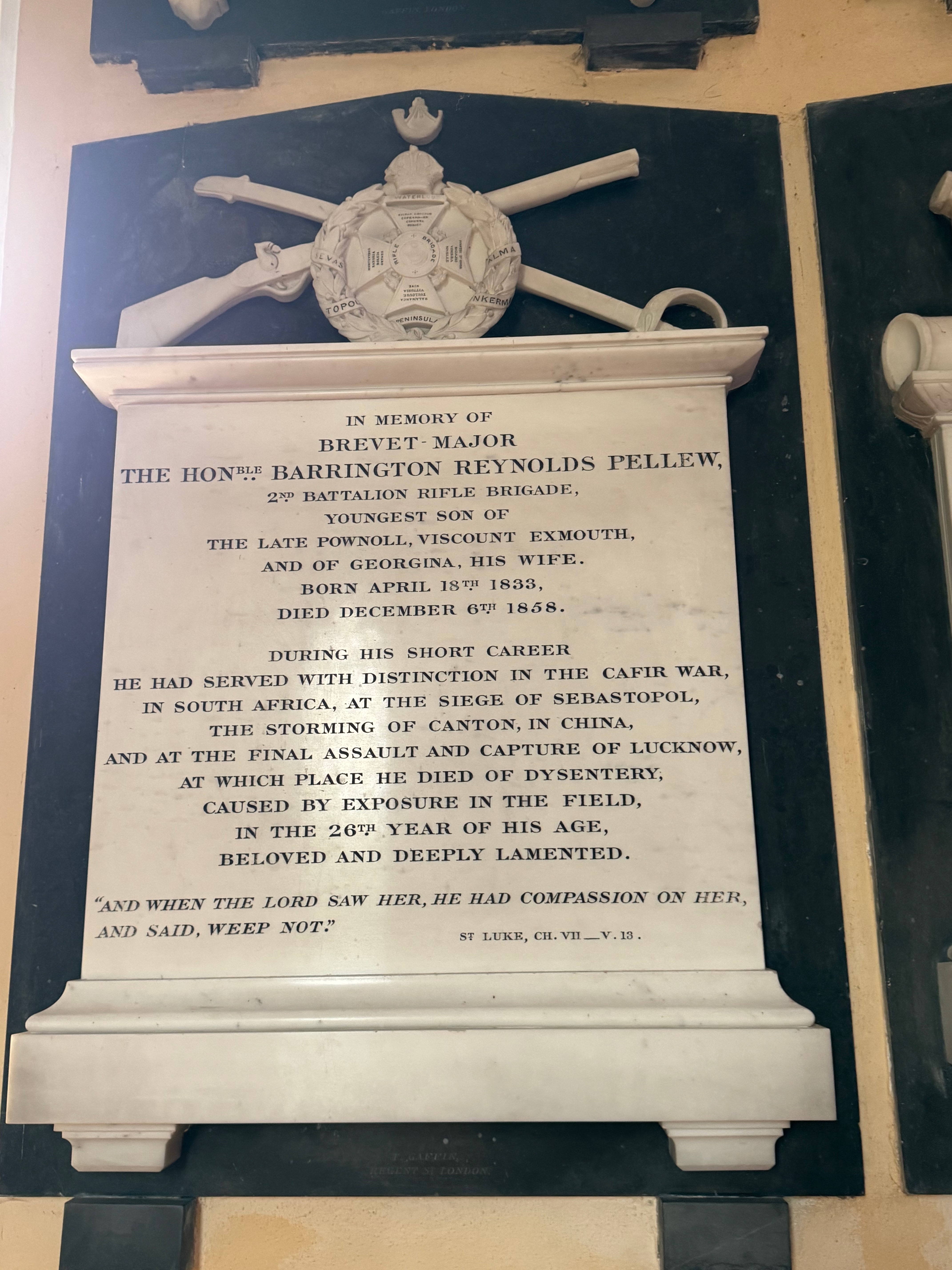
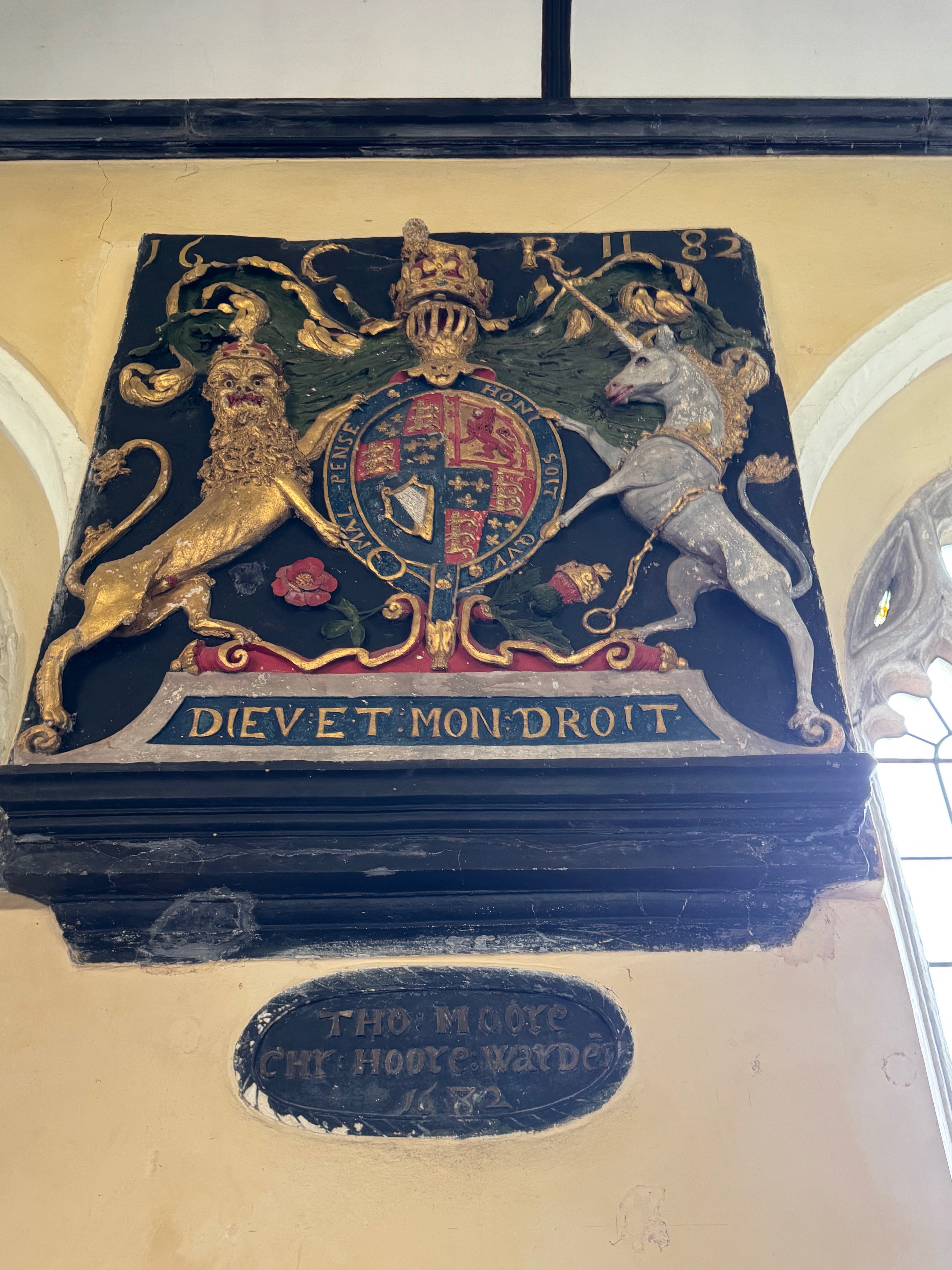
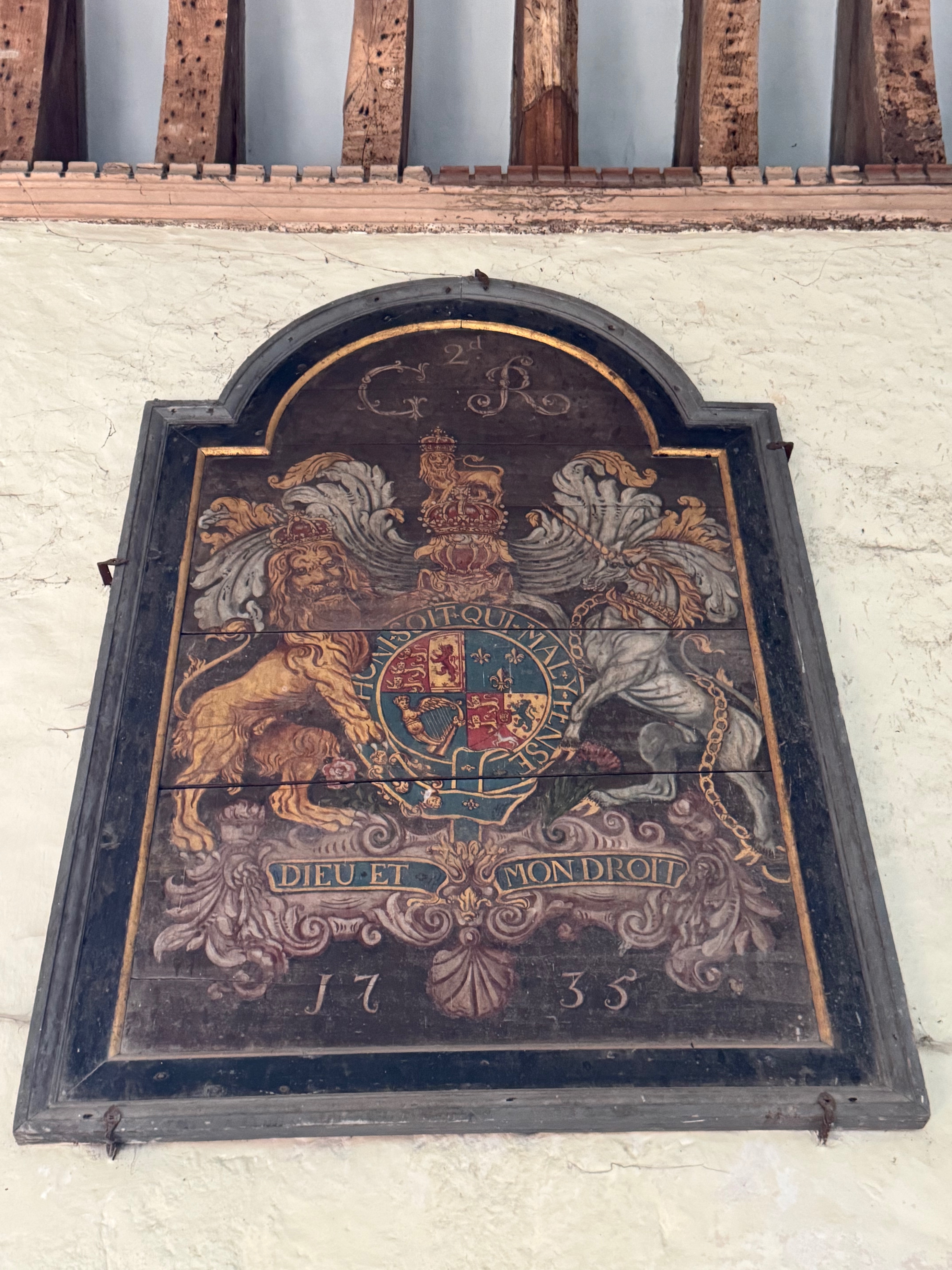
With regards to Plymouth, he famously organised the rescue of the fully loaded East Indiaman Dutton that was sinking on the Hoe shoreline. Its own crew had abandoned the 500-plus passengers, including many women and children, on board. Pellew had just happened to be passing when he saw the unfolding disaster and quickly organised a full evacuation of the ship—rescuing the vast majority of them by his quick actions and decisive leadership. For his remarkable military service he was created Viscount Exmouth, and his descendants hold that title to this day—most of whom are commemorated in this church. One of the interesting descendants is his grandson Barrington Reynolds Pellew of the 2nd Rifles, who fought in Africa, China, and Crimea, and sadly died after the final assault and relief of Lucknow during the Indian Mutiny at the tender age of 26. The church also has a very unusual Royal Arms dating back to Charles II. What makes it unusual is the 3D sculptural effect—they are nearly always painted.
 |
|
|
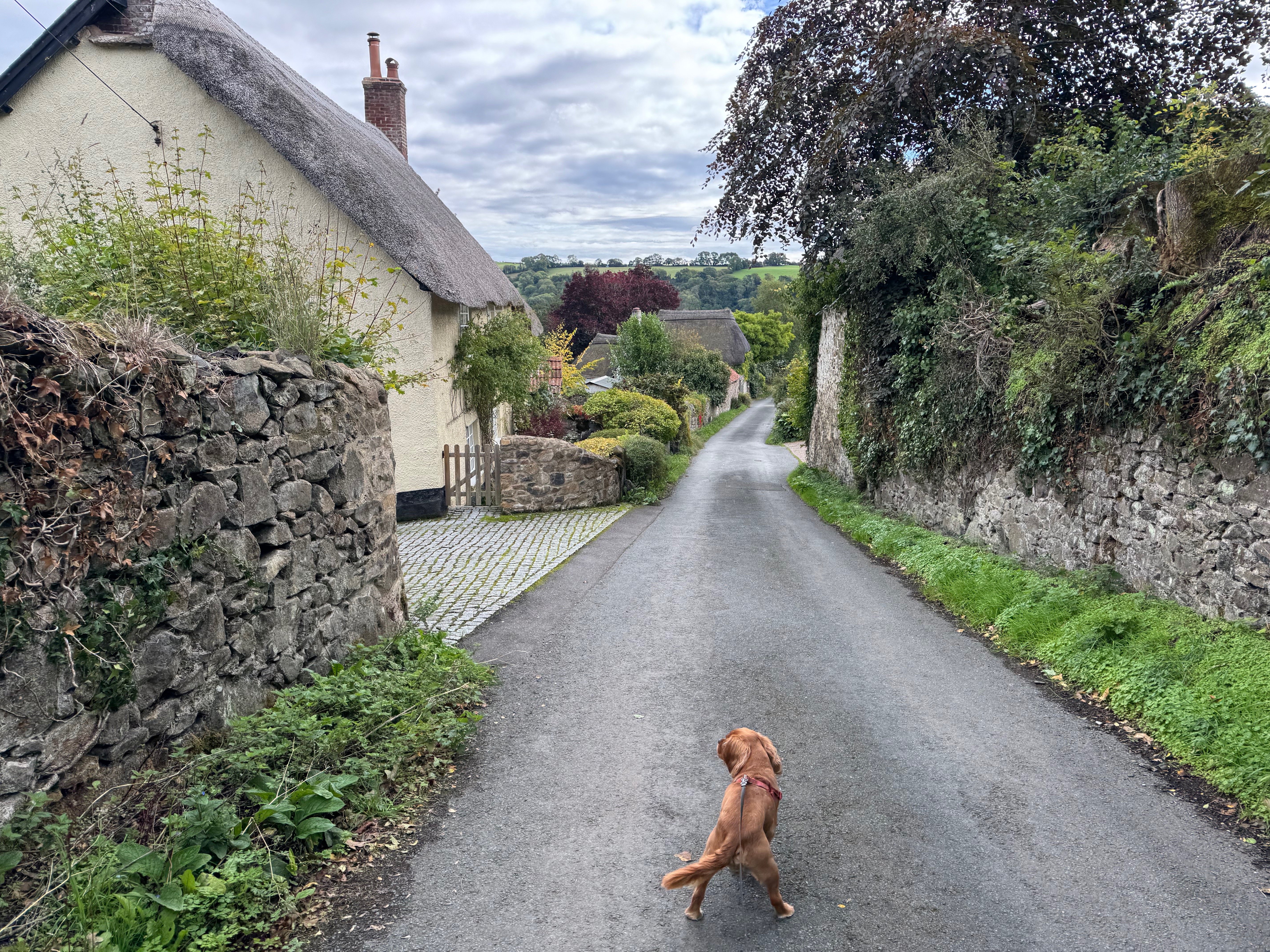
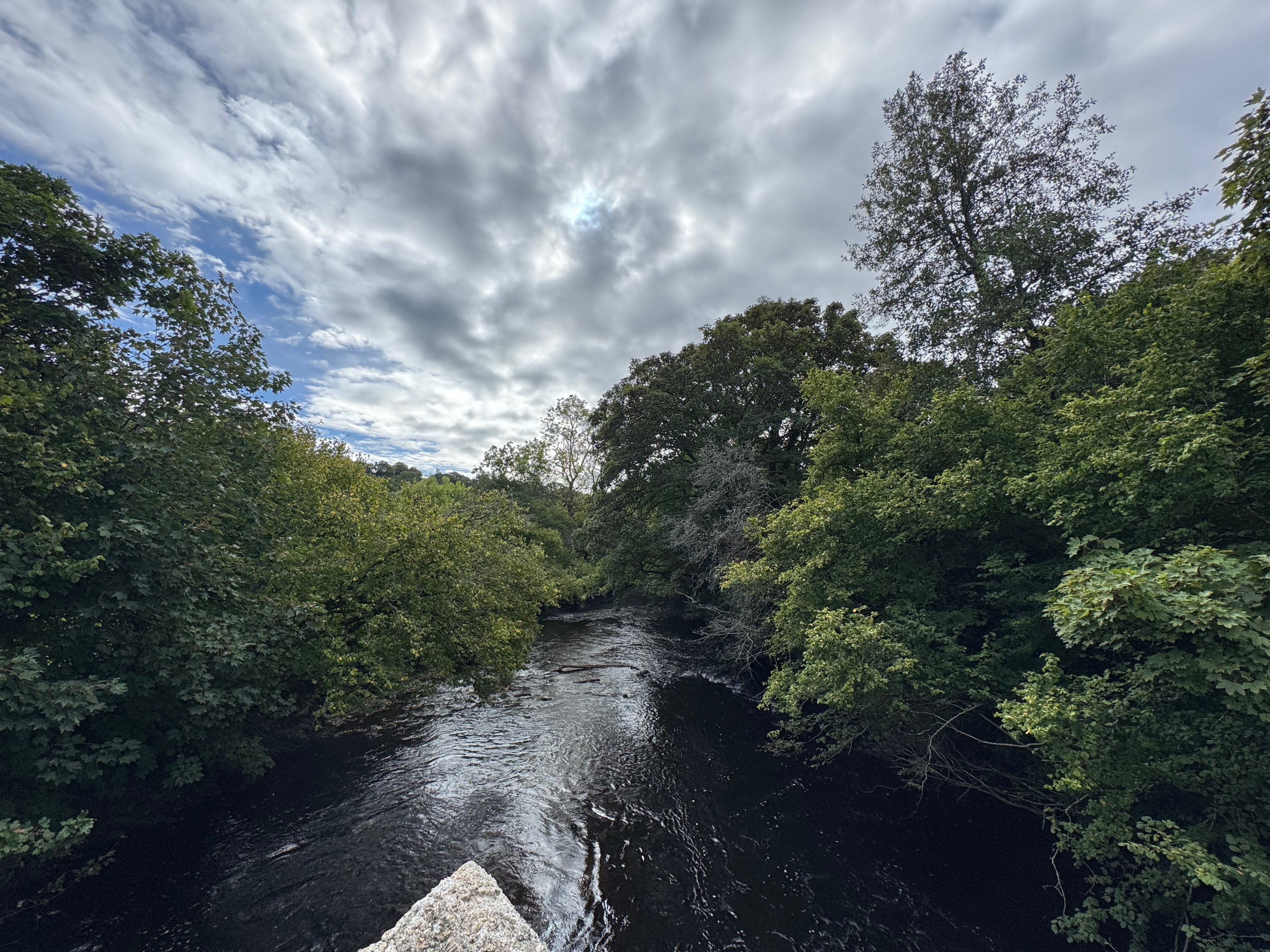
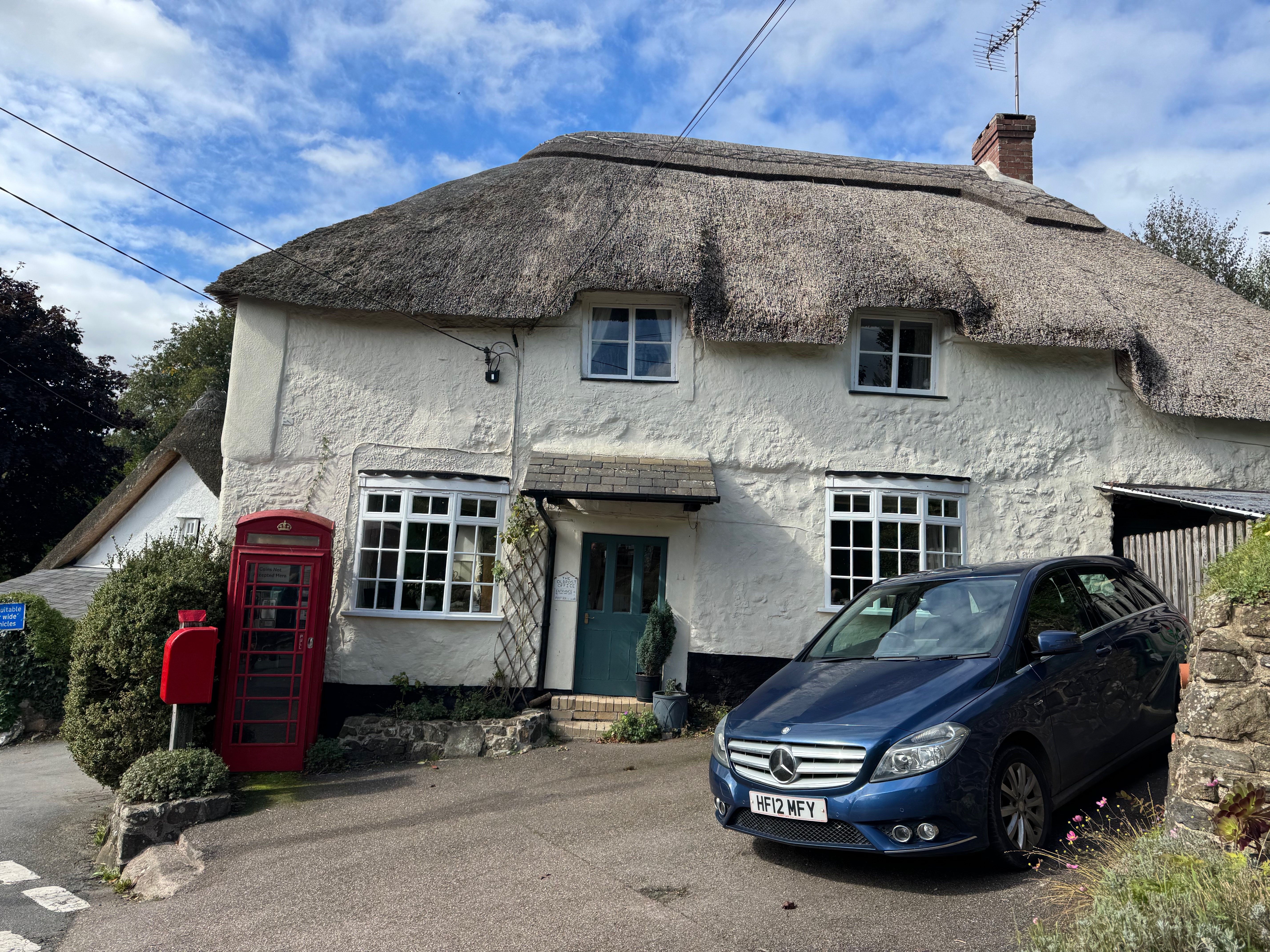
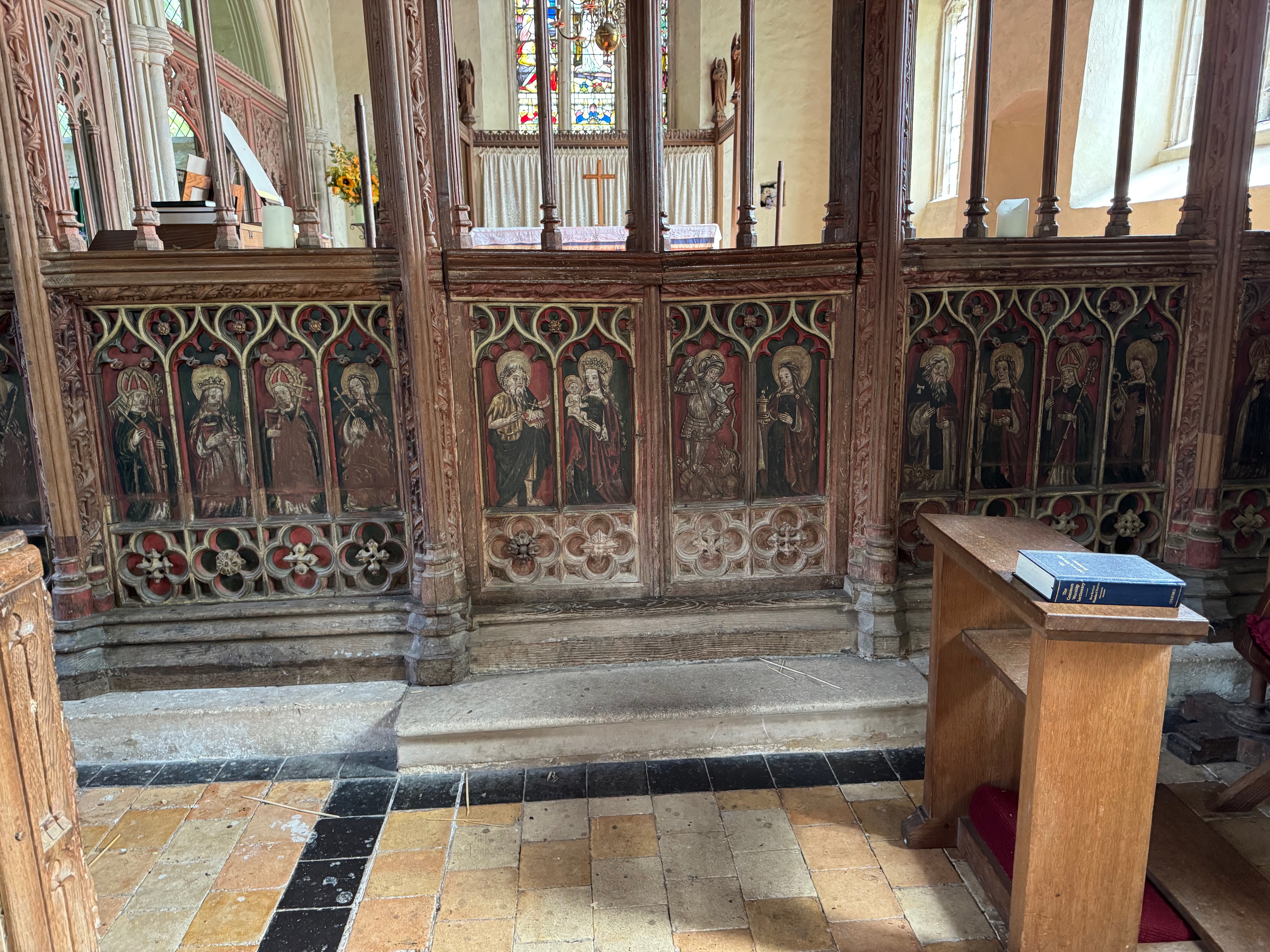
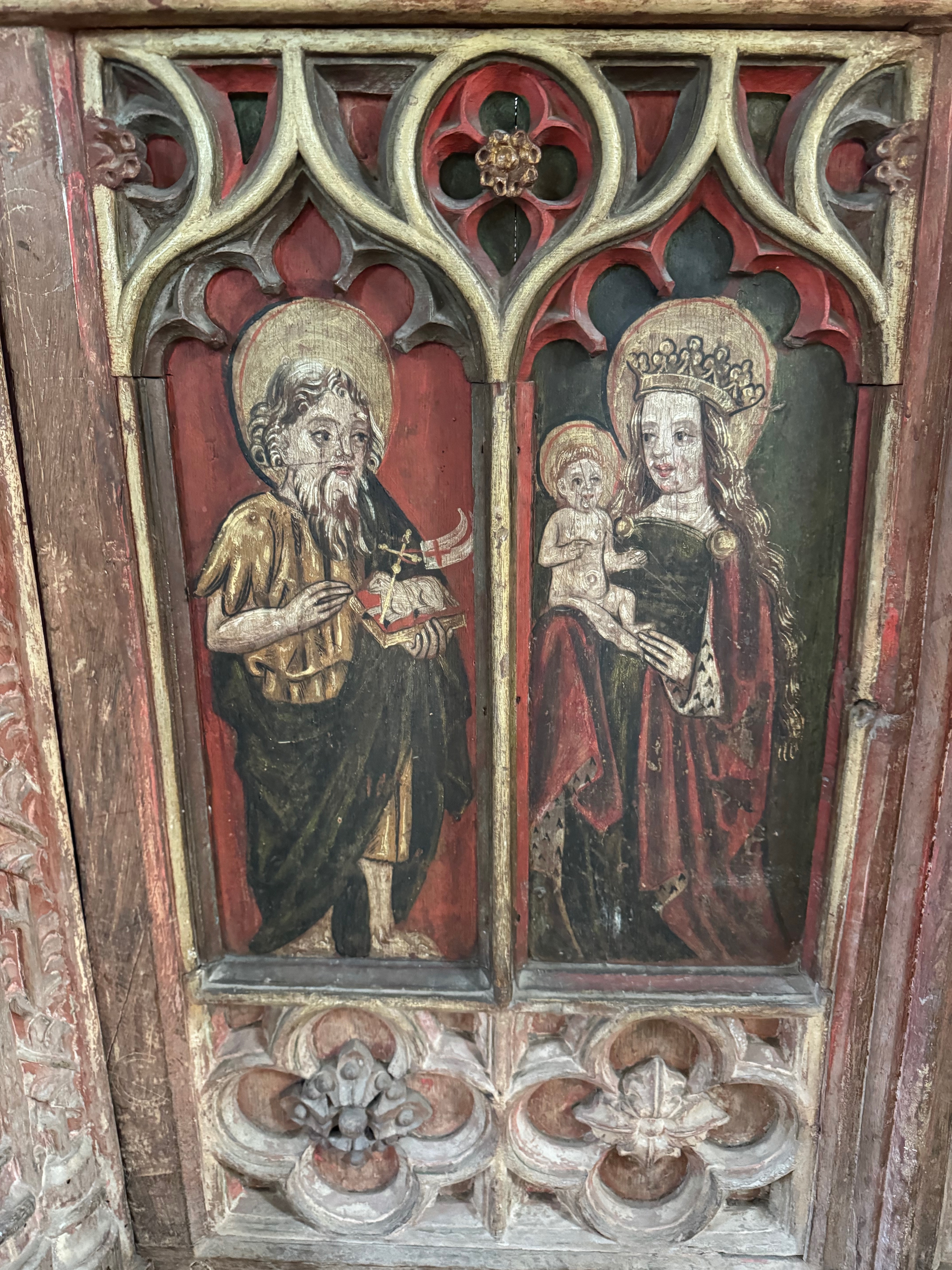
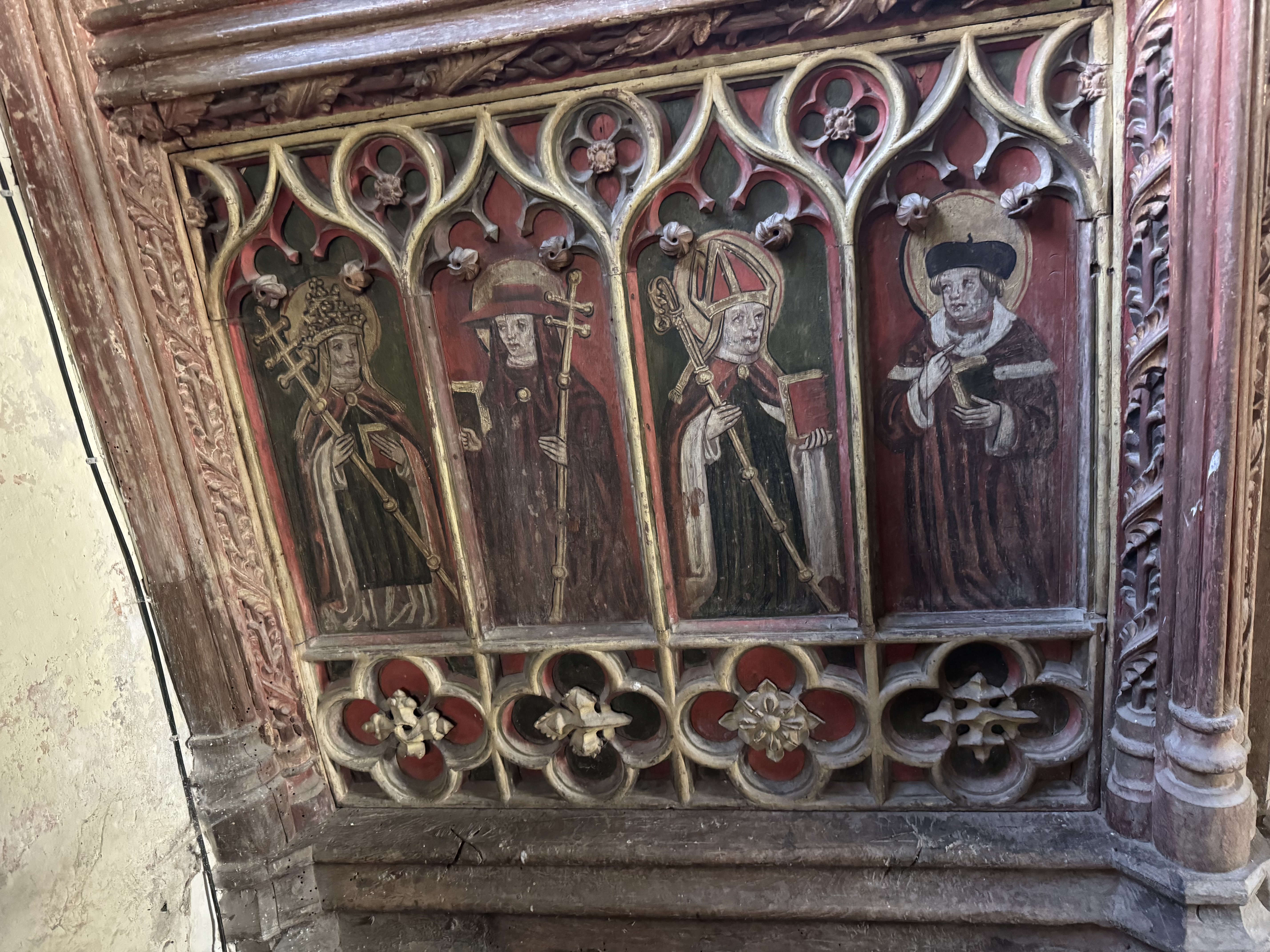
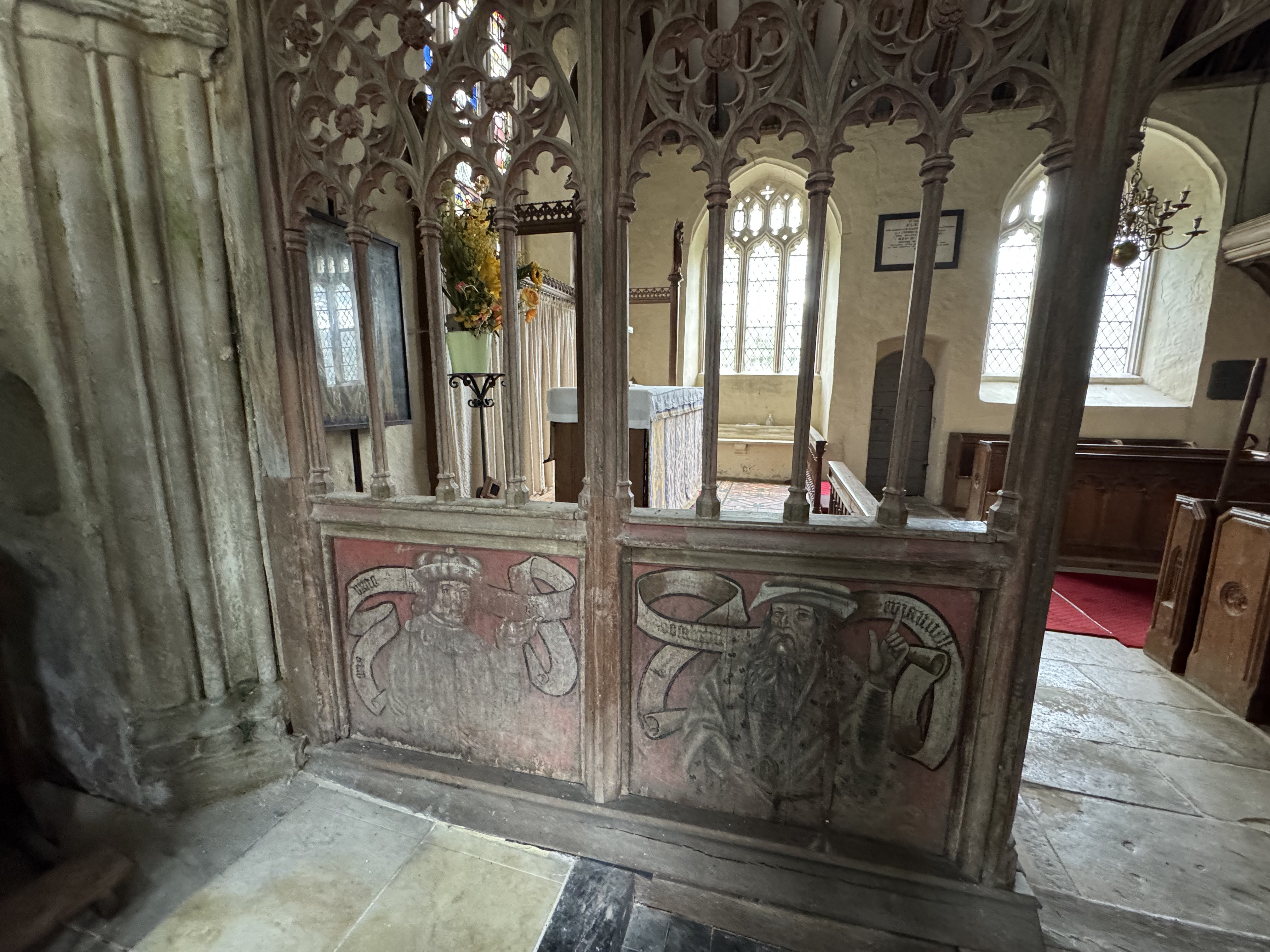
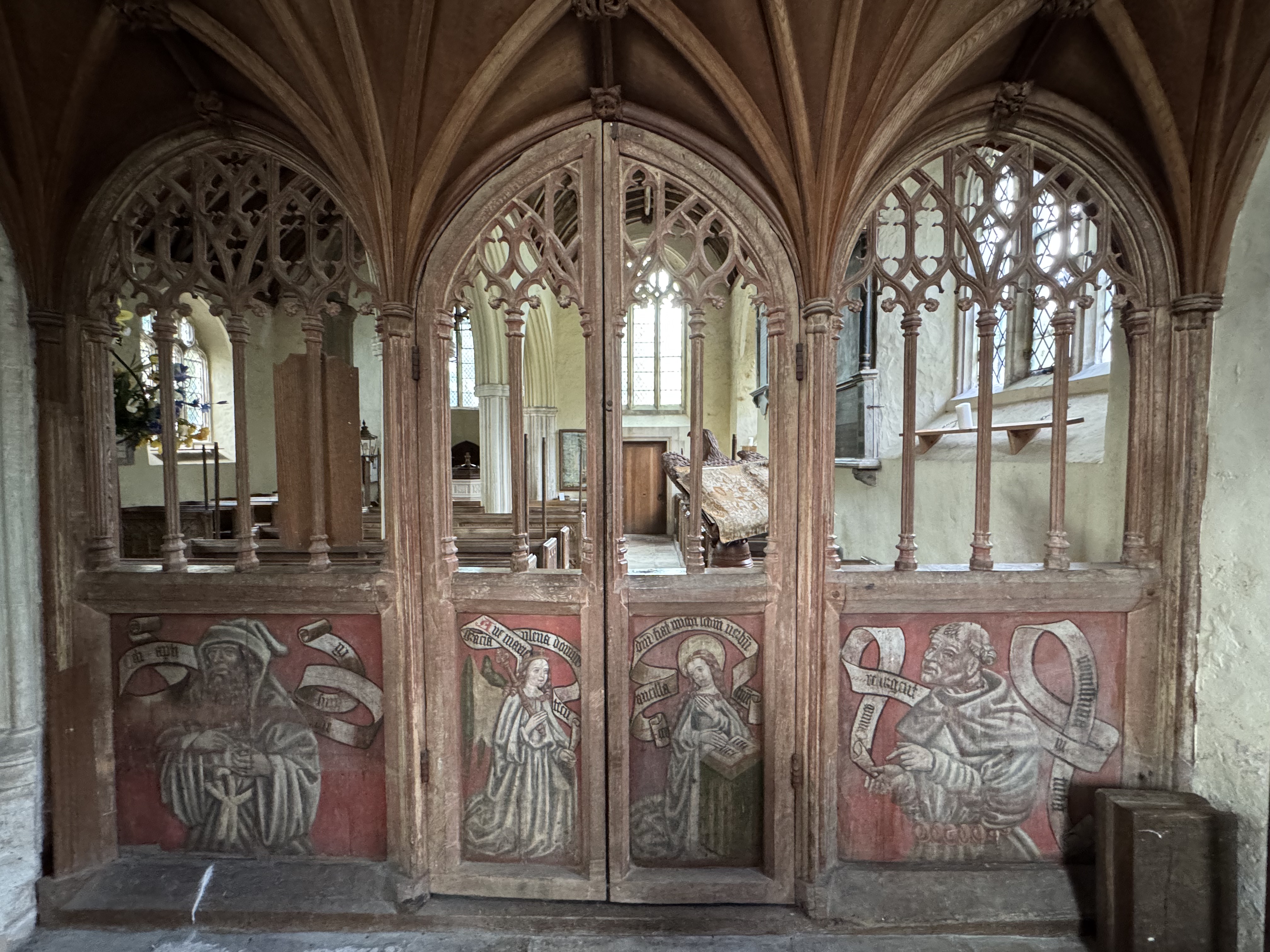
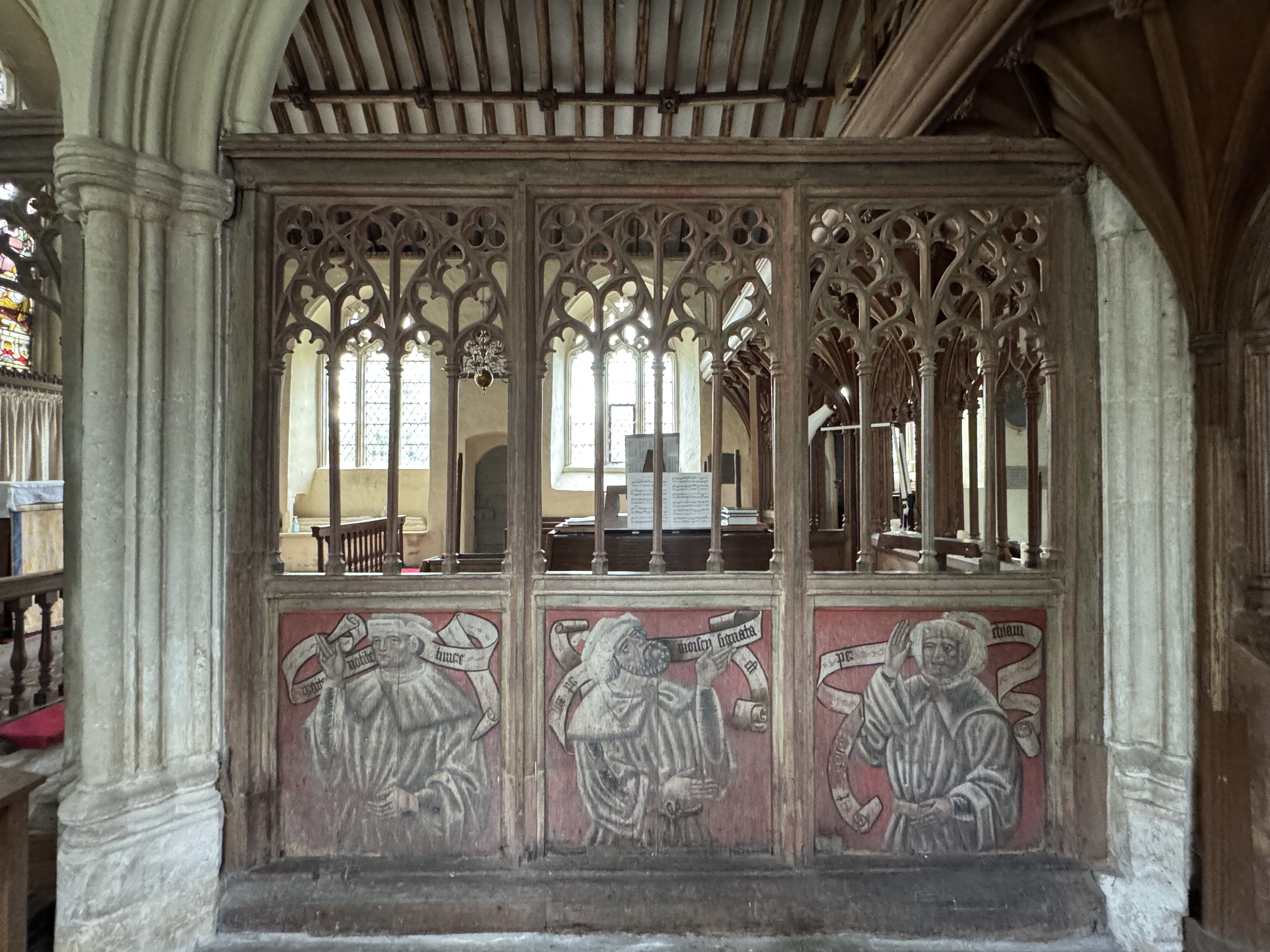
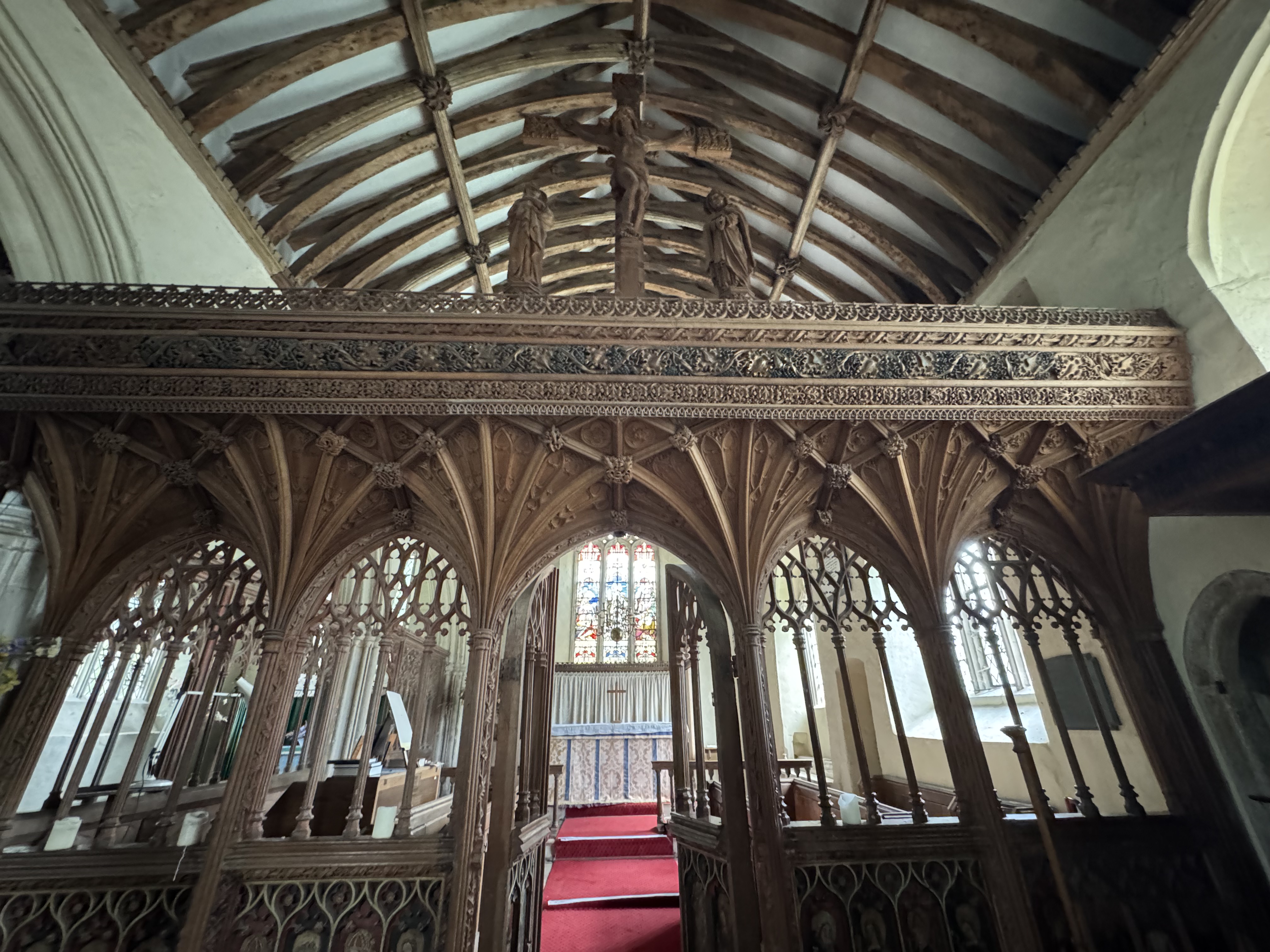
From Christow we followed the Eden Valley pilgrimage route through some picturesque Devon villages and over a lovely ancient bridge to the very different St John the Baptist Church in Ashton. This church is one of the few that not only still has its original rood screen, it even has the original pre-Reformation decorations on it. Remarkably, it escaped the ravages of Henry VIII’s Reformation, Edward VI’s acceleration of that Reformation, Parliament’s marauding armies, and also a decade of Commonwealth rule—no mean feat. The result is that you can get a real glimpse of what churches looked like before the Reformation—indeed there is even the outline of an uncovered wall painting from the era before whitewashing all the walls was demanded by Puritans. Better yet, some of the rood screen has both sides decorated, so you are given two completely different artistic experiences to savour.
 |
|
|
This church also has a memorial to George Chudleigh, who played a significant role in the English Civil War in Devon and Cornwall. The Chudleighs lived almost next door in Ashton Manor. He started off as a Parliamentarian supporter but was captured at the Battle of Stratton near Bude (which we visited earlier this year) and was treated remarkably well by his captors. So much so, he effectively changed sides and declared for the King. There is also a connection with the Chudleighs and Haldon House, which we visited a fortnight ago. It was the 4th Baron Chudleigh who built that original building in 1735, which Palk later purchased with the money he made with the East India Company. You can see remnants of the original Ashton Manor and its outbuildings as you take the footpath to the next church at Doddiscombsleigh. Although the manor fell into ruin, part of it survived and a wedding venue has been created there called the Great Barn, using the old farm buildings—I have to say it looked lovely and very nicely redeveloped.
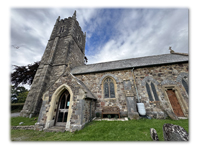
The walk to the third church at Doddiscombsleigh took us through a beautiful woodland valley before following a road to the village. St Michael’s Church is a little tucked away from the roads, but it is also worth visiting for very different reasons again from the other two churches. St Michael’s also has rare remnants of the medieval period, but in this case it is stained glass dating back to the 15th century that still survives. Again, it is unusual that such glass survived the Reformation and the Civil War. It is only in isolated country churches far from the prying eyes of outsiders that glass like this survived. The religious fundamentalists tended to smash or demand the removal of such iconography and have it replaced with clear glass. The vast majority of stained glass you see in our churches now dates from the Victorian era, when there was a revival of a high-church aesthetic. There are only a handful of churches in the South West that still have a significant amount of original stained glass for us to catch another glimpse of what our churches looked like before Henry VIII changed the church forever.
 |
|
|
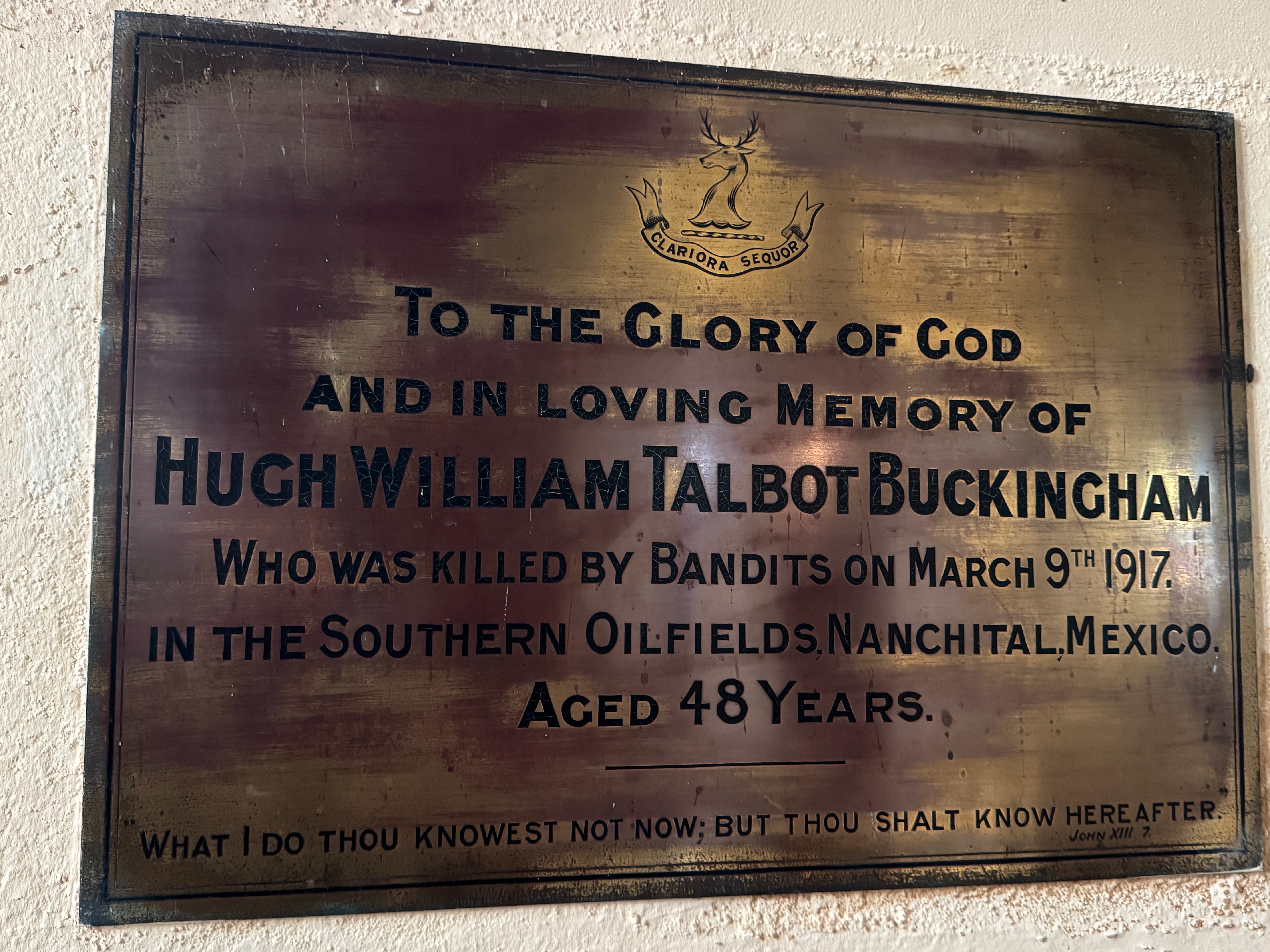
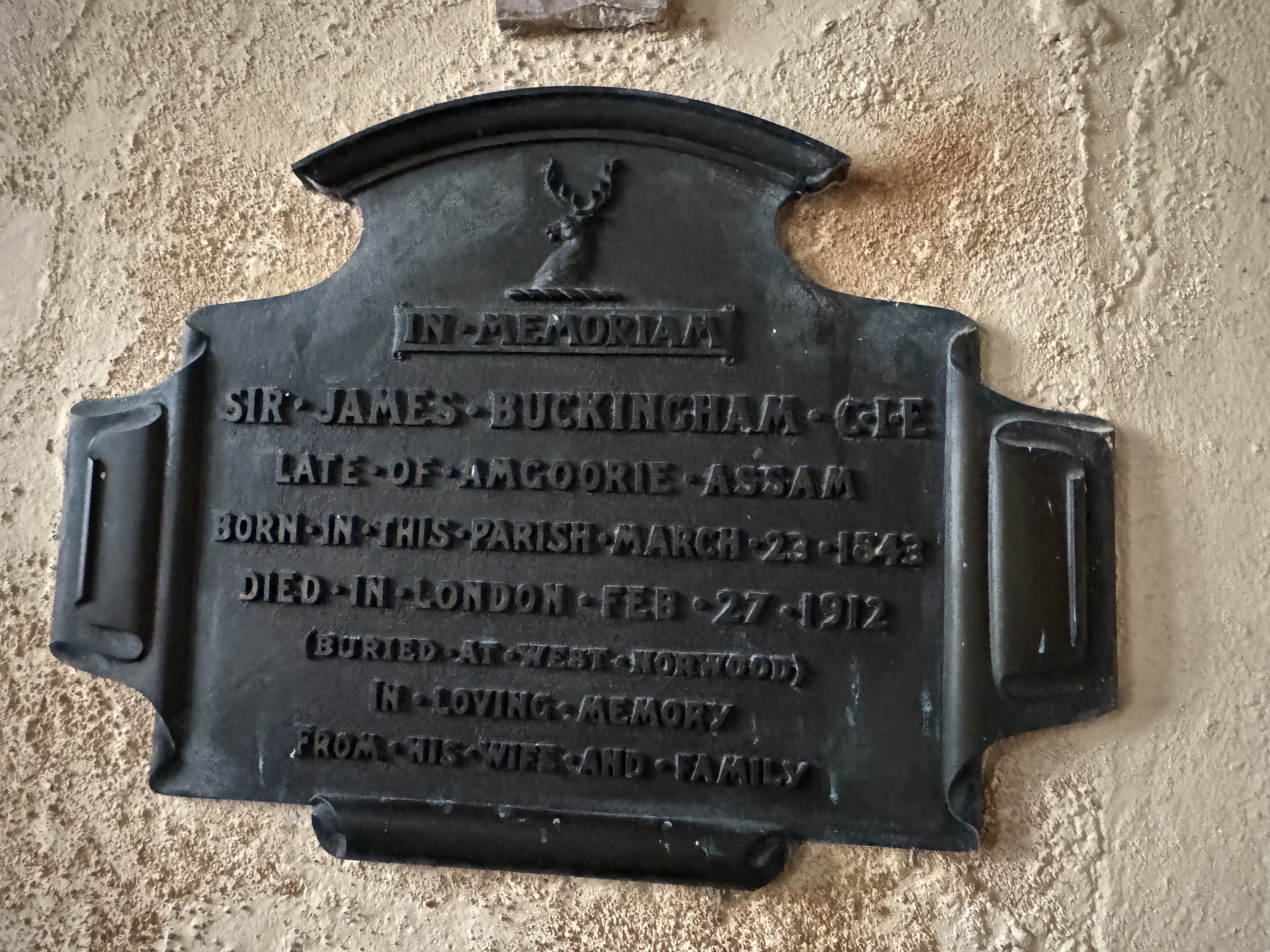
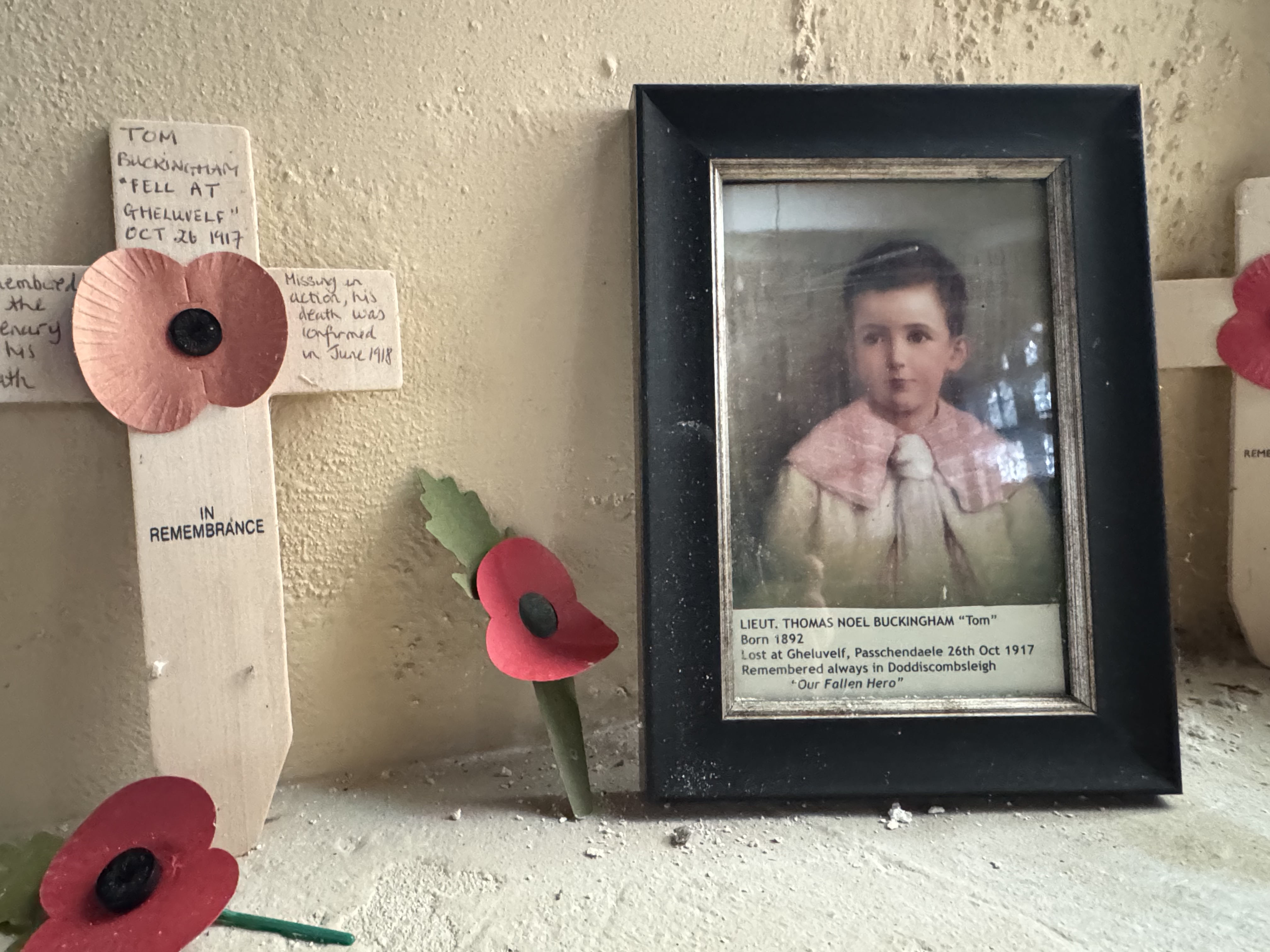
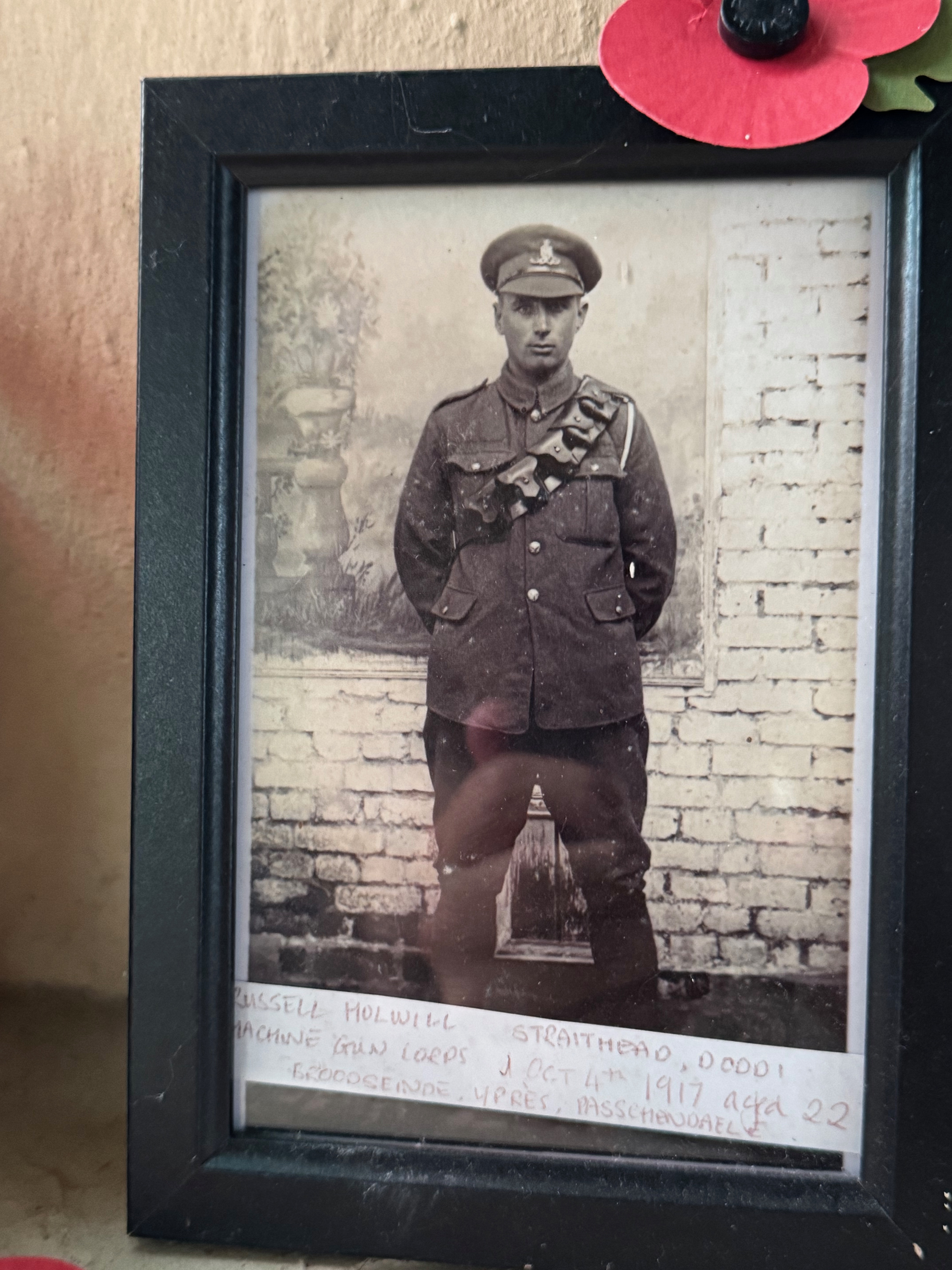
There is a very sad memorial to Lieutenant Thomas Buckingham, who was killed with the Devons at Passchendaele in 1917—one of the most iconic battles of the war. The reference on his memorial to being “missing” almost certainly refers to the horrific muddy casualties of the battle, when soldiers literally disappeared without trace in the horrific conditions of the battlefield. There is also a spectacular reredos dedicated to him. His parents and grandparents had been rectors at this church, so they must have felt his loss particularly keenly. There is a sweet photograph of Thomas as a young child, presumably a constant reminder to his father in his place of work of his lost son. There is another photograph of Private Russell Holwill of the Machine Gun Corps, who was killed in the exact same battle aged just 22—two local families joined in tragedy. There is also a more bizarre reference to Hugh William Talbot Buckingham, who was “Killed by Bandits on March 9th 1917 in the Southern Oilfields of Nanchital, Mexico aged 48 years.” Tantalisingly, there is no more information on this fascinating memorial. Given his age, I wonder if he was an uncle of Thomas and brother of the vicar. There is a really interesting story behind this memorial that I would love to know more about if anyone happens to know.
We looped back to Christow, where the majorettes were still twirling. The car was mercifully unscathed. Four of the six Eden Way churches are now under our belt, and every one has been a gem — full of art, history, and the kind of surprises that make a walk unforgettable.
|