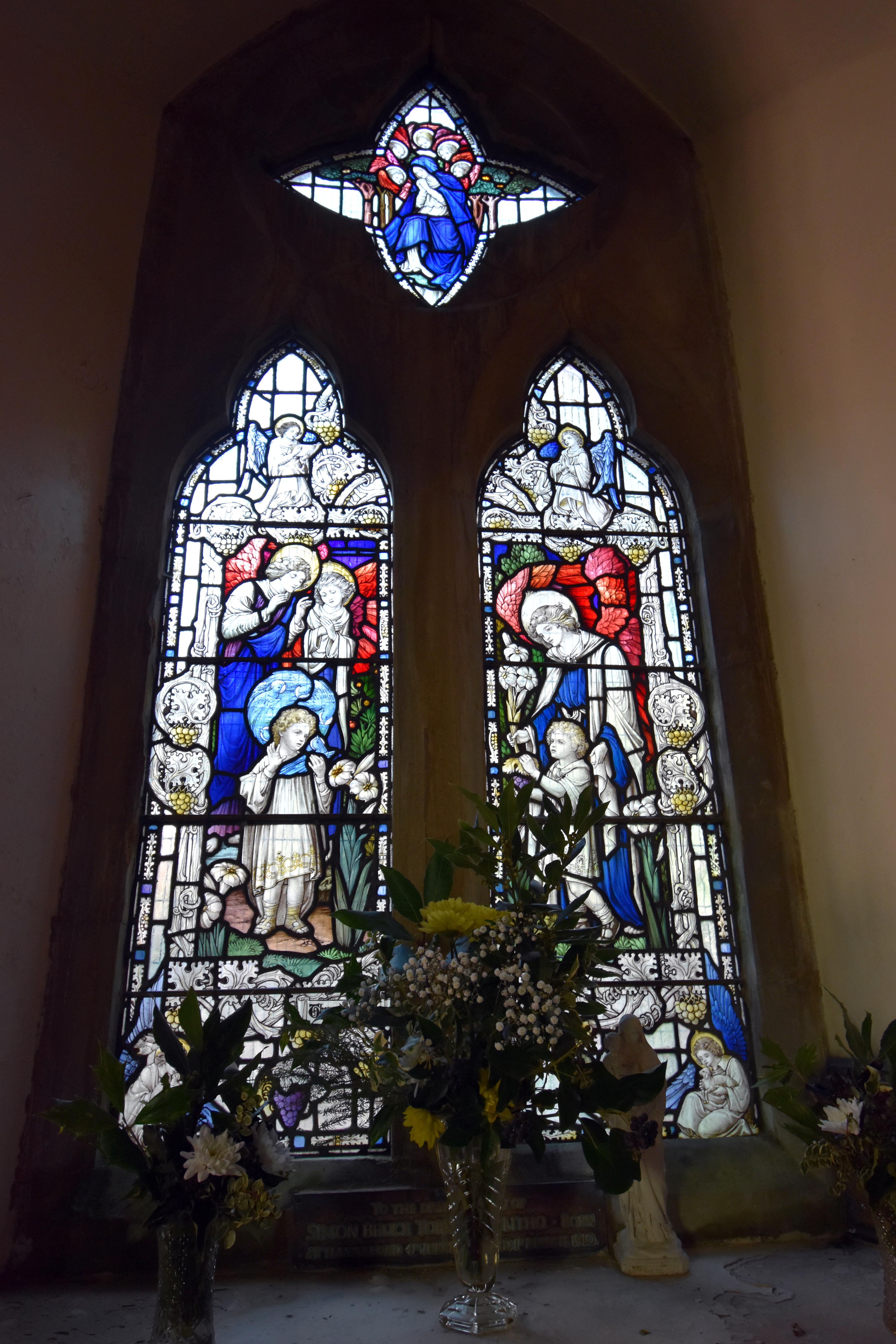
Opposite the martial splendour of William Bolitho’s window is a very different memorial indeed, one that stops you in your tracks for its tenderness rather than its heroism. This is the window dedicated to his younger brother, Simon Bruce Tormod Bolitho, who died at the age of just five. It is known locally as the Blue Bird Window, and it is unlike anything else in the church. Instead of saints or soldiers, the glass shows two children from a Belgian play called The Blue Bird, written in 1908 by the Symbolist playwright Maurice Maeterlinck. The story follows a brother and sister, Tyltyl and Mytyl, who are sent by a fairy on a quest to find the mystical Blue Bird of Happiness. They travel through enchanted realms and meet all manner of allegorical figures, only to discover in the end that happiness was not some distant treasure at all, but something already present in their own home.
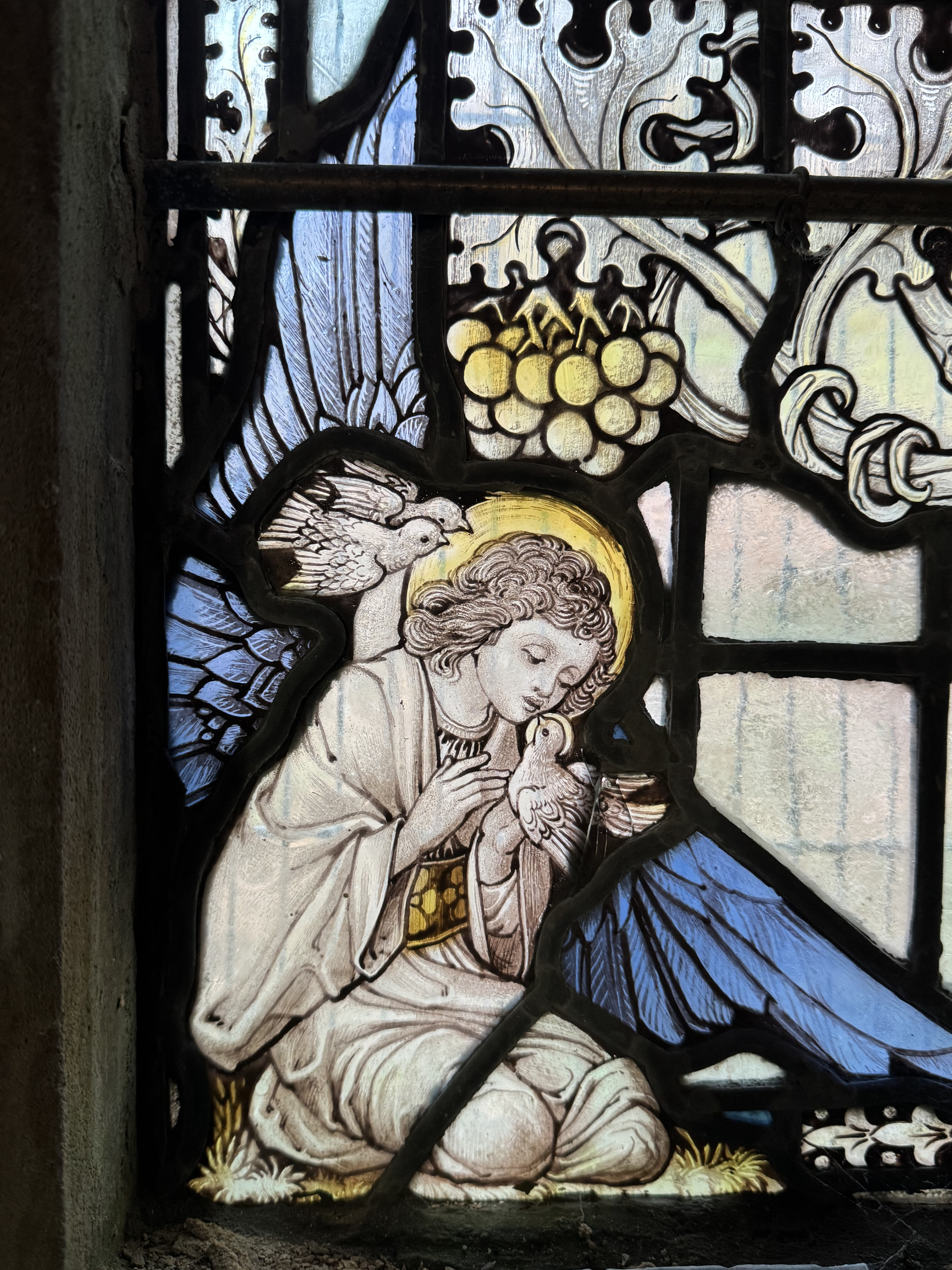
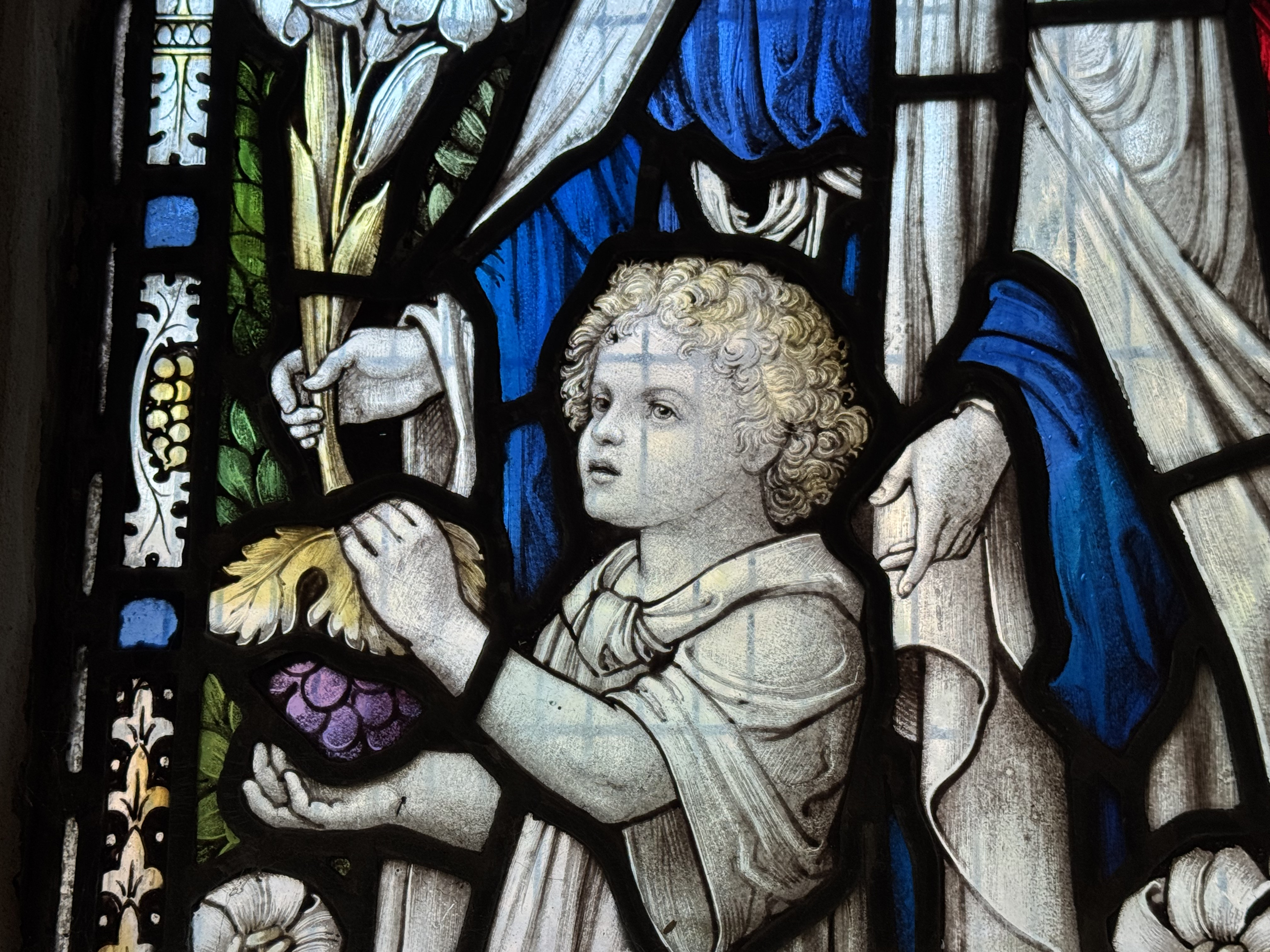
The Bolithos clearly chose this imagery with care. The boy in the window holds a blue bird in his hands while others fly gently around his head, the whole scene bathed in soft, hopeful colour. It is a world away from the martial saints and battlefield references opposite, yet the two windows speak to one another across the nave: one commemorating a young officer lost at Ypres, the other a small child whose life barely began. The inscription “There Are No Dead” sits quietly beneath the glass, a reminder of the Edwardian fascination with allegory and the belief that love and memory might transcend the short span of earthly years.
It is a surprisingly modern choice for a rural Dartmoor church, but then the Bolithos were never shy of commissioning unusual and beautiful things. Maeterlinck’s play was enormously popular at the time — it had premiered in Moscow, reached Broadway by 1910, and even inspired an opera and several early films — so the symbolism would have been immediately understood by anyone familiar with the cultural fashions of the day. Standing in the stillness of Leusdon Church, with the Dart valley spread out below the porch, the Blue Bird window feels like a small, luminous gesture of hope from a family who had known more than their share of loss.