|
|
|
West Africa was not called the white man's grave for nothing. The average life expectancy of British officials and merchants could be measured in months of being posted to these tropical lands. Without the natural protection built up by the local peoples over generations, Europeans would quickly be stricken down by a whole host of debilitating and even fatal diseases. Similar but different conditions would be replicated across the empire—from the Caribbean to the Indian subcontinent. Each colony would have its own battery of invisible microbes and parasites which might attack the unsuspecting European colonist. As a rule, the warmer and more humid the colony, the greater the danger that it presented, as the microbes enjoyed the more stable breeding conditions. It was no accident that saw the great majority of British migrants heading towards the safer temperate colonies of Canada, New Zealand, South Africa and South Australia. Although even the sometimes alien nature of these colonies could challenge the medical knowledge and understanding of the first colonists to arrive. It should also be remembered that until the mid-nineteenth century and the acceptance of the germ theory, no one even knew of the existence of disease-bearing microbes.
It was not just the effect of microbes on people that shaped where colonists did and did not go. Rinderpest was a disease that could be lethal to that favourite form of transportation for the colonists, the horse, and one of their favourite farm animals, the cow. Colonists from South Africa spread further and further north until they reached a temperature that sustained the microbes in the faeces of infected animals. Once they hit the so-called Rinderpest zone, European farmers, mounted police and the military in general were halted in their tracks by this invisible disease.
Plant diseases also shaped the location and form of colonies around the world. One of the first tasks undertaken by colonists to any new land was to establish which cash crops could be viably grown with the local soil and climate conditions. Countless colonial farmers would have invested huge amounts of time, effort and money in seed, machinery and farmland on crops that might seem viable for a couple of seasons, only for them to be reduced to a pulp as some local disease mutated to infect the imported plants or for some disease to catch a lift alongside some imported plantlings. Disease could dictate the economic viability and structure of whole communities and even whole colonies.
The modern transportation and communication links that enabled colonists to travel around the world as their empire grew could also prove to be a double-edged sword. Not only could Europeans travel halfway around the world, but when they travelled back they could bring new and deadly diseases with them. The most devastating example of this phenomenon was the way that cholera was brought back to Britain from the Indian subcontinent with devastating results. The imperial habit of moving slaves and then labourers around the world to tend the new plantations and factories opening up around the empire would bring a further danger of introducing disease to populations that had no natural resistance to them. Again, the migration of diseases was not limited to those that affected humans—animal and plant diseases were just as easily displaced as the colonists tampered and experimented with nature in order to advance their economic prospects.
Starting from a base of almost total ignorance, the imperial responses to disease went through many stages. The journey from haphazard experimentation to full-blown public health systems was a long and painful one that cost many millions of people their lives.
 |
|
|
The initial habits of the earliest colonists could sometimes be surprisingly effective in dealing with the dangers of disease. Those colonists who adapted to the local customs would be better suited to avoiding and dealing with local diseases. For example, those East India Company men who built airy bungalows with good ventilation and who ate the local cuisine (curried for hours on end which would kill off any microbes) were far more likely to survive than those who transplanted their English customs lock, stock and barrel to the tropics. However, it was not long before an air of European superiority over local customs would build up and displace many of the sensible living habits of the earliest colonists—usually to their disadvantage.
Additionally, the lack of proper administrative controls over the early empire worked against the authorities. Ignorant farmers, soldiers and labourers could spread disease far more effectively than the authorities could deal with it. The laissez-faire nature of the empire meant that there were no passports, no immigration or screening departments. Administration cost money—and the empire was designed around making money, not spending it. If you could afford a ticket to India—you could go there. As is often the case, it was only after a disaster had struck that something was done about it. The devastations of the cholera epidemics on Britain were just such a disaster. Regulations were brought in to screen passengers, to isolate those who exhibited symptoms once aboard a ship, to limit the density of passengers on a particular ship and to ensure that clean food and water was provided to all the travellers.
This increasing willingness of the imperial government to deal with public health was a useful weapon in the battle against disease. Even if no one knew that disease was carried by germs, the fact that colonial governments were increasingly willing to invest in public works projects such as fresh water and sewage systems was helpful in keeping many diseases at bay. These were usually confined to those areas with the most Europeans living in them, but they did spread out into the wider metropolitan areas as the authorities realised that these were often the breeding grounds for diseases that could eventually spread to European compounds anyway.
Developments in the armed services would also play a helpful role. In most campaigns the army had long lost more soldiers to disease than to any enemy in the field. The Crimean War would vividly illustrate the need for reforms in the conditions of the soldiers in the field and in their treatment on being injured or on becoming ill through disease. Florence Nightingale proved statistically that her sanitised hospital regimes which insisted on cleanliness, exercise, edible food and fresh water were far more effective than the army's laissez-faire approach to dealing with sickness. The remarkable thing about her reforms is that it was done with a complete ignorance of the role that germs played in transmitting disease. She recognised a correlation between hygiene, recovery rates and the abeyance of disease without understanding the underlying reasons.
Obviously, when the role of germs in the spread of disease was finally understood, medical breakthroughs came thick and fast. The most important developments were actually in preventative medicine: prophylactics and vaccinations. Cures for existing sufferers were actually more difficult to develop and so there was an appreciable time lag between the two developments (some diseases have never had a cure developed for them). The British Empire was fortunate in that it had a strong scientific, industrial and technological basis to research, develop and mass-produce these medicines, vaccines and prophylactics. Although for vaccines in particular to be effective, it was preferable to immunise whole communities and populations at the same time. At first, well-meaning voluntary organisations and missionaries would undertake such programmes. Although these would not always be as effective as they did not have the administrative abilities to ensure that whole populations were being reached in a short period of time. It was only when the full weight of the administrative authorities could be persuaded to engage in such programmes that they began to have significant effects. It was only really in the twentieth century that the full weight of industrial medicine and administrative application would make significant inroads into limiting the spread and hosting of diseases.
 |
|
|
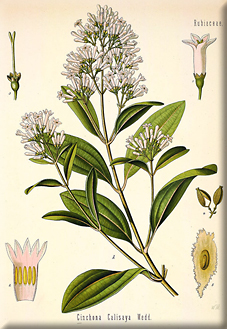
Malaria would illustrate the hopes and setbacks of such industrial medicine. By far one of the most common, debilitating and often deadly of the tropical diseases. It was the one disease that eighteenth- and early nineteenth-century colonists could expect to contract if they spent any significant time in the tropics. In the nineteenth century the bark of the Cinchona plant was found to have an active ingredient that inhibited the spread of the Plasmodium parasite that caused the symptoms of the disease. In fact, unusually, the quinine could be used as both a prophylactic and a treatment. In the 1860s, a group of English and Dutch adventurers actually stole seedlings from its native Peru (its export was strictly prohibited by the Peruvian government). The British Empire then used its geographical expanses and organisational strength to try growing the bark in plantation form around the empire. After a great deal of experimentation, it was found that Malaya and Indonesia were the best places to grow the bark and a new business opportunity was created for a few well-capitalised entrepreneurs. The bitter taste of the quinine was added to tonic water to make it more palatable as a medicine. This is almost certainly why 'Gin and Tonic' became the effective beverage of empire. Although the effect of the alcohol on the quinine in the tonic was probably not beneficial. However, by the end of the nineteenth century it seemed that another major barrier to imperialism had been broken down. Unfortunately, genetic mutation would rear its ugly head and the parasites would evolve to combat quinine medication which was not always being taken in its correct dosages (or being diluted by gin!). Malaria would mutate into new and more virulent forms which quinine could do little to combat. However, even by the Second World War, the loss of the quinine plantations in Malaya and Java to the Japanese was still regarded as a medical catastrophe to the Allied war machine.
It is perhaps ironic that the British Empire came to a close at a time when it was at its most capable of bringing about significant medical advances to those peoples it had ruled over for so many years. The period following World War II saw major medical developments once again. Penicillin and antibiotics were being mass-produced at affordable prices; medical equipment and surgical techniques made huge advances. It is therefore appropriate that the final stage in the imperial battle against diseases was sharing this knowledge and these techniques with at least some of the local populations. At first, some ruling elites might send their sons (rarely daughters) to study in the private colleges of England. Local private schools would be developed over time and then finally, hospitals, universities and medical colleges would be built throughout the colonies. Medical students and doctors could share their knowledge and techniques with one another. It would no longer be necessary for British doctors to be parachuted into an unfamiliar area, attempt to deal with conditions and factors that they were unfamiliar with and be expected to perform medical miracles. Locally trained doctors could get hold of the latest research (often from the field), use high-quality industrially produced medical equipment and medicines and yet still apply local knowledge and understanding where appropriate.
This synthesis of Western and local medicine was a useful, if unexpected and unanticipated, by-product of British imperialism. But it was the global nature of the Empire that allowed Western medicine to be taken to so many corners of the planet and to be put to such vigorous tests in a range of environments, populations and climates. The improved communications certainly encouraged the transmission of pathogens but more importantly still it allowed the transmission of treatments and good medical practice which were to prove to be more enduring in the long run.
|