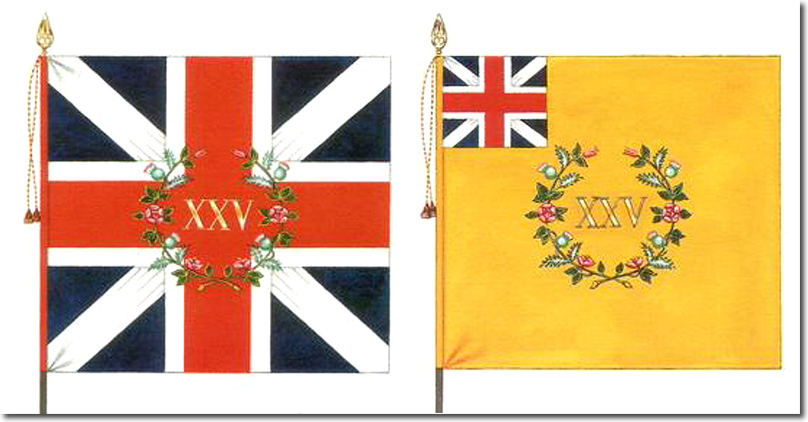
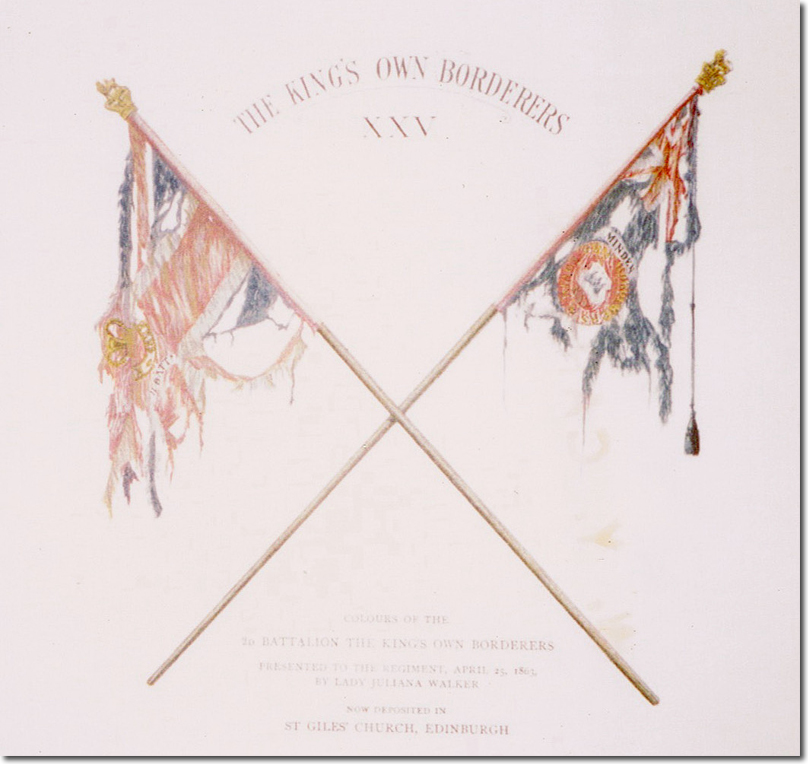
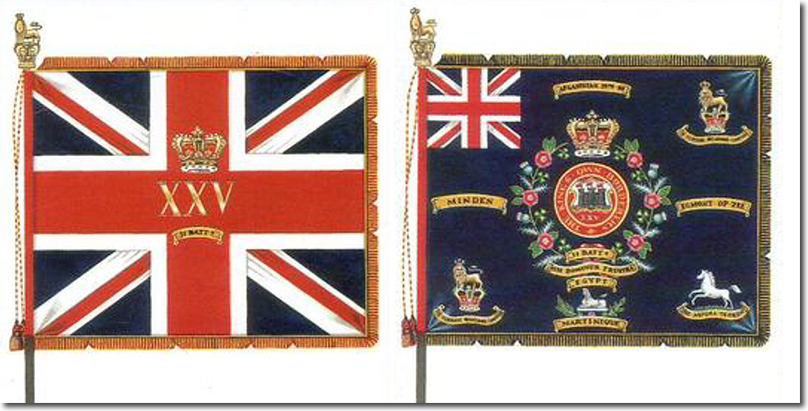
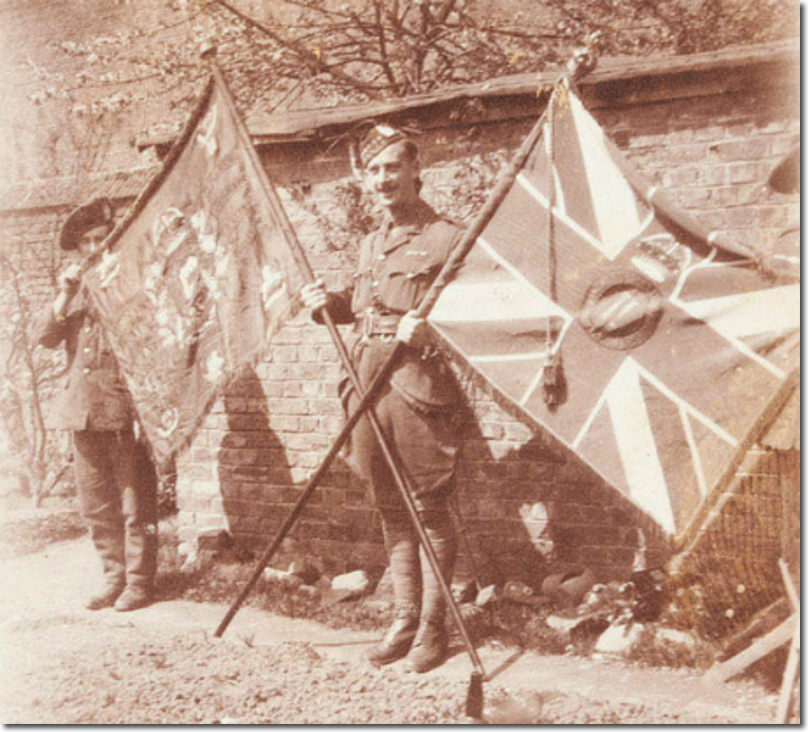
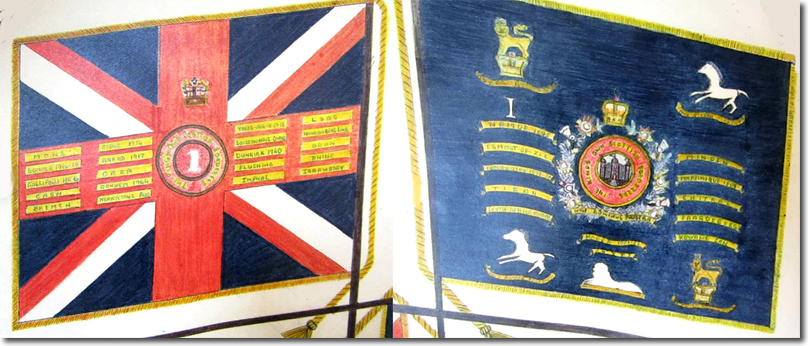
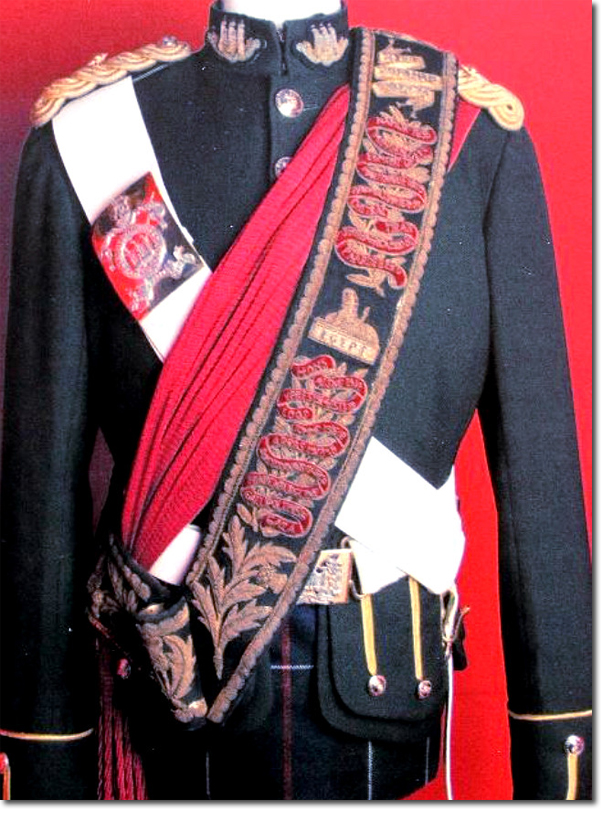
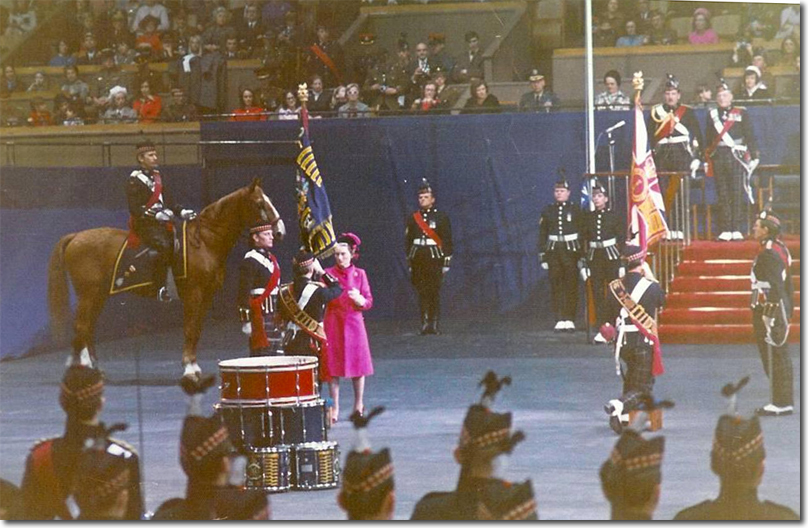
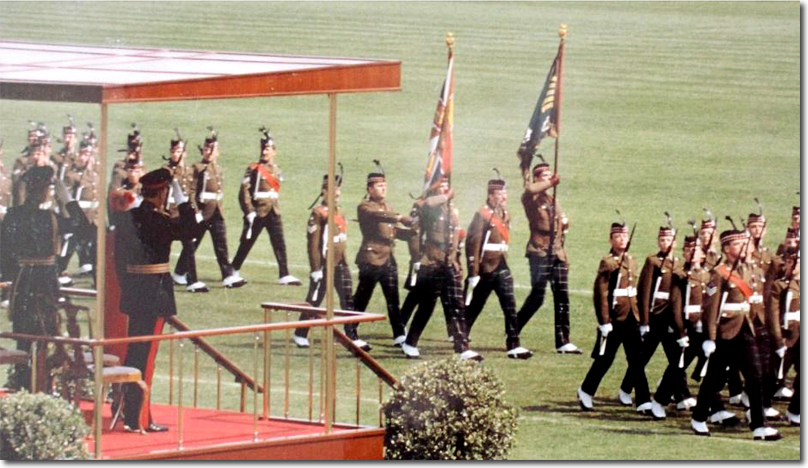
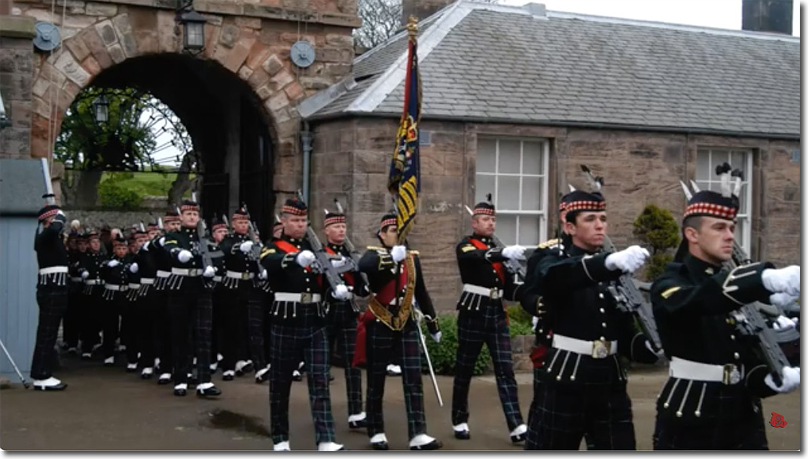
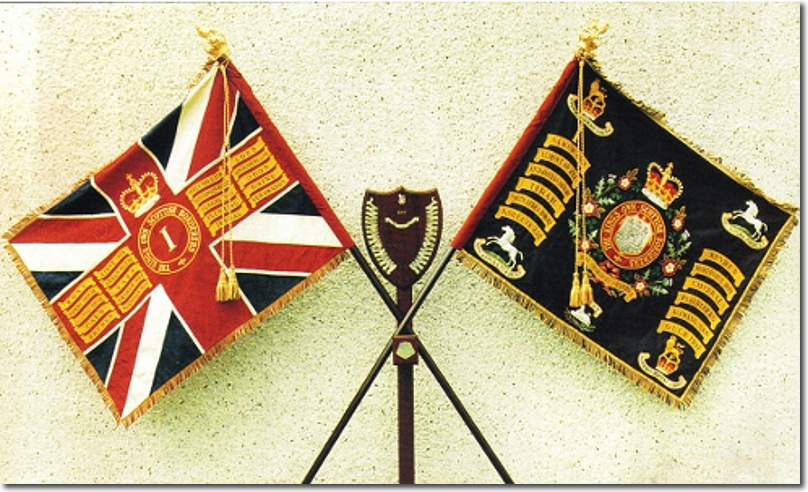
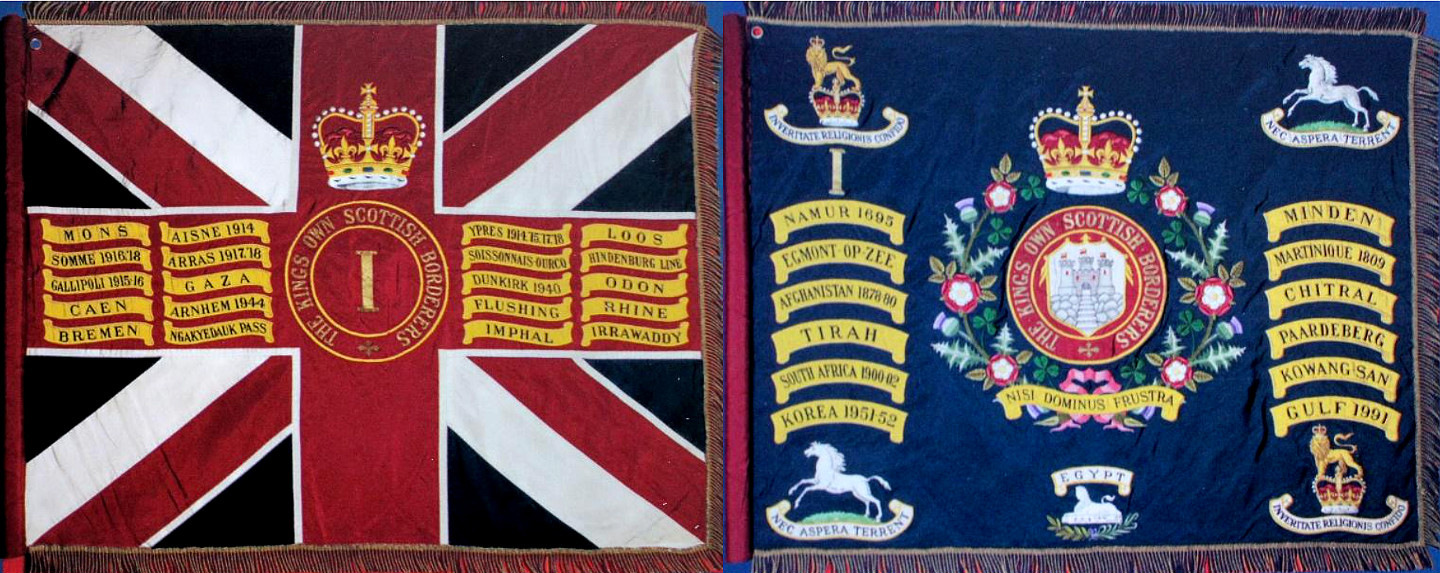
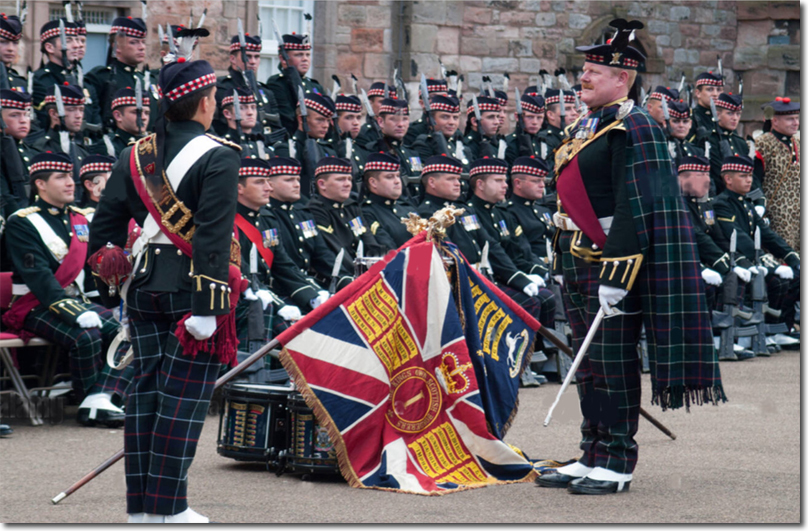
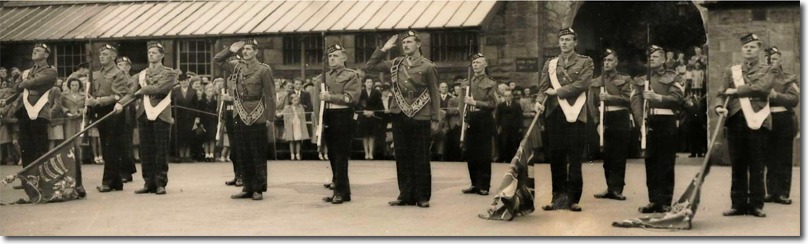
Colours were established as a visible rallying point in battle, the personification of the Regiment. As long as soldiers remain to carry the Colours, no matter how depleted the Regiment becomes, the Regiment cannot die. Under Colonel James Maitland the Regiment lost 525 officers and men in one catastrophic incident during the siege of Namur on 27 July 1695 when a mine exploded. The survivors rallied behind the Colours and drove the enemy back, winning the day. The Regiment recruited again and continued its history, maintaining the traditions and standards shown by its forebears while carrying the same Colours.
For that reason the Colours in a regiment are more sacrosanct than any living person or reigning monarch. Tradition dictates that all military personnel salute the Colours, and even the monarch is expected to show respect. Queen Elizabeth would bow her head whenever she passed the Colours, not because they represent the Crown, but because they bear the Regiment’s battle honours which embody its history and the sacrifices of its officers and men.
Infantry regiments today have two Colours, the King’s (or Queen’s) Colour and the Regimental Colour. In earlier years each infantry company had its own Colour. The Colonel’s company carried a plain Colour (white or blue) with a central device for the Earl of Leven, while the other companies were blue with the white saltire of St Andrew. The lieutenant-colonel’s and major’s companies had their own distinctions, and the remaining companies carried Colours numbered according to the seniority of the captain.
There are no surviving examples or detailed descriptions, but the company Colours may have resembled the First Captain’s Colour 1687 of the 1st or Royal Regiment of Foot, or the coloured drawings held in the Bibliothèque Nationale, Paris and sketched by C. C. P. Lawson: Captured Colours 1693. These Colours were taken at Landen, where Leven’s Regiment fought the French.