|
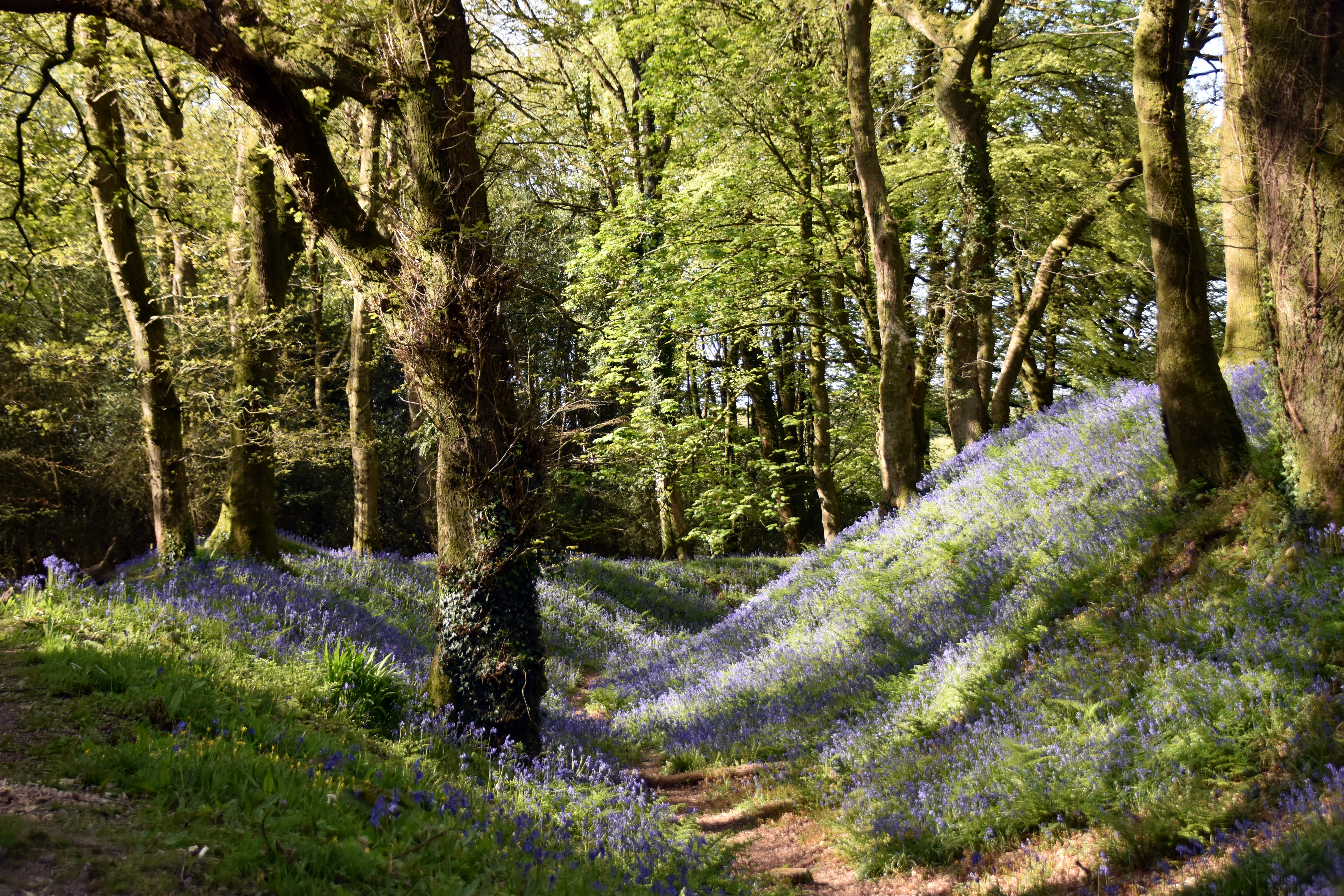
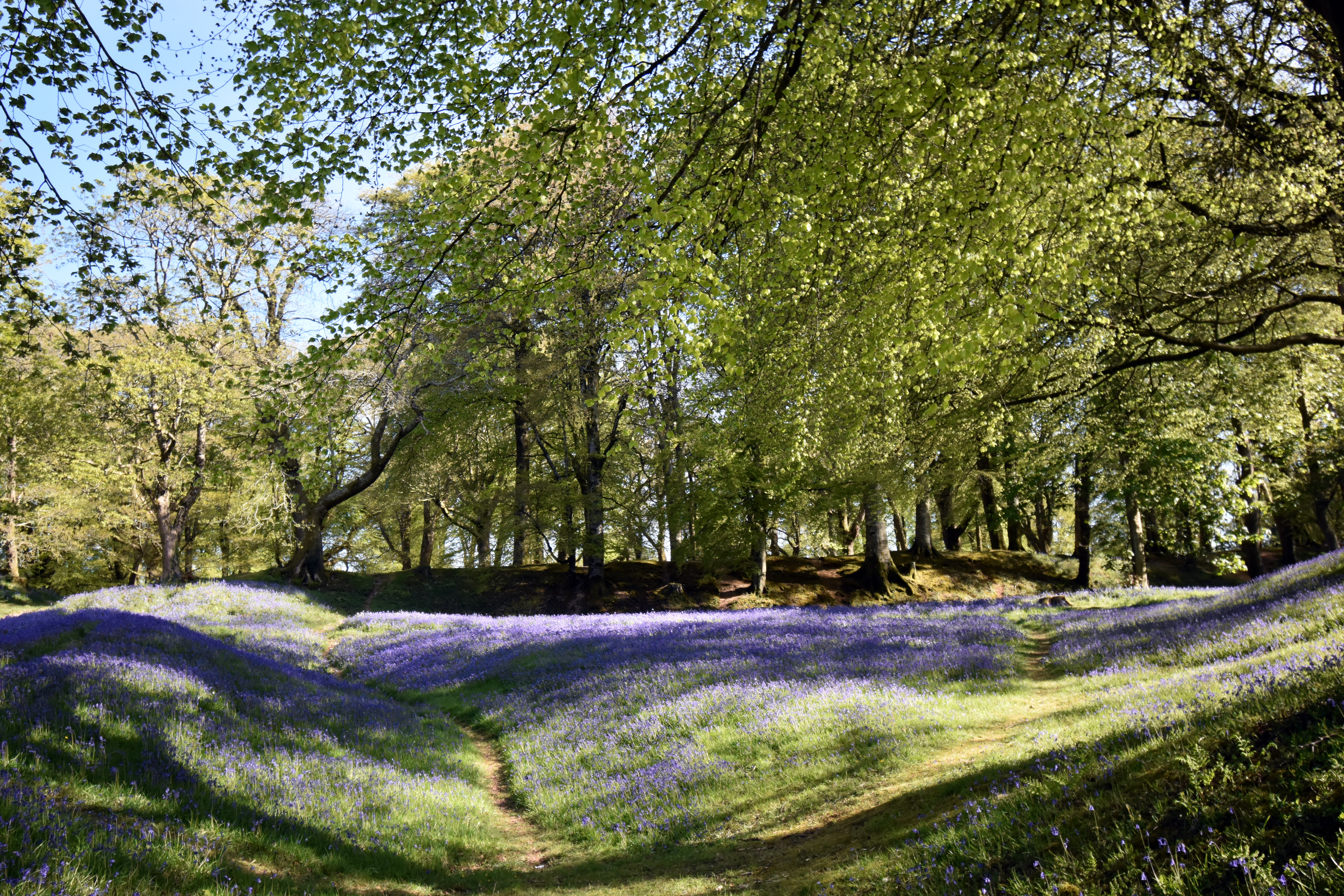
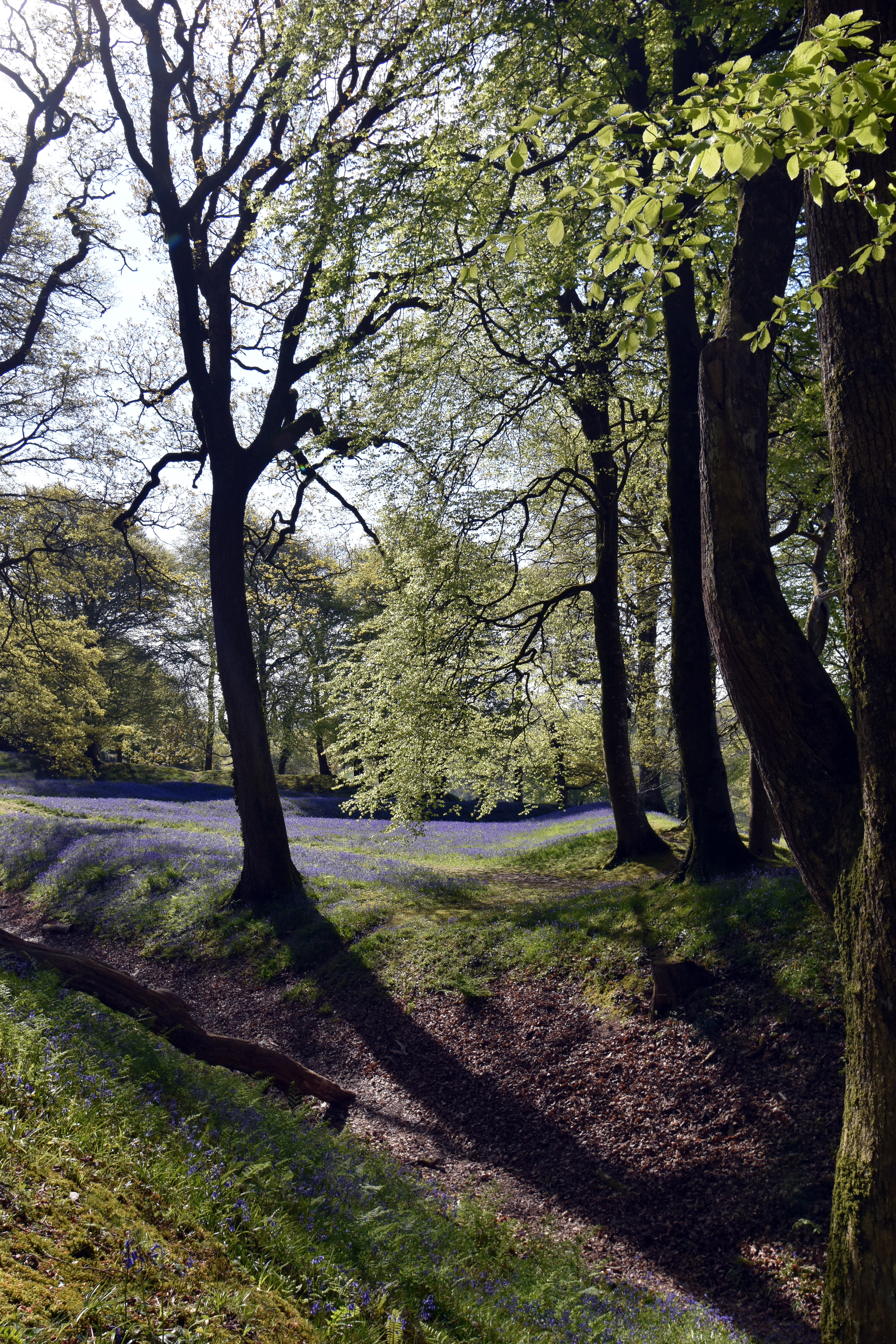
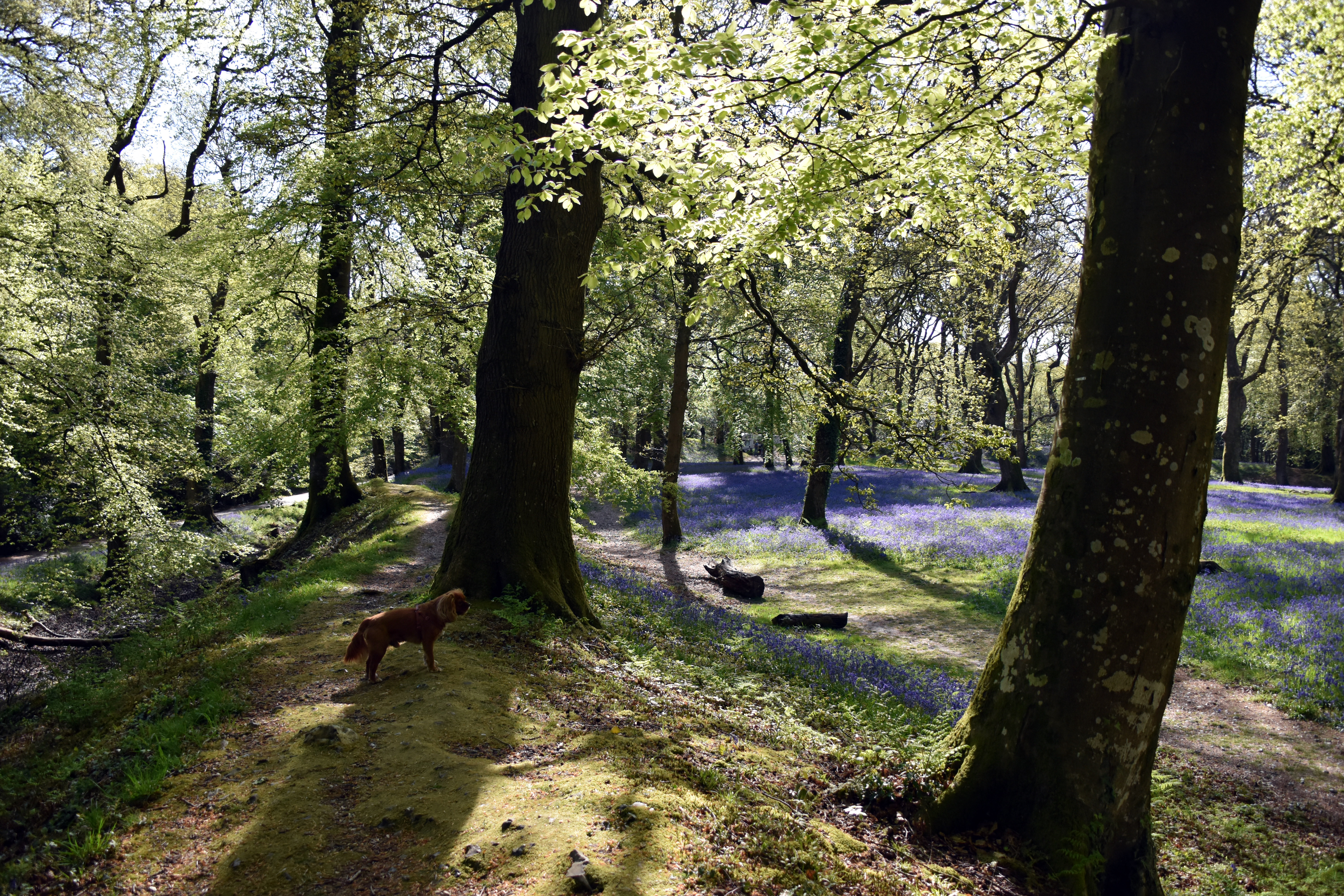
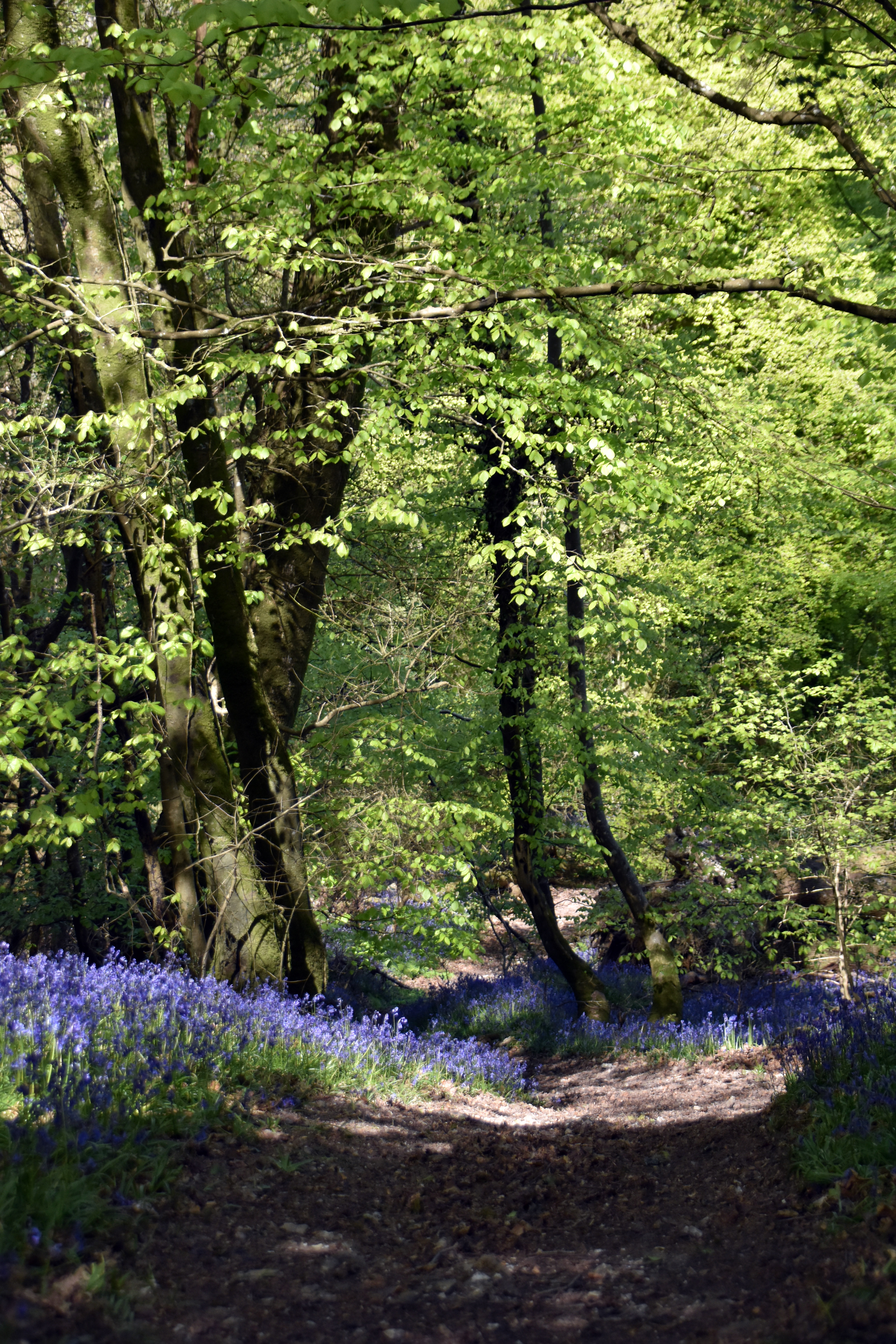
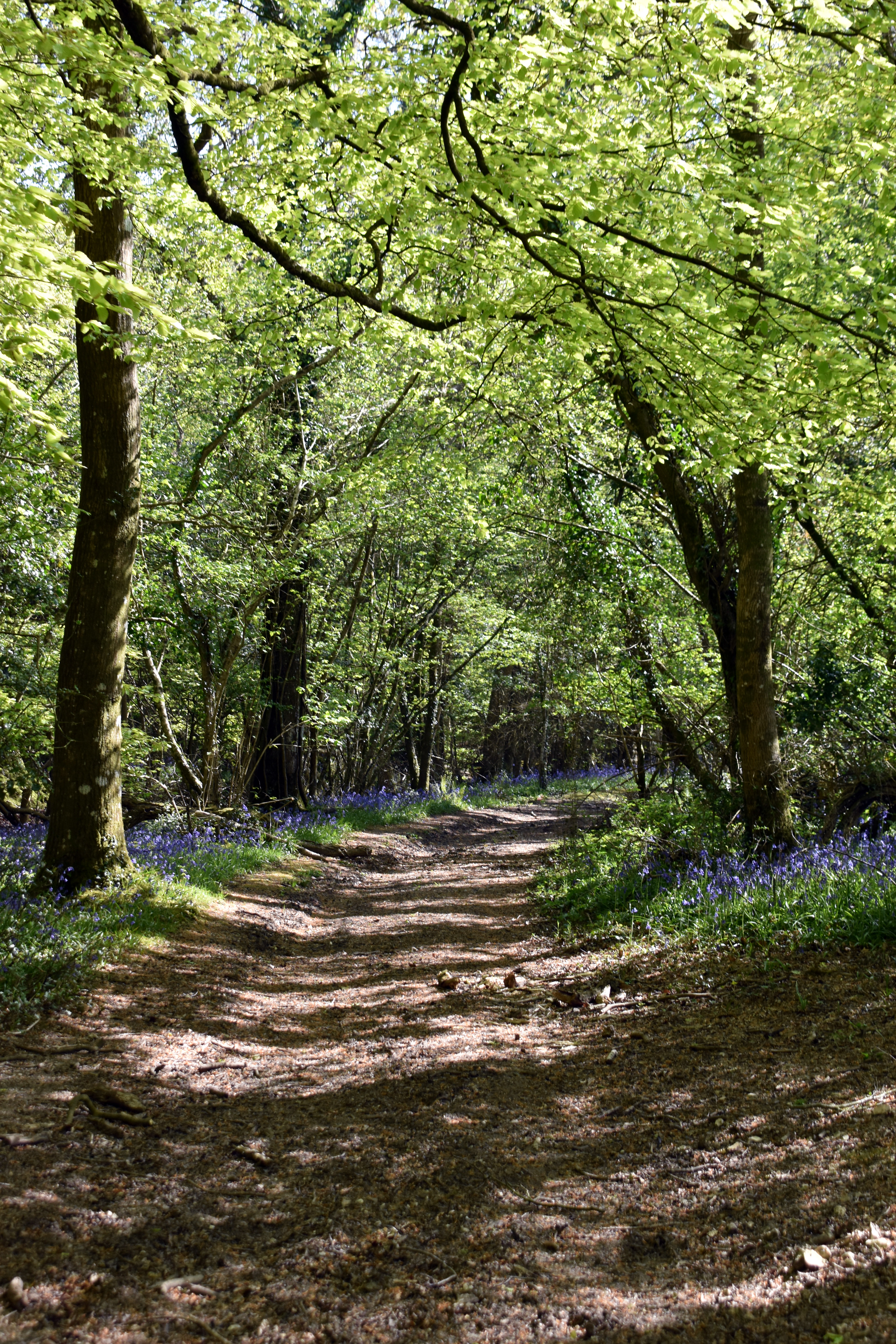
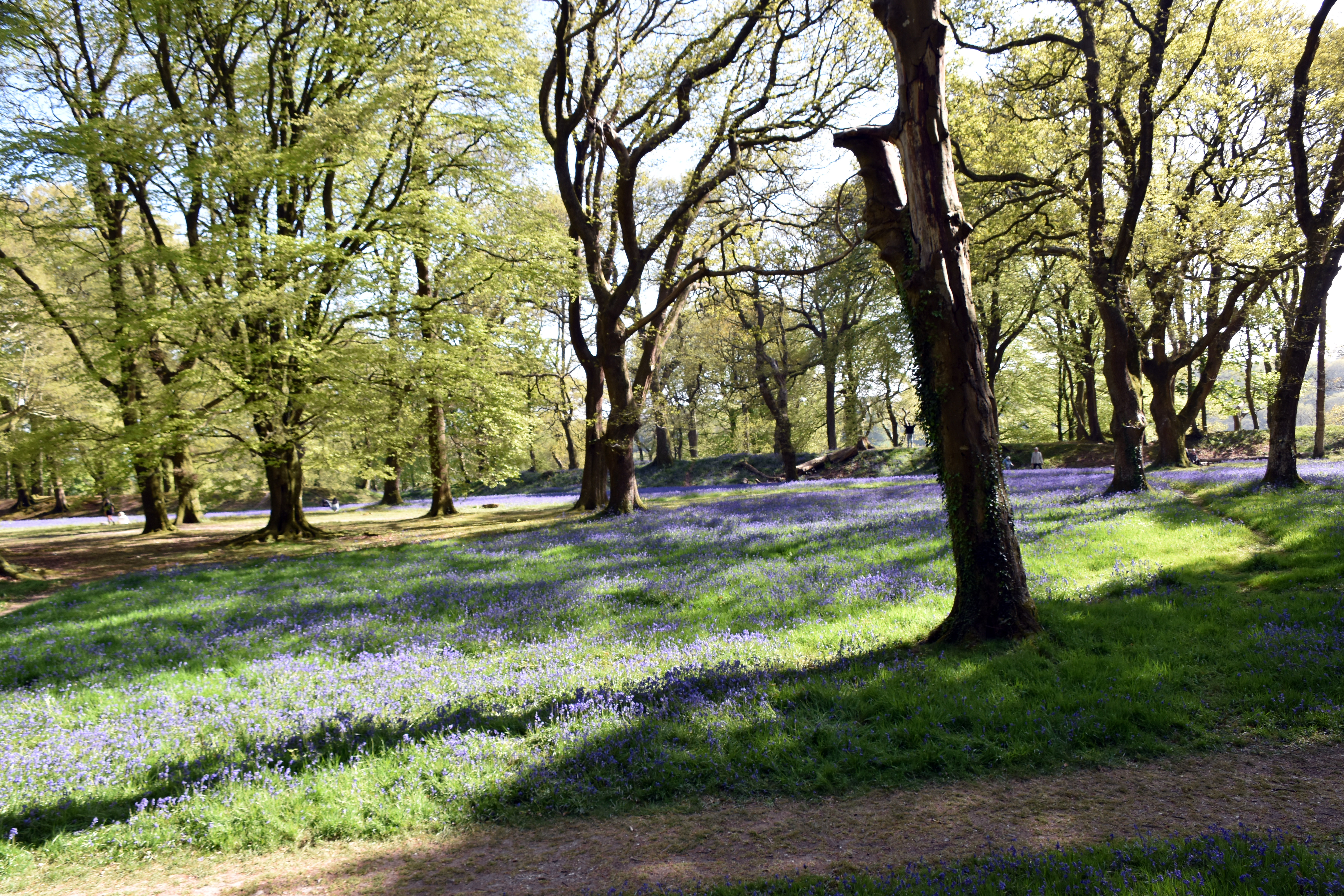
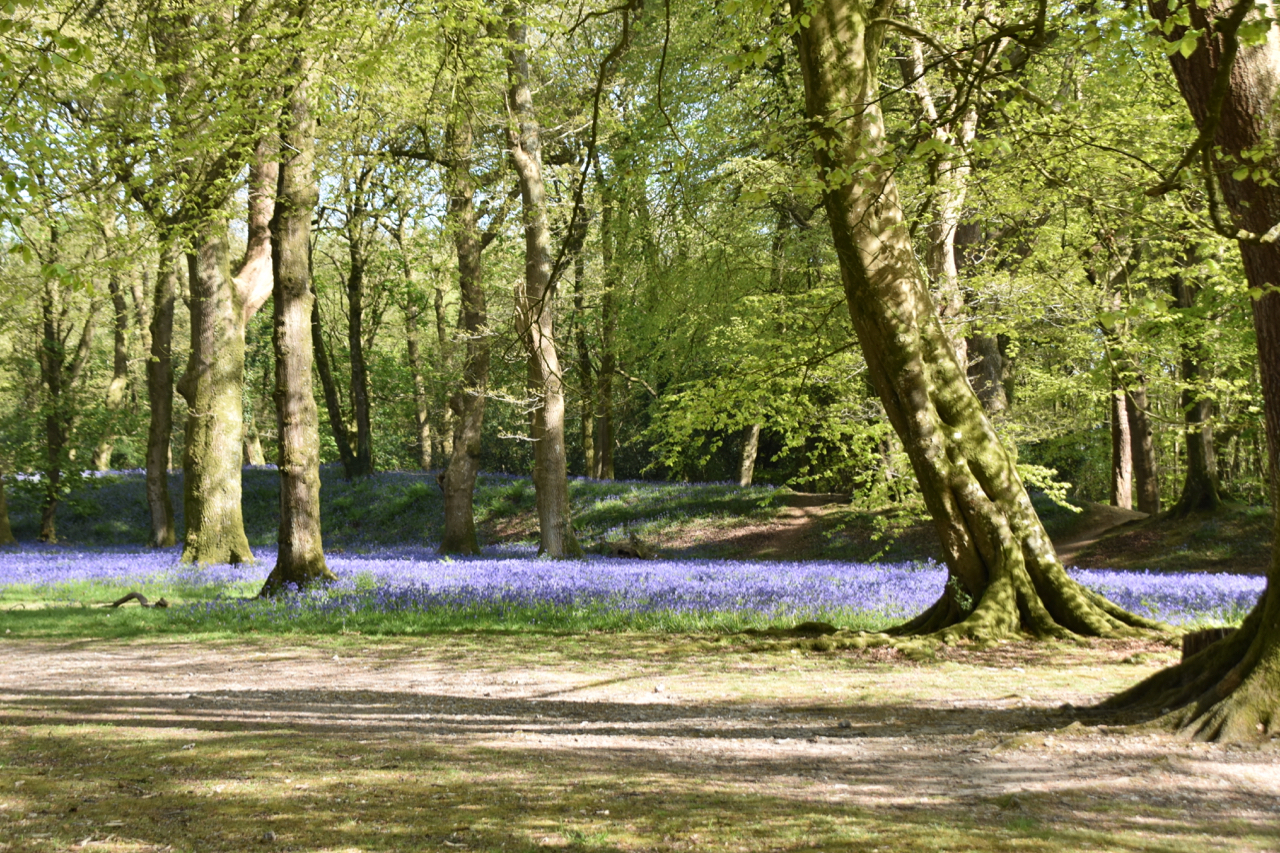
Late April meant that there was one destination that we particularly needed to head for at this time of year. Blackbury Camp in East Devon is beautiful any time of year, but in late April and early May it goes beyond merely beautiful to the sublime when it is flooded with bluebells on its banks, in its interior and in many of the surrounding woodlands. Blue is such an unusual colour in nature, but when you see it in such prevalence the effect is truly breathtaking.
The hill fort is from the Iron Age, probably about the 4th century BC, and it was an imposing structure with a very impressive entrance barbican to the south and plenty of room inside the 2‑hectare structure for all the locals to bring their livestock and families if trouble were brewing with rival tribes. The barbican had a long walkway before getting to the gateway itself. All the walls and the entranceway would have been covered with wooden palisades providing protection for slingers. This area is covered in flint and plenty of slingshot — 1,271 to be precise — have been uncovered by archaeologists in the past. But the beauty of the bluebells makes it hard to appreciate that this was a defensive fortification designed for protection. The contrast of living in a peaceful society to one where warfare was the norm could not have been demonstrated more ably, with the families, visitors and photographers delighting in this idyllic setting today! At times it would have felt a far more austere and dangerous location, although its intention was always to offer a degree of security to its inhabitants.

|
|
|
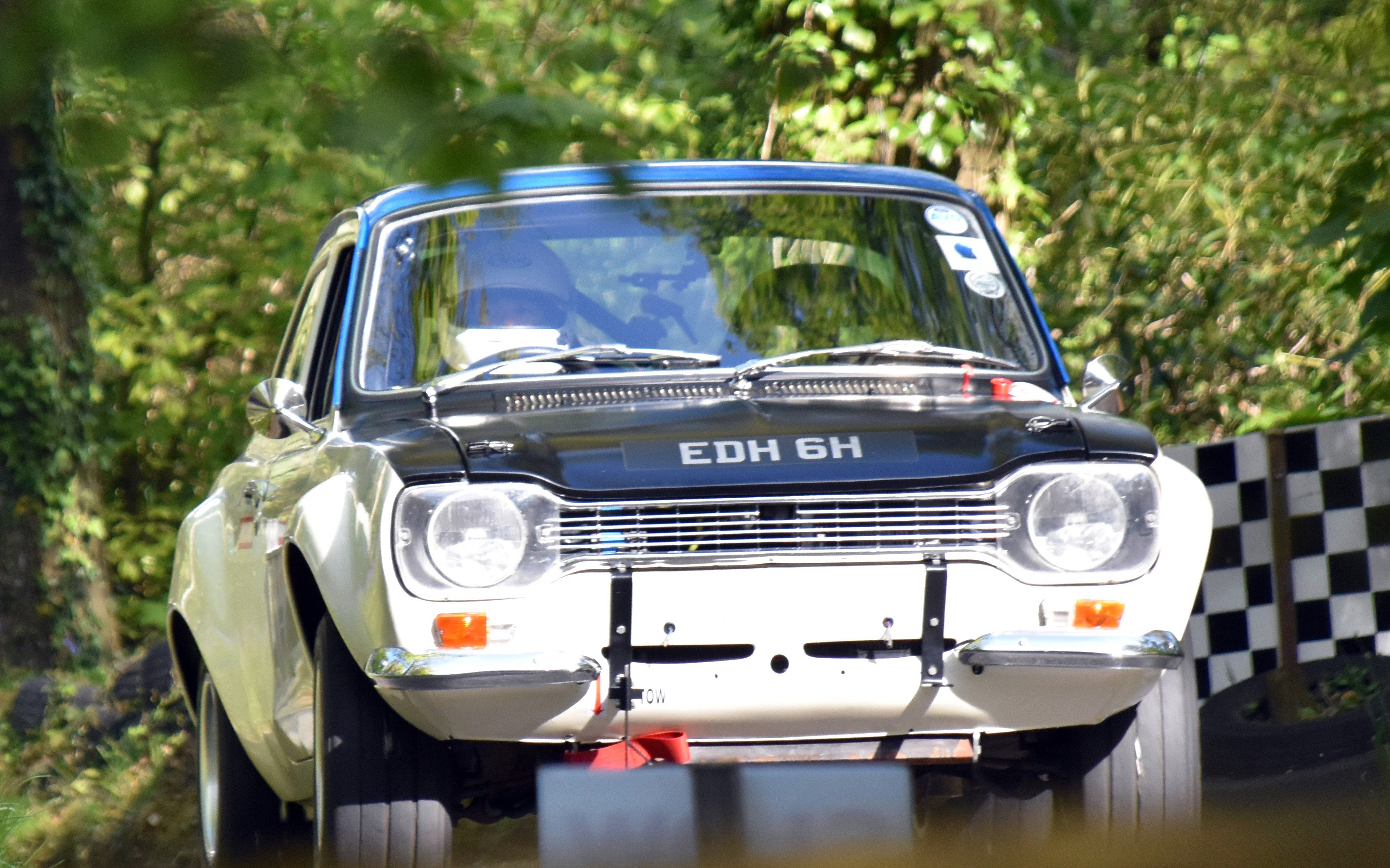
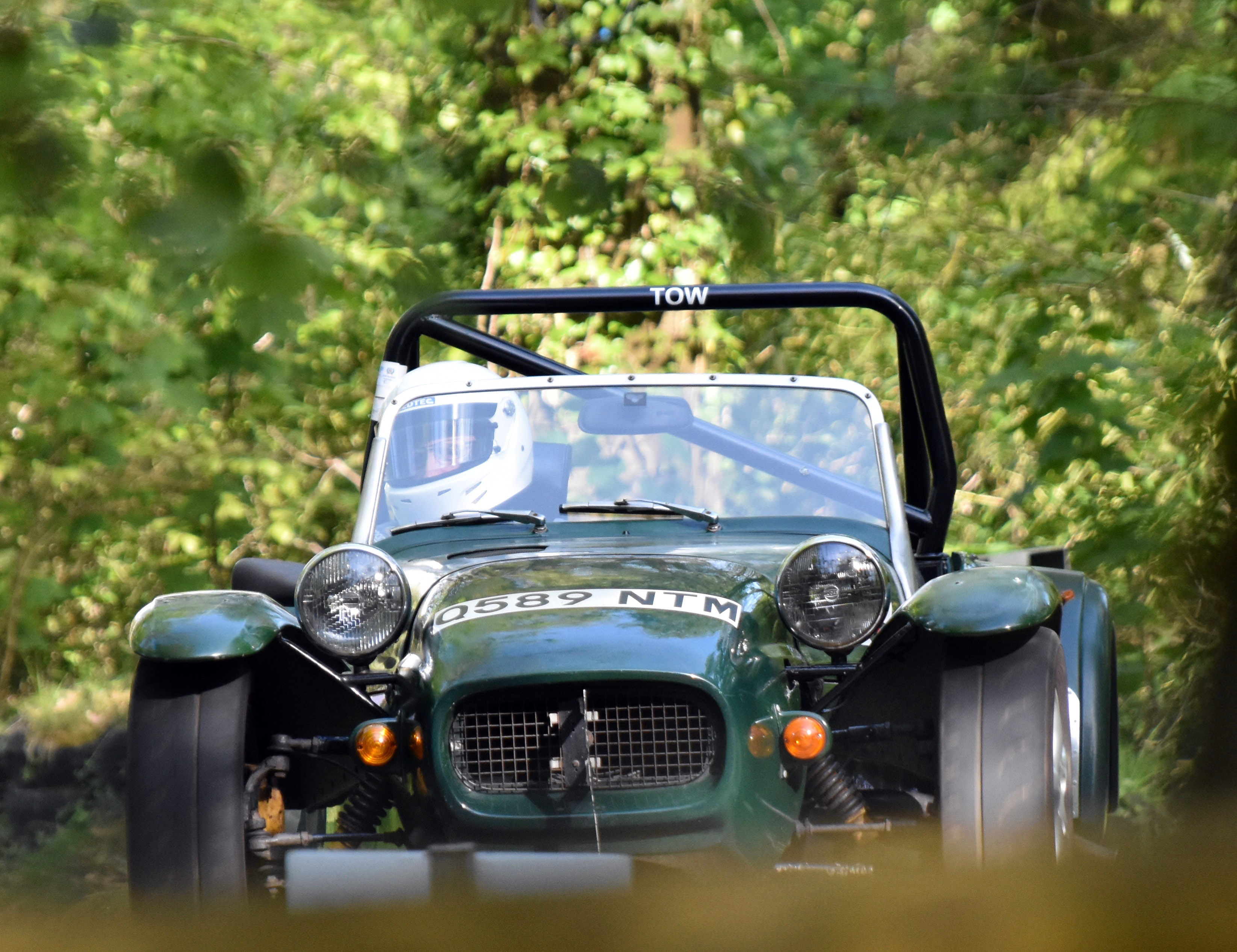
Not surprisingly, the feast for the eyes attracted a steady stream of sightseers, but actually it was a neighbouring event at Wiscombe Park that somewhat took away from the peaceful ambience. I had not realised it, but this weekend was the Wiscombe Park Hill Climb weekend. A steady stream of fascinating cars from every conceivable era raced up a 1,000‑yard hill climb with the ending being literally yards away from Blackbury Camp itself. Indeed, you could see the final section from the Iron Age embankments. Of course, the volume of these motor vehicles straining to get up the hill as fast as they could gave an interesting soundtrack at regular intervals, with the intervals filled by tannoy speakers announcing the times and leaders. I wouldn’t say it detracted from the beauty but added another level of interest.

|
|
|
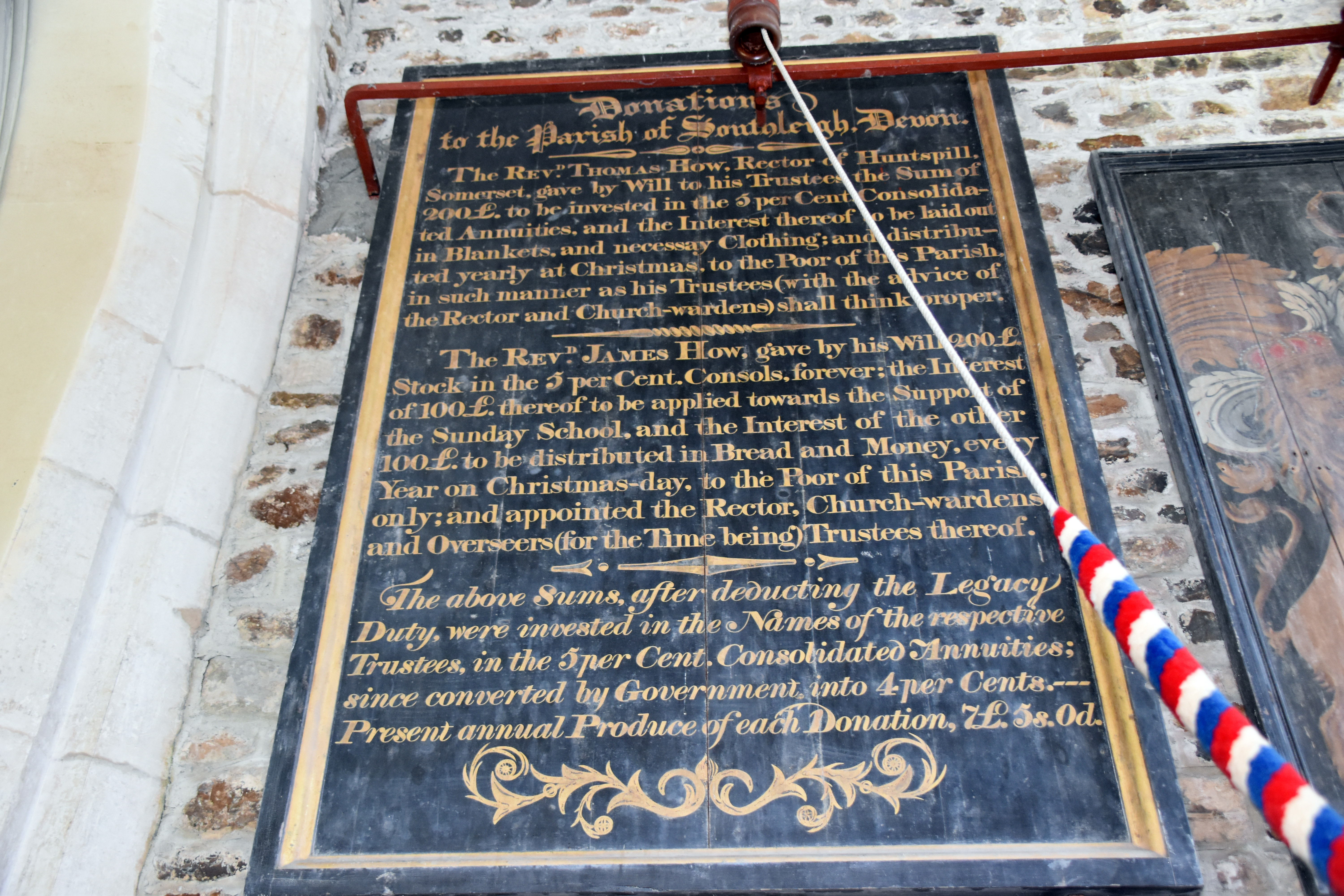
Wiscombe Park itself has a fascinating history. Originally a priory connected to Otterton, it was given over to Sir William Bonville I by Henry III, who used all these surrounding wooded hills as a deer park for hunting. He had vast holdings throughout Cornwall, Wiltshire, Devon and Somerset, and nearby Shute House would become the Bonvilles’ primary residence. Later generations of the Bonvilles had their own civil war within a civil war during the Wars of the Roses as they fought the Courtenays for power and influence in Devon. Disaster struck for the family in 1455 at defeat at the Battle of Clyst Heath on the outskirts of Exeter, which saw the Courtenays ride to Shute to sack and pillage it. As prominent Yorkists, the last of the line was William Bonville, 1st Baron Bonville. He was to see his son and grandson killed at the Battle of Wakefield in 1460. In 1461, in a series of events that makes Game of Thrones look tame, William Bonville was protecting the Lancastrian King Henry VI from the King’s own wife and son, who captured the King and his protector at the Battle of St Albans when the famous Warwick the Kingmaker abandoned the battlefield. The Queen and Prince Edward had intimated that William Bonville would be pardoned for protecting Henry VI, but with some cajoling from the Earl of Devon (the hated Thomas Courtenay), the last of the male Bonvilles was executed for treason. Normally a traitor’s lands go to the King, but fortunately for the surviving Bonvilles, Edward of York would win the Battle of Towton just a few weeks later. Edward captured Thomas Courtenay and had him executed. And the Bonville lands and estate passed to William’s one‑year‑old great‑granddaughter, Cecily Bonville — including Wiscombe Park. She was later married to Thomas Grey, the Marquess of Dorset, with her considerable fortune. Their son would be Henry Grey, the Duke of Suffolk, adviser to King Edward VI and father of Lady Jane Grey, known as “the Nine Days’ Queen”. He and his daughter were not executed by the victorious Queen Mary at first, but when a subsequent Wyatt rebellion took place, they were both executed. Bizarrely, his severed head was found in 1851 in the Church of Holy Trinity in the City of London — it was thought to have been hidden by his widow so that it could not be displayed for public humiliation. His confiscated lands, including Wiscombe Park, were taken over by the Petre family, who seem to have passed it on to the How family at some date. The house that stands there now was built in 1826 for Charles Gordon, who had purchased the estate from the Hows in 1815 and was related to the Prime Minister of England at the time of the Crimean War — the Earl of Aberdeen. It was then taken on by the Edmonds in the mid‑nineteenth century, who kept it until the 1950s. In 1953 the estate was bought by motoring enthusiast Major Richard Chichester, who, amongst other motoring exploits, drove a Rolls‑Royce Silver Ghost from Palestine back to England. It was Richard who created the hill climb which still runs to this day!

|
|
|
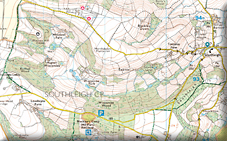
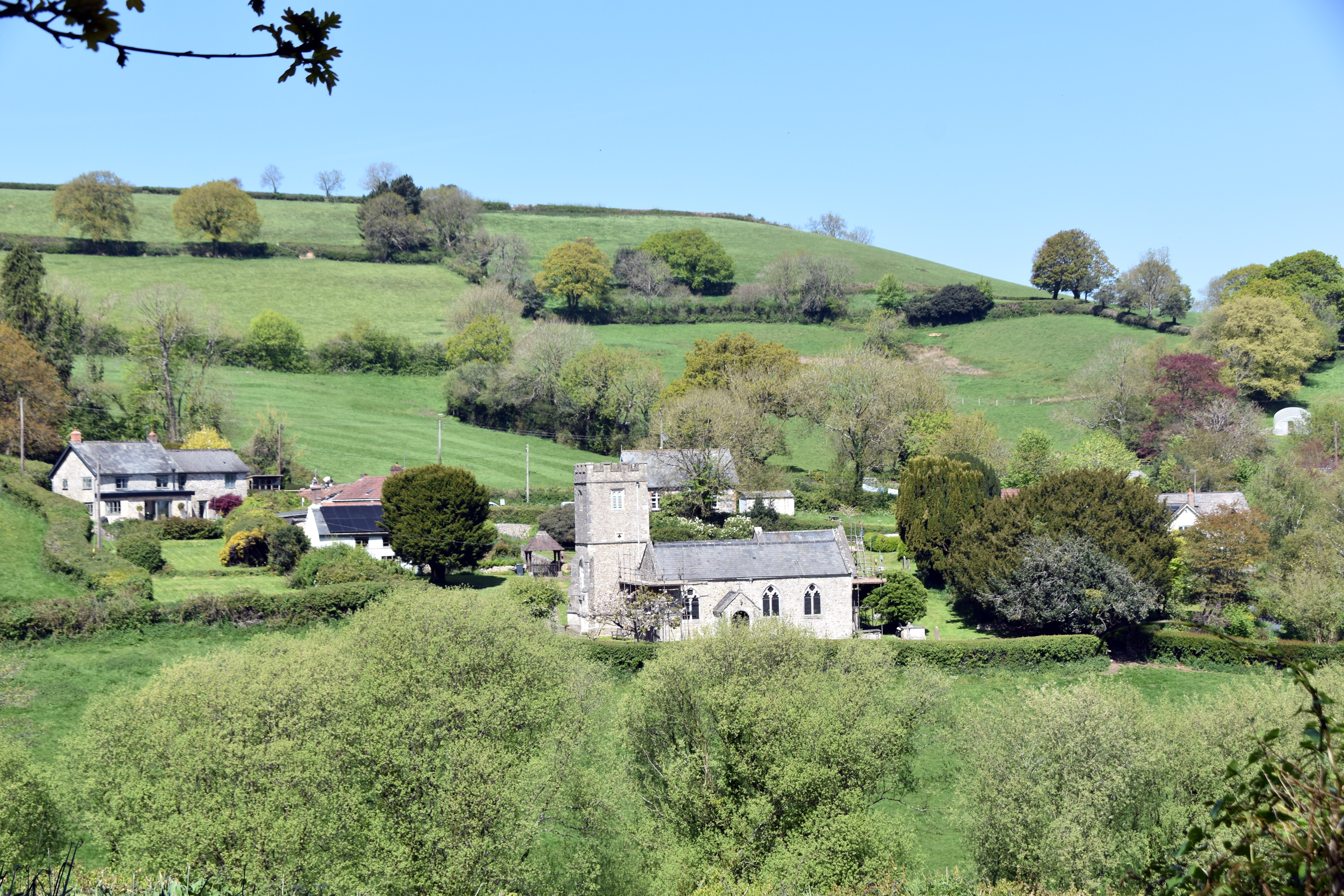
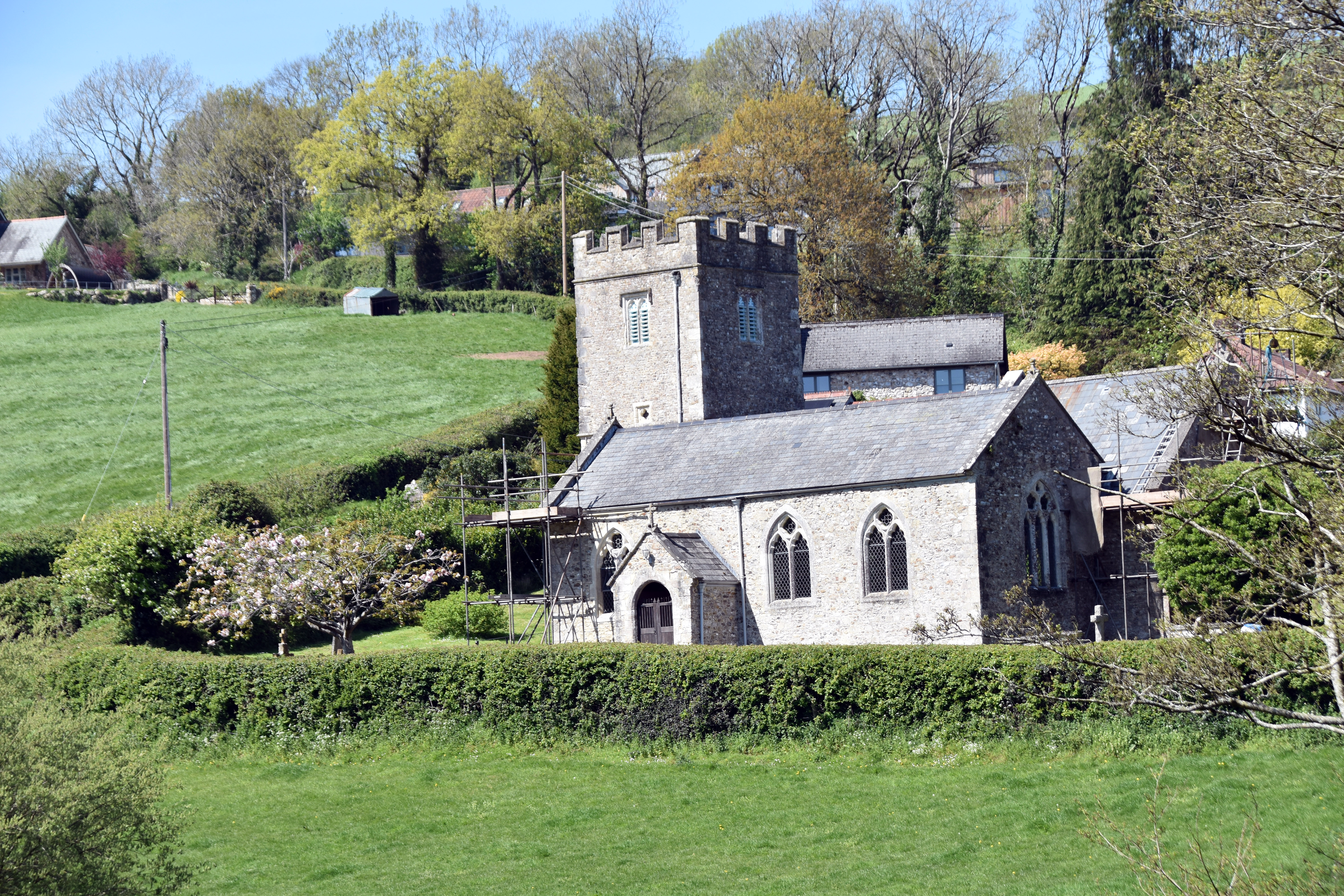
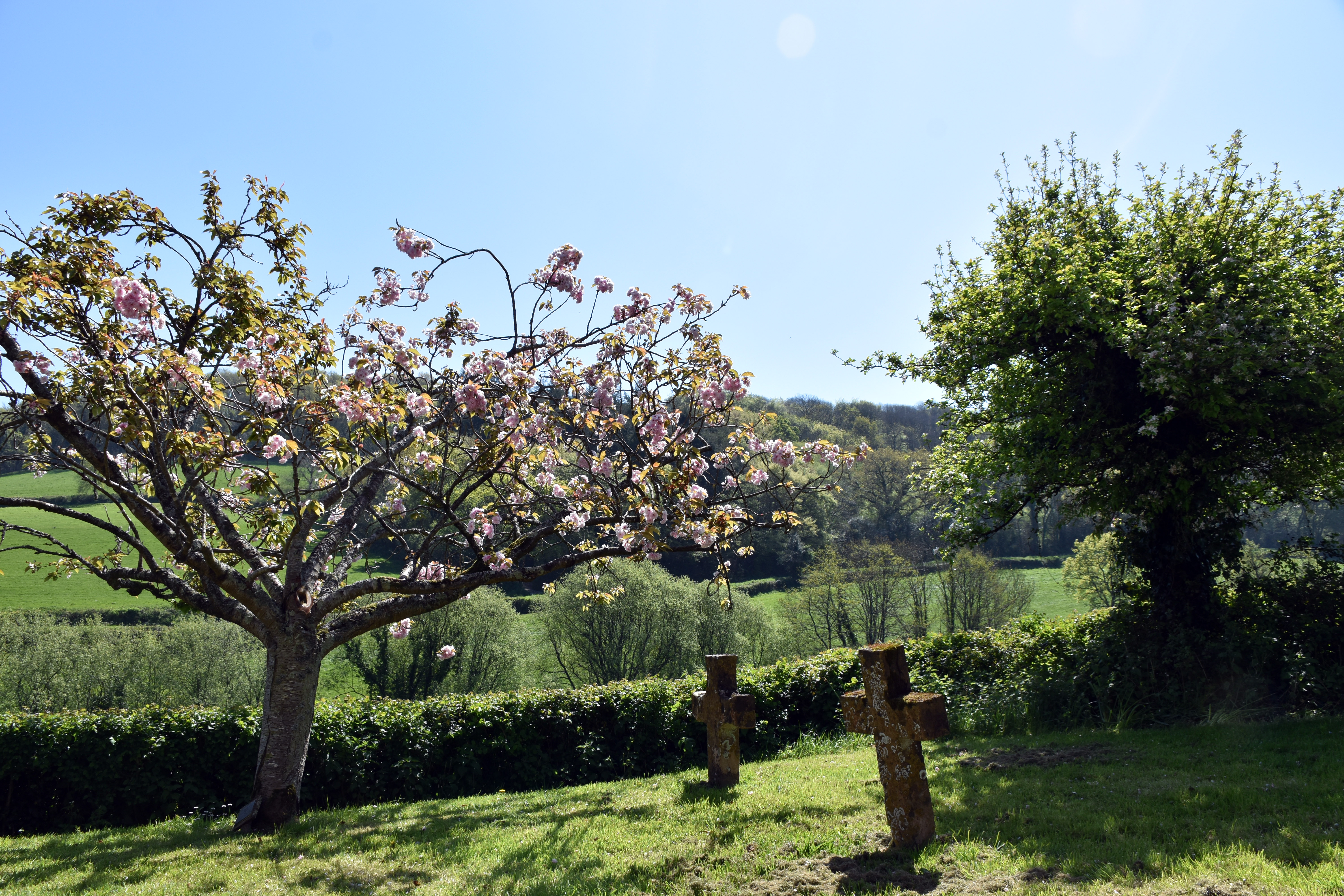
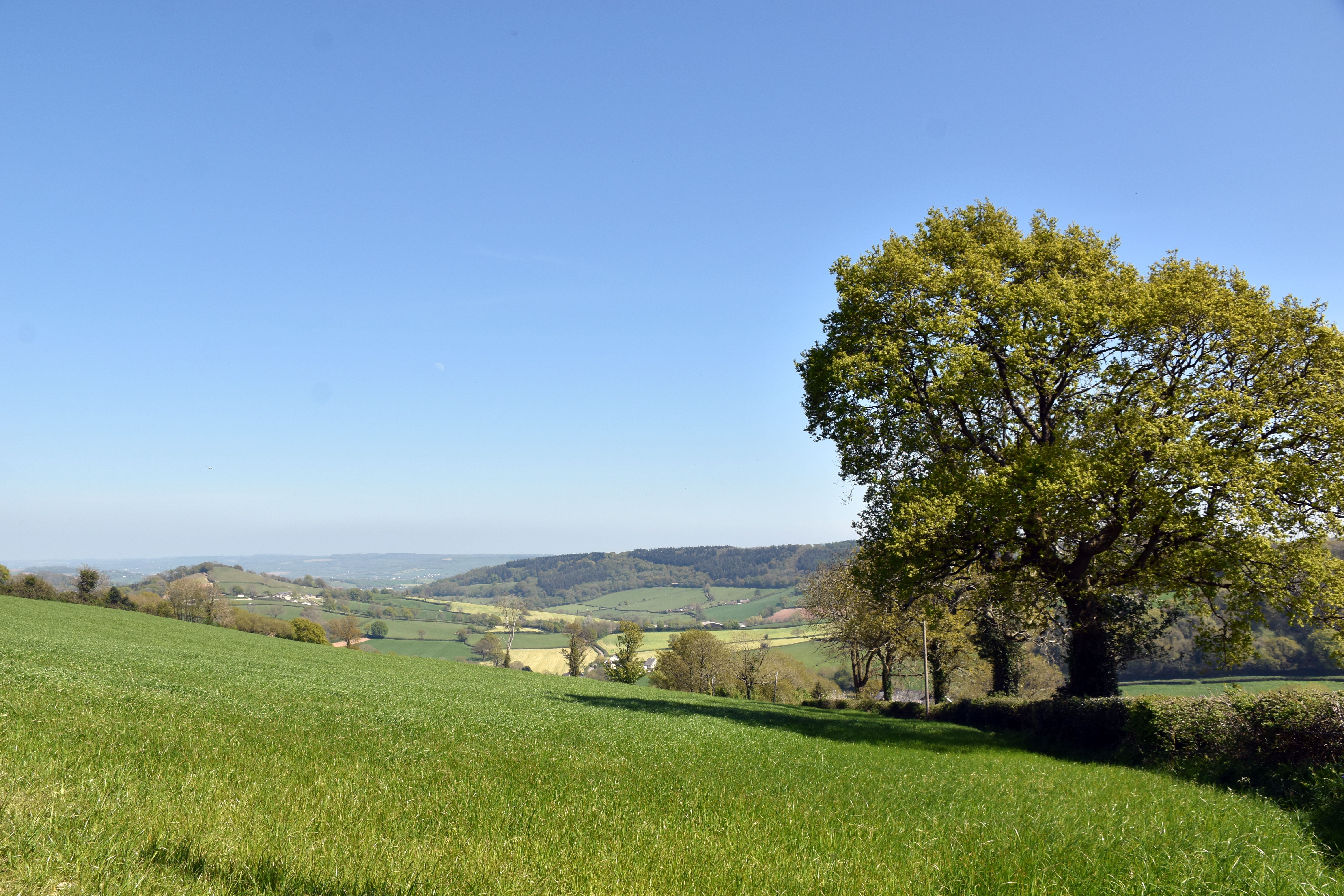
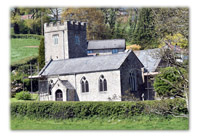
We, though, decided to move away from the volume and look for more remote bluebells away from crowds and roaring engines. We headed due east, heading for the Southleigh Hills. For a while we were accompanied by bluebells under the deciduous trees, but when the woodland turned to managed conifer trees, the bluebells fell away. But then, as we began to head north to descend the valley, we were greeted with truly stunning bluebells lining the path all the way down. Now these bluebells were all to ourselves, and the steep path made for a very pleasing vista. And that view did not diminish as we emerged from the woodlands and saw the picture‑perfect village of Southleigh and its lovely St Lawrence’s Church basking in the spring sun — in fact it felt like a summer’s day — but the spring meant that cherry blossom still clung to a tree adjacent to the church. You couldn’t hope to find a more perfect Devon image than the church nestling to the side of this beautiful valley.
|
|
|
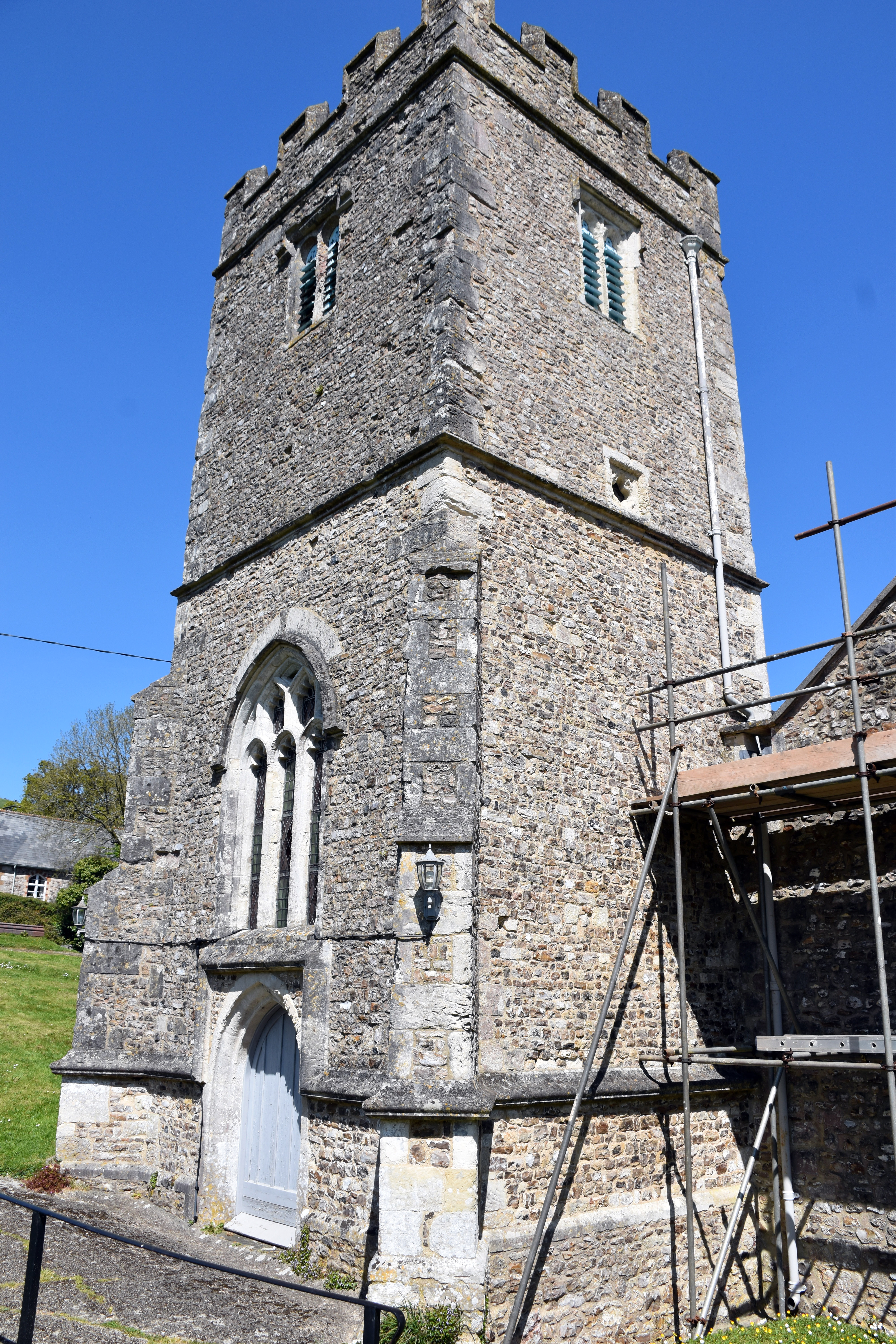
St Lawrence’s Church dates from the 13th century but was substantially rebuilt and remodelled in the 19th century. The tower, though, betrays the original rough stone of its original builders. Interestingly, the font is actually older than the building, dating from the 12th century. Somehow over time it had been tucked away into the base of the tower and was only moved to the traditional location by the entrance in the early 19th century. There is a beautiful 18th‑century candelabra that was a gift of the How family from Wiscombe Park. Hidden away beneath the tower is the Royal Coat of Arms of George II and two very hard‑to‑read memorials. Interestingly, it has one of the oldest surviving bells in the county, dating from the 14th century. Now, there should be four of the oldest surviving bells in the county, but it is thought that the other three were taken away to be melted down in 1549 as punishment for Devonians participating in the Prayer Book Rebellion of that year. The peal of four bells was not restored for another two and a half centuries, in 1710.

|
|
|
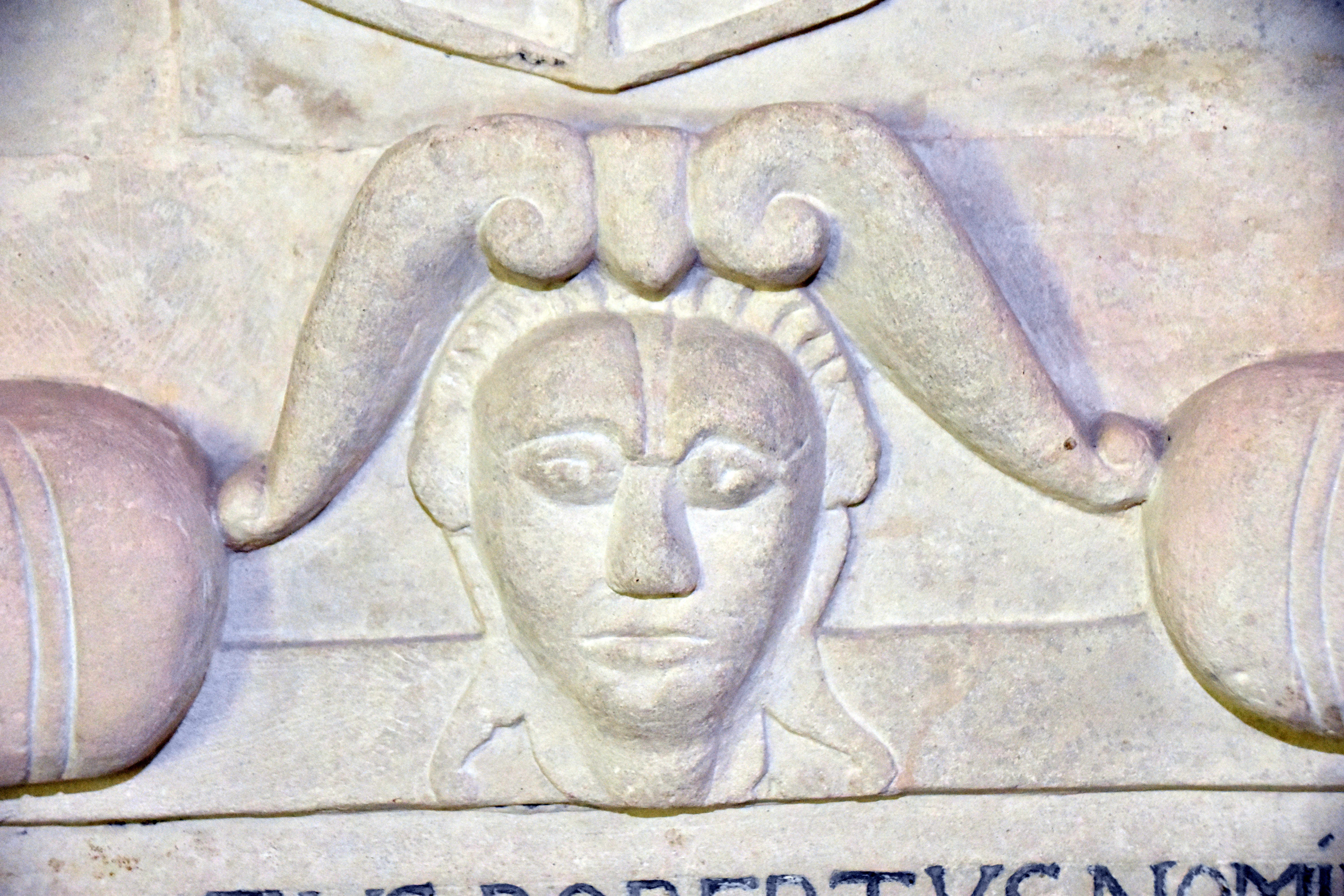
On the north wall of the chancel is a lovely monument to the Drake family. These are related to Sir Francis Drake, but they are the branch of the Drake family from Ashe. In fact, this monument is to Robert Drake, who was the brother of Sir Bernard Drake of Ashe. Robert had rented Wiscombe Park from the Petres. Robert and Bernard were cousins of the famous Sir Francis Drake, although the Ashe branch of the Drakes was very suspicious of this new whippersnapper upstart from Tavistock and disputed Sir Francis Drake’s using the ancient Drake coat of arms. This was despite the fact that Bernard was a sea captain and explorer himself through his friendship with Sir Humphrey Gilbert of Compton Castle, not far from Marldon, which we visited a few weeks ago, and of Sir Walter Raleigh. It is a lovely memorial showing the face of his dear wife Elizabeth née Pridqeaux, who the memorial delights in telling us “bore him seven thrifty sons and five comely daughters”. Robert died in 1600, just nine years after his cousin Sir Francis was killed in Portobello, Panama, and 14 years after his brother died of an illness he caught from Portuguese sailors he had captured! Two of Robert’s sons fought in the army fighting the Spanish in the Low Countries on behalf of the nascent Protestant nation of the Netherlands. They were both killed defending Ostend in 1604.

|
|
|
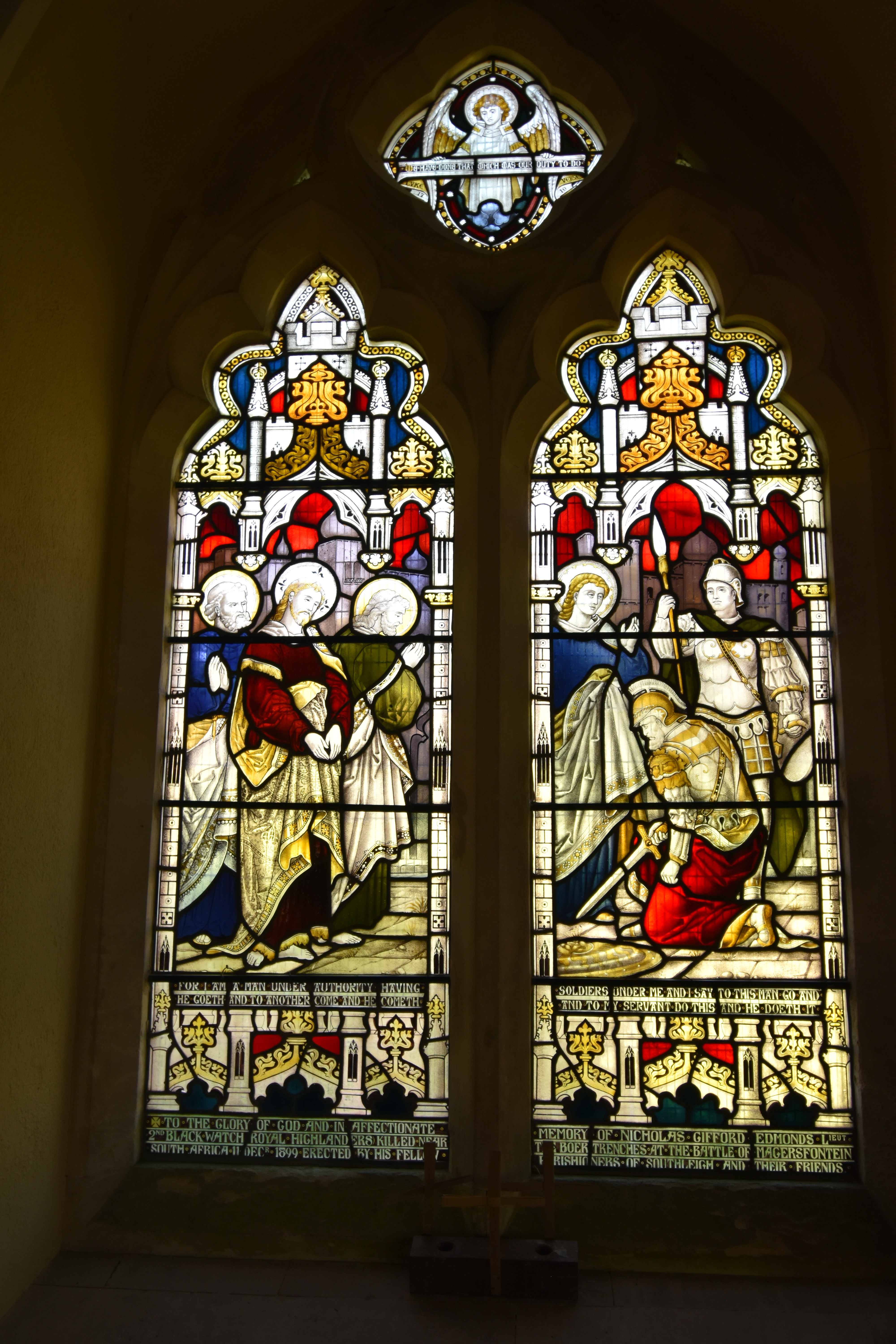
The other prominent local family commemorated in the church is the Gifford Edmonds family. There is a beautiful stained‑glass window dedicated to Lieutenant Nicholas Gifford Edmonds of the Black Watch Royal Highlanders, who, it says, was “killed near the Boer trenches at the Battle of Magersfontein, South Africa, 11th December 1899”. This was one of the series of disastrous defeats for the British Army in what came to be known as “the Black Week” and saw the end of the military career of another famous Devon soldier, that of Sir Redvers Buller of Crediton. Nicholas had been in South Africa for less than a month before he was killed. They had landed on 13th November with a view to rushing to Kimberley to relieve the town under siege. In their haste, their commander, General Wauchope, launched an ambitious night attack through a ferocious thunderstorm on Magersfontein Hill. This battle would presage some of the forthcoming horrors of the First World War. The Boers had dug themselves into trenches protected by barbed wire. The British had no idea of the extent of the Boer defences, even though they had brought a balloon which could have been used to discover them. Nicholas was part of the 2nd Battalion, which had been ordered to assault the main Boer strongpoint on Magersfontein Hill itself. In the confusion of the darkness, the Black Watch managed to charge the Boer trenches but were to be dealt a double blow, with British artillery not realising that they had advanced so far and raining down shrapnel on Boer and British alike. Furthermore, they happened upon the main Boer generals directing the defenders, who found themselves in the right place at the right time: Piet Cronjé. Lieutenant Nicholas Gifford Edmonds almost certainly died in this initial onslaught, given that this window points out that he was “killed near the Boer trenches”. This initial onslaught was as close as they got. The Black Watch as a whole would suffer one of its worst setbacks in its regimental history at this battle, with over 300 casualties, many in the opening minutes of the charge. These casualties included that of General Wauchope himself. Such was the disgust of the surviving soldiers that one of their number penned this rather dark poem:

|
|
|
Such was the day for our regiment,
Dread the revenge we will take.
Dearly we paid for the blunder
A drawing‑room General's mistake.
Why weren't we told of the trenches?
Why weren't we told of the wire?
Why were we marched up in column,
May Tommy Atkins enquire…
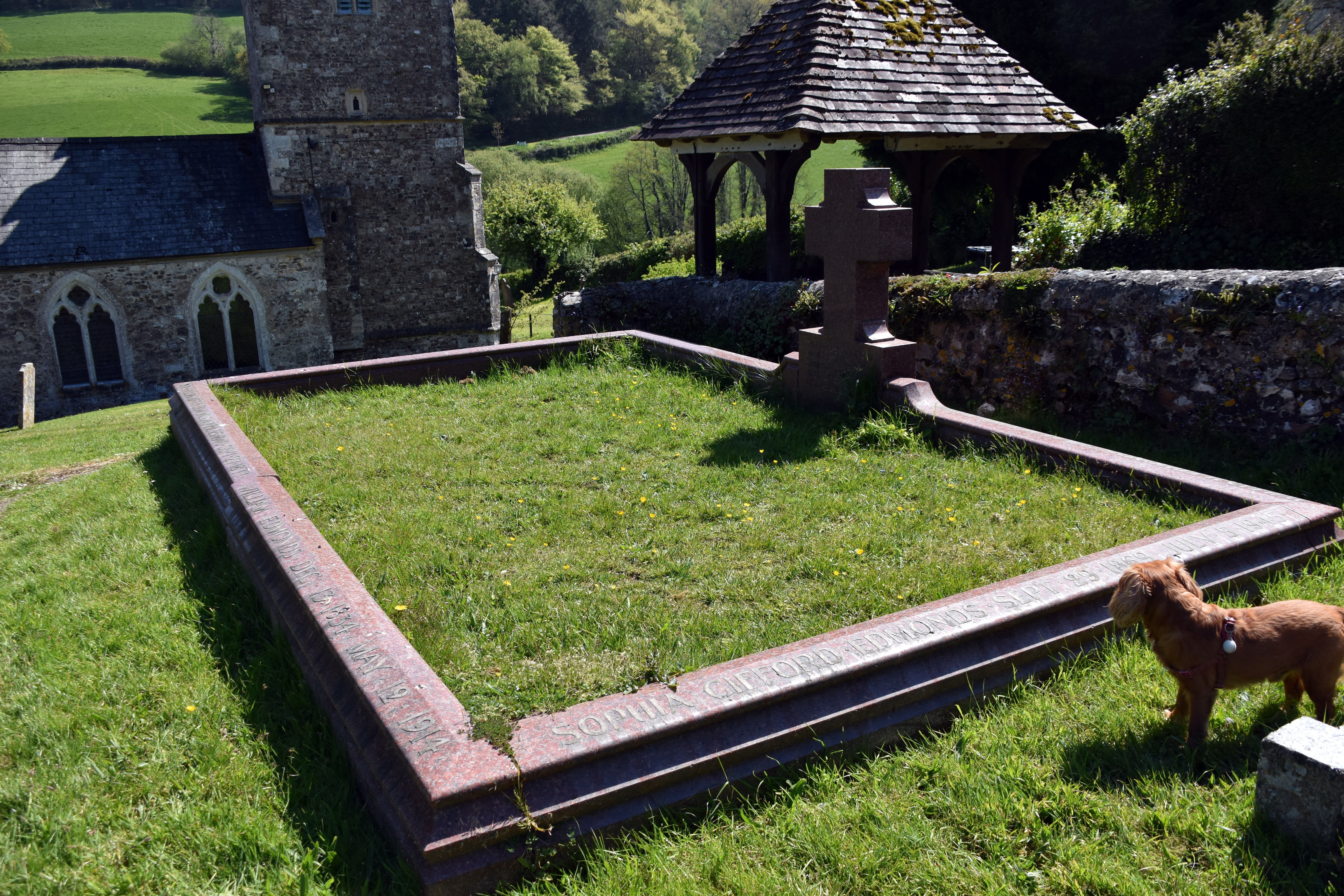
With regards to the Gifford Edmonds family, I might add that in the graveyard outside they had possibly the largest family vault I have ever seen for a single family. It is framed by the names of some of the family members stretching back into the 19th century. Another memorial in the church explains that they also helped pay to renovate the church in 1952, but one wonders if they were falling on hard times with death duties, as Major Chichester claimed that he was buying a very run‑down estate. Major Chichester is also buried in the churchyard alongside his beloved wife “Bunny” Margaret Edmonson Chichester.
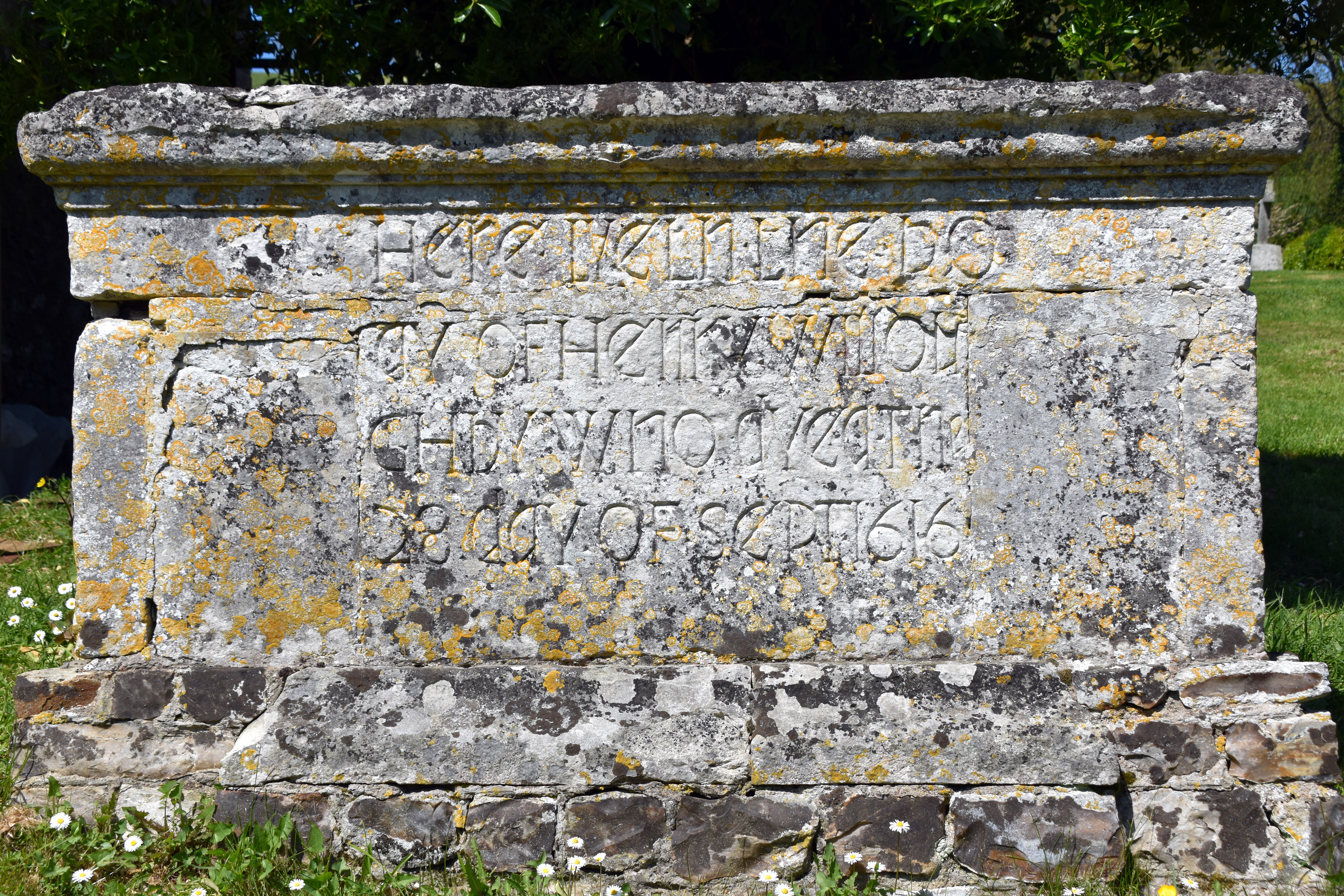
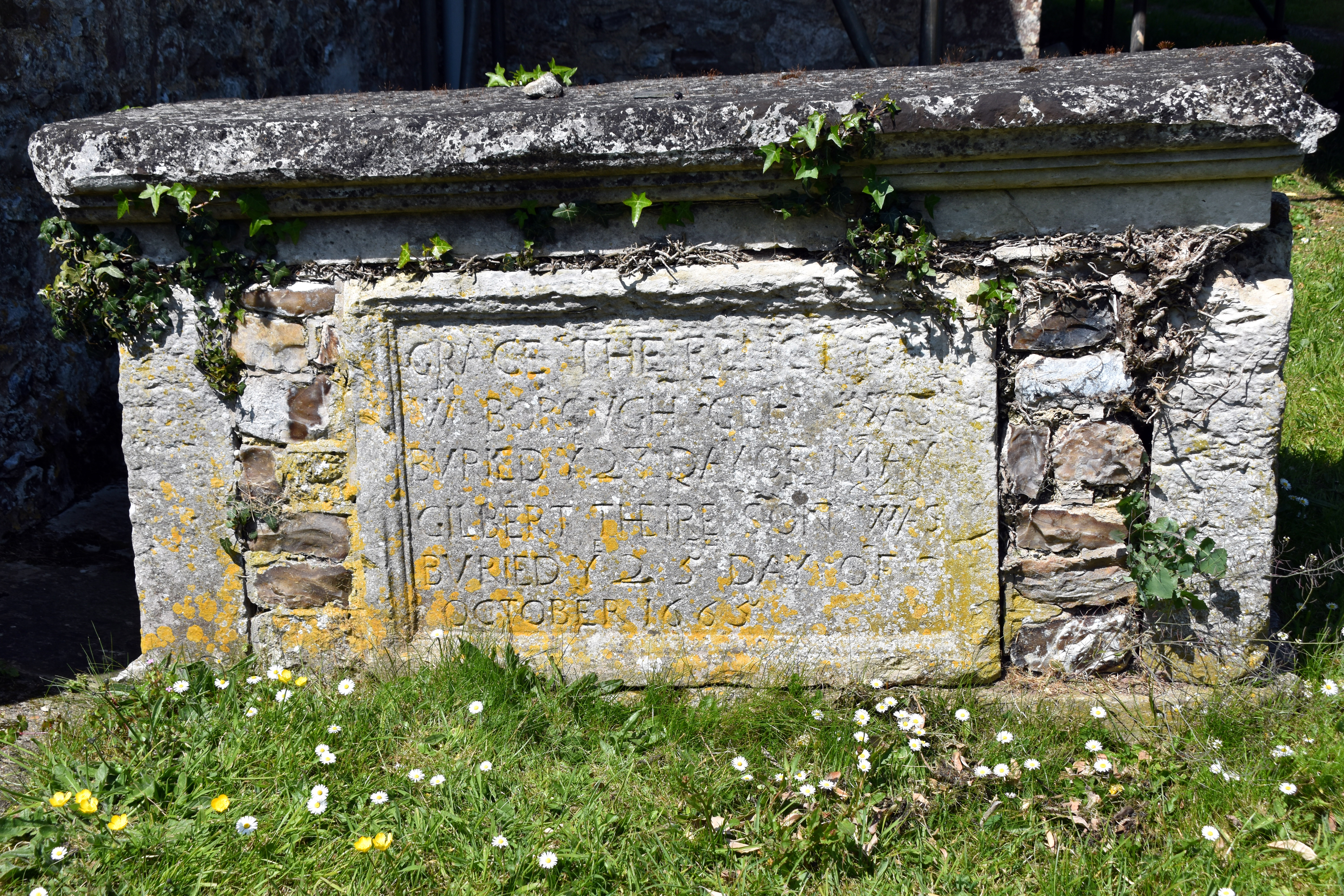
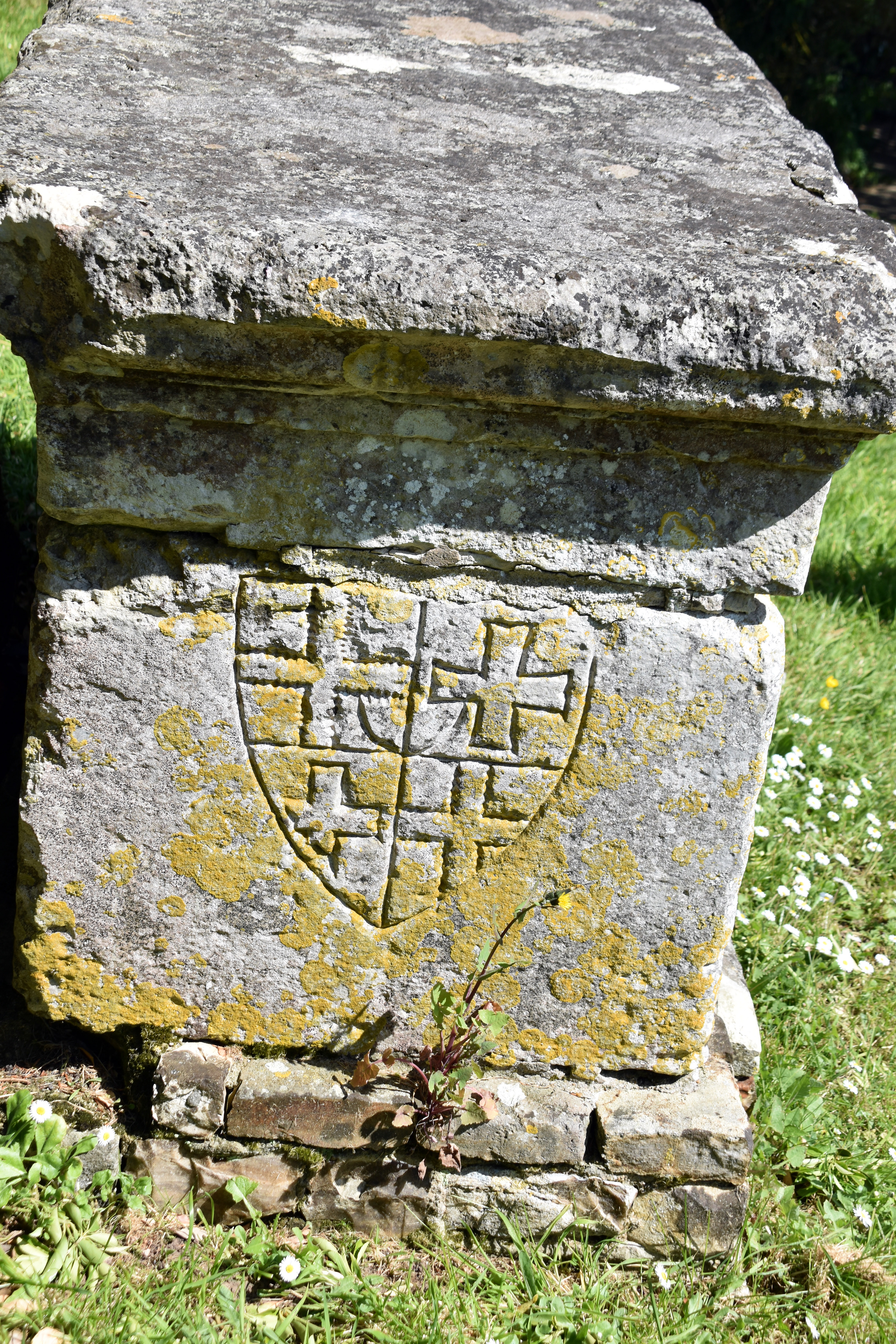
There are some magnificent 17th‑century tombs complete with coat of arms. One such records “here lyeth the body of Henry Willoughby who dyed the 28 day of Sept 1616”. The coat of arms is done in the same style as that of his kinsman Lord Willoughby de Broke, portrayed on his magnificent effigy recumbent in the chancel of Callington Church in Cornwall. It is not entirely clear why Henry Willoughby is buried in Southleigh, but it is a fascinating tomb combining Beerstone with local flint. There were several other intriguing 17th‑century tombs nearby.
We stopped for lunch between the tower and the cherry blossom on an absolutely perfect day’s weather. The sun was hot but not too hot; there was a gentle breeze, just enough to carry down some of the remaining cherry blossom as we glanced back over the valley towards the Southleigh Hills and Wiscombe Wood.
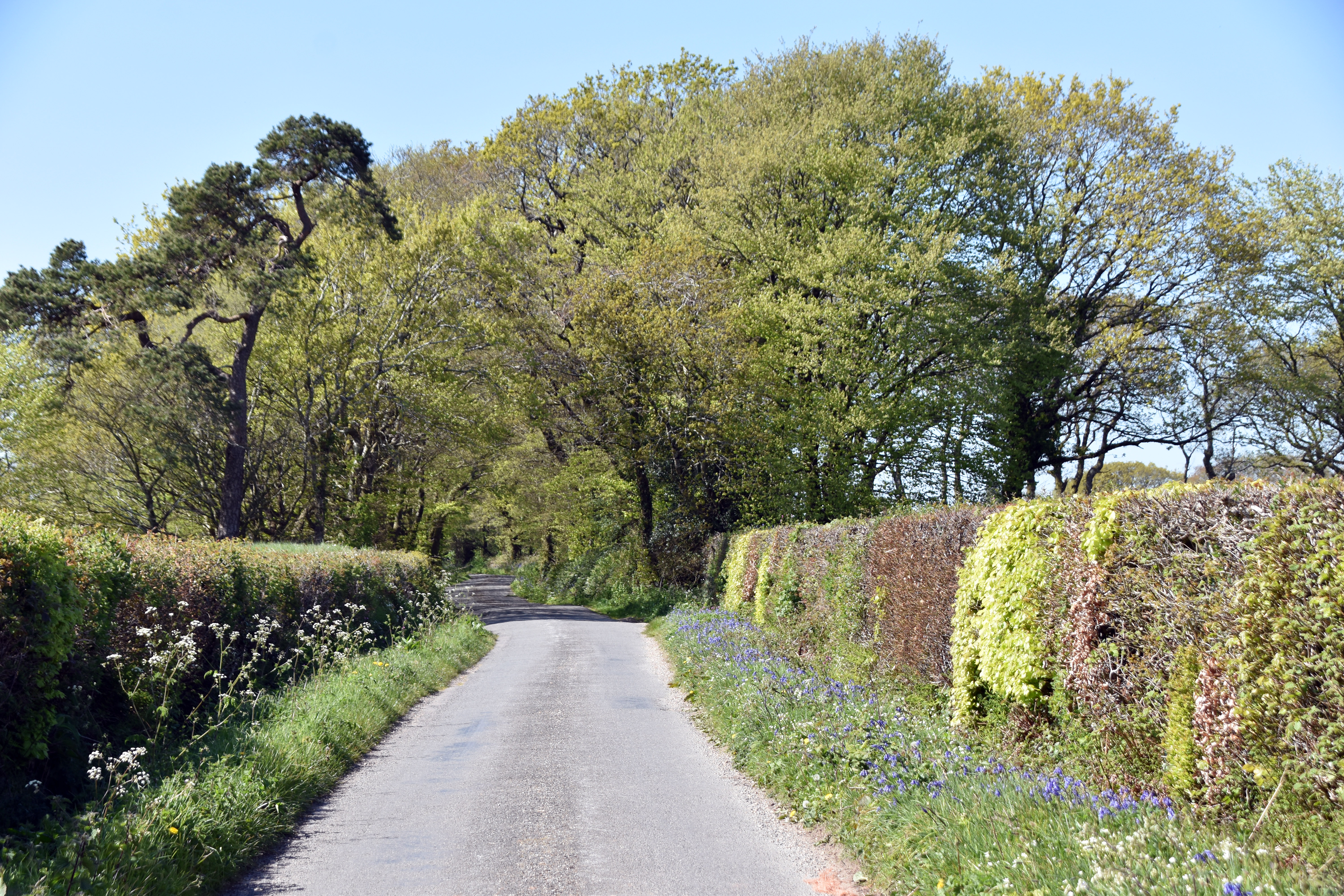
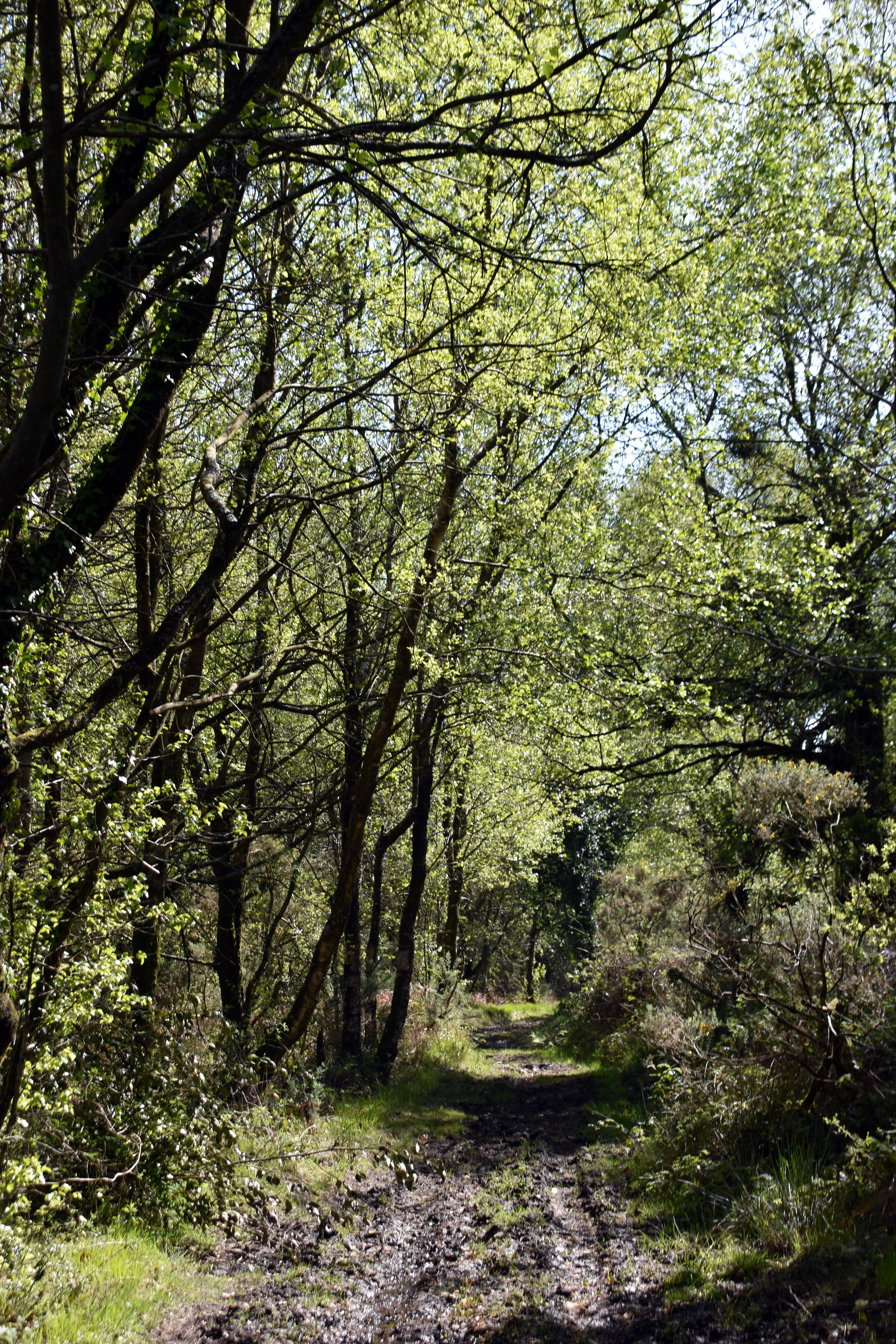
After lunch we walked out of the north gate to follow the road up to the opposite valley side to Northdown Plantation. Wild garlic and fascinating hedgerows entertained us, as did a constant stream of pheasants fleeing our path. We even passed a few alpacas taking it easy on a hot afternoon. The sound of cars racing up the Wiscombe Park hill climb became more pronounced as we approached Broaddown. Here we turned south, following a clearly marked bridle path. Now, it has to be said that this bridle path would have been a lot easier on a horse, as large stretches of it had basically been turned into a watercourse — very muddy in places, requiring us to fight through some surrounding woodland instead. It wasn’t too onerous, and soon we were rewarded with more views of beautiful bluebells and some surprisingly precipitous drops at the head of this Wiscombe valley. No wonder this was earmarked as the perfect venue for hill‑climbing races.
Eventually we turned back towards Blackbury Camp and soon saw some interesting cars leaving Wiscombe for the day. We once more entered Blackbury Camp for another look at the beautiful bluebells, with yet more visitors mesmerised by the sight. It is truly spectacular, but as we had explored the wider valley we had delighted in enjoying bluebells all to ourselves. I am sure this walk is spectacular any time of year, but late April and early May has to make it even more special.
|