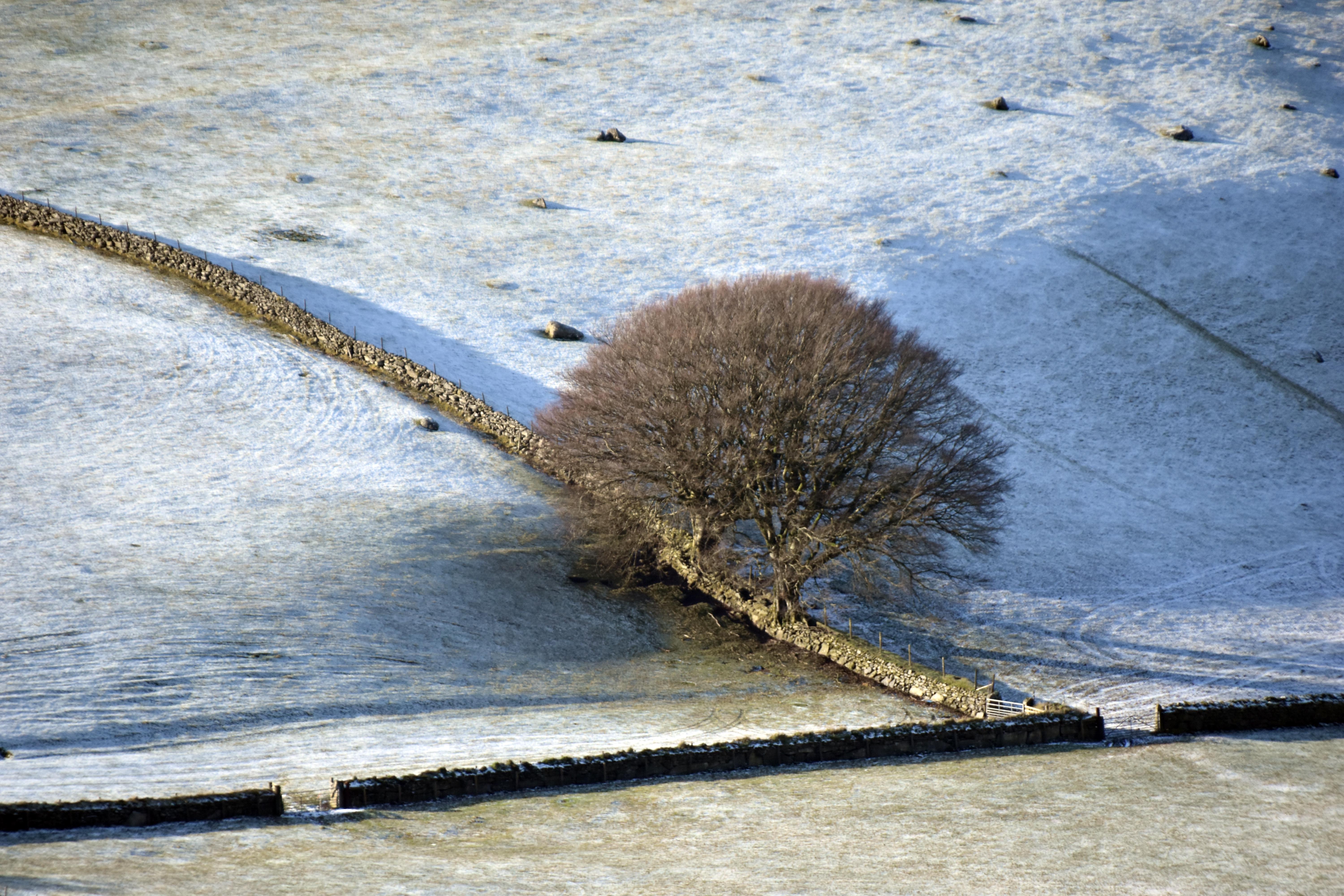
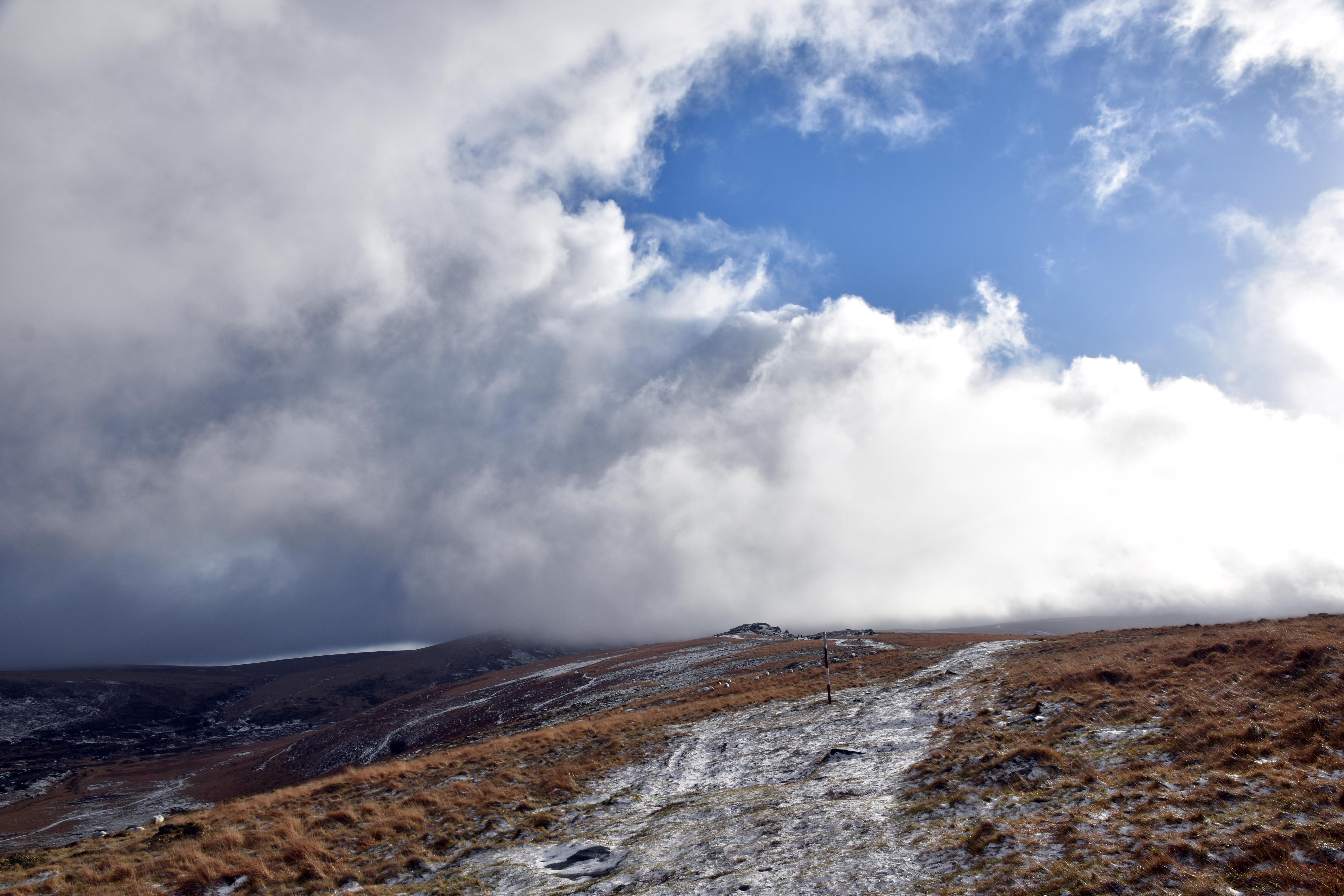
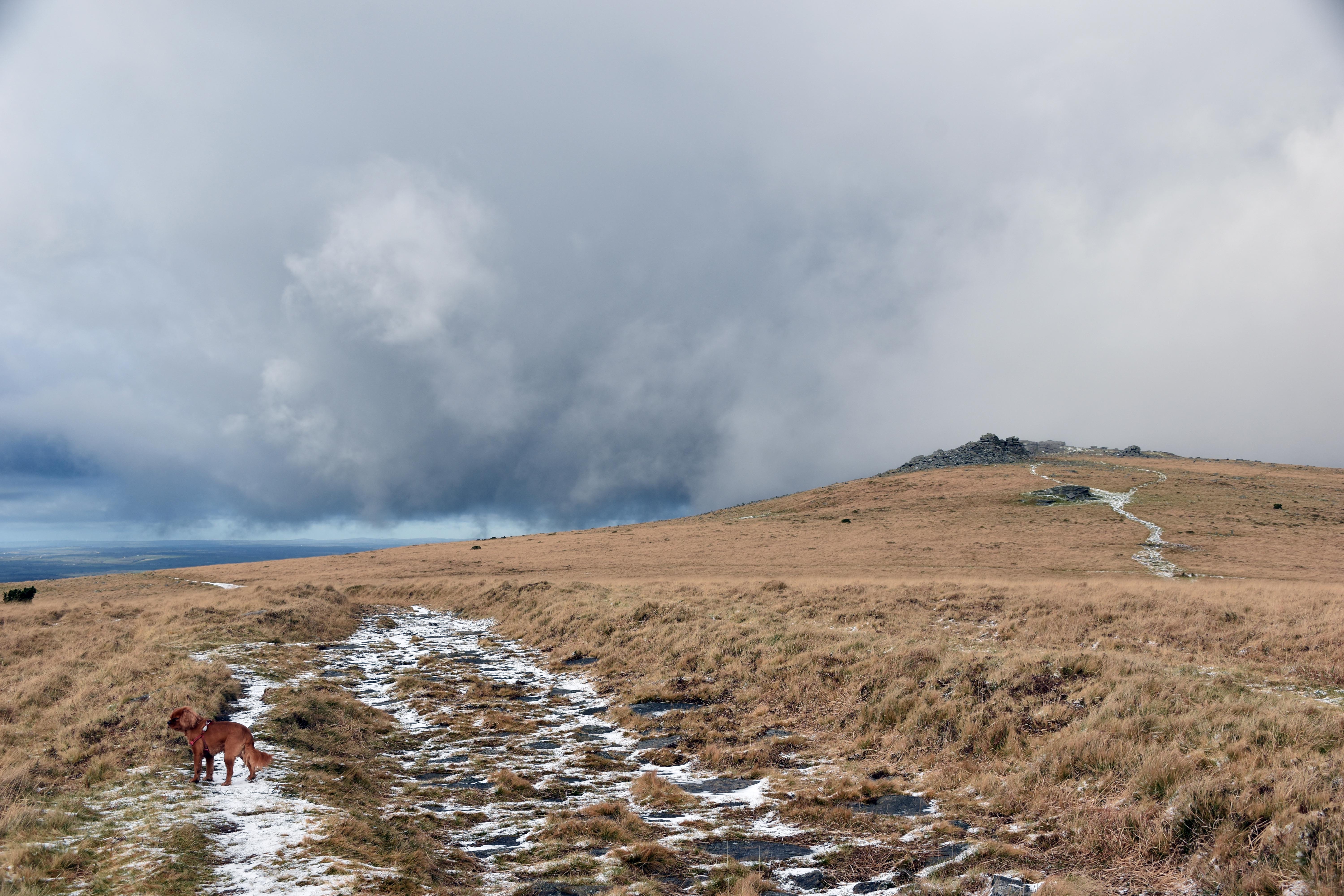
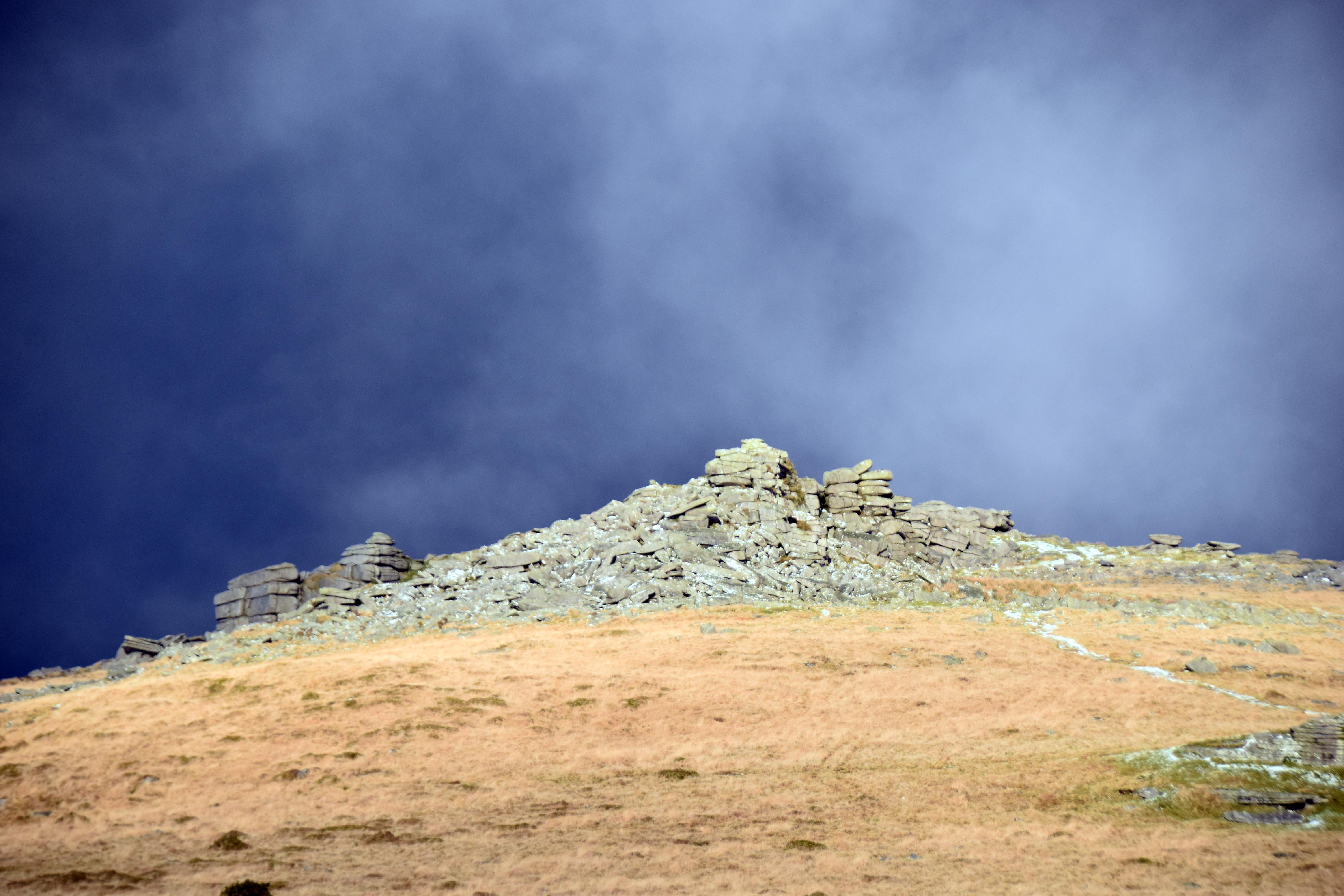
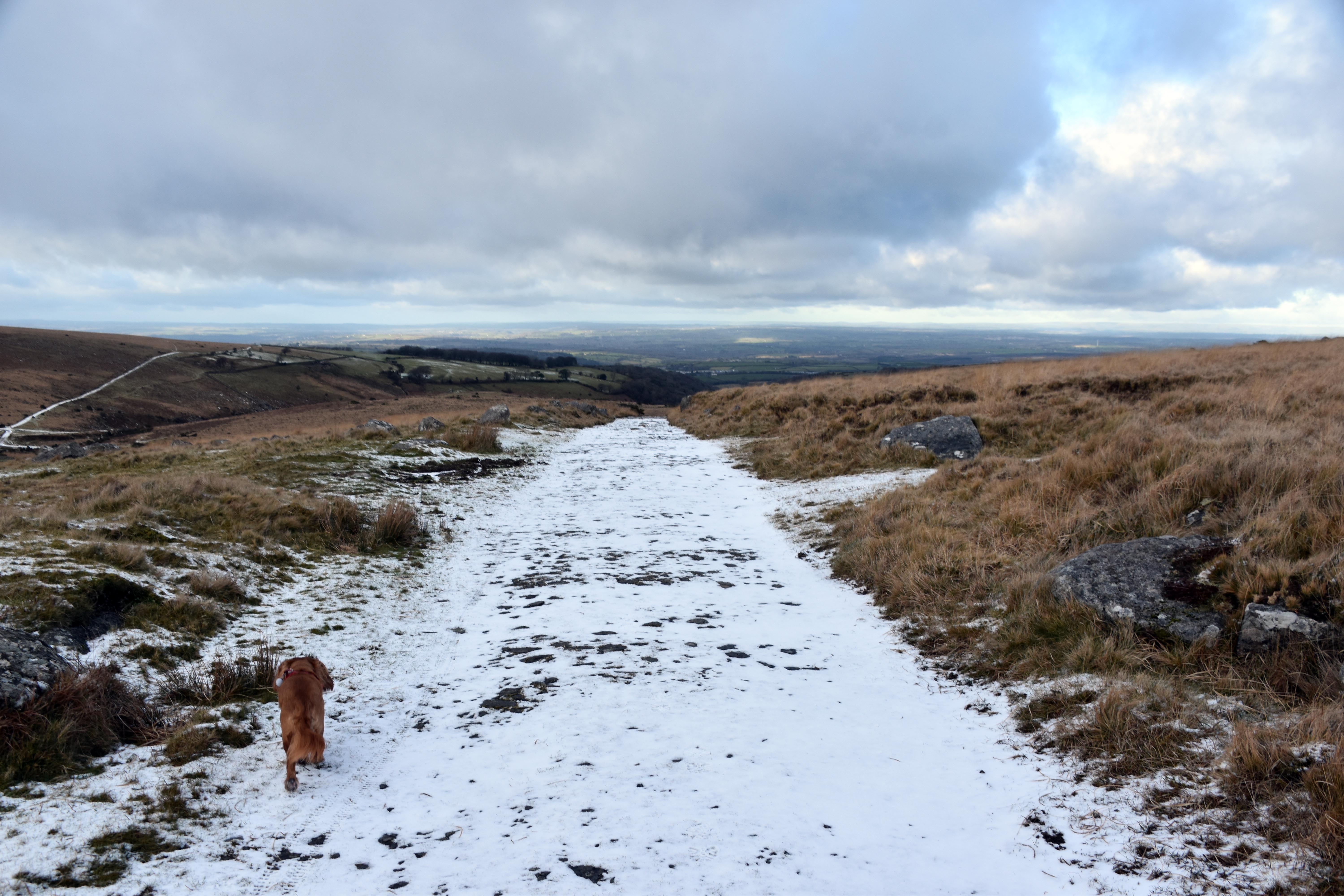
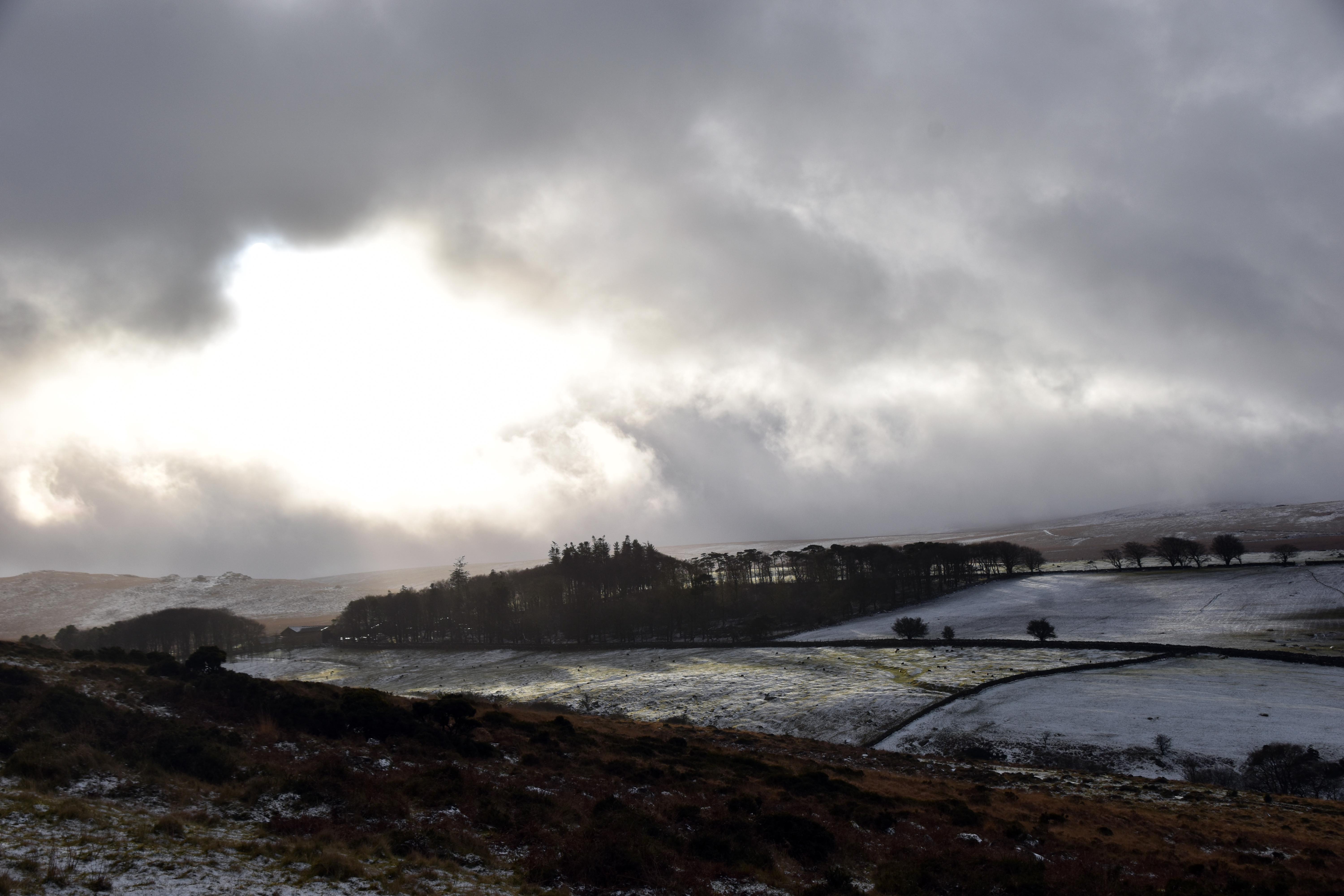
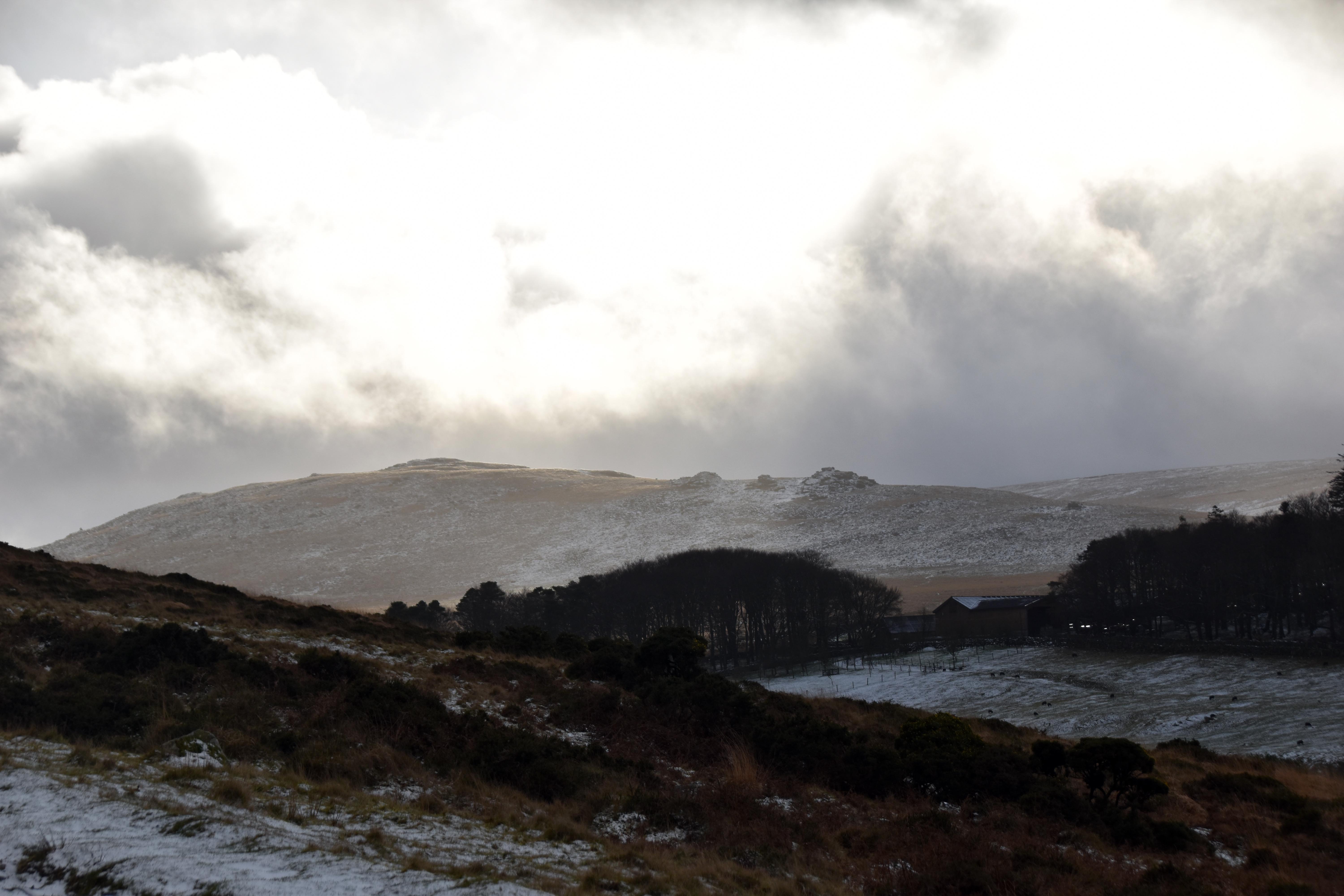
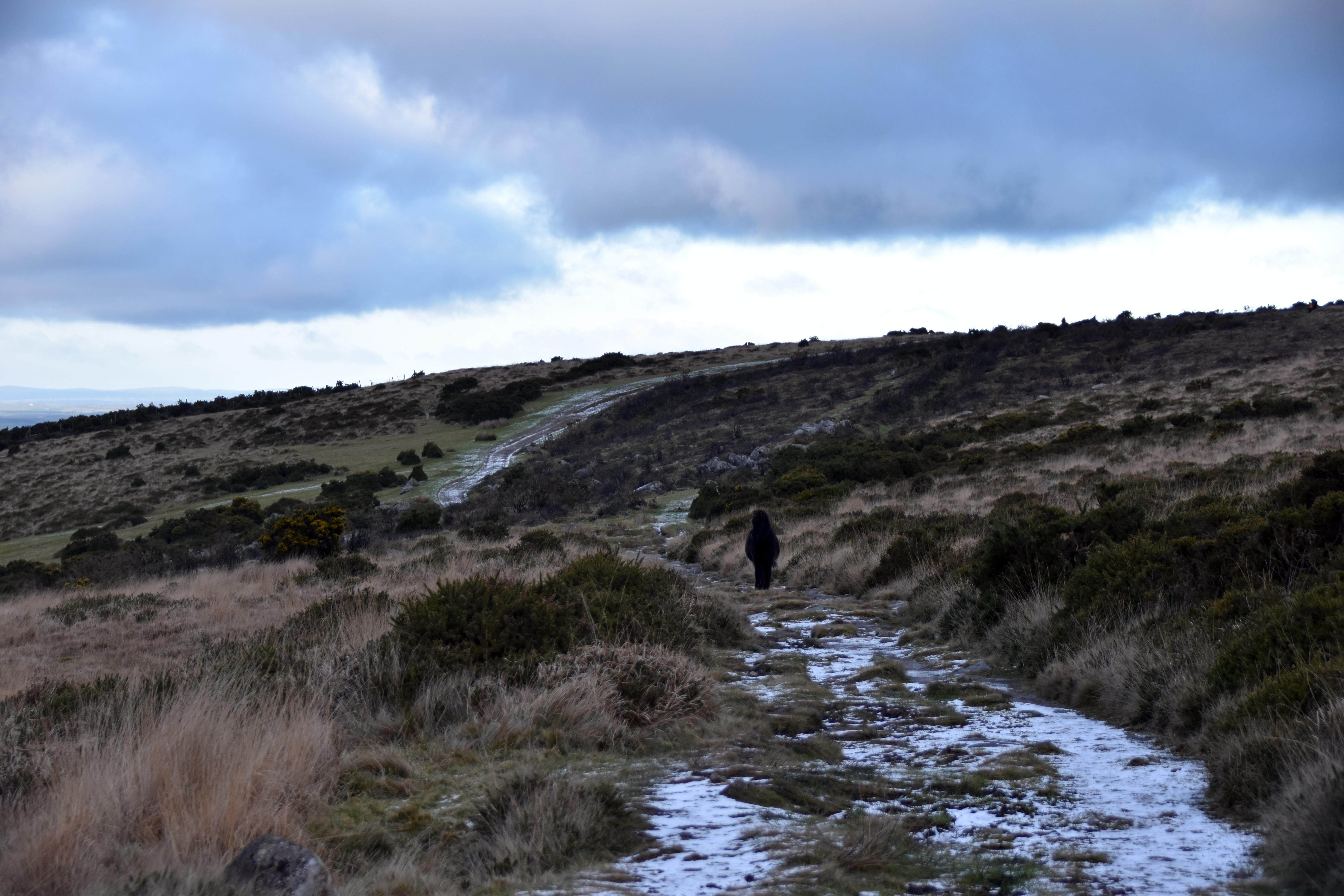
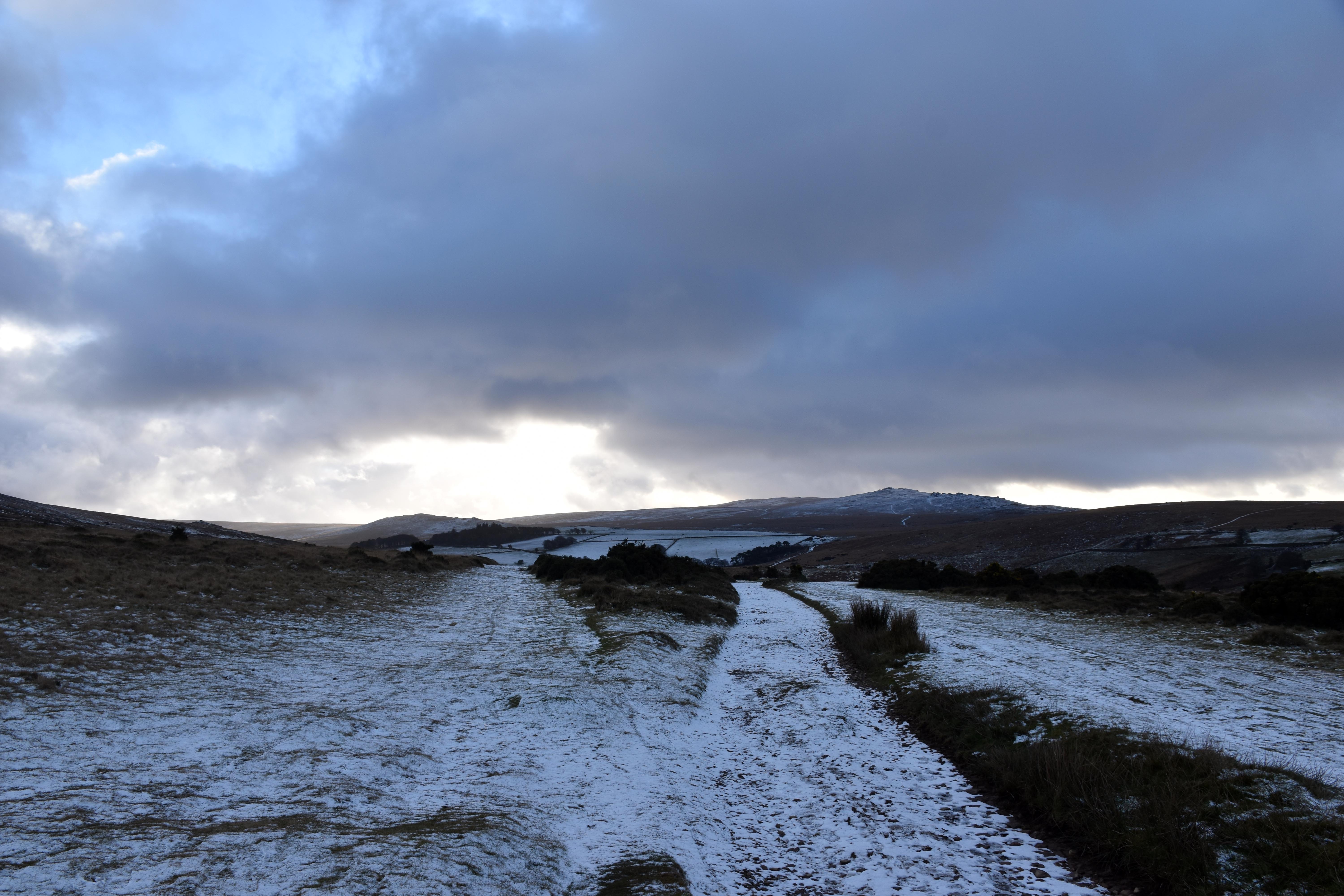
With a rare forecast of snow, Rupert and I decided to head to the area we thought most likely to see some accumulation of the white stuff - not a huge amount but enough to get the flavour of it. For this reason we headed to Belstone, especially as the cold air was coming down from the north and the moorland around Belstone is the first place that the clouds would hit high land, pushing them up and reducing the temperature as they rise. Sure enough, we were accurate with our assessment and had a beautiful day walking in snow and even having a fall of snow whilst eating lunch.
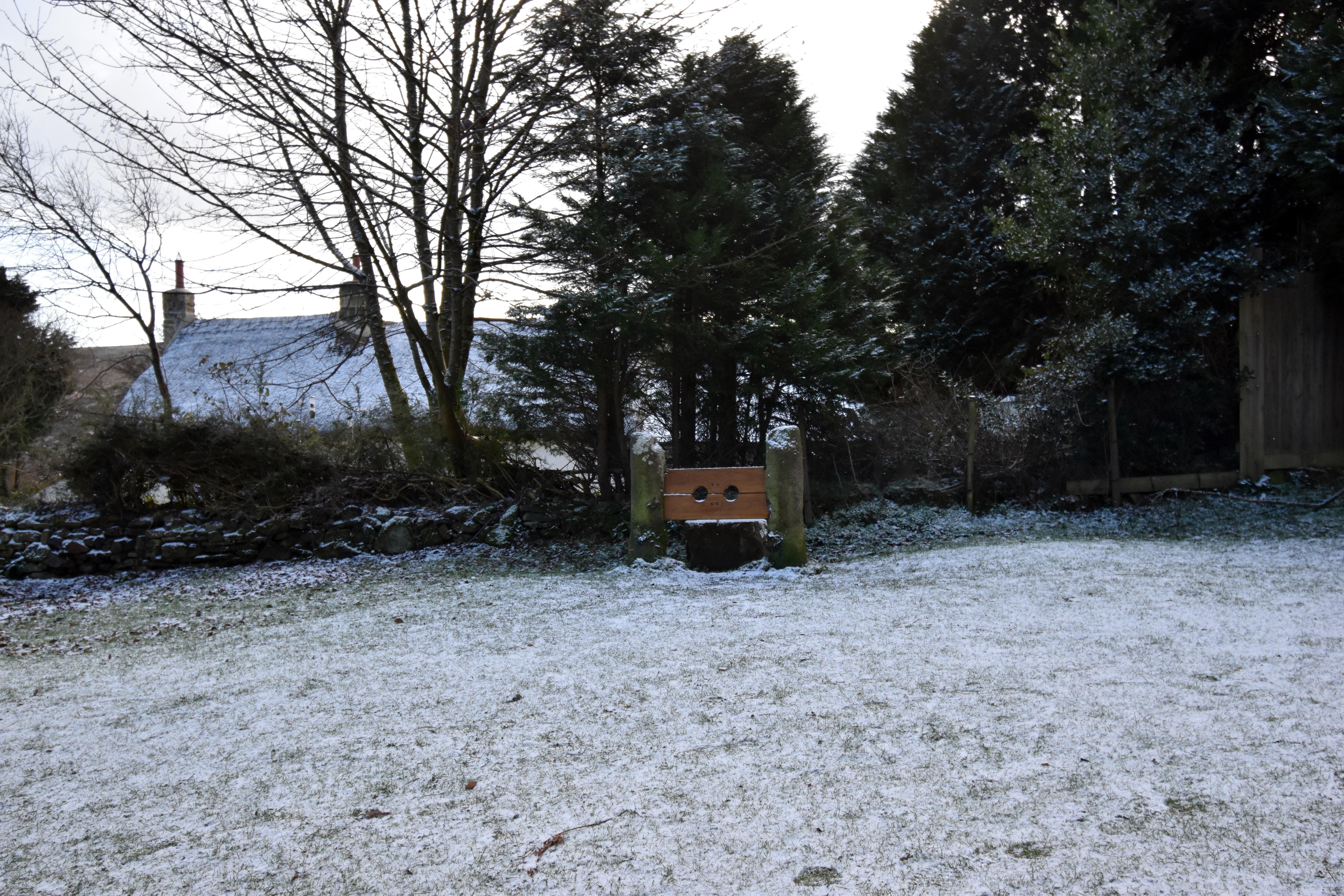
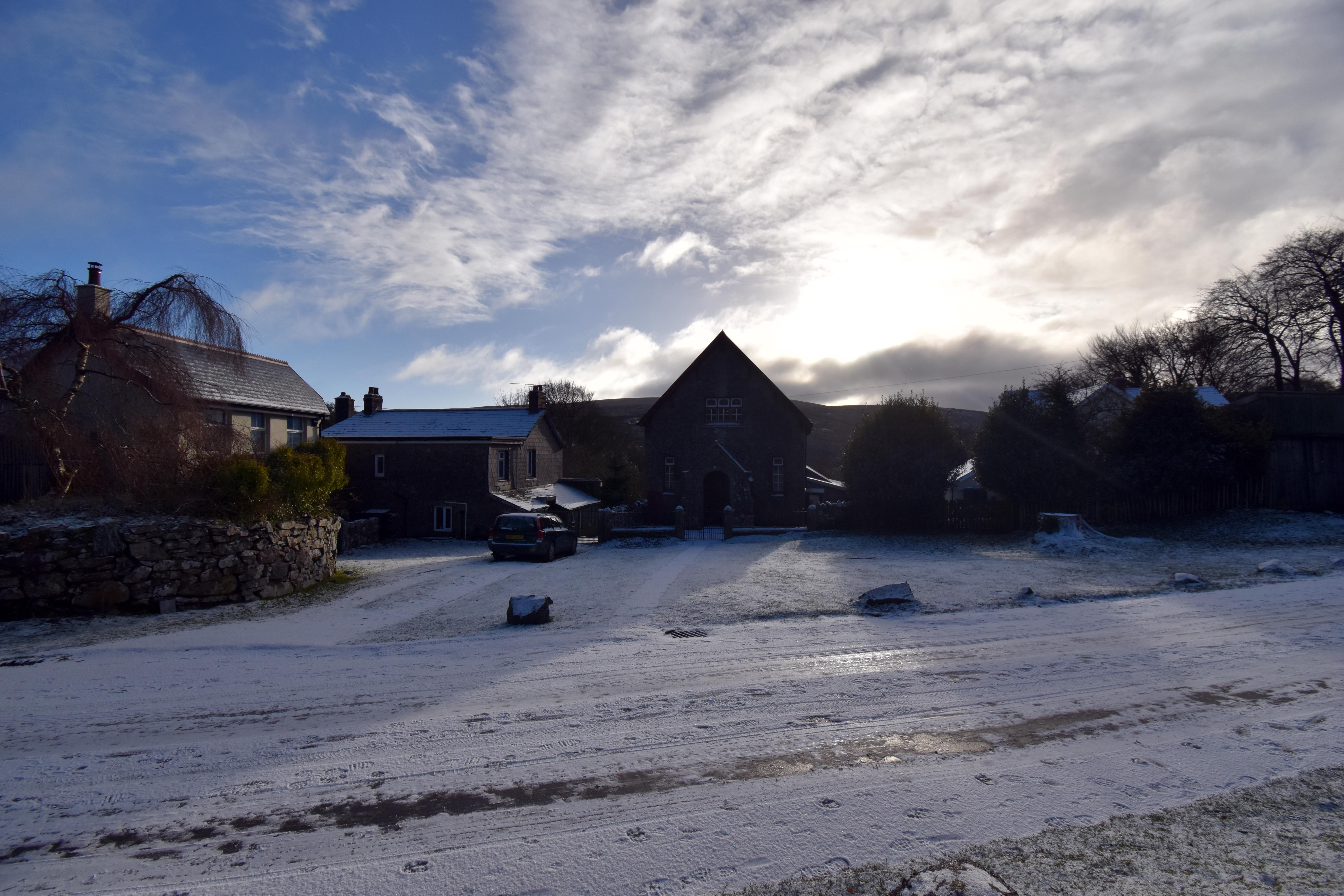
Belstone is a pretty village in any case; add a smattering of snow and it is yet further enhanced into an even more beautiful location than usual. The thatched houses look particularly nice with snow captured within their strands. Belstone kind of reminds me of Welsh villages with the steep moorland hills behind the houses. The old Belstone Methodist Chapel from the Victorian era helps with this Welsh image, although it now operates as a tearoom rather than a place of worship. Also good to see that they still proudly display their stocks in the centre of the village – indeed they are Grade II listed. These, of course, were from the era when justice had to be swift and public. No local authorities wanted the expense of imprisoning anyone, so public humiliation was a fast, free and furious way of administering justice.
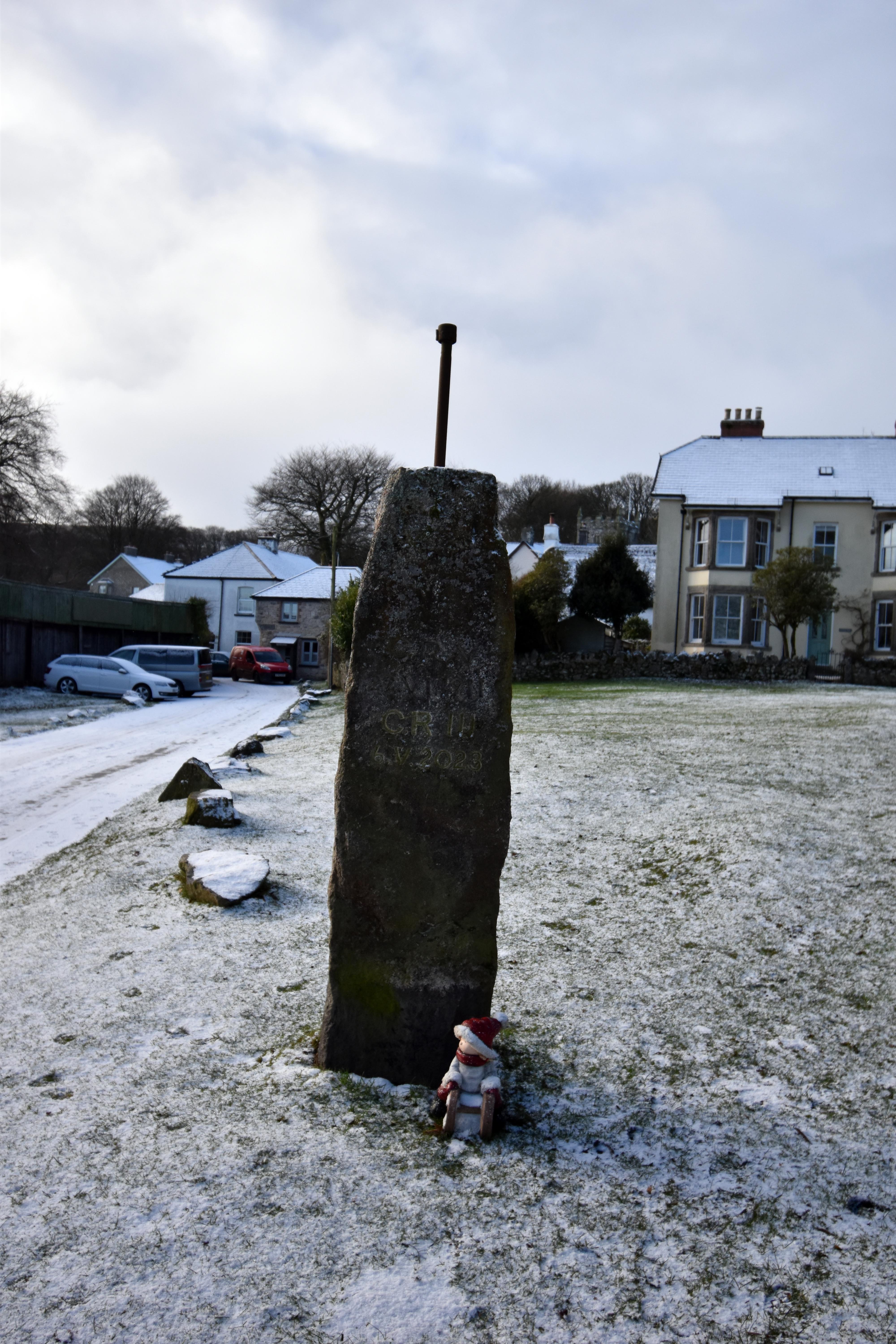
Just the other day we were at Leusdon and noted their two menhirs commemorating Queen Elizabeth; well, here in Belstone on their green they had an even more recent one commemorating the accession of Charles III to the throne. It is amazing how carving these events into stone makes them look old and part of our history even though it was just a couple of years ago!
Belstone was apparently the inspiration for Agatha Christie’s 1931 novel The Sittaford Mystery – obviously recast as Sittaford: “it was not in a valley lime most of the villages and farms, but perched right up on the shoulder of the moor under the shadow of Sittaford Beacon’ Sittaford Beacon of course standing in for Belstone Tor which was to be one of our objectives today.. And is if that is coincidence enough, the presence of snow is central to the setting of the book and the events that unfold within it.
And as if taking us back to the time of Agatha Christie’s writing of her book in 1931 up on the right of the village you can see an interesting legacy of our old communications systems with the “Telegraph Office” from the days when it was a functioning Post Office that could relay or receive messages from all over the country. The King George V post box and red telephone box housing a defibrillator rather than a phone are hints at its previous telecommunications hub job. Although you could say that the 1841 building was once used to communicate on a wholly higher plane when it was Zion Chapel for non‑conformist congregations. Once you realise this, you can tell that the architecture is more redolent of a place of worship than of a Post Office!
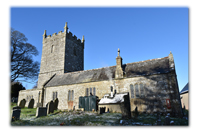
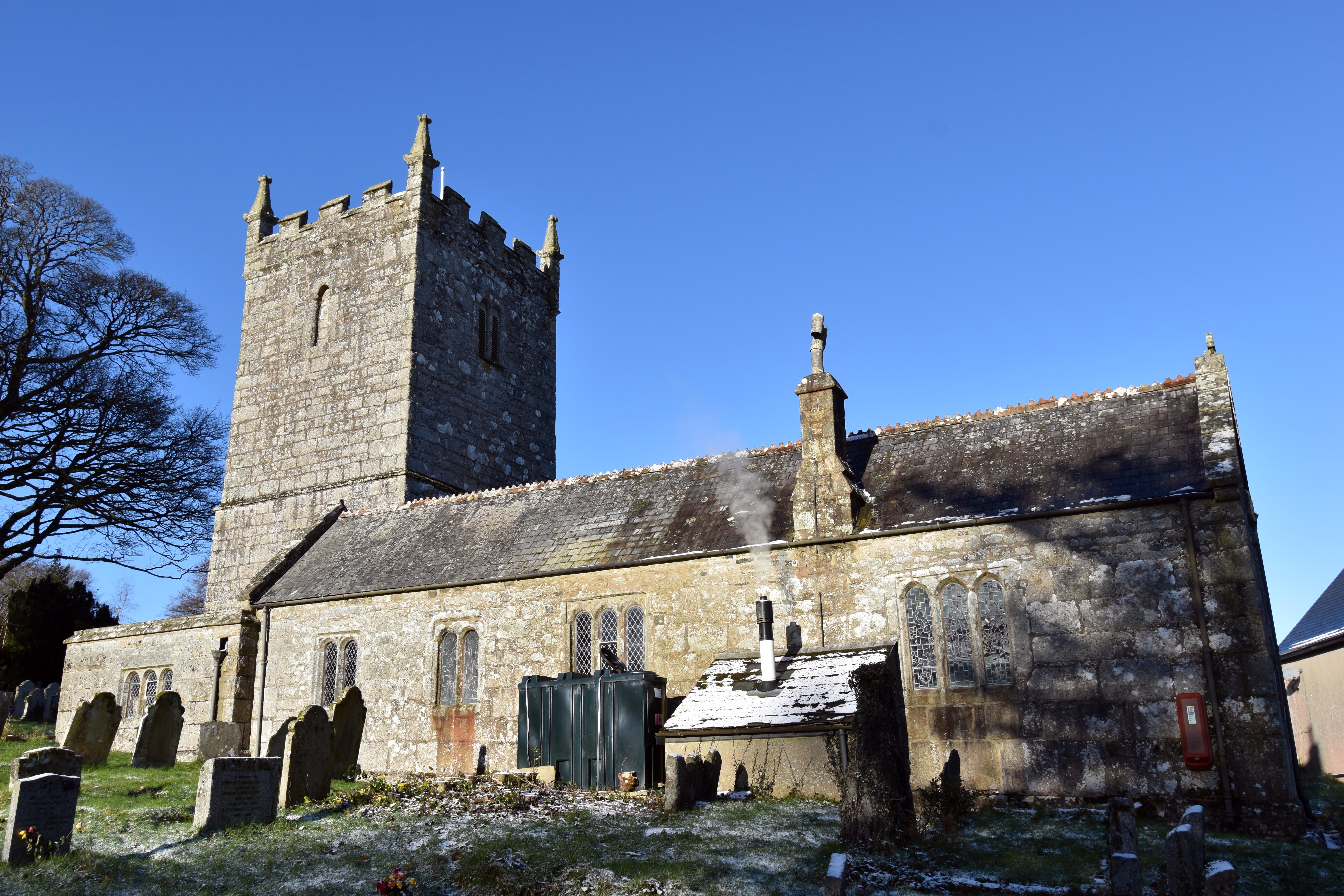
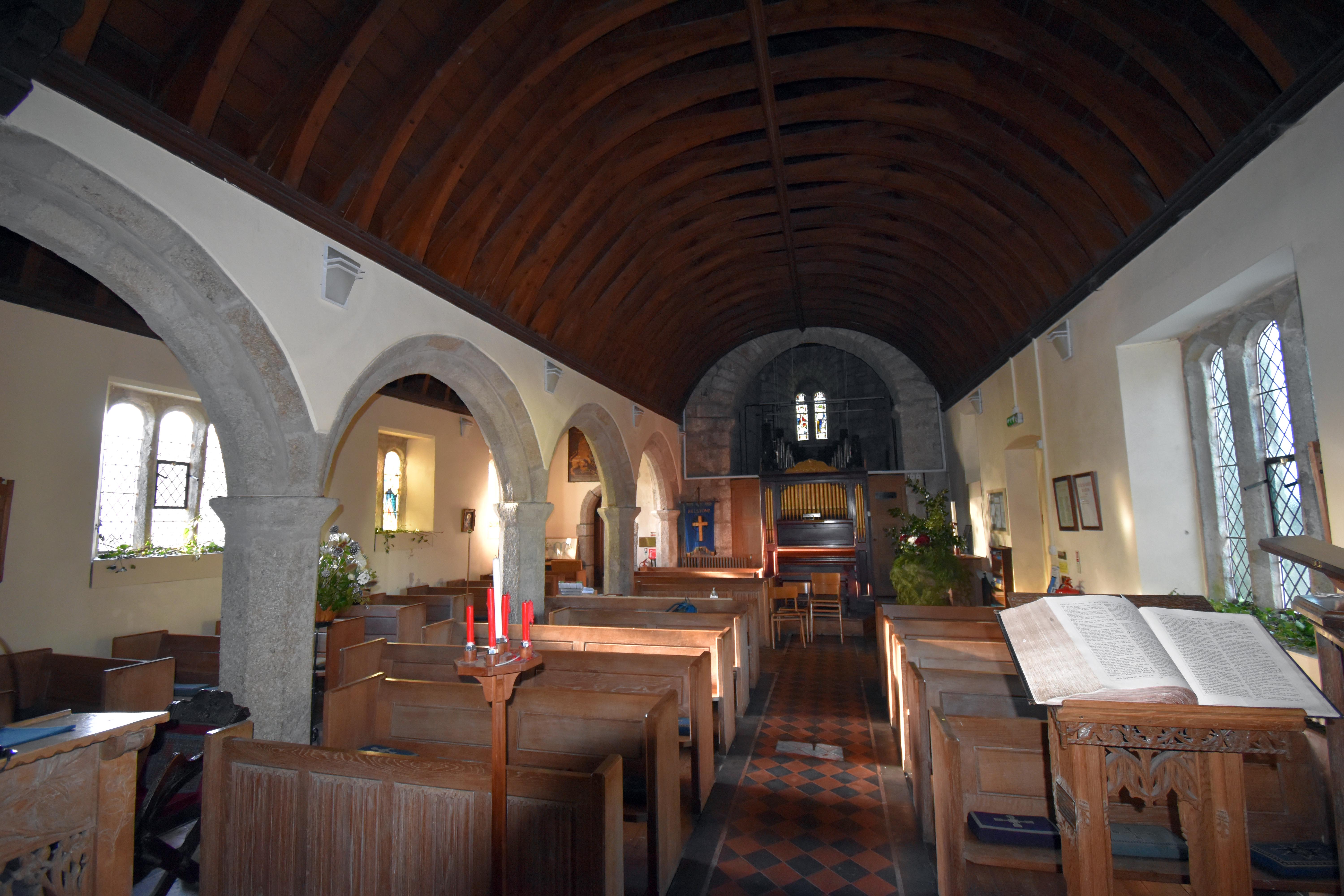
We carried on walking up to reach one of the highest churches in Devon at over a thousand feet up, St Mary the Virgin Church. It is a very simple granite church which was radically updated in the Victorian era but with roots going back long before then. There has been a church on this site back to the 13th century. But there is actually evidence of Christian worship in Belstone going back far further than that with the Belstone Ring Cross. Its age is hinted at by the very old Chi‑Rho symbol used in Ancient Greece to symbolise Christ. This stone could date as far back as the 7th century but was found almost by accident in the 19th century when almshouses were demolished only to discover that this stone had been used as a step to a church room above them. This stone links Belstone to the very earliest days of Christianity in the region and may have been to mark a burial ground, an important grave or some church jurisdiction.
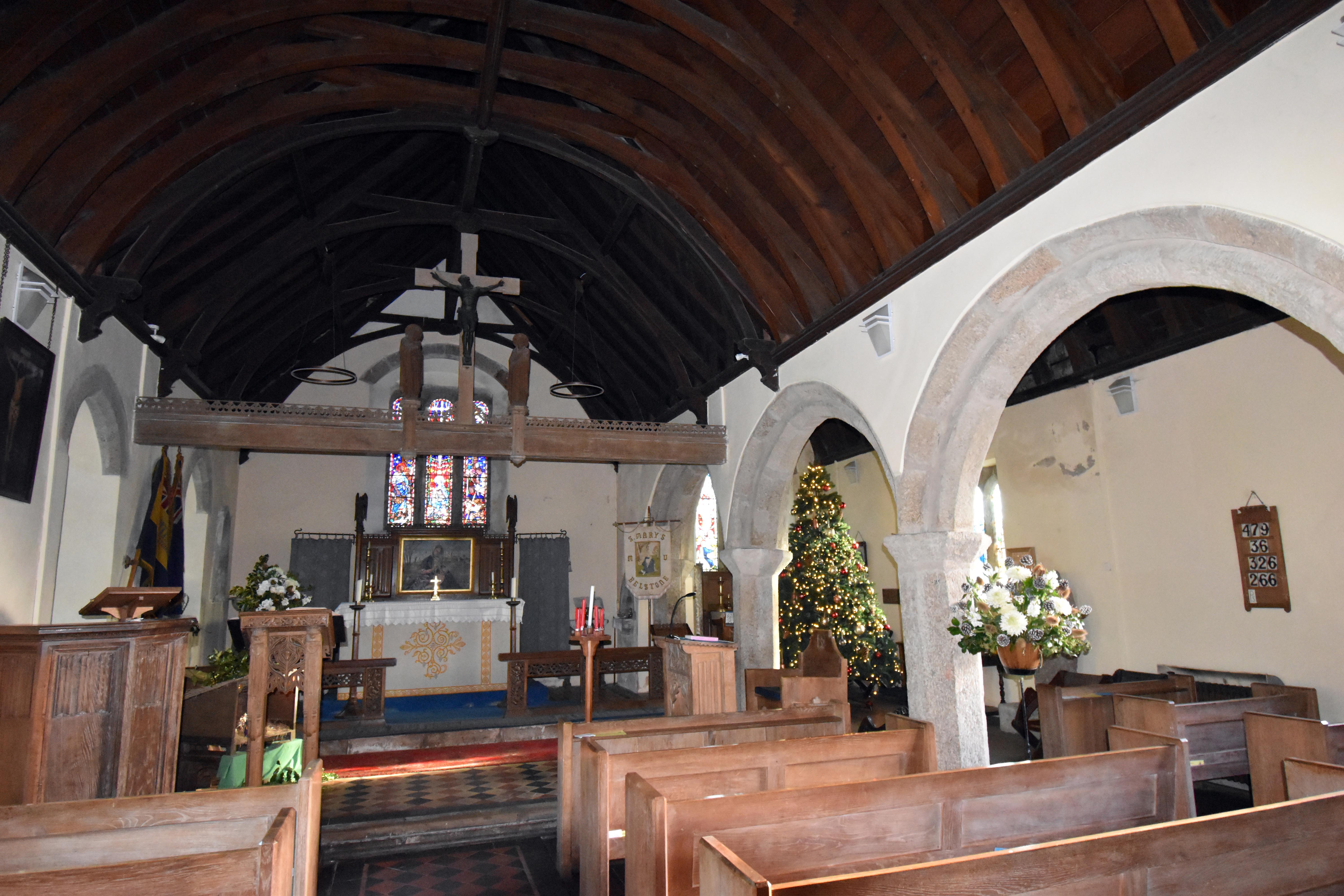
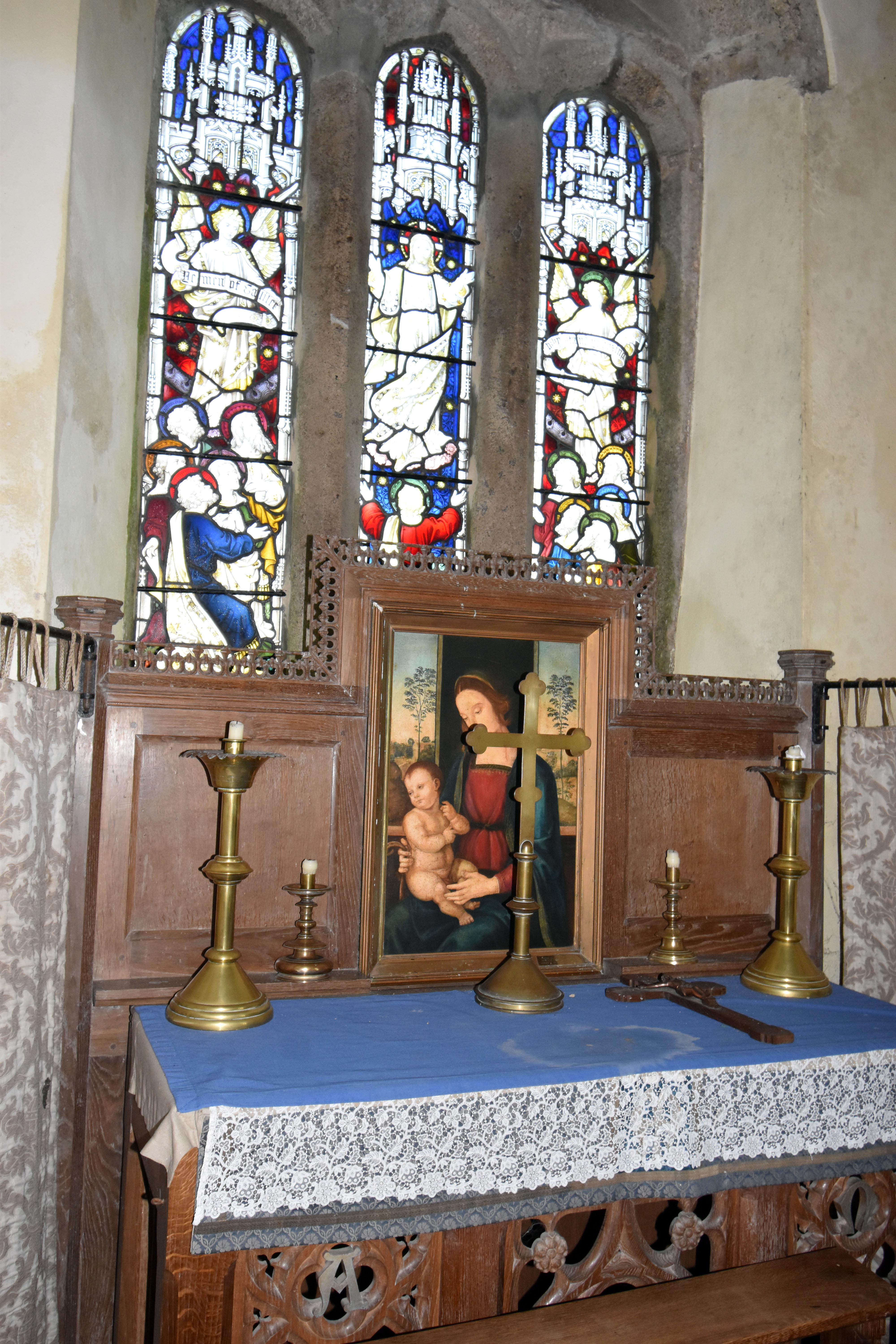
Although we visited in the New Year, Christmas decorations were still adding much to the décor of the church. The 13th‑century font was actually quite hard to find from behind all the festive decorations festooned around it. It looked very pretty, that’s for sure, as did the Christmas tree that was somewhat obscuring the Lady Chapel.
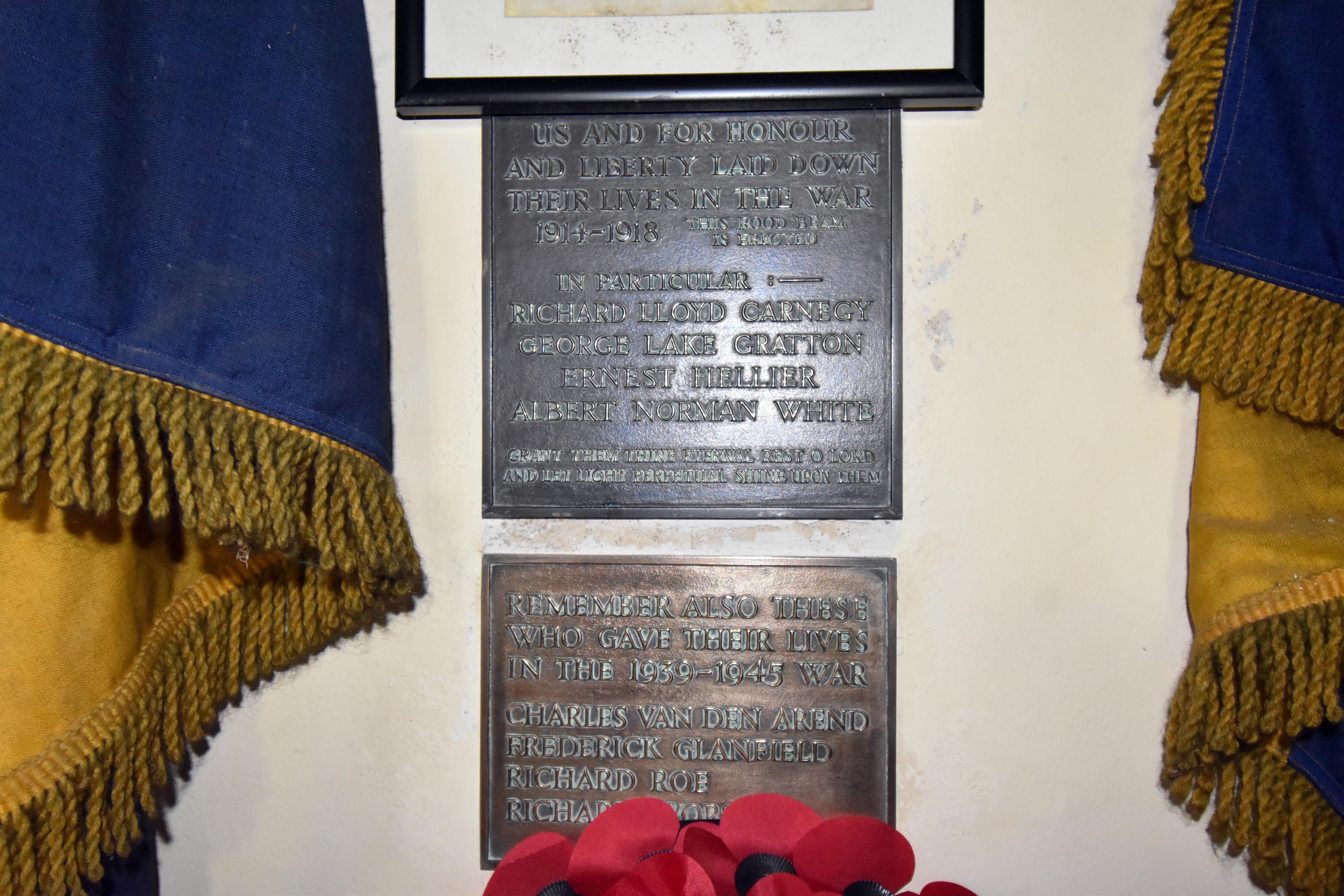
There is a George III coat of arms to pledge allegiance to the Crown and of course the dedications to the fallen in the two World Wars. The careers of the dead once again show the extent of colonial ties, as G. L. Gratton had emigrated to Australia in 1912 and died fighting with the Australian Infantry in the very last weeks of the war but obviously still had family and friends here in this corner of Devon. Major Carnegy died whilst an officer in the Royal Lancaster Regiment at Gallipoli, but he had actually spent much of his army career with the Indian Army. For the Second World War plaque Frederick Glanfield had emigrated to New Zealand in 1926 (with his brother), presumably as their rural farm skills would have been in high demand there whilst rural wages and opportunities were diminishing rapidly in inter‑war Britain. Frederick volunteered to join up immediately as war broke out in 1939 but died in November 1941 fighting with the New Zealand Infantry in the Western Desert and is buried in Libya. Lieutenant Richard Roe was actually born in Lahore in British India (modern‑day Pakistan) as his father was a Lieutenant Colonel of the Gurkhas. Richard, though, joined the Royal Naval Air Service and was due to join HMS Illustrious when he was killed over Northern Ireland whilst undergoing training at HMS Merlin when a fellow pilot collided with him. Sadly his body was never recovered, although the observer’s body was washed up off the coast of Scotland later.
There is another very sad memorial almost tucked away in the corner which hints at the harsh conditions of life in this wet moorland in the era before decent medical care. It is to Reverend Hole who, it says, “Suddenly departed this life” in 1828 at the age of 28. That could be anything from a heart attack to a stroke. However, it is his two children’s dedications that hint at the sadness that was all too common in this era. His daughter Anna Maria died within months of her father “who with Christian Fortitude lingered in a Consumption aged 24 years.” And then his son Joshua also died in a consumption in 1840 at the coincidental age of 24 too. Consumption invariably referred to what we know as tuberculosis. TB particularly afflicted people in cold and wet environments as they sought to protect themselves from the elements and so would close their windows and doors in an attempt to stay warm. But this would be the perfect breeding ground for the tuberculosis to be transmitted within families, as obviously occurred in the case of this sad family. This dedication is a window on the hardships of rural life even for the relatively well‑off family of a vicar.
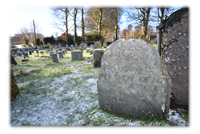
Now who would expect to find the grave of a pirate slap bang in the middle of Devon a thousand feet up? Well, there is a good chance that the grave of a certain Moses Arscott in the graveyard is precisely that. It has a very clear skull and crossbones decorated on top of it, which was the universal sign of the pirate at the time of his burial. The theory was that Moses realised that he was doomed to a life in hell for his life of piracy but decided with his final act to donate his ill‑gotten gains to the church in return for the vicar putting in a good word for him through prayer. It is an intriguing thought and, to tell you the truth, I can’t think of a better theory to explain a gravestone so decorated.
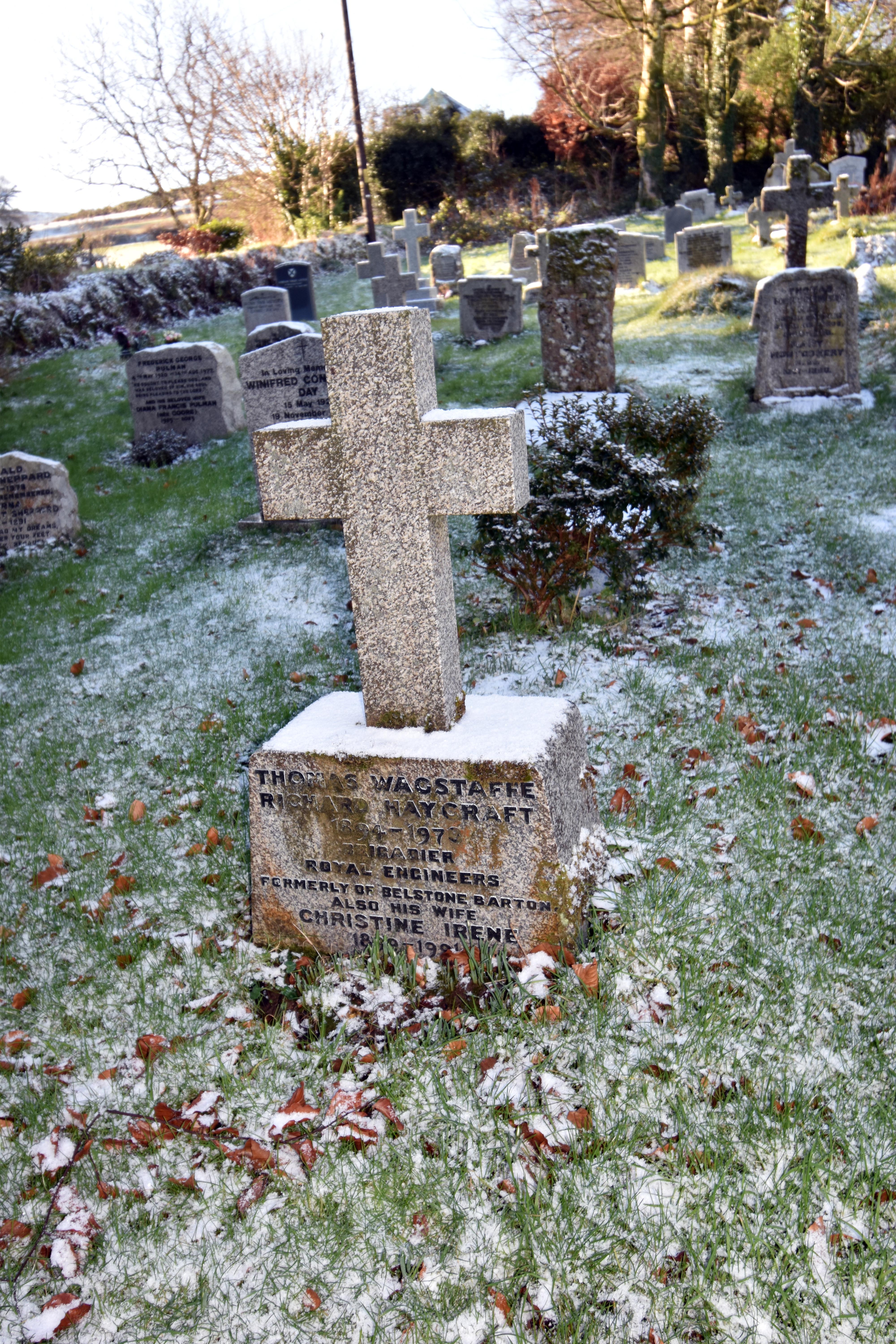
Whilst wandering around the graveyard looking for pirates I chanced on two senior military officers buried here. One being Lieutenant Colonel William Peter Bertram Arkwright DSO of the Royal Scots Fusiliers who died in 1962. He had a very active war serving in the Middle East and the Far East. He was attached to the Nigeria Regiment in Burma in 1945 when his commanding officer was killed and he had to take over in the Arakan and led his troops to a very successful attack despite terrible conditions and high casualties. I believe he was buried here as he was the Officer Commanding the Royal Scots Fusiliers at a time that they were stationed at nearby Okehampton Camp. The other grave of a soldier was that of Brigadier Thomas Wagstaff Richard Haycraft of the Royal Engineers. He was part of the team that helped fortify Gibraltar and especially its deep tunnels that helped turn it into something of a fortress. He also had some very interesting ancestors. His father was a senior barrister in the British Colonial Service including stints in Cyprus, Gibraltar and Mauritius before seeing out his career as the Chief Justice of Grenada and then the Chief Justice of Palestine in its formative years as a British mandate. And his mother was the daughter of a Captain of the French Imperial Guard no less – last seen in action at Waterloo fighting the British! There was also an intriguing gravestone to a James Edward Norrish who sadly died at the young age of 25 in 1997 who was “An adventurous and loving son and brother who died in Vietnam fulfilling an ambition.” I have been unable to find more about this young gentleman but his gravestone certainly piqued my curiosity.
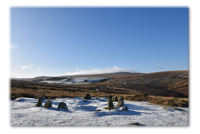
With snow on the ground but the sun shining we decided to head up to the moor itself with our first destination that of the Nine Maidens Stone Circle – which are neither maidens nor are there merely nine of them. This is a Bronze Age stone circle with perhaps up to 20 stones but certainly 17. The old wives’ tale was that the nine maidens were cast into stone when foolishly dancing on the Sabbath. Some contend that they dance every day at noon whilst an old poem believed that they dance at every Hunter’s Moon.
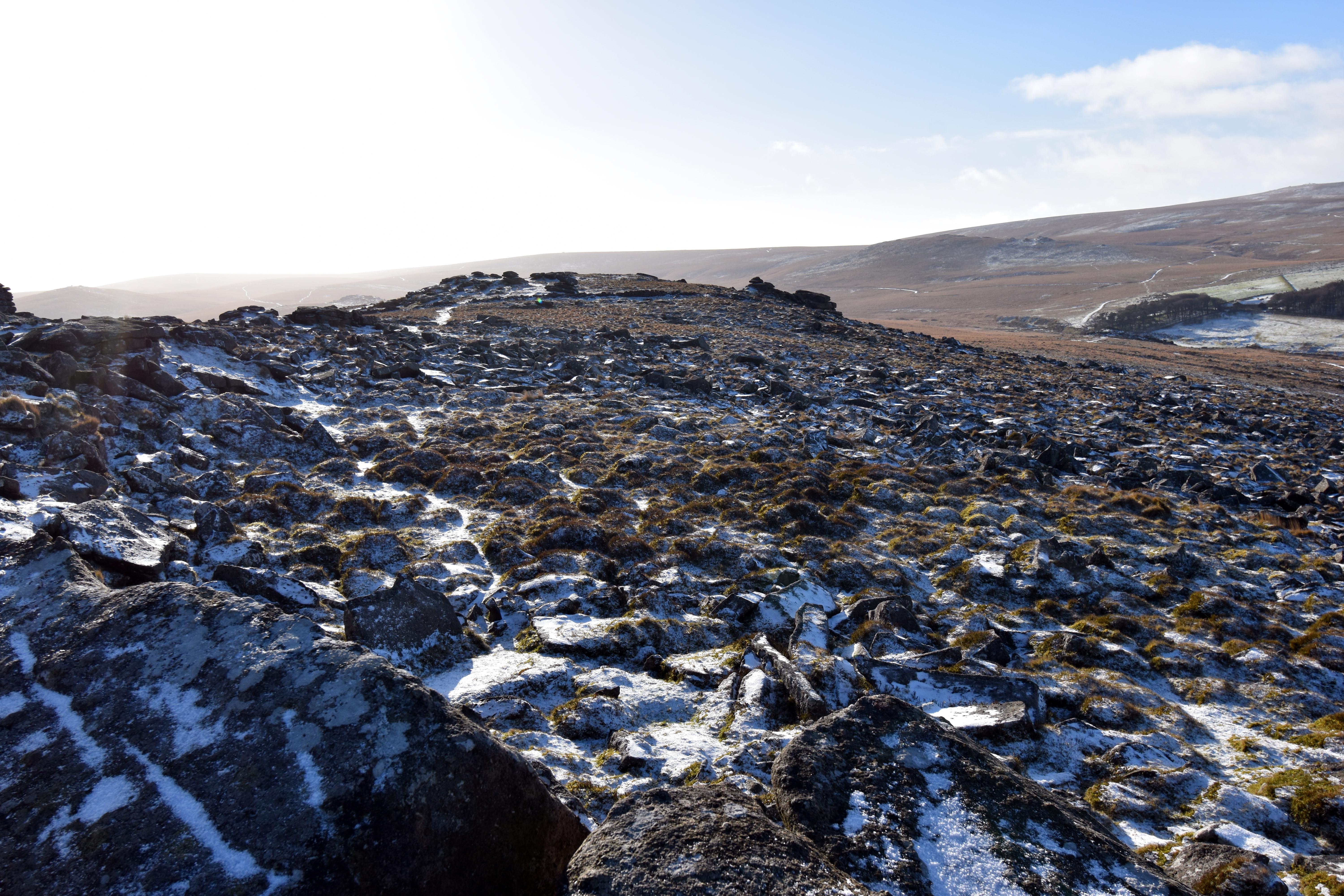
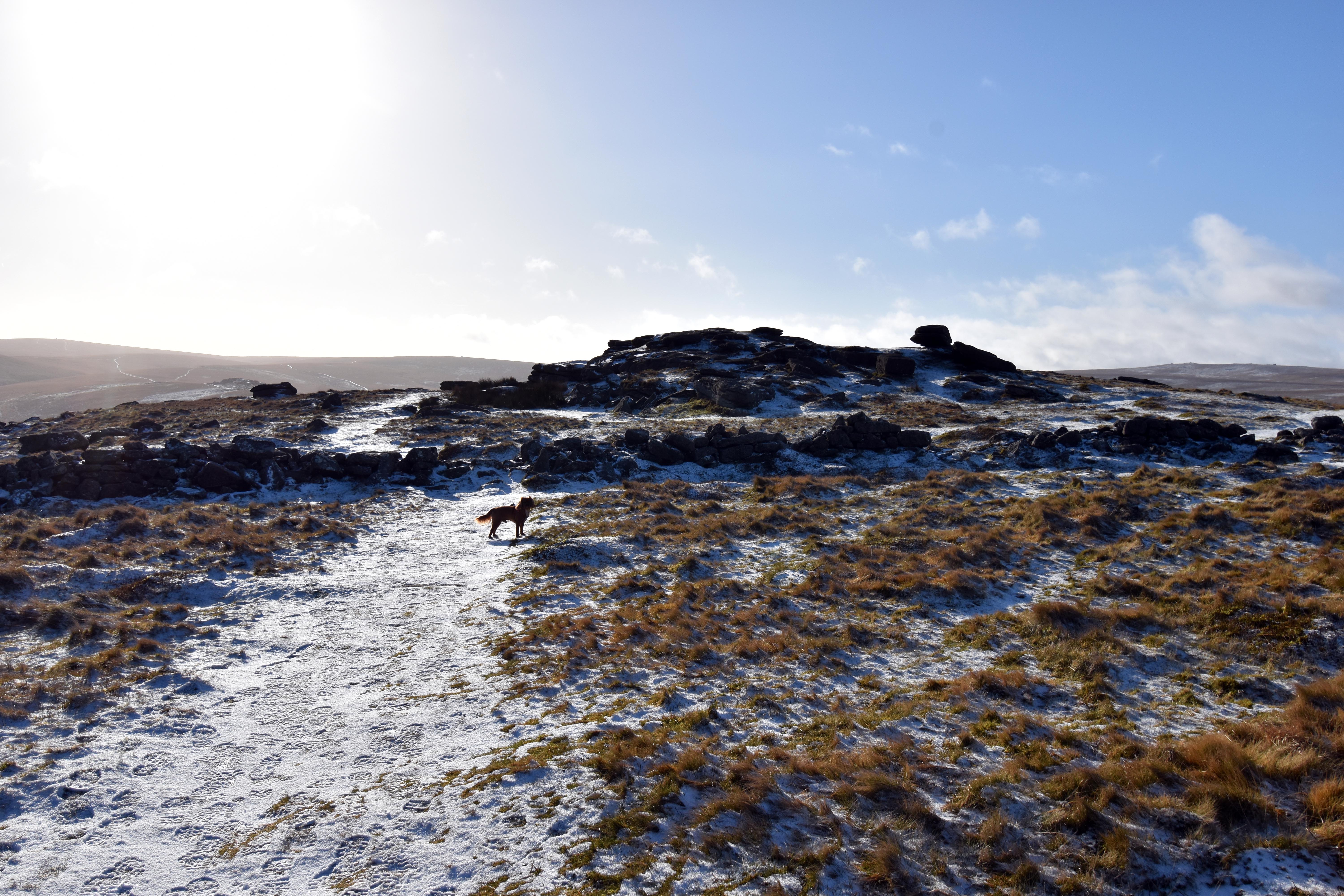
From here we headed up Belstone Tor itself to get some lovely views out across the valleys and down below. It was particularly beautiful watching clouds blow up to Yes Tor and High Willhays and spill over them to the valley beyond. It was a bit slippy on the rocks as you can imagine in the snow and of course with it obscuring the ground it wasn’t always obvious where best to put your feet. Rupert had far fewer issues with his four paws and low centre of gravity. He really does relish playing in the snow. After Belstone Tor we continued to Higher Tor, crossing the interestingly named Irishman’s Wall as we did so. This is another intriguingly long geographical feature on a section of moor not noted for walls. There are a few theories as to why this was built and how it got its name. It does indeed appear that Irishmen were involved in the construction of the wall but why is not quite so easy to pin down. It was probably built in the mid‑Victorian period although it may well have followed a much older existing Bronze Age reave. It could well have been constructed in order to enclose land in a process to claim ownership. Dartmoor has had common grazing rights since Saxon times but the land could still be owned outright and what better way of proving ownership than having a wall around what you claim is yours. The wall could have been built as a boundary to the Forest of Dartmoor. It is worth remembering that the original use of the term “forest” was to denote hunting grounds rather than an area with trees. It just so happened that most hunting grounds were full of trees – not so Dartmoor, of course! One other theory for its name is that it was a work creation scheme for Irish people reeling from the potato famine. Landowners were loath to give charity without anything in return and so there were many work schemes set up to provide paid work – of course most of these were in Ireland but there were some in England too. What would appear to be the case though is that for whatever reason, the locals did not take kindly to this wall, seeing it as an impingement on their common rights, and the wall was frequently sabotaged and left looking little more than a Bronze Age reave of thousands of years’ vintage.
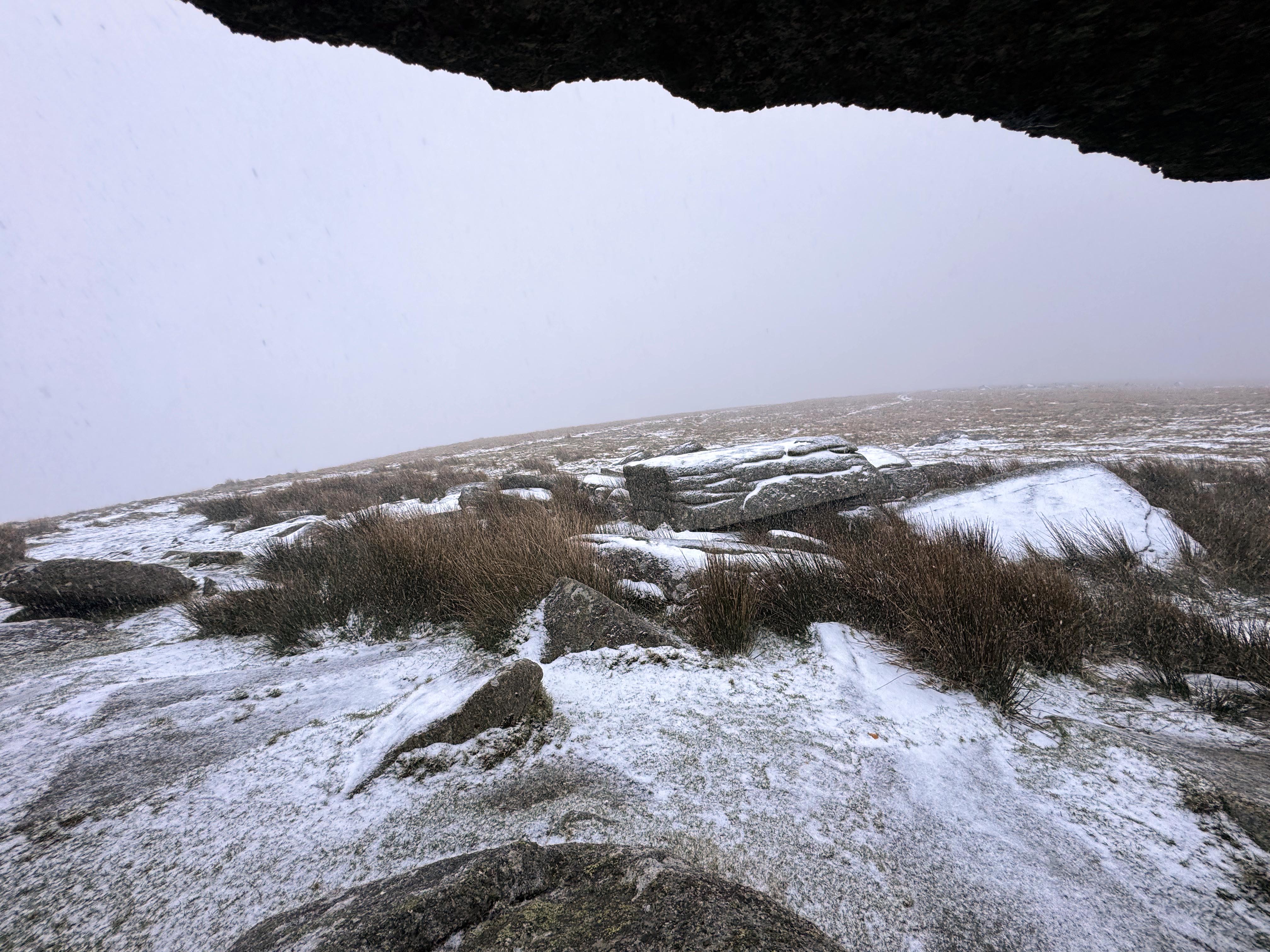
Snowing on Oke Tor
After Higher Tor we continued walking south to Oke Tor where you really do begin to feel that you are in the middle of the moors with its distinctive geography in every direction. You are no longer looking out over central Devon but you are amongst the highest peaks of Devon. You can no longer hear the distant whine of the A30 but can hear profound silence moderated only by the wind. It was here that we decided to have lunch and we could not have timed it more perfectly if we tried. As we started eating, a snow flurry began in earnest. Fortunately there is a little overhang near the various military detritus in this training area. We were sat on the leeward side with zero wind whatsoever and with granite above protecting us from the snowfall, enjoying our soup and hot chocolate (sausage and treats for Rupert, of course). Even Rupert was smart enough to stay under cover during the snowfall. And then just as we were packing everything away, the snow stopped! It was timed to perfection.
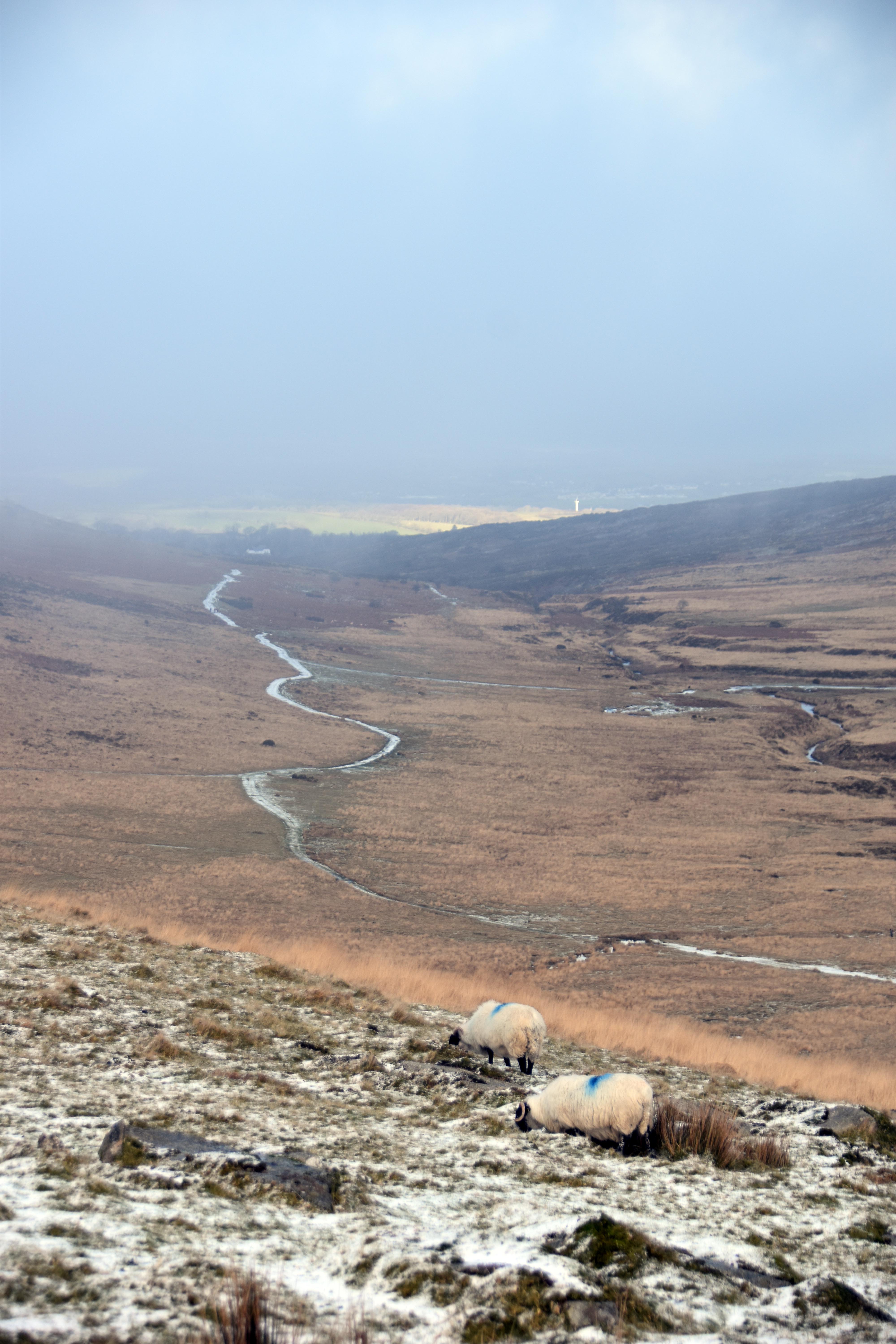
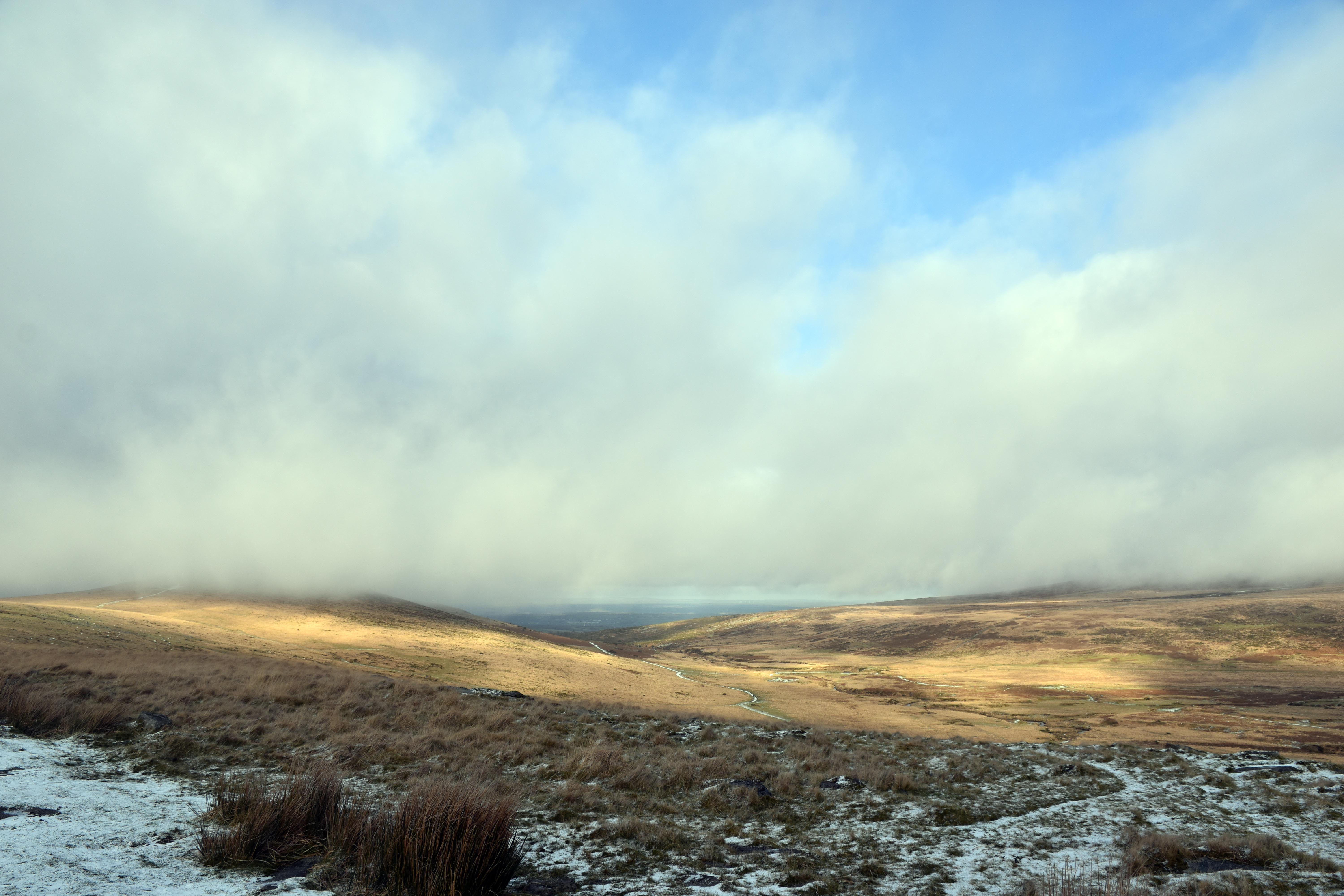
We headed back northwards but instead of going back up and over Higher Tor and Belstone Tor we veered down the valley to our left, although not before watching some incredible weather formations as dark clouds and blue skies created fascinating juxtapositions and beautiful colours. Soon we could see the Devon plain before us as we dropped down in altitude. We did see one very playful foal who got a little separated from its mum but then, when it realised and heard its mum call, started haring around, prancing and kicking. I picked Rupert up just in case he wanted to take a closer look, but the unpredictable pony ran off whinnying as it did so.
Then it was a matter of dropping back into Belstone and retracing our steps through the village back to the car. You couldn’t have asked for a more perfect winter’s day where you get to see snow but mostly in warm sunshine, and when it did snow, nature provided the perfect viewing platform. And of course, once again we found layers and layers of history as we always seem to do so!